Artwork
Minerva, Mars and Venus after Jacopo Tintoretto’s painting in the Sala dell’Anticollegio, Doge’s Palace, Venice
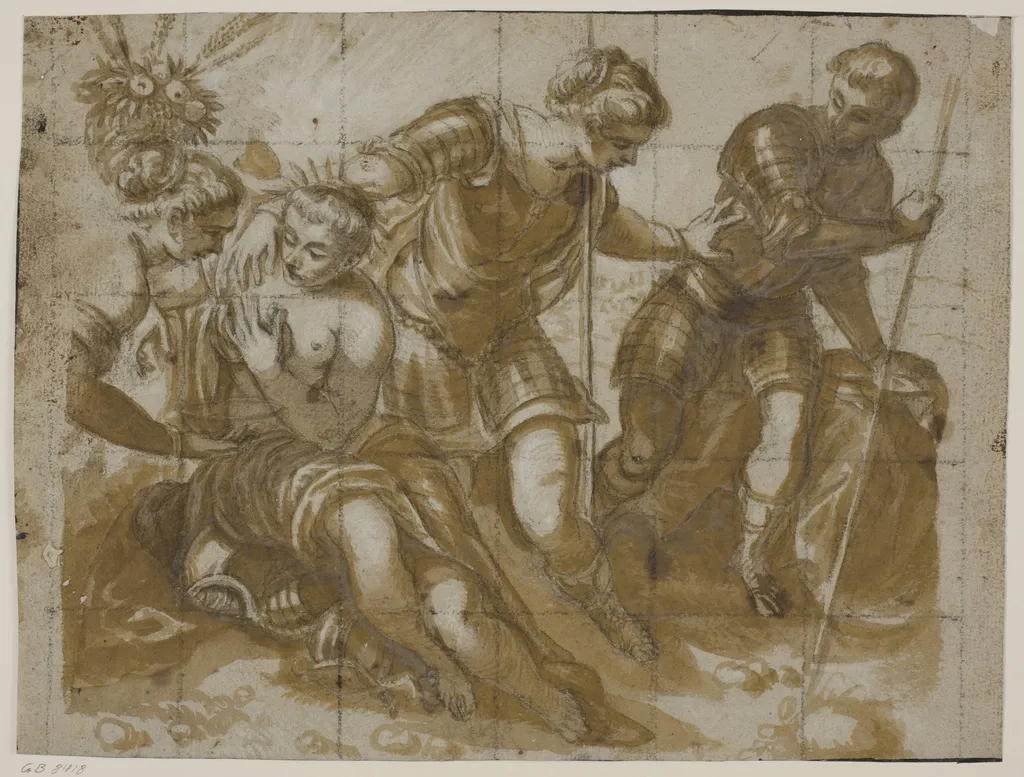
Minerva, Mars and Venus after Jacopo Tintoretto’s painting in the Sala dell’Anticollegio, Doge’s Palace, Venice is an unspecified painting by Unknown. It dates from 1550 and is held in the collection of the Statens Museum for Kunst.
About this work
Overview
This mid‑sixteenth‑century work, titled Minerva, Mars and Venus, is a copy after a fresco by Jacopo Tintoretto that once adorned the Sala dell’Anticollegio in Venice’s Doge’s Palace. Executed around 1550, the painting now belongs to the collection of the Museum of Ethnography.
Subject & Meaning
The composition presents a small mythological gathering: a seated female figure occupies the left side, while three male figures surround her. One of the men, positioned on the right, holds a spear, suggesting a martial presence that contrasts with the more serene female presence.
Technique & Style
The artist employs chiaroscuro to model the bodies, using strong contrasts of light and shadow to give the figures a three‑dimensional quality. The overall arrangement and the handling of illumination reflect a classical aesthetic, echoing the compositional balance found in ancient sculpture.
History & Provenance
Created as a derivative of Tintoretto’s original fresco, the painting entered the Museum of Ethnography’s holdings at an unspecified date. Its provenance traces back to the Venetian Republic’s decorative program for the Doge’s Palace, where the source fresco once contributed to the civic narrative.
Context
Tintoretto’s frescoes in the Anticollegio hall celebrated mythological allegories that linked the virtues of wisdom, war, and love. This copy mirrors that thematic program, positioning the deities Minerva, Mars, and Venus within a visual dialogue that reinforced the political and cultural ideals of 16th‑century Venice.
Artist & collection

 Domestic Scene
 Giacomo and Cardinal Marco, investing Andrea, Abbot of San Zeno, with his Benefice
 The Nymph of Fontainebleau
 Portrait of a Woman
 Madonna and Child with Saints in the Enclosed Garden
 Venus and Minerva
 Family Group of Four on Sofa
 Wall painting from Room H of the Villa of P. Fannius Synistor at Boscoreale
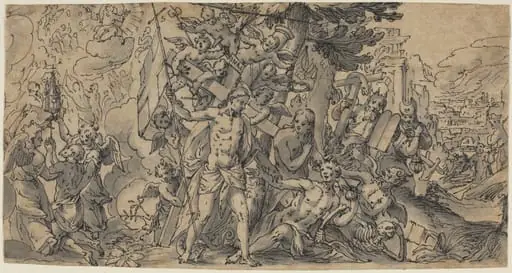 The Way of Salvation
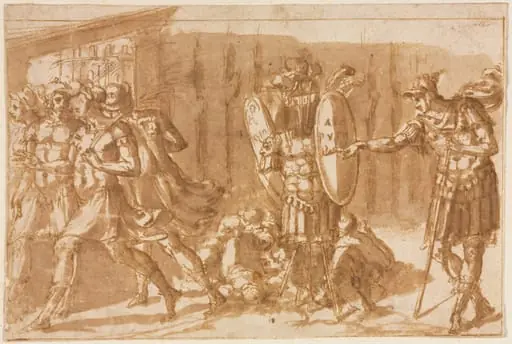 Victorious Soldiers with Trophy
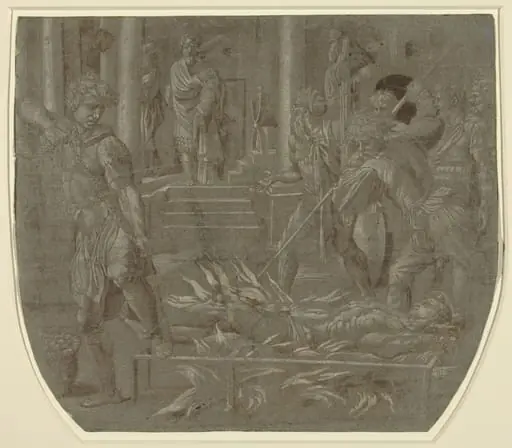 The Martyrdom of Saint Lawrence
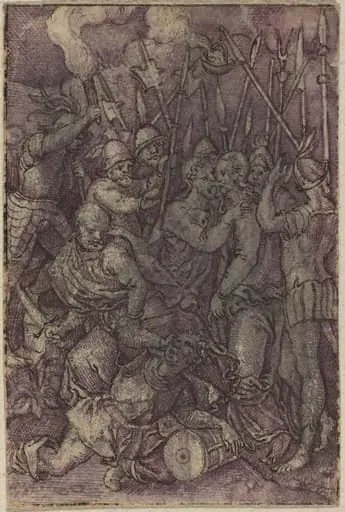 The Betrayal
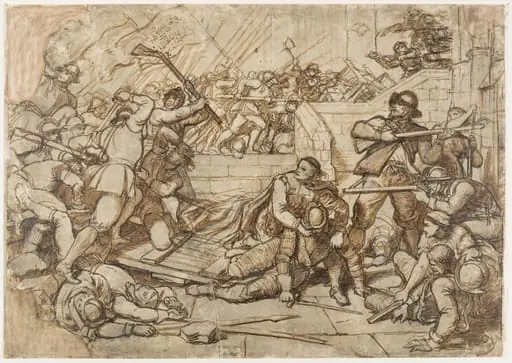 The Defence of Basing House by the Cavaliers against the Roundheads
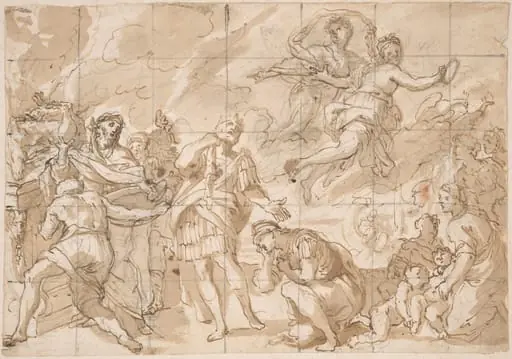 The Sacrifice of Iphigenia
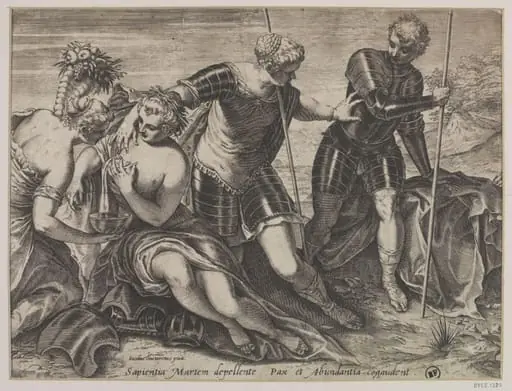 Minerva nourishing Peace and Plenty
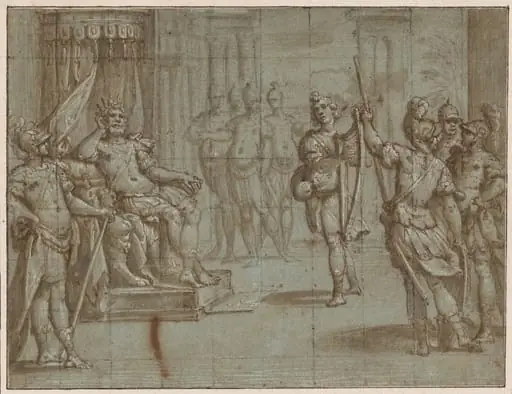 David Playing the Harp Before Saul
![The Martyrdom of Saints Peter and Paul [recto], by Antonio da Trento](https://artifactworldgallery.com/img/antonio-da-trento--the-martyrdom-of-saints-peter-and-paul-recto--a51e90060085a207-w320.webp) The Martyrdom of Saints Peter and Paul [recto]
The Martyrdom of Saints Peter and Paul [recto]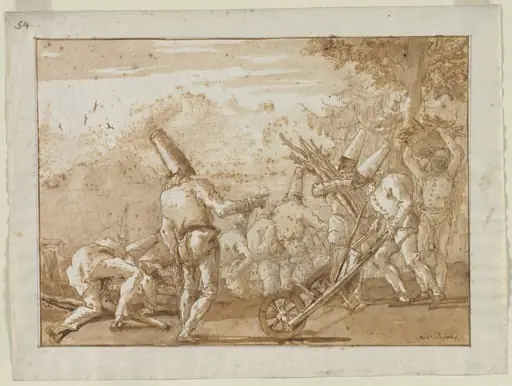 Gathering Wood
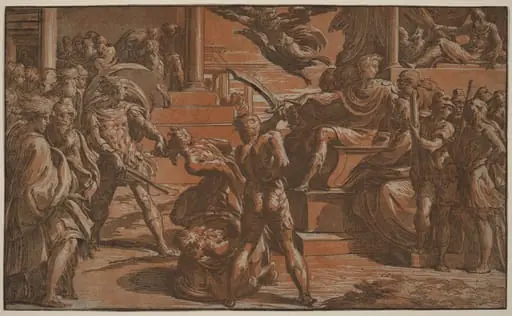 The Martyrdom of Two Saints
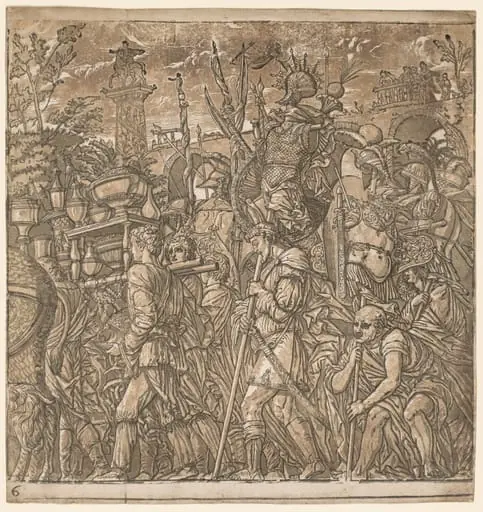 The Triumph of Julius Caesar: Soldiers Carrying Vases and Trophies of War