Artwork
The Assumption of the Virgin
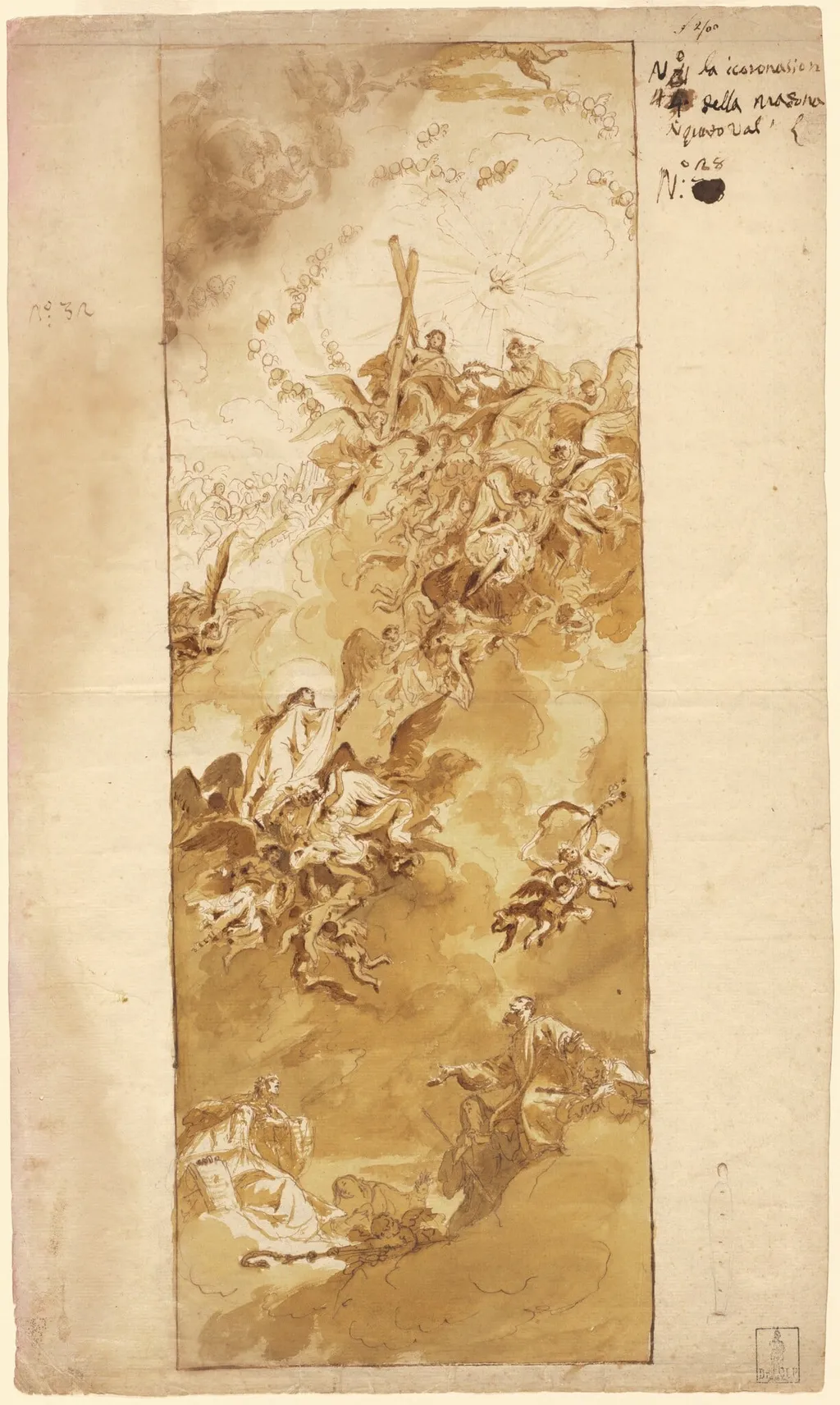
The Assumption of the Virgin is an ink drawing by the Romanticist artist Giambattista Canal. It dates from 1785 and is held in the collection of the National Gallery of Art.
About this work
Overview
It belongs to the late eighteenth‑century Italian Romantic vein, where drawing served both preparatory and expressive purposes.
Giambattista Canal’s drawing titled *The Assumption of the Virgin* dates from around 1785. Executed in pen and brown ink with a golden‑brown wash applied over a graphite underdrawing, the work measures a modest size and presents a narrative scene rather than a finished painting. It belongs to the late eighteenth‑century Italian Romantic vein, where drawing served both preparatory and expressive purposes.
Subject & Meaning
The composition illustrates the biblical episode of the Virgin Mary’s ascent to heaven. Mary is shown rising above a crowd of onlookers, surrounded by a host of angels and cherubic figures. The gestures of the spectators convey reverence and awe, while the celestial beings underscore the event’s divine character, aligning with contemporary devotional iconography.
Technique & Style
Canal employed a combination of pen work and brown ink to define the figures, while a warm golden‑brown wash overlays the graphite sketch, creating tonal depth and a subtle illumination. The varied line quality and the wash’s translucency generate a sense of movement, particularly in the swirling drapery and the upward thrust of the Virgin’s form, hallmarks of Romantic expressiveness.
Context
Created in the 1780s, the drawing reflects the Romantic shift toward heightened emotion and imagination in visual art, moving away from the restrained classicism of earlier decades. Canal, active in the Venetian sphere, incorporated the era’s fascination with spiritual subjects rendered with dramatic lighting and dynamic composition, situating the work within the broader European trend toward personal, affective religious representation.
Artist & collection


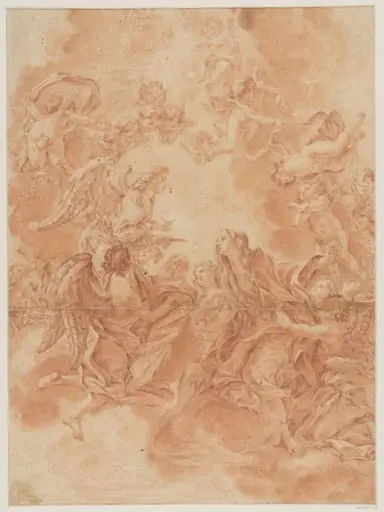 The Communion of St Mary Magdalene
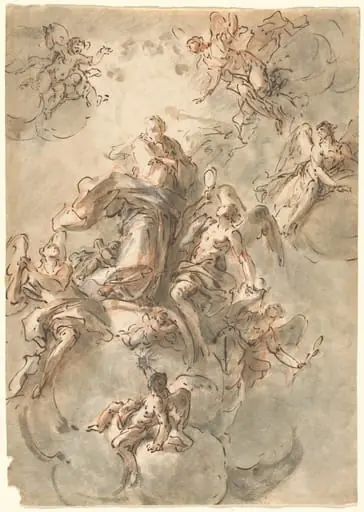 Virgin of the Immaculate Conception
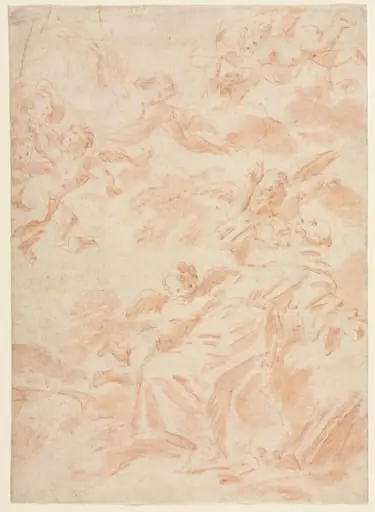 The Stigmatization of Saint Francis
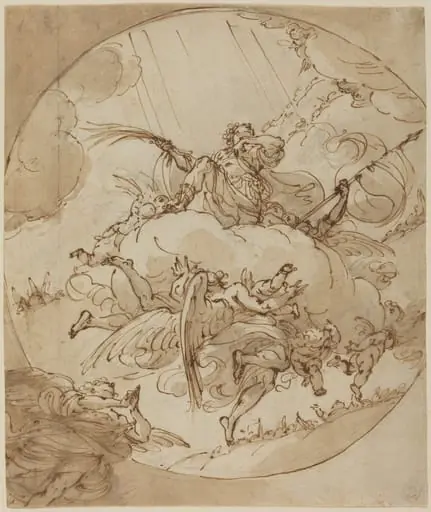 The Apotheosis of San Vitale
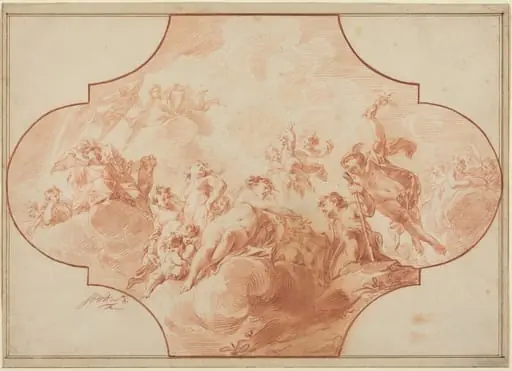 The Judgment of Paris
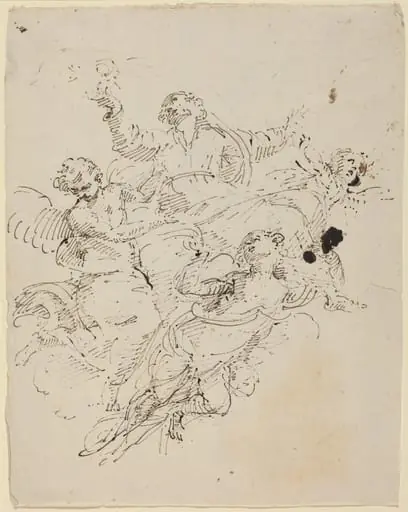 The Ascension of the Virgin
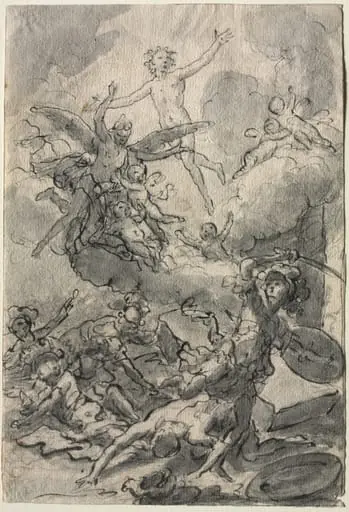 The Resurrection
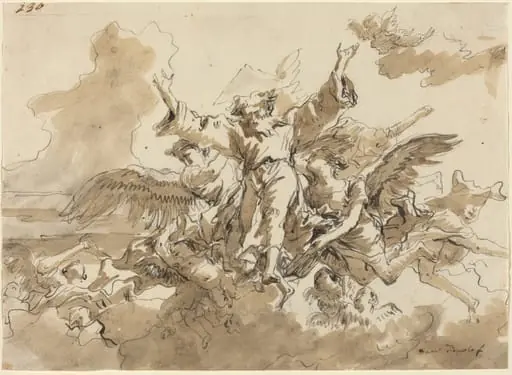 Creation of the Universe
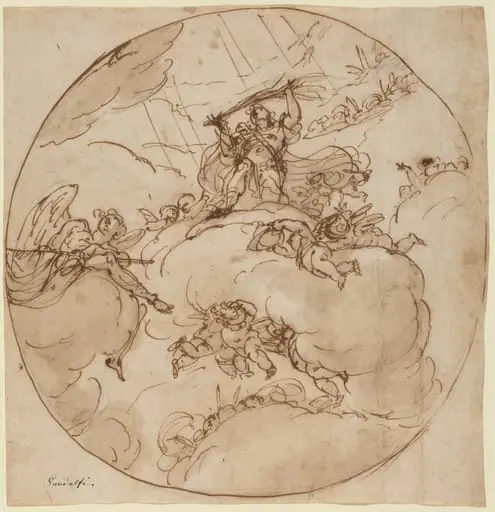 The Apotheosis of San Vitale
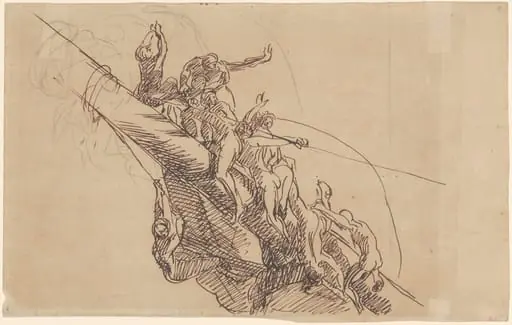 Study for "The Defeat of the Floating Batteries at Gibraltar"