Artwork
Creation of the Universe
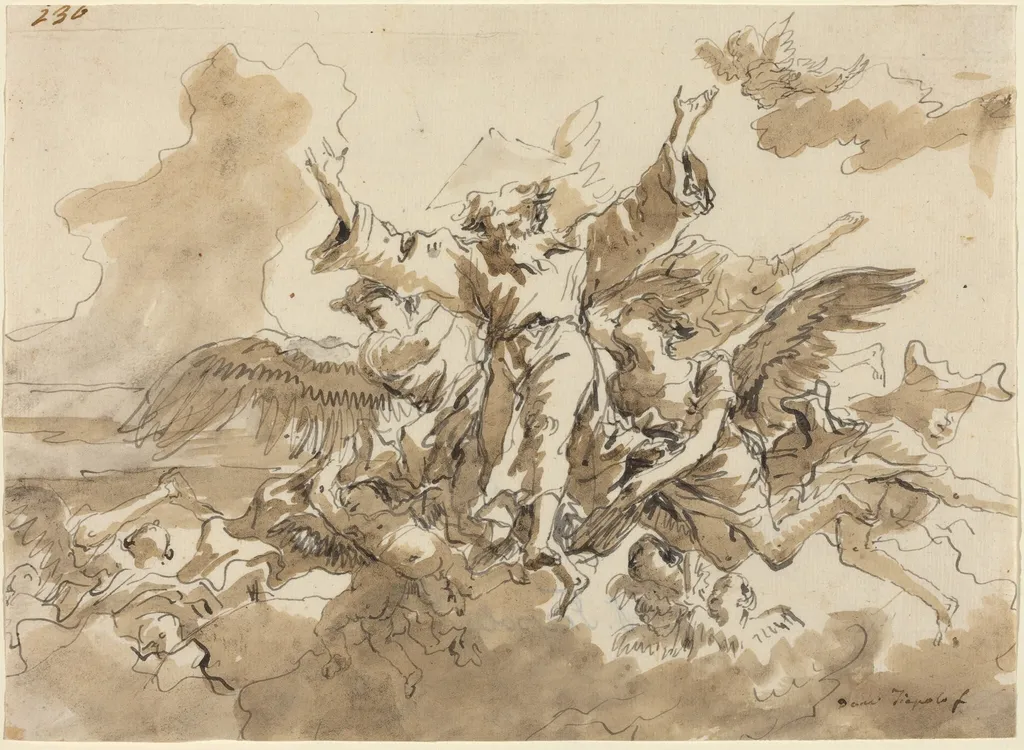
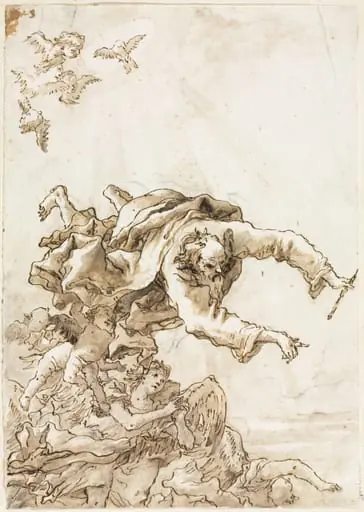
Creation of the Universe is an ink drawing by the Baroque artist Giovanni Domenico Tiepolo. It dates from 1766 and is held in the collection of the National Gallery of Art.
About this work
Overview
Tiepolo, trained under his father, operated within Venice’s evolving artistic climate, bridging late Baroque dynamism and emerging Neoclassical restraint.
Created in 1766, this drawing by Giovanni Domenico Tiepolo depicts the biblical genesis of the cosmos using pen, gray ink, and brown wash on laid paper. As a work on paper, it reflects the artist’s engagement with preparatory and independent graphic studies. The medium’s subtlety allowed for layered tonal effects, capturing celestial motion without color. Tiepolo, trained under his father, operated within Venice’s evolving artistic climate, bridging late Baroque dynamism and emerging Neoclassical restraint.
Subject & Meaning
The scene illustrates the moment of divine creation as described in Genesis, with abstracted figures and swirling forms suggesting the emergence of order from chaos. Rather than literal representation, Tiepolo emphasizes cosmic energy through fluid lines and atmospheric washes. The absence of a central deity shifts focus to the unfolding universe itself, aligning with Enlightenment-era interest in natural forces and divine immanence rather than anthropomorphic intervention.
Technique & Style
Tiepolo employed fine pen lines to define swirling clouds and celestial forms, while brown washes added depth and volume to the composition. The gray ink provided tonal contrast, enabling a sense of luminosity without pigment. His handling of washes suggests rapid, confident strokes, characteristic of his preparatory drawings. The technique conveys movement and spatial ambiguity, reflecting his skill in translating theatrical composition into intimate graphic form.
History & Provenance
The drawing was made during a period when Tiepolo was producing numerous religious and mythological studies, often for private patrons or as autonomous works. It likely originated in his Venice studio, possibly as a design for a larger commission or as a standalone meditation on creation. Its survival in good condition suggests it was carefully preserved, though its early ownership remains undocumented in public records.
Context
In mid-18th-century Venice, religious themes persisted despite growing secular interests. Tiepolo’s work responded to both devotional traditions and the intellectual currents of the Enlightenment, where nature and divine order were increasingly interpreted through rational observation. His drawings, including this one, reveal a shift from grand fresco cycles toward introspective, graphic explorations of sacred narratives.
Legacy
This drawing exemplifies Tiepolo’s contribution to the graphic arts of his time, demonstrating how ink and wash could convey complex theological ideas with minimal means. While less known than his father’s monumental works, his drawings influenced later generations of draftsmen interested in expressive line and atmospheric tone. The piece remains a quiet testament to the intellectual and spiritual inquiries of 18th-century Venetian art.
Artist & collection
Artist
Giovanni Domenico Tiepolo (August 30, 1727 – March 3, 1804) was an Italian painter and printmaker in etching. He was the son of artist Giovanni Battista Tiepolo and elder brother of Lorenzo Baldissera Tiepolo.

![The Ecstasy of Saint Francis [recto], by Sebastiano Ricci](https://artifactworldgallery.com/img/sebastiano-ricci--the-ecstasy-of-saint-francis-recto--5f53f9b59775e5dd-w320.webp) The Ecstasy of Saint Francis [recto]
The Ecstasy of Saint Francis [recto]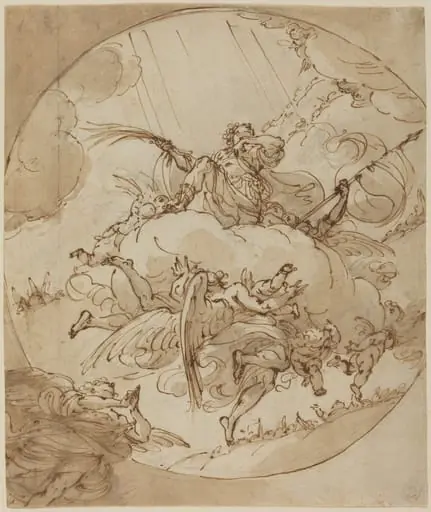 The Apotheosis of San Vitale
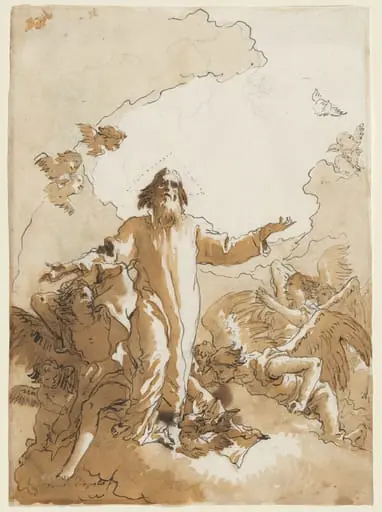 God the Father Standing in Clouds Surrounded by Angels and Putti
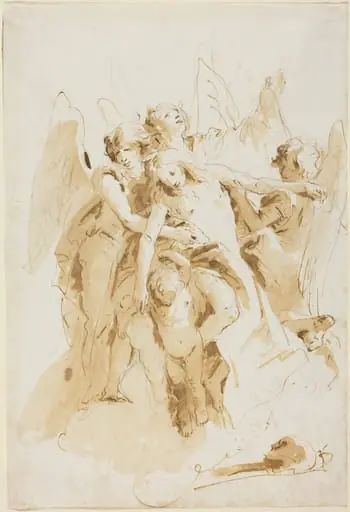 Saint Mary Magdalene Lifted by Angels
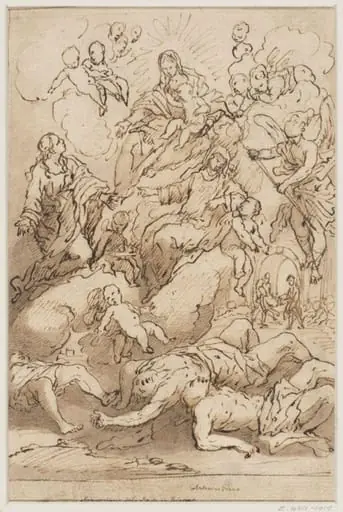 Anniversary of the Plague at Palermo
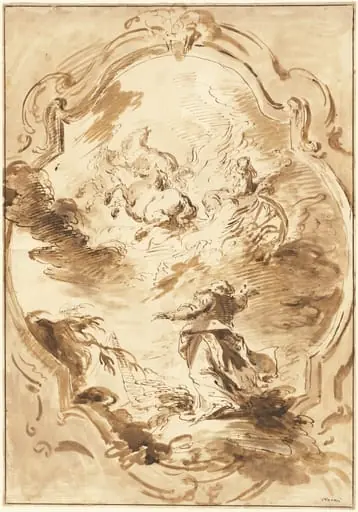 Elisha Watching Elijah Ascend in the Fiery Chariot
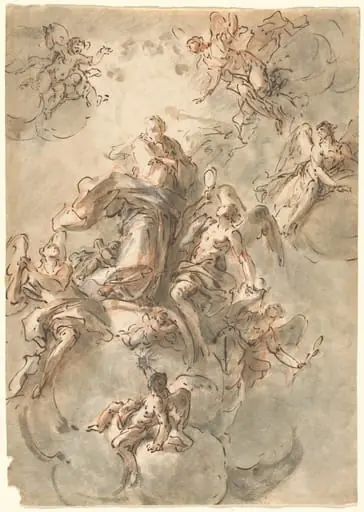 Virgin of the Immaculate Conception
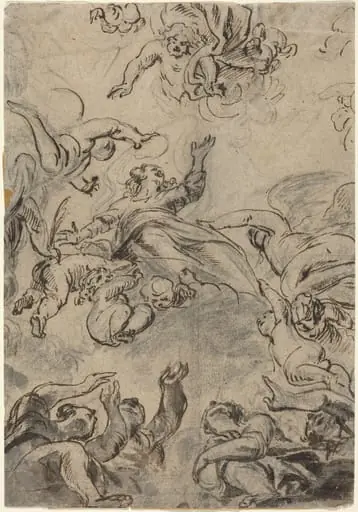 The Assumption of the Virgin
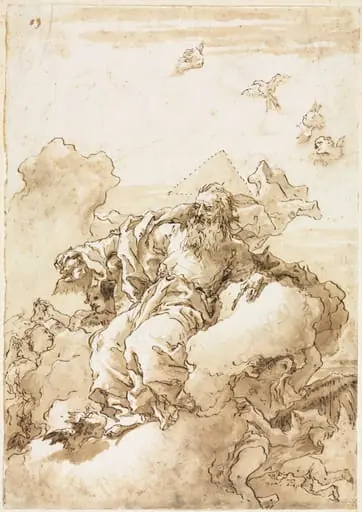 God the Father with Symbol of the Trinity
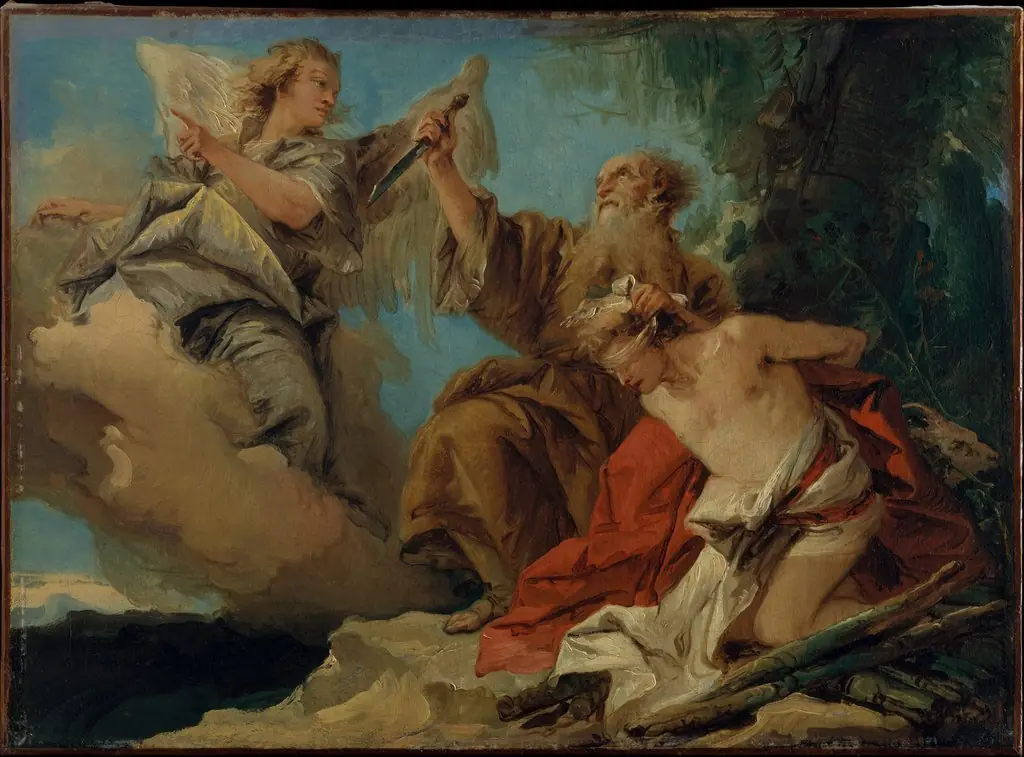
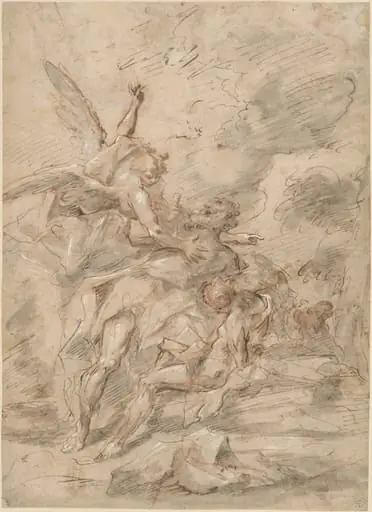 The Sacrifice of Isaac
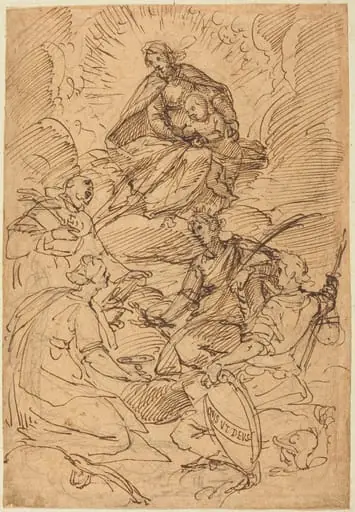 The Madonna and Child in Glory Adored by Saints
 God the Father with Angels and Cherubs