Artwork
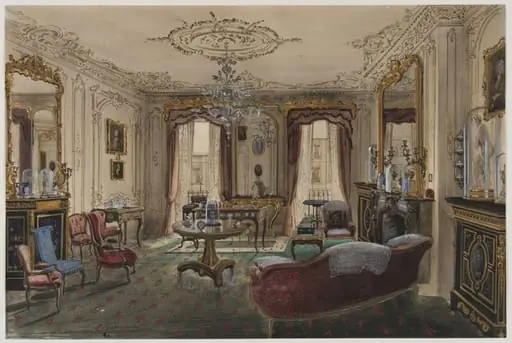
The Drawing room at 3, The Close, Winchester
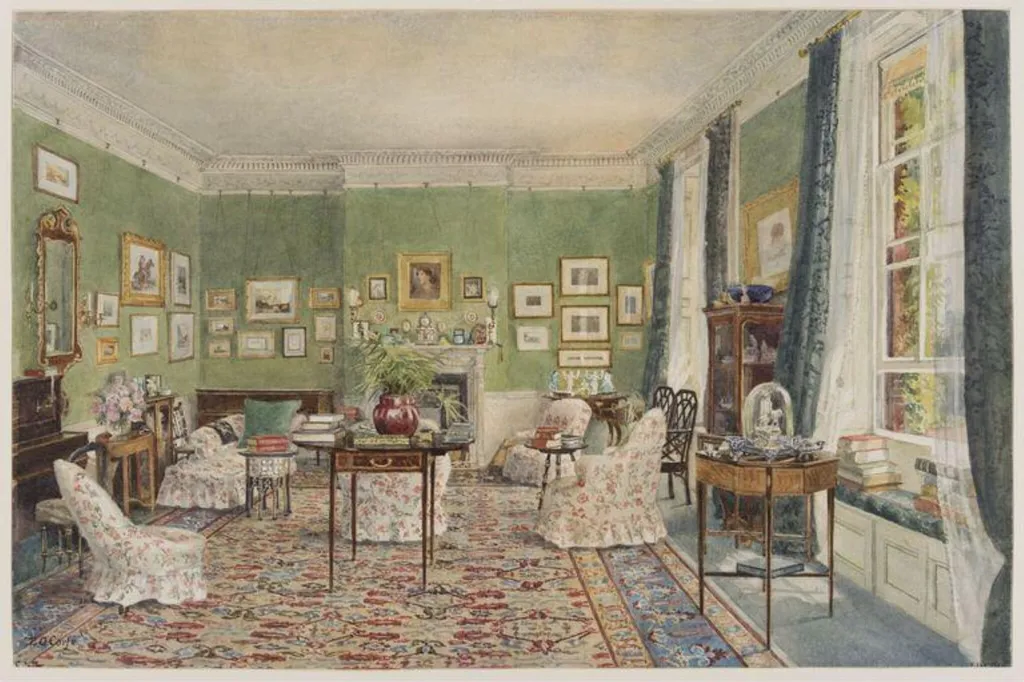
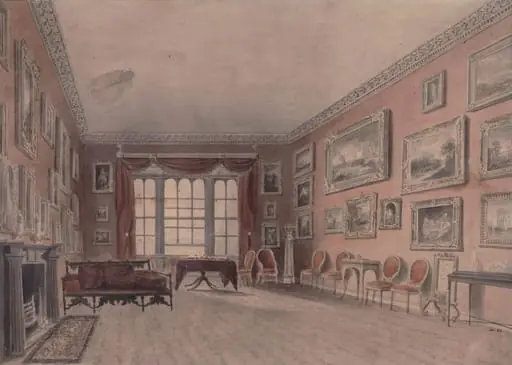
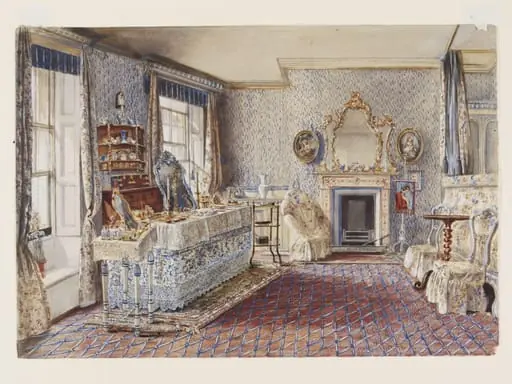
The Drawing room at 3, The Close, Winchester is a watercolor drawing by Beatrice Olive Corfe. It dates from 1900 and is held in the collection of the Victoria and Albert Museum.
About this work
Overview
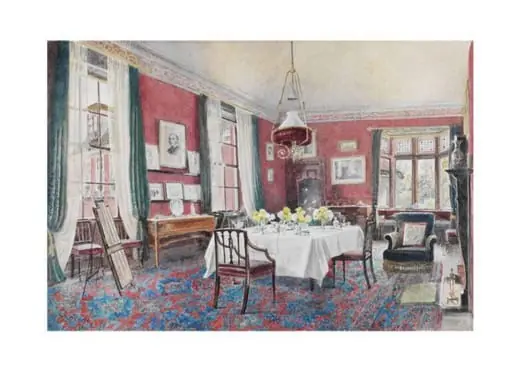
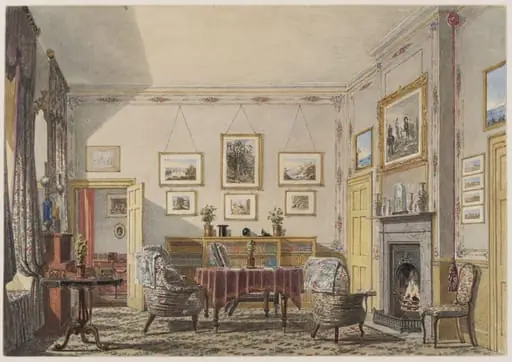
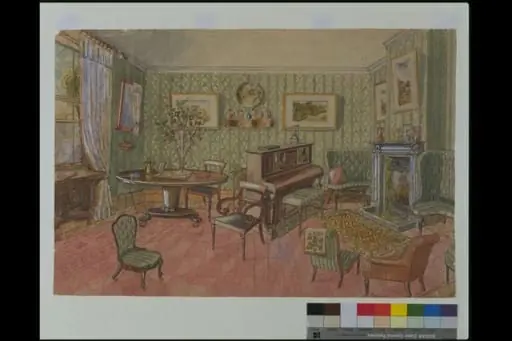
The watercolour titled The Drawing Room at 3, The Close, Winchester depicts an interior of a late‑seventeenth‑century house situated within the Cathedral Close of Winchester. Executed by an otherwise obscure Winchester‑based artist who specialised in architectural subjects, the work forms one of a quartet of drawings that document the house’s rooms in detail.
Subject & Meaning
The scene captures a drawing‑room where Georgian and reproduced period furniture coexist with eclectic pieces such as an Indian table rendered in a North‑African, Islamic motif, and mid‑Victorian easy chairs concealed beneath chintz covers. A richly patterned rug anchors the space, while an extensive display of eighteenth‑century ceramics—both on open shelves and in neo‑rococo cabinets—illustrates the owners’ penchant for mixing genuine antiques with contemporary reproductions.
Technique & Style
Rendered in watercolour, the artist employs fine cross‑hatching and delicate washes to convey texture and depth, particularly in the varied surfaces of wood, fabric, and ceramic glaze. The drawing balances precise architectural rendering with a softer, atmospheric treatment of light, allowing the viewer to discern both structural details of the room and the sumptuousness of its furnishings.
History & Provenance
Commissioned in the nineteenth century, the drawing was part of a fashionable trend among affluent homeowners to have their elaborate decorative schemes recorded by artists. It was produced for Canon A. S. Valpy and his wife, who inhabited the house at the time. The work has remained in the museum’s collection, catalogued under its watercolour medium.
Context
The interior reflects the Victorian era’s revivalist taste for ‘decorating with antiques,’ a practice that persists in contemporary interior design. The inclusion of an Indian table similar to one displayed in the British Galleries (museum no. E.222‑1955) underscores the period’s fascination with exotic, imported objects alongside domestic heritage pieces.
Artist & collection
Artist
She spent her life painting the same three houses, always from the inside. Beatrice Corfe had a habit of standing in doorways, noticing the way light pooled on the carpet or caught the edge of a chair. These watercolors…