Artwork
View of a living room
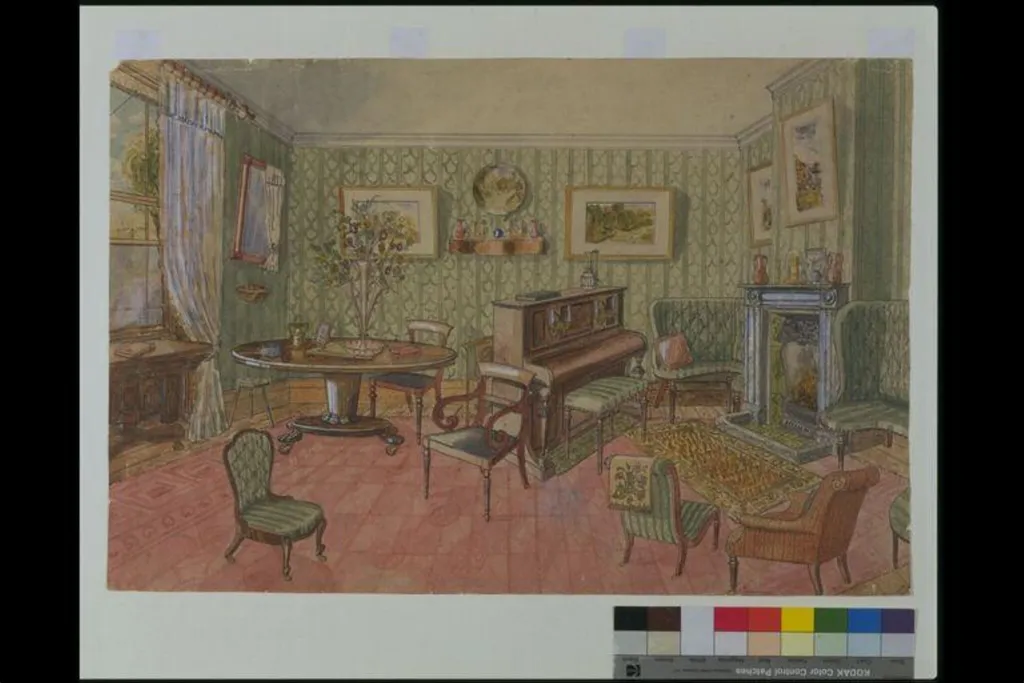
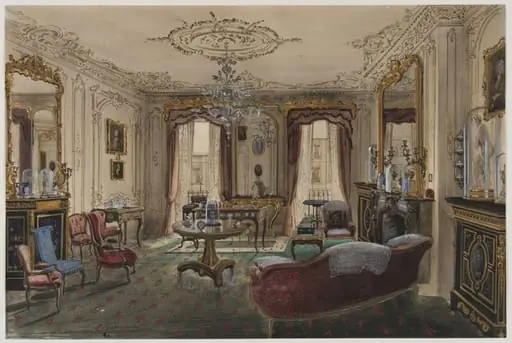
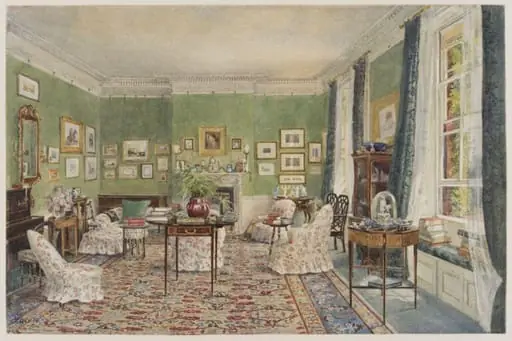
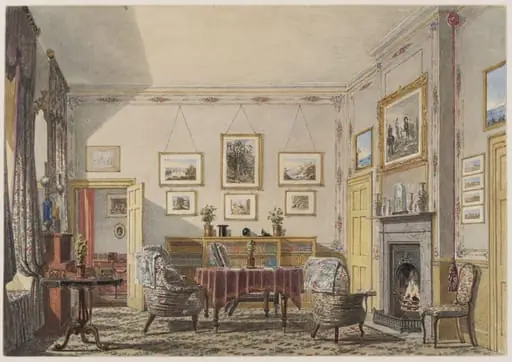
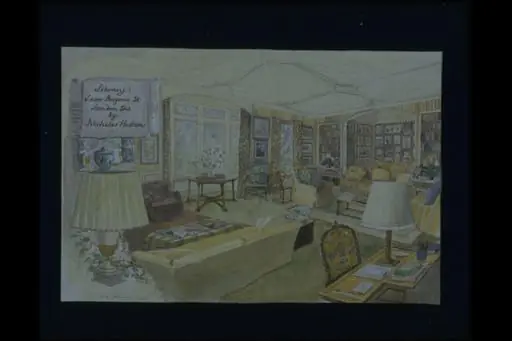
View of a living room is a watercolor work on paper by the Impressionist artist Bodman, C. W.. It dates from 1909 and is held in the collection of the Victoria and Albert Museum. This 1909 watercolour depicts a middle-class British living room, rendered with quiet precision by an amateur artist.
About this work
This watercolor shows a living room scene from 1909. It's a snapshot of a middle-class home, with an old table pushed aside for a new piano. You can spot updates like cozy corner seats and an Art Nouveau fireplace.
The artist mixes old and new things here. The seats use legs from older furniture. The fireplace has a mix of old marble and modern tile.
Check out the Victoria and Albert Museum next.
Overview
This 1909 watercolour depicts a middle-class British living room, rendered with quiet precision by an amateur artist.
This 1909 watercolour depicts a middle-class British living room, rendered with quiet precision by an amateur artist. The scene captures a domestic space in transition, where inherited furnishings coexist with newer acquisitions. The composition reflects everyday life rather than idealized interiors, emphasizing the practical rearrangements of a household adapting to changing tastes and technologies.
Subject & Meaning
The painting illustrates the tension between tradition and modernity in early 20th-century home life. The central piano, a symbol of cultural aspiration, has displaced a once-central dining table, signaling shifting social priorities. The presence of decorative ‘Art’ pots and the ‘cosy corner’ seating suggests an effort to blend aesthetic refinement with domestic comfort, revealing how middle-class identity was expressed through interior design.
Technique & Style
Executed in watercolour, the work employs delicate washes and restrained line work to convey texture and spatial depth. The artist avoids dramatic lighting or stylization, favoring a documentary approach. Details like the mismatched chair legs and the tile-and-marble fireplace are rendered with careful observation, underscoring a focus on authenticity over artistic flourish.
History & Provenance
The piece was created in 1909 and remains within the collection of the Victoria and Albert Museum. Its origin as an amateur work suggests it was made for personal or familial use, possibly as a record of the home’s evolving character. No record of public exhibition or sale exists prior to its acquisition by the museum, indicating its initial role as a private document.
Context
In early 1900s Britain, the living room became a stage for social performance, where new technologies like the piano and decorative arts like Art Nouveau signaled refinement. The reuse of older furniture legs in the ‘cosy corner’ seats reflects both economic pragmatism and a lingering attachment to past craftsmanship. This hybridity was common among the middle class, caught between industrial progress and sentimental preservation.
Legacy
The watercolour offers a modest but valuable record of domestic life during a period of rapid change. Unlike grander interior depictions by professional artists, this work captures the unpolished reality of adaptation — where utility, nostalgia, and fashion intersected in ordinary homes. It remains a quiet testament to how individuals negotiated modernity within the confines of their own spaces.
Artist & collection
Artist
C.W. Bodman spent his life drawing the quiet corners of homes—fireplaces, teacups, unmade beds—turning everyday clutter into something worth staring at. His 1909 watercolor *View of a Living Room* is just a room, but…