Artwork
Götz von Berlichingen
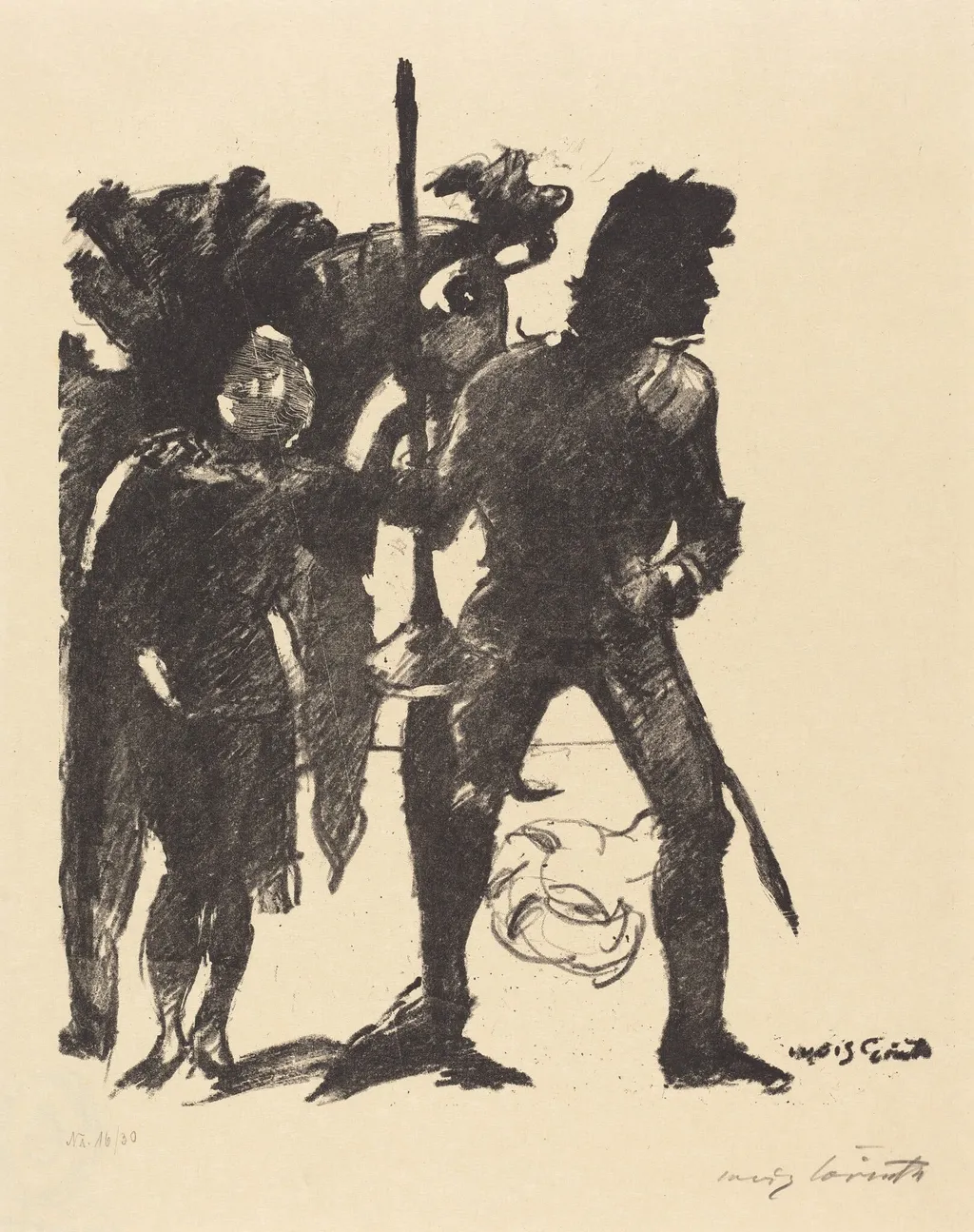
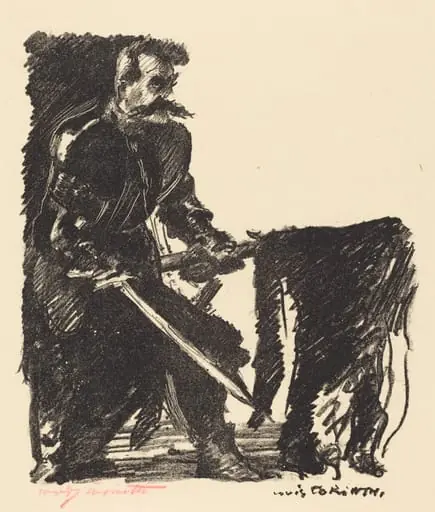
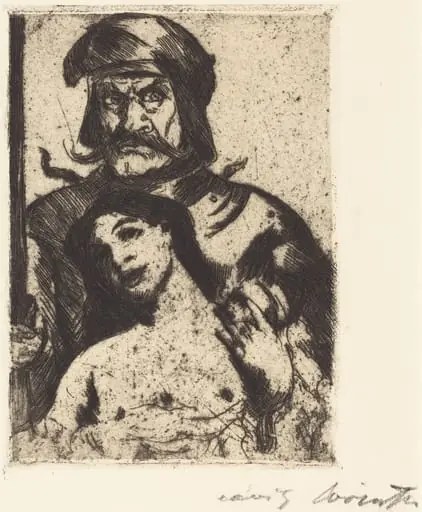
Götz von Berlichingen is an ink print by Lovis Corinth. It dates from 1920 and is held in the collection of the National Gallery of Art.
About this work
Overview
The work emerged during a period of stylistic transformation in Corinth’s career, following a stroke in 1911 that loosened his approach to form and brushwork.
Created in 1920, *Götz von Berlichingen* is a black lithograph by German artist Lovis Corinth. The work emerged during a period of stylistic transformation in Corinth’s career, following a stroke in 1911 that loosened his approach to form and brushwork. Executed using lithographic technique, the print captures a group of armored figures in a dense, gestural composition, reflecting both historical subject matter and a shift toward expressive abstraction.
Subject & Meaning
The print portrays Götz von Berlichingen, a 16th-century German knight associated with the Peasants' War, though the image focuses not on individual heroism but on the collective presence of soldiers. Their hunched postures and indistinct faces suggest anonymity and fatigue, emphasizing the human cost of conflict rather than glorifying military legend. Corinth’s choice of subject aligns with postwar Germany’s reexamination of national myths.
Technique & Style
Lithography allowed Corinth to draw directly onto a stone surface, translating his rapid, tactile mark-making into printed form. The lines are uneven and loosely rendered, with soft tonal gradations achieved through controlled ink application. The figures appear almost smudged, their forms dissolving into the background — a deliberate departure from naturalism, favoring emotional immediacy over detail.
History & Provenance
Corinth produced this print during his tenure with the Berlin Secession, an avant-garde artists’ group he later led after Max Liebermann. Though not part of a larger series, the work reflects his ongoing interest in historical and literary themes during the 1910s and 1920s. It entered public collections shortly after its creation, preserved as an example of his mature graphic style.
Context
Made in the aftermath of World War I, the print resonates with a society grappling with trauma and the collapse of old hierarchies. Corinth’s depiction of faceless soldiers echoes broader cultural disillusionment. His stylistic evolution — from academic realism to expressive looseness — mirrored a generation’s rejection of prewar order, aligning his work with the mood of Weimar-era Germany.
Legacy
*Götz von Berlichingen* stands as a significant example of Corinth’s graphic output, illustrating how lithography could convey psychological depth through minimal means. While less known than his paintings, the print influenced later German expressionist printmakers who valued rawness over polish. Its preservation in major collections underscores its role in documenting the transition from 19th-century traditions to modernist experimentation.
Own this work as a print
Artist & collection

Artist
Lovis Corinth was a German artist and writer whose mature work as a painter and printmaker realized a synthesis of impressionism and expressionism.

 Bannerträger (Standard Bearer)
 At the Opera: Mme. Caron in "Faust" (A l'opéra: Mme. Caron dans "Faust")
 Hamlet and Polonius
 The Fall of Man (Der Sündenfall)
 Untitled
 Rudolf Rittner als Florian Geyer (Rudolf Rittner as Florian Geyer)
 Cheval aile (Winged Horse)
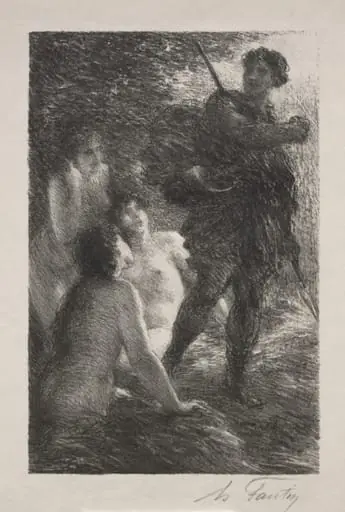 Twilight of the Gods, Act III: Sigfried and the Rhine Maidens
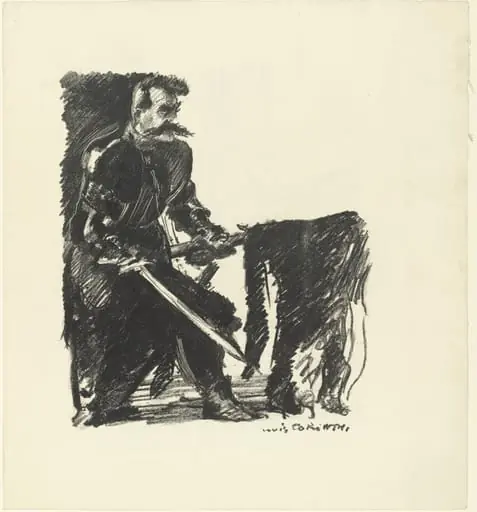 Untitled
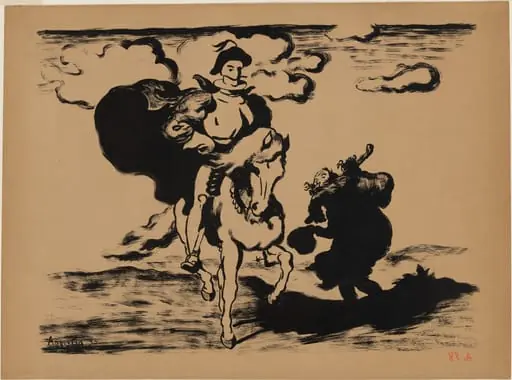 The Horseman and the Beggar (Le Cavalier et le mendiant)
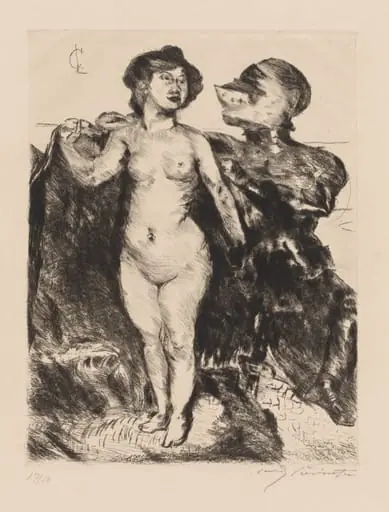 Perseus and Andromeda
 Der Ritter (The Knight)