Artwork
Perseus and Andromeda
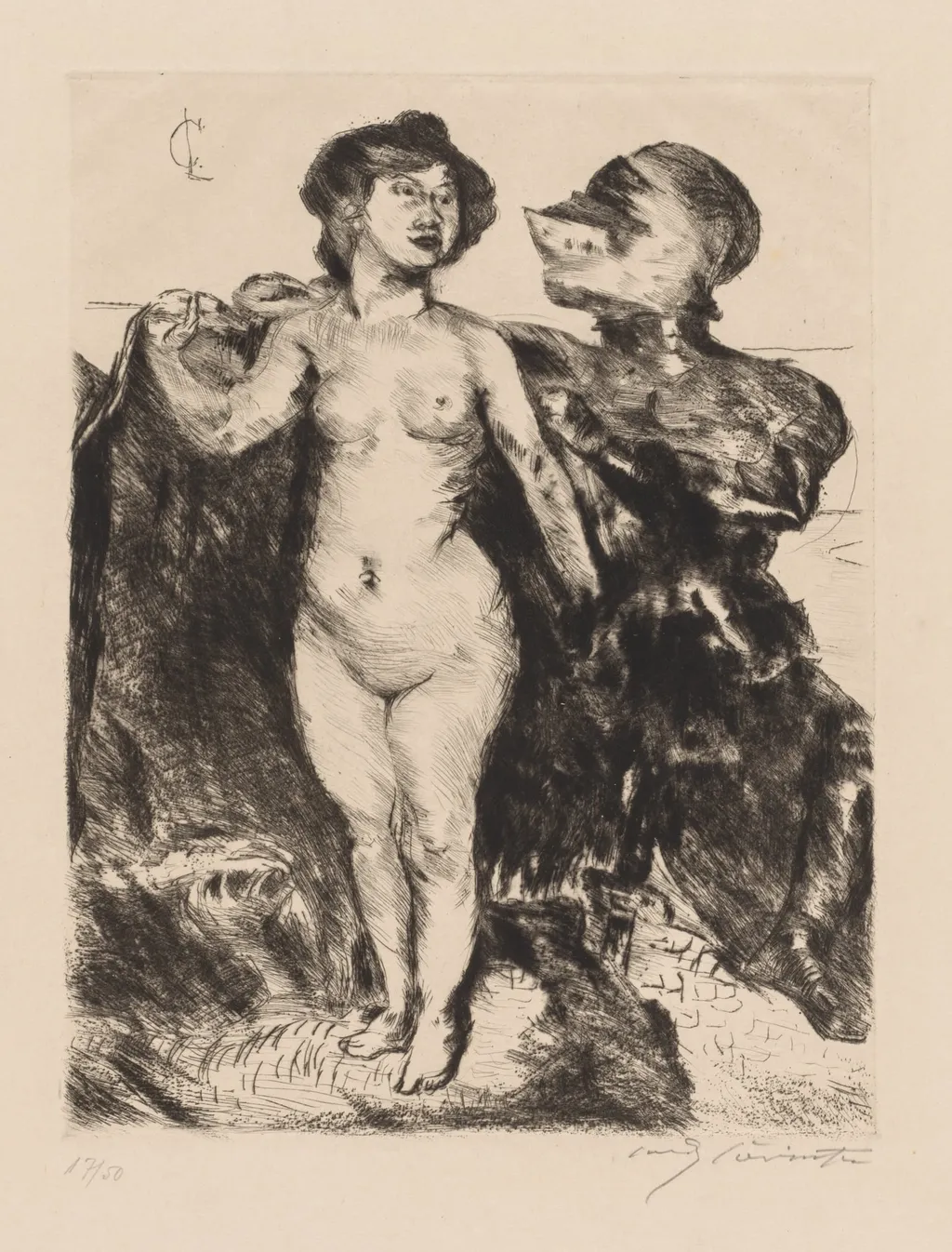
Perseus and Andromeda is a print by Lovis Corinth. It dates from 1920 and is held in the collection of the Cleveland Museum of Art.
About this work
Overview
Though labeled a painting in some sources, it is a drawn composition on paper, held in the collection of The Cleveland Museum of Art.
Created in 1920, this ink and wash drawing by Lovis Corinth depicts the mythological moment of Perseus rescuing Andromeda. Executed with rapid, expressive strokes, the work captures a fleeting, emotionally charged encounter. Though labeled a painting in some sources, it is a drawn composition on paper, held in the collection of The Cleveland Museum of Art. Its unfinished quality emphasizes immediacy over polish.
Subject & Meaning
The scene illustrates the Greek myth in which Perseus saves Andromeda from a sea monster, here shown just after his arrival. Andromeda, bound and exposed, braces against impending release, while Perseus, cloaked and face obscured, stands as an anonymous savior. The tension lies not in action but in anticipation—the moment before liberation, rendered with psychological weight rather than narrative clarity.
Technique & Style
Corinth employed loose, energetic lines and stark contrasts of light and dark to model form. The figures emerge from a near-white ground through layered washes and scratchy contours, with areas left deliberately bare to suggest volume and atmosphere. The rough handling conveys urgency, aligning with Expressionist tendencies that prioritized emotional resonance over refined detail.
History & Provenance
The work entered The Cleveland Museum of Art’s collection in the 20th century, though its exact provenance prior to acquisition remains undocumented. Created during Corinth’s later years, it reflects his continued engagement with classical themes despite shifting artistic trends. No record indicates it was exhibited publicly before its museum acquisition.
Context
Painted in the aftermath of World War I, the drawing reflects a broader cultural preoccupation with vulnerability and rescue. Corinth, recovering from a stroke, returned to mythological subjects as a means of processing trauma. The fragmented style mirrors the fractured emotional landscape of postwar Europe, where traditional narratives were reexamined through a lens of raw human experience.
Legacy
This drawing exemplifies Corinth’s late style—unpolished, emotionally direct, and formally experimental. It stands as a quiet counterpoint to more monumental treatments of the same myth, offering a psychological portrait rather than a heroic tableau. Its presence in a major American museum underscores its role in expanding perceptions of myth in modern art.
Artist & collection

Artist
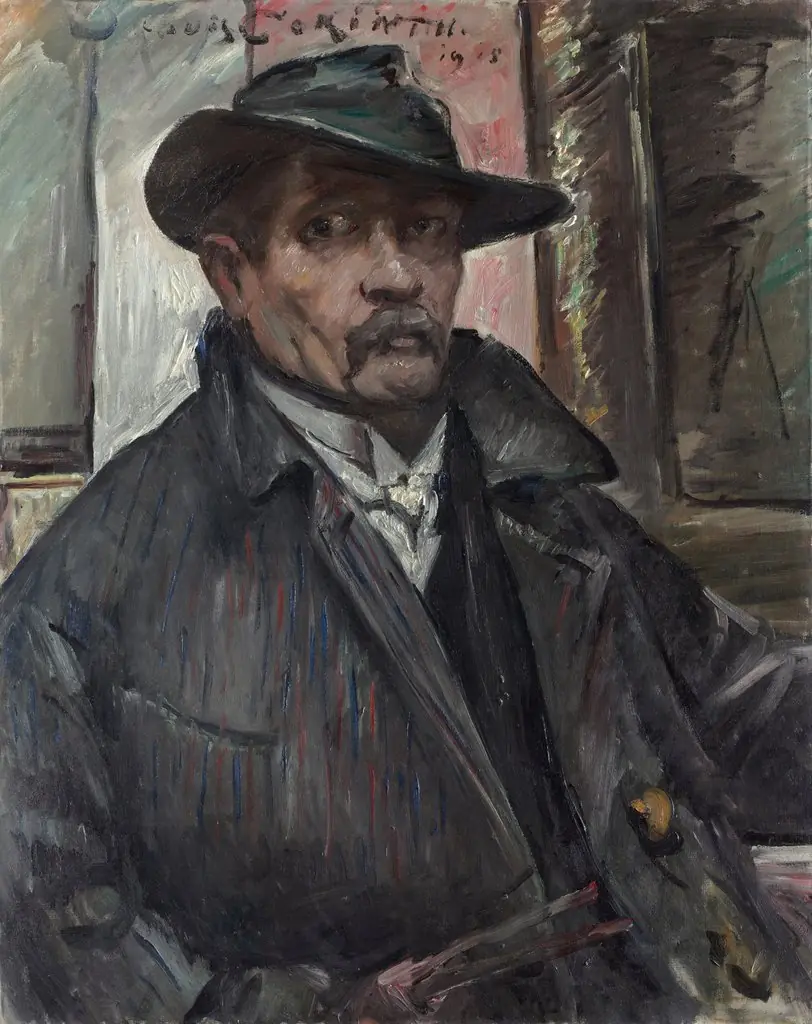
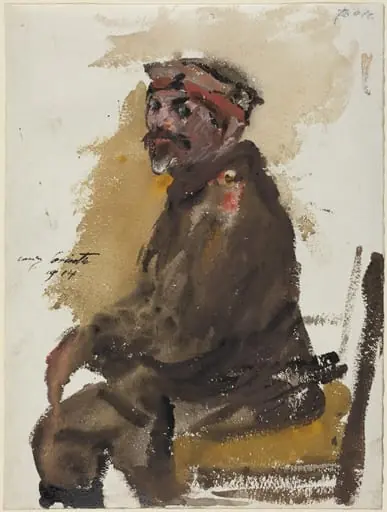
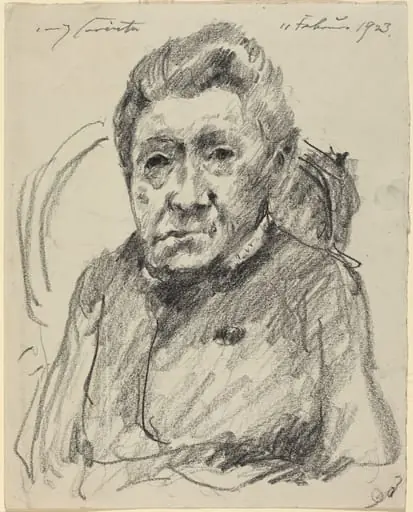
Lovis Corinth was a German artist and writer whose mature work as a painter and printmaker realized a synthesis of impressionism and expressionism.

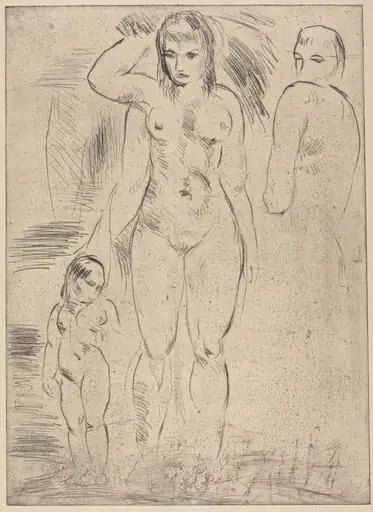 Woman and Child (Weib und Kind)
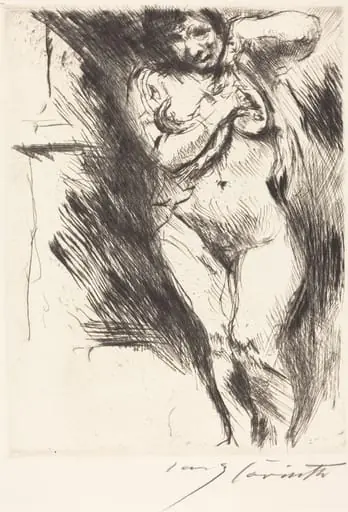 Akt mit hochgehobenem Hemd (Woman Undressing)
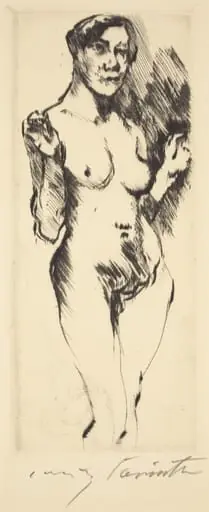 Stehende Weibliche akte (Standing Female Nude)
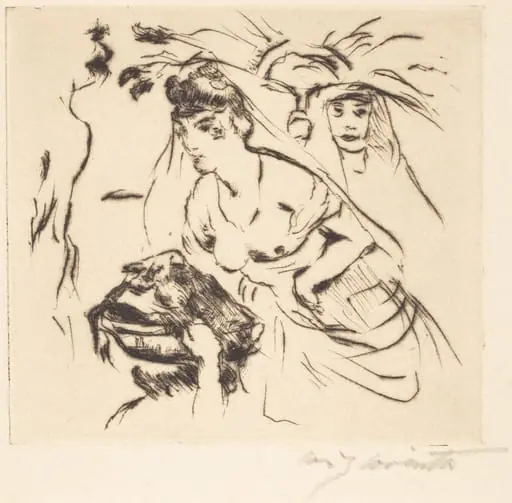 Salome
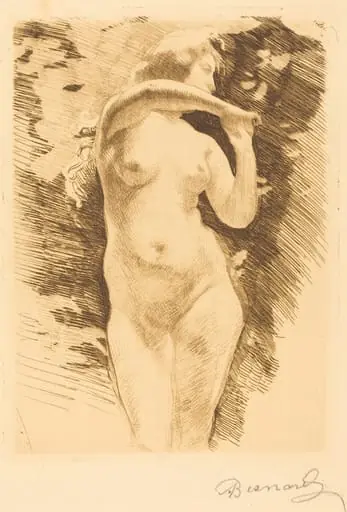 Eve
Eve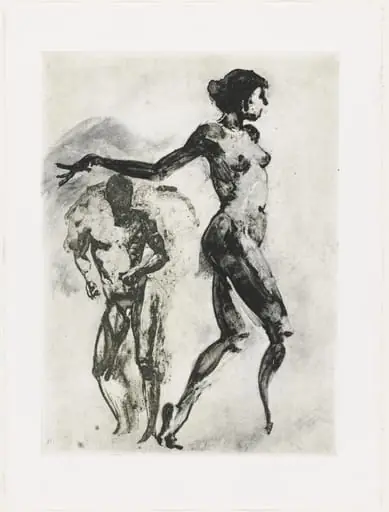 Untitled
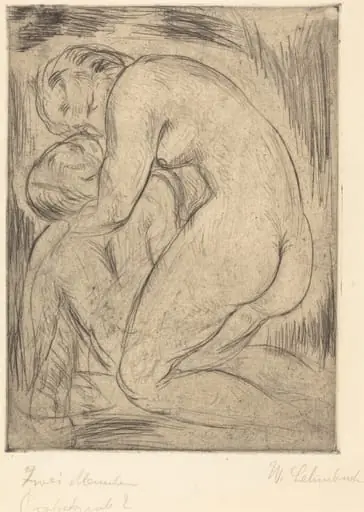 The Dead Man (Der tote Mann)
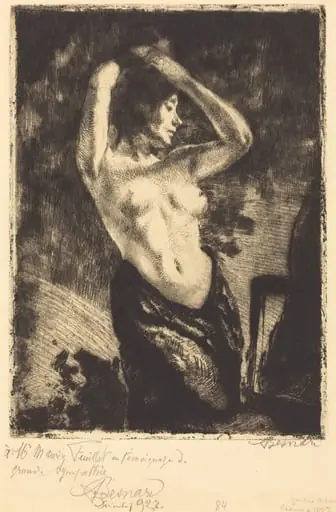 Nude with Her Arms Raised (Le modèle nue les bras levés)
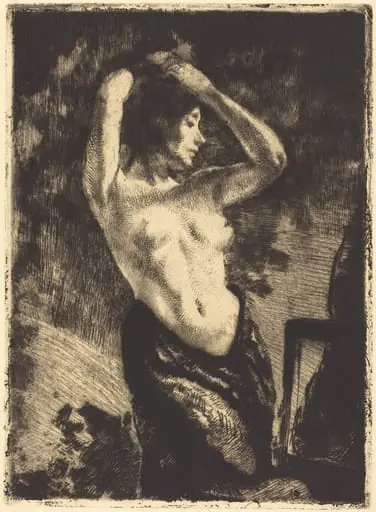 Nude with Her Arms Raised (Le modèle nue les bras levés)
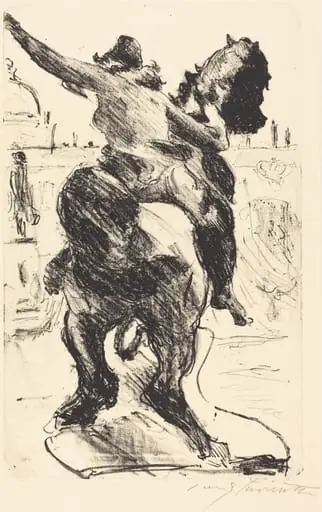 Amazonenstatue auf der Freitreppe des Alten Museums (Statue of an Amazon at the Alte Museum)