Artwork
Pietà
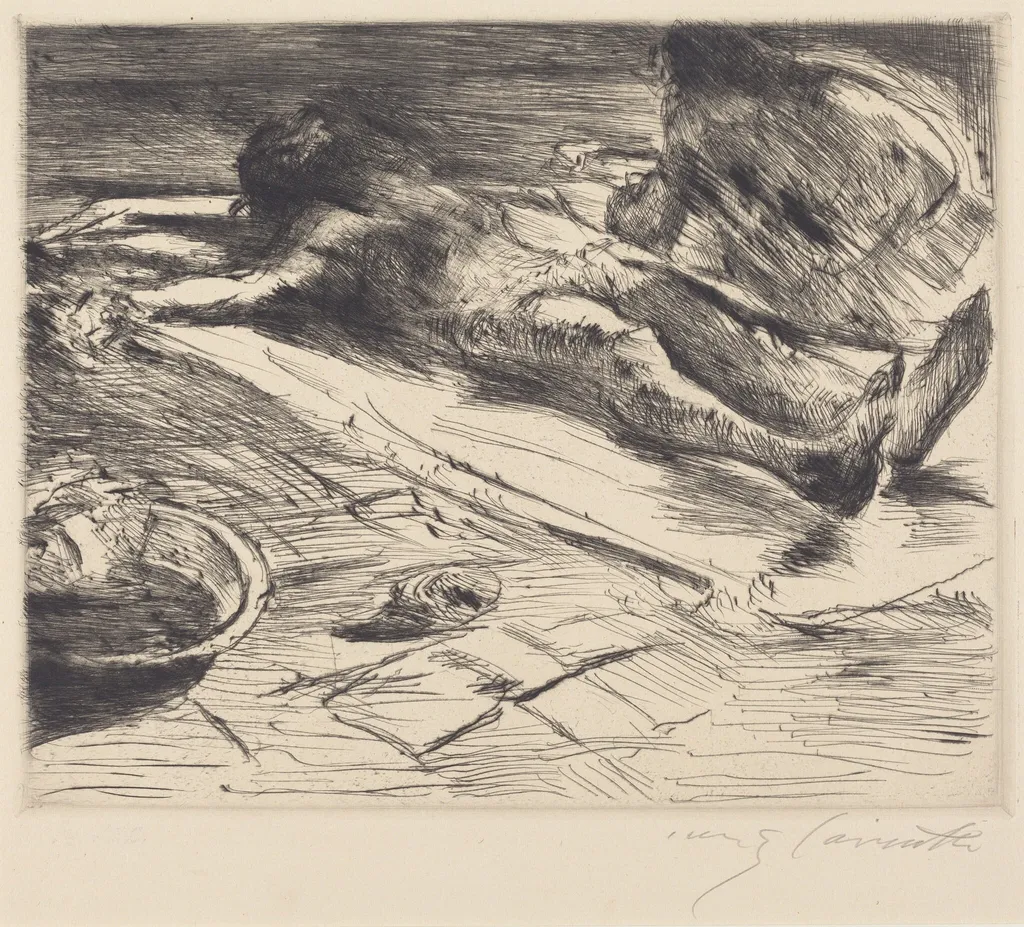
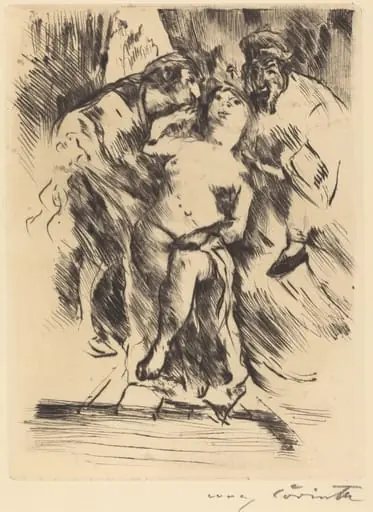
Pietà is an ink print by Lovis Corinth. It dates from 1920 and is held in the collection of the National Gallery of Art.
About this work
Overview
Lovis Corinth’s 1920 drypoint print titled *Pietà* presents a stark, black‑on‑paper rendition of the biblical scene of Mary cradling the dead Christ. Executed on wove paper, the image is rendered entirely in drypoint, a printmaking method that yields deep, uneven lines. The composition is compact, focusing on the figures’ intertwined forms and the palpable sense of loss.
Subject & Meaning
The work portrays the Virgin Mary seated, swathed in a dark mantle, holding the limp body of Jesus after his removal from the cross. The starkness of the ink and the harshness of the lines convey an unflinching grief, emphasizing the physical weight of death rather than a consoling spirituality. The empty gaze of Christ and the tight grip of Mary intensify the emotional charge.
Technique & Style
Corinth employed drypoint, incising the image directly into the paper’s surface, which leaves a characteristic burr that produces a rough, velvety line.
Corinth employed drypoint, incising the image directly into the paper’s surface, which leaves a characteristic burr that produces a rough, velvety line. This method creates a tactile, scratchy quality that reinforces the work’s raw emotional tone. The print reflects Corinth’s post‑stroke shift toward expressionism, favoring stark contrasts and vigorous line work over the softer modeling of his earlier impressionist phase.
History & Provenance
Created shortly after Corinth’s 1911 stroke, the *Pietà* exemplifies his later period, during which he presided over the Berlin Secession. While specific ownership records are limited, the print has been catalogued among Corinth’s graphic oeuvre and appears in several scholarly surveys of early‑20th‑century German printmaking, underscoring its relevance to his artistic development.
Artist & collection

Artist
Lovis Corinth was a German artist and writer whose mature work as a painter and printmaker realized a synthesis of impressionism and expressionism.

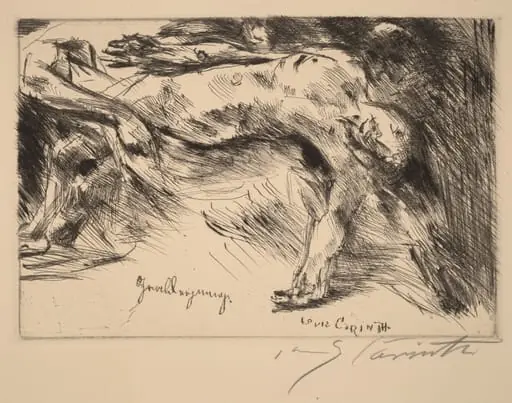 Grablegung (Burial)
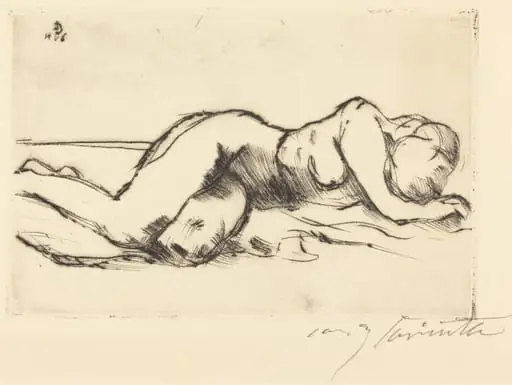 Weiblicher Akt (Female Nude)
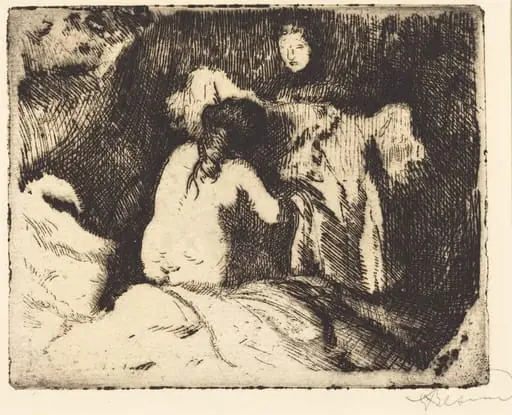 Getting Up (Le lever)
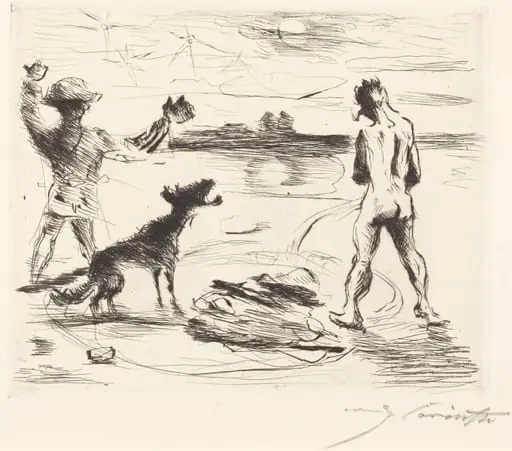 Das Gastmahl des Trimalchio: pl. VII (The Banquet of Trimalchio: pl. VII)
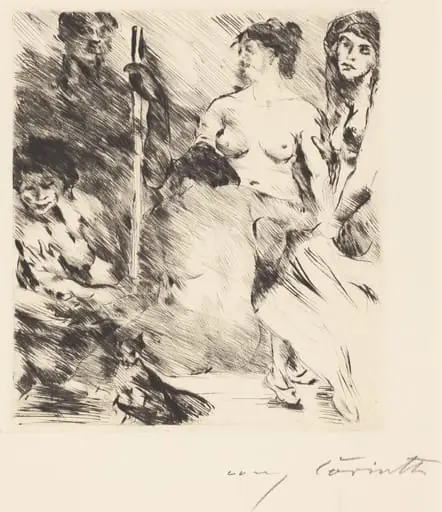 Der Harem (The Harem)
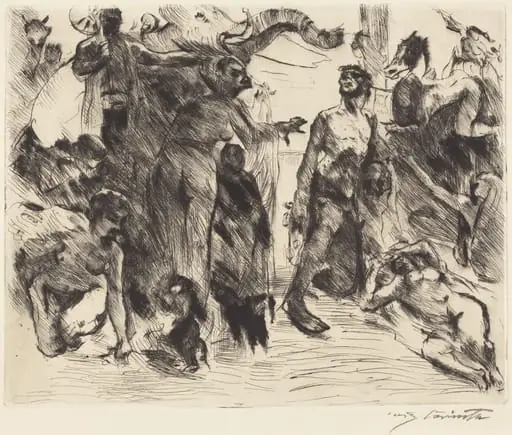 Die Versuchung des heiligen Antonius (The Temptation of Saint Anthony)
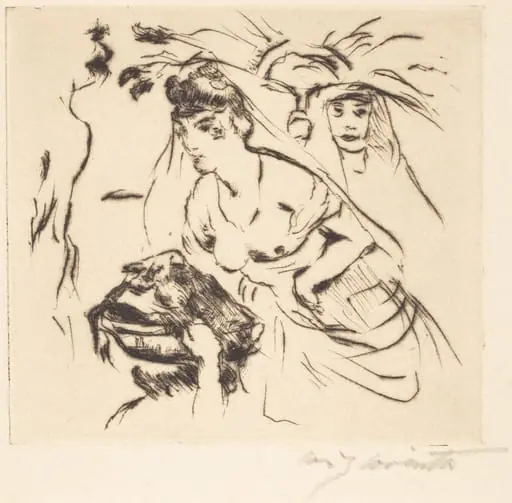 Salome
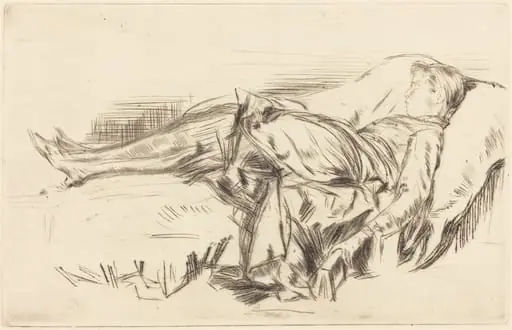 A Child on a Couch, No.2
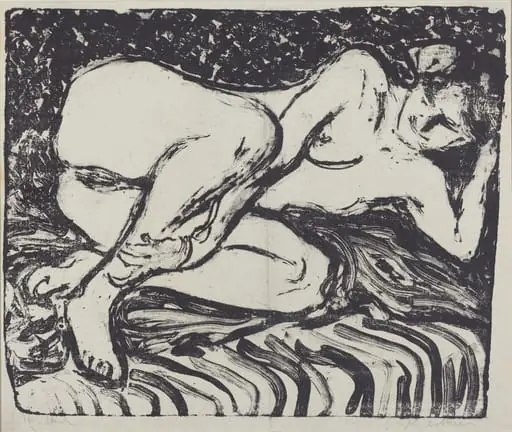 Reclining Nude
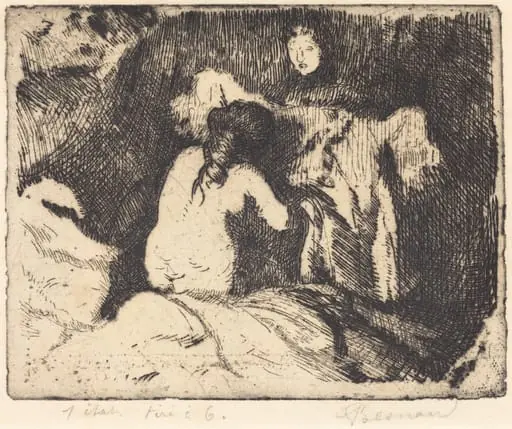 Getting Up (Le lever)
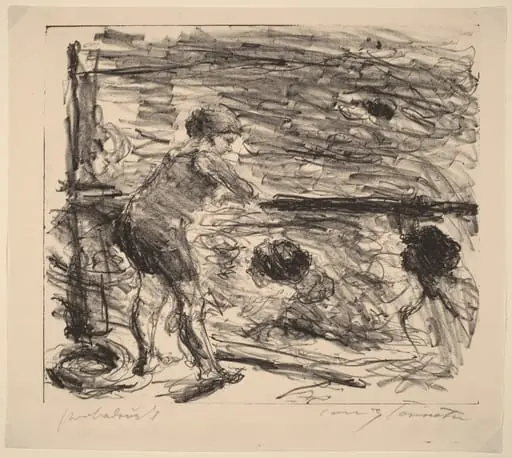 Badeanstalt (The Bath House)
 Susanna im Bade (Susanna in the Bath)