Artwork
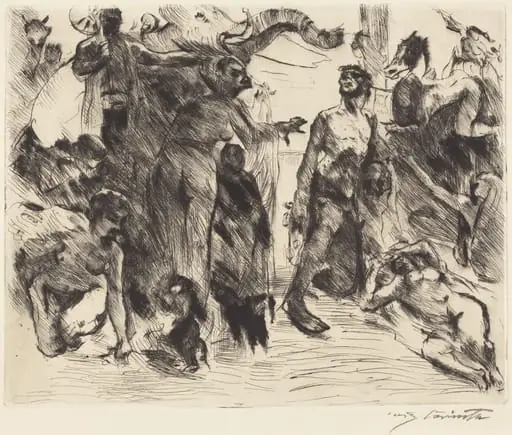
Das Gastmahl des Trimalchio: pl. VII (The Banquet of Trimalchio: pl. VII)
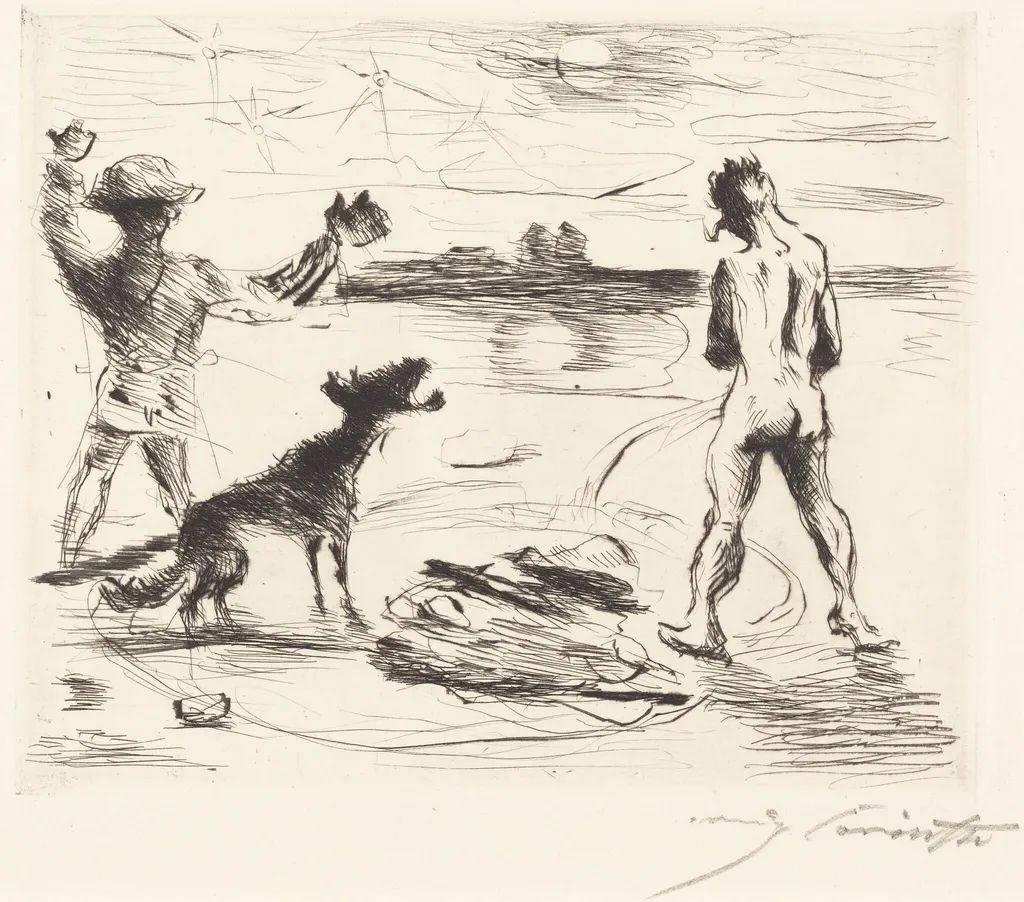
Das Gastmahl des Trimalchio: pl. VII (The Banquet of Trimalchio: pl. VII) is an ink print by Lovis Corinth. It dates from 1919 and is held in the collection of the National Gallery of Art. Created in 1919, *Das Gastmahl des Trimalchio: pl.
About this work
Overview
Executed in black ink on plain wove paper, the work is part of a series inspired by Petronius’s *Satyricon*.
Created in 1919, *Das Gastmahl des Trimalchio: pl. VII* is a drypoint print by German artist Lovis Corinth. Executed in black ink on plain wove paper, the work is part of a series inspired by Petronius’s *Satyricon*. Corinth, who had transitioned from naturalism to a more expressive style after a stroke in 1911, used the drypoint technique to produce bold, gestural lines that convey movement and immediacy rather than refined detail.
Subject & Meaning
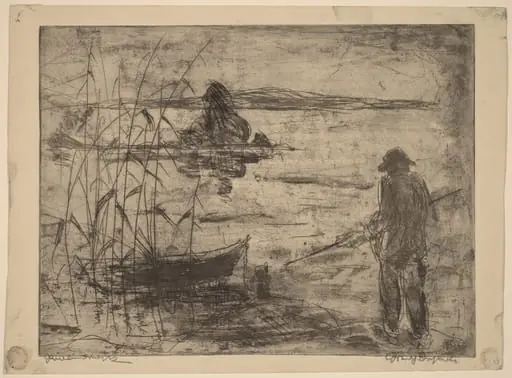
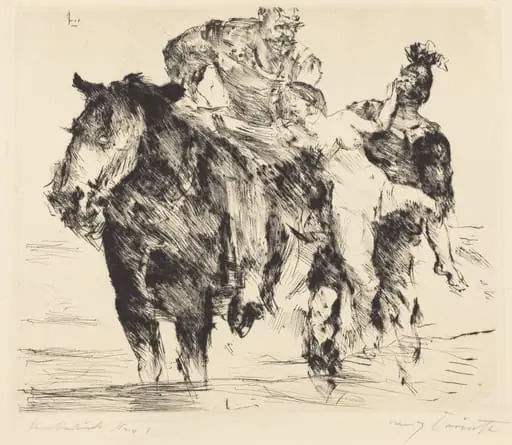
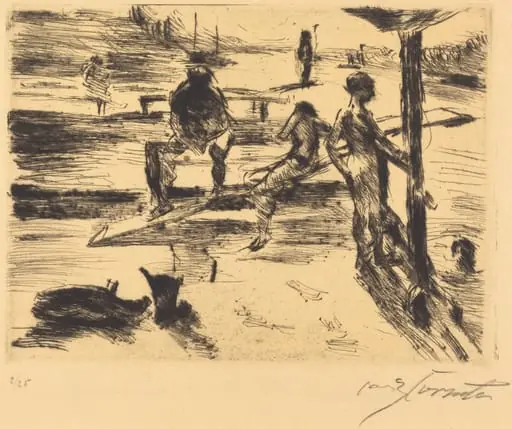
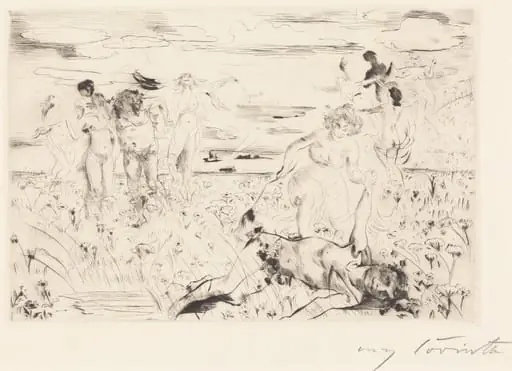
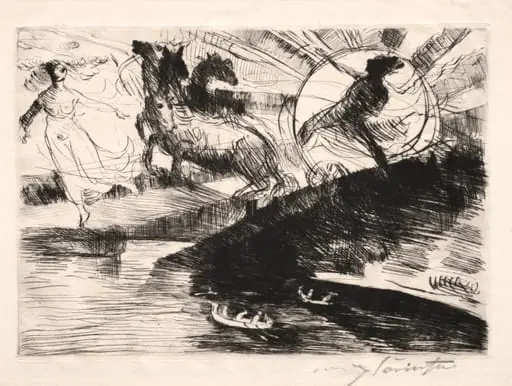
The scene references Trimalchio’s lavish feast from the ancient Roman satire, though this plate focuses on a quieter moment: two figures walking with a dog, one barefoot, the other wearing a hat. A boat appears in the distance, suggesting movement beyond the banquet’s excess. Corinth’s choice to depict this peripheral moment may reflect a shift from spectacle to human fragility, aligning with his post-stroke interest in raw, unidealized life.
Technique & Style
Corinth employed drypoint, scratching directly into a metal plate to create rich, velvety lines that hold ink deeply. The resulting print features loose, urgent strokes—resembling quick sketches—that prioritize emotional resonance over precision. The stark contrast between the black ink and untoned paper amplifies the spontaneity of the marks, characteristic of his expressionist phase, where form was shaped by gesture rather than anatomical accuracy.
History & Provenance
The print was made in 1919, during Corinth’s mature period, following his 1911 stroke and his leadership of the Berlin Secession. It belongs to a suite of prints interpreting *Satyricon*, a project that occupied him in his final years. While specific early ownership records are sparse, the work is held in major print collections, reflecting its recognition as a significant example of early 20th-century German printmaking.
Context
Corinth’s engagement with classical literature in this series coincided with postwar Germany’s cultural reckoning. His reinterpretation of Trimalchio’s banquet—once a symbol of decadence—gained new resonance amid societal collapse and shifting values. The expressive looseness of his technique mirrored a broader artistic turn away from prewar order toward emotional authenticity and fragmented perception.
Legacy
This print exemplifies Corinth’s late style: unpolished, psychologically charged, and rooted in direct observation. Though less known than his paintings, his graphic works influenced later expressionist printmakers through their emphasis on tactile mark-making and emotional immediacy. The *Trimalchio* series remains a key link between classical narrative and modernist experimentation in German art.
Own this work as a print
Artist & collection

Artist
Lovis Corinth was a German artist and writer whose mature work as a painter and printmaker realized a synthesis of impressionism and expressionism.