Artwork
The Fall of Man (Der Sündenfall)
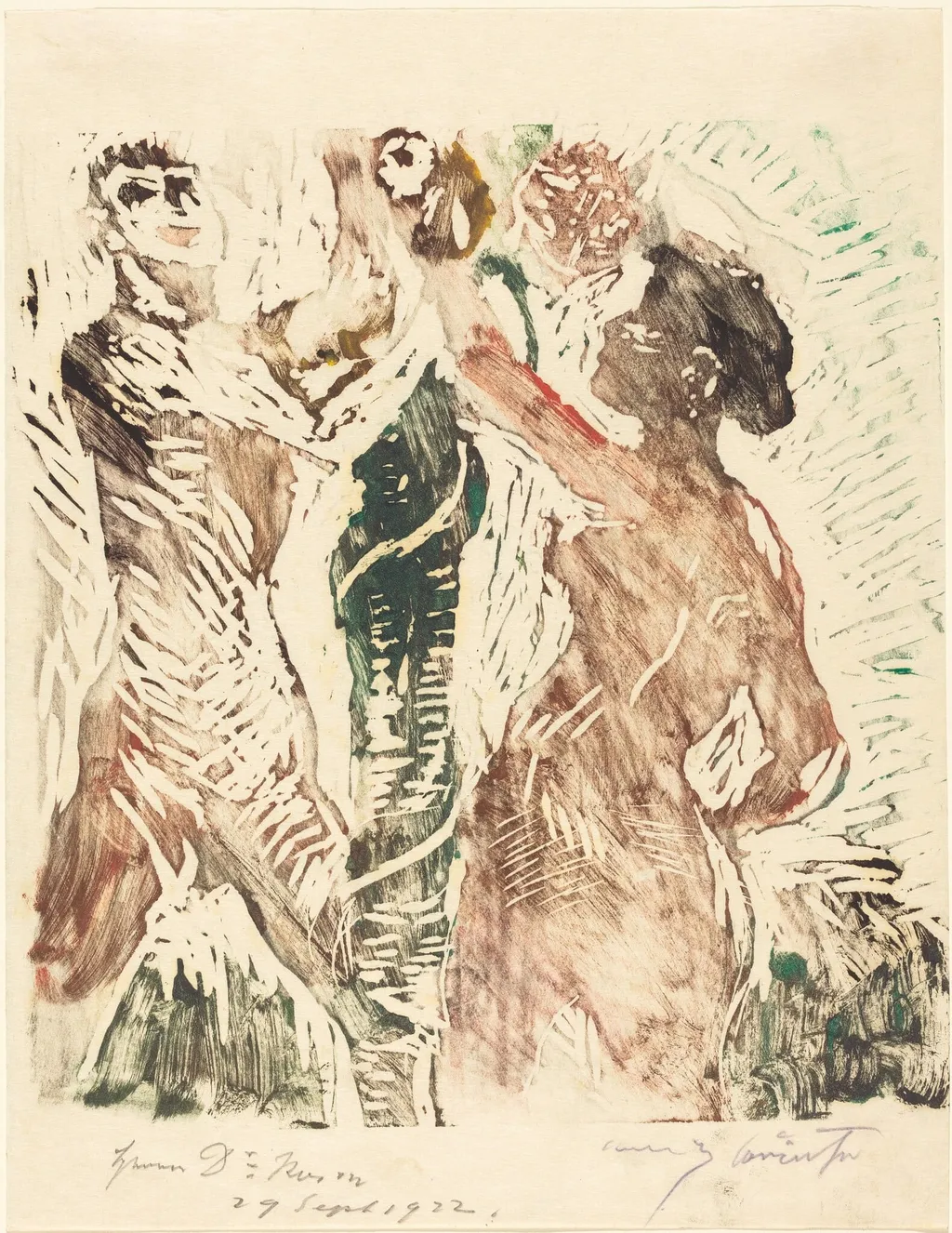
The Fall of Man (Der Sündenfall) is an ink print by Lovis Corinth. It dates from 1919 and is held in the collection of the National Gallery of Art.
About this work
Overview
The work presents a compact scene of two figures pressed together, their faces indistinct, rendered with rough, uneven lines that suggest a hurried sketch.
Created in 1919, *The Fall of Man (Der Sündenfall)* is a color woodcut printed on wove paper. The work presents a compact scene of two figures pressed together, their faces indistinct, rendered with rough, uneven lines that suggest a hurried sketch. The composition captures the moment of Adam and Eve’s removal from Eden, using stark contrast between a dark coat and a lighter dress accented with a red stripe.
Subject & Meaning
The image interprets the biblical narrative of humanity’s expulsion from paradise. By obscuring the faces and emphasizing the bodies’ close proximity, the print underscores the shared vulnerability and loss experienced by the first humans. The limited palette and abrupt line work convey a sense of abrupt disruption, aligning the visual tension with the theological theme of original sin.
Technique & Style
Corinth employed a traditional woodcut process, carving the design into a block and pressing ink into the recessed areas before transferring it to paper. The print is distinguished by a unique inking method that yields uneven, jagged edges, enhancing the work’s expressive quality. The overall style reflects Corinth’s post‑stroke shift toward expressionism, marked by bold coloration and a looser, more gestural handling of form.
History & Provenance
German artist Lovis Corinth, trained in Paris and Munich, produced the piece after assuming leadership of the Berlin Secession. The work follows his 1911 stroke, a turning point that intensified his expressionist tendencies. While the exact ownership trail is not fully documented, the print remains associated with Corinth’s late period output and is cited in catalogues of his printmaking.
Context
The print emerges from a period when Corinth blended impressionist sensitivity with expressionist vigor, reflecting broader shifts in early‑20th‑century German art. Its biblical subject aligns with a renewed interest among artists in reinterpreting classic narratives through modern visual languages, while the woodcut medium connects to a revival of print techniques championed by the Secessionist movement.
Own this work as a print
Artist & collection

Artist
Lovis Corinth was a German artist and writer whose mature work as a painter and printmaker realized a synthesis of impressionism and expressionism.

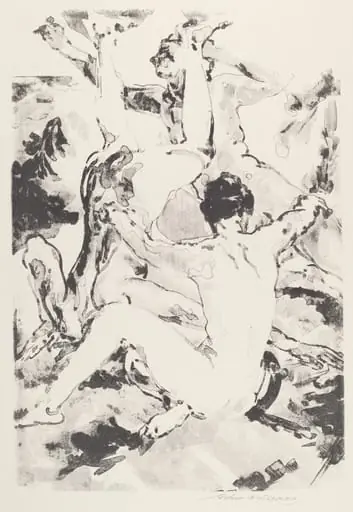 Three Acrobats
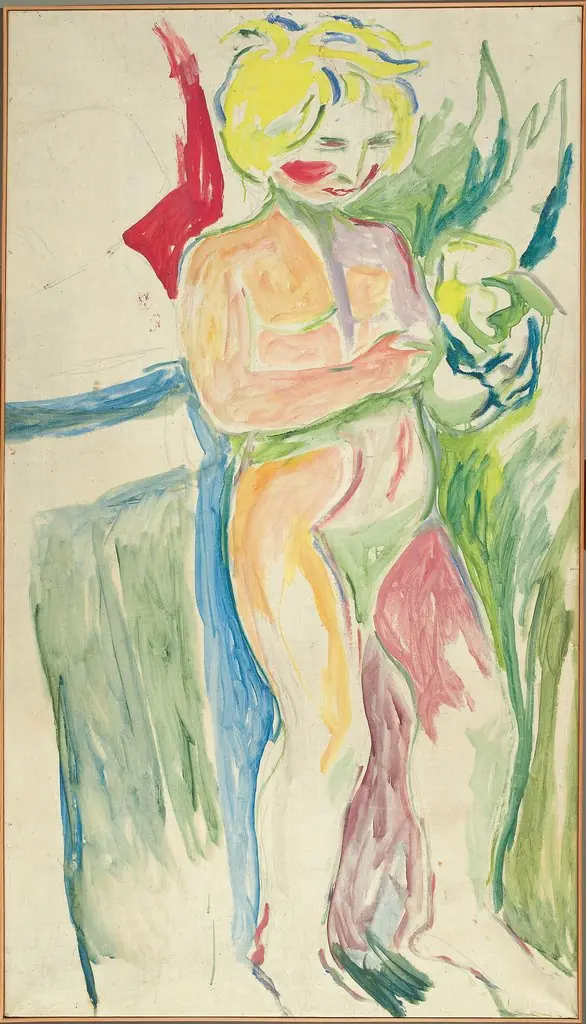 Alma Mater: Standing Child
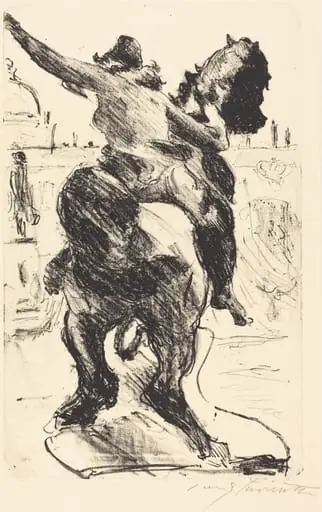 Amazonenstatue auf der Freitreppe des Alten Museums (Statue of an Amazon at the Alte Museum)
 Untitled
 Chemistry
 The Human Mountain: Right Part
 Figures of Earth
 Release at the Gates
 Release at the Gates
 Astronomy
 Naked Couple on the Beach
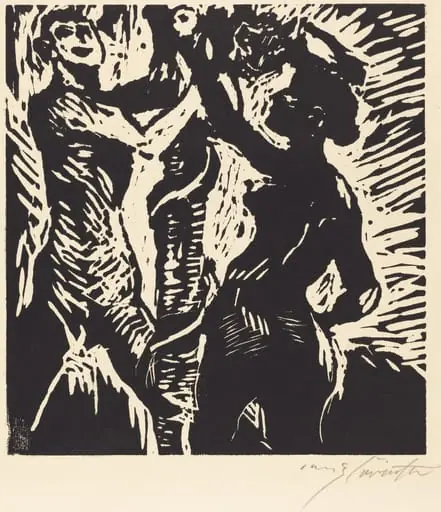 The Fall of Man (Der Sündenfall)