Artwork
Versöhnung (The Reconciliation)
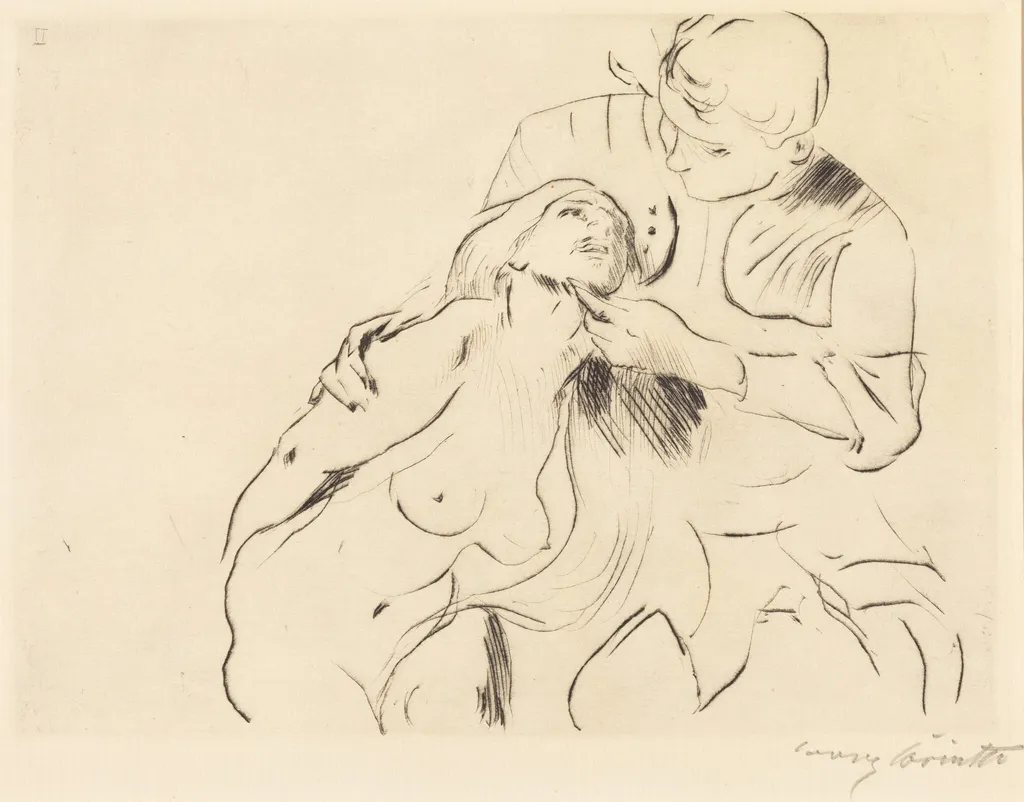
Versöhnung (The Reconciliation) is an ink print by Lovis Corinth. It dates from 1914 and is held in the collection of the National Gallery of Art.
About this work
Overview
Versöhnung (The Reconciliation) is a 1914 drypoint print by German artist Lovis Corinth, executed in black ink on Van Gelder Zonen laid paper. Characterized by loose, expressive lines and hatching, the monochrome work captures a tender moment between two nude figures in a warm embrace.
Subject & Meaning
The print depicts an intimate scene of two nude figures embracing, one kneeling and the other leaning in closely, with heads nearly touching. The emphasis on movement and emotional connection suggests a focus on the reconciliation or union implied by the title.
Technique & Style
Created using drypoint, the work features Corinth's mature style, marked by loose, quick lines and selective hatching to indicate shadows. Despite the monochrome execution, the technique conveys a sense of urgency and spontaneity, with simple shapes prioritizing the emotional dynamic over detailed realism.
History & Provenance
Produced in 1914, Versöhnung reflects Corinth's post-1911 style, which shifted toward a more expressive and impulsive approach following a stroke. This period saw him synthesizing elements of impressionism and expressionism, despite the naturalistic beginnings of his career.
Context
Corinth's artistic evolution was influenced by his training in Paris and Munich, and his later leadership in the Berlin Secession. Versöhnung embodies the expressive tendencies of his later work, contrasting with his earlier naturalistic focus.
Legacy
As part of Corinth's later oeuvre, Versöhnung contributes to the broader legacy of early 20th-century German Expressionism, highlighting the artist's capacity to convey deep emotional resonance through simplified, expressive forms.
Artist & collection

Artist
Lovis Corinth was a German artist and writer whose mature work as a painter and printmaker realized a synthesis of impressionism and expressionism.

 The Dead Man (Der tote Mann)
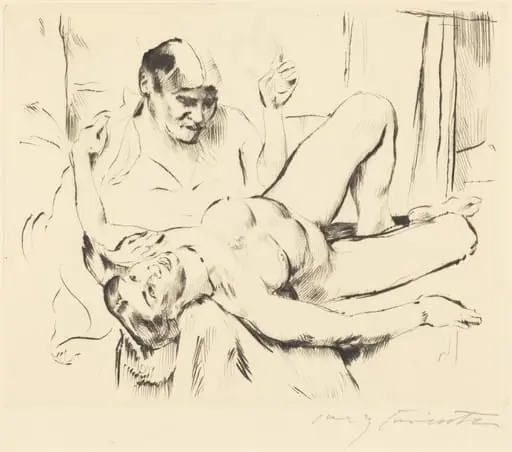 Weissagung (Prophecy)
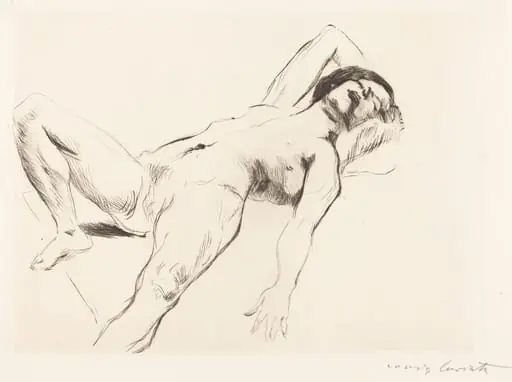 Liegender Weiblicher Akt I (Reclining Female Nude I)
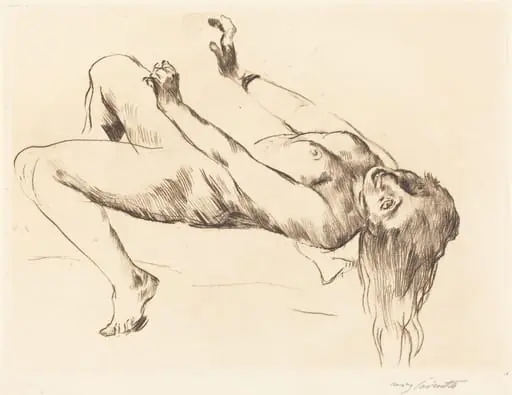 Liegender Weiblicher Akt.—Studie zu "Joseph und Potiphar" (Reclining Female Nude—Study for "Joseph and Potiphar's Wife")
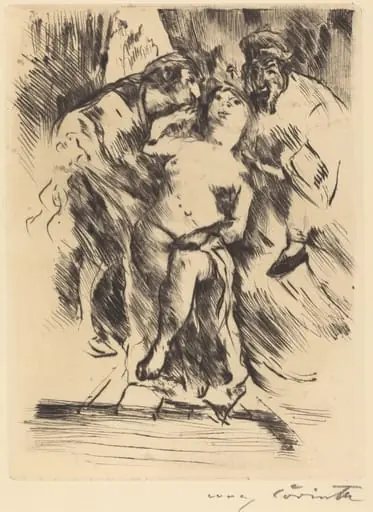 Susanna im Bade (Susanna in the Bath)
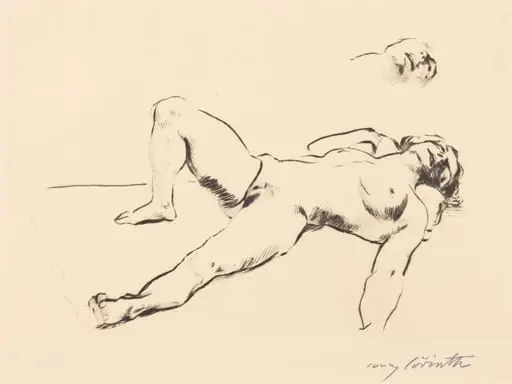 Liegender Weiblicher Akt II (Reclining Female Nude II )
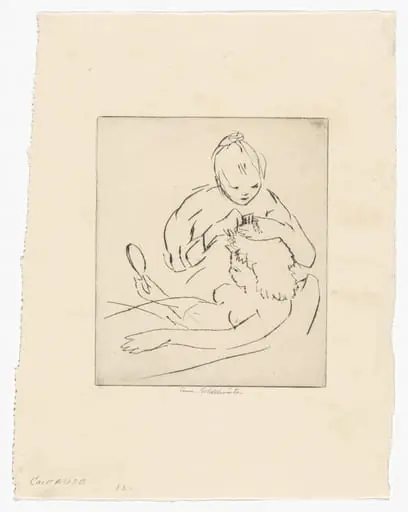 Untitled
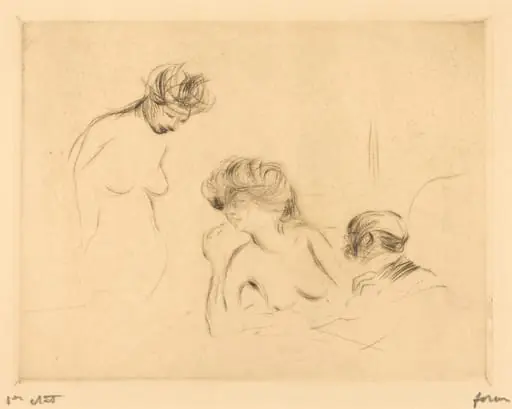 En cabinet particulier (3e planche) (In a Private Room) (third plate)
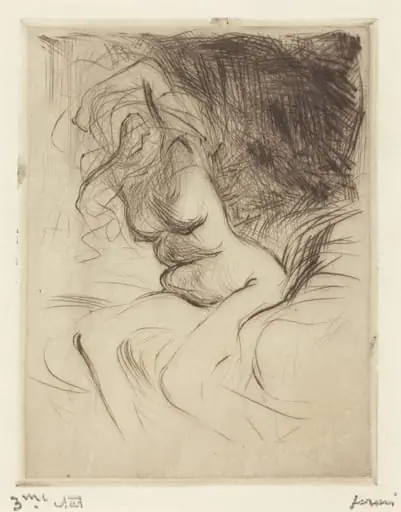 Femme nue passant sa chemise (Nude Woman Taking Off Her Chemise)
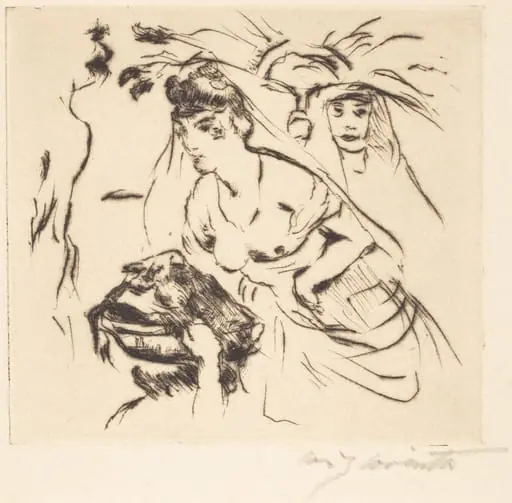 Salome
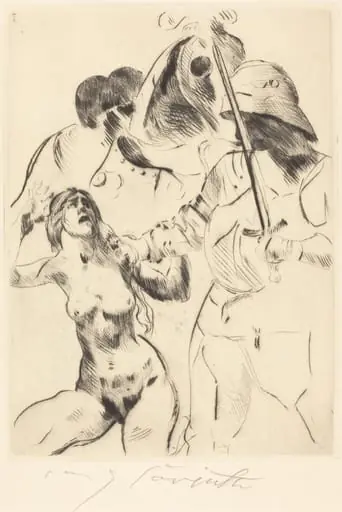 Frauenraub III (Abduction III)
 Le gros cigare (The Big Cigar)