Artwork
Weissagung (Prophecy)
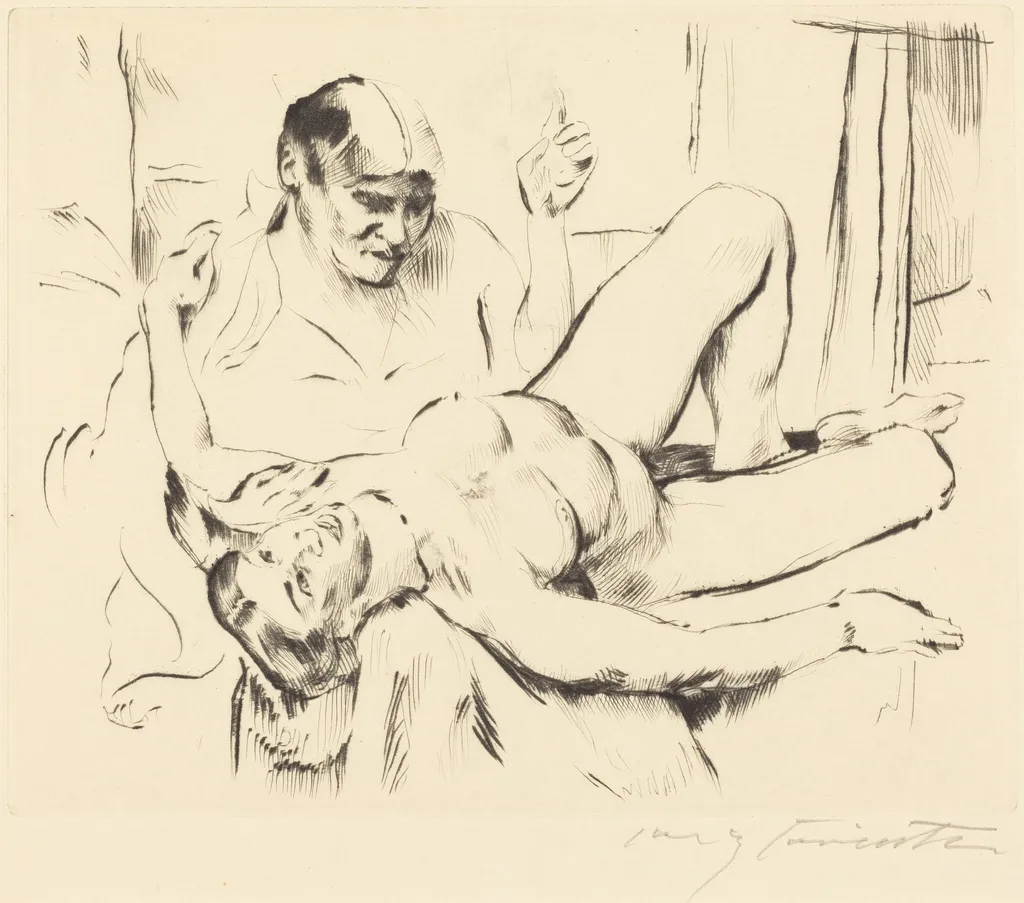
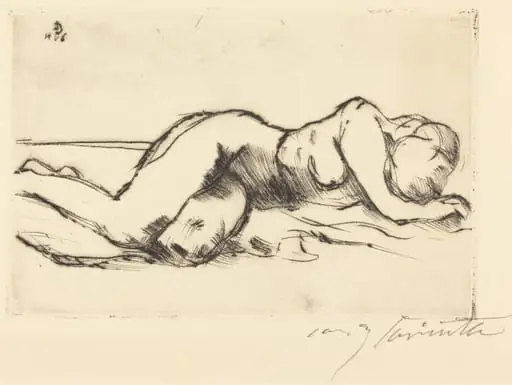
Weissagung (Prophecy) is an ink print by Lovis Corinth. It dates from 1914 and is held in the collection of the National Gallery of Art.
About this work
The man is dressed in a simple tunic and has his right hand raised, as if he is about to touch the woman.
This painting shows a nude woman lying on her back, with a man standing over her. The woman's body is relaxed, with her arms at her sides and her legs slightly bent. The man is dressed in a simple tunic and has his right hand raised, as if he is about to touch the woman.
The scene is depicted in a simple, yet expressive style, with bold lines and minimal shading. The artist has used a limited color palette, with shades of brown and black dominating the composition.
The painting is a drypoint in black on laid paper, created by Lovis Corinth in 1914. It is held at the National Gallery of Art, Washington. To learn more about the artist's use of chiaroscuro, a technique that uses strong contrasts of light and dark to create a sense of volume, look up Lovis Corinth.
Overview
Lovis Corinth’s 1914 drypoint titled *Weissagung* (Prophecy) presents a stark black-and-white composition on laid paper. Executed in a single medium—drypoint engraving—the work captures a nude female figure reclined on her back while a clothed male figure stands above her, hand raised. The image is held in the collection of the National Gallery of Art in Washington.
Subject & Meaning
The print depicts an intimate encounter: a relaxed woman lies with her arms at her sides and legs gently bent, while a man in a simple tunic hovers over her, his raised right hand suggesting an imminent gesture. The title “Prophecy” invites speculation about a narrative or symbolic reading, perhaps alluding to a moment of revelation or foretelling within the depicted scene.
Technique & Style
Corinth employed the drypoint method, incising lines directly into the surface of laid paper and printing them in deep black. The resulting image relies on bold, expressive lines and minimal shading, creating a stark contrast that emphasizes form over detail. A restrained palette of black and subtle brown tones underscores the work’s graphic intensity.
History & Provenance
Created shortly after Corinth’s 1911 stroke, *Weissagung* reflects the artist’s shift toward a more expressionist approach, merging his earlier naturalist training with heightened emotional line work. The print entered the National Gallery of Art’s holdings, where it remains part of the museum’s early‑20th‑century German print collection.
Context
By 1914, Corinth had become a leading figure in the Berlin Secession, advocating for artistic independence from academic conventions. His work from this period often blended impressionistic light effects with expressionist vigor, a synthesis evident in the stark, gestural quality of this drypoint.
Artist & collection

Artist
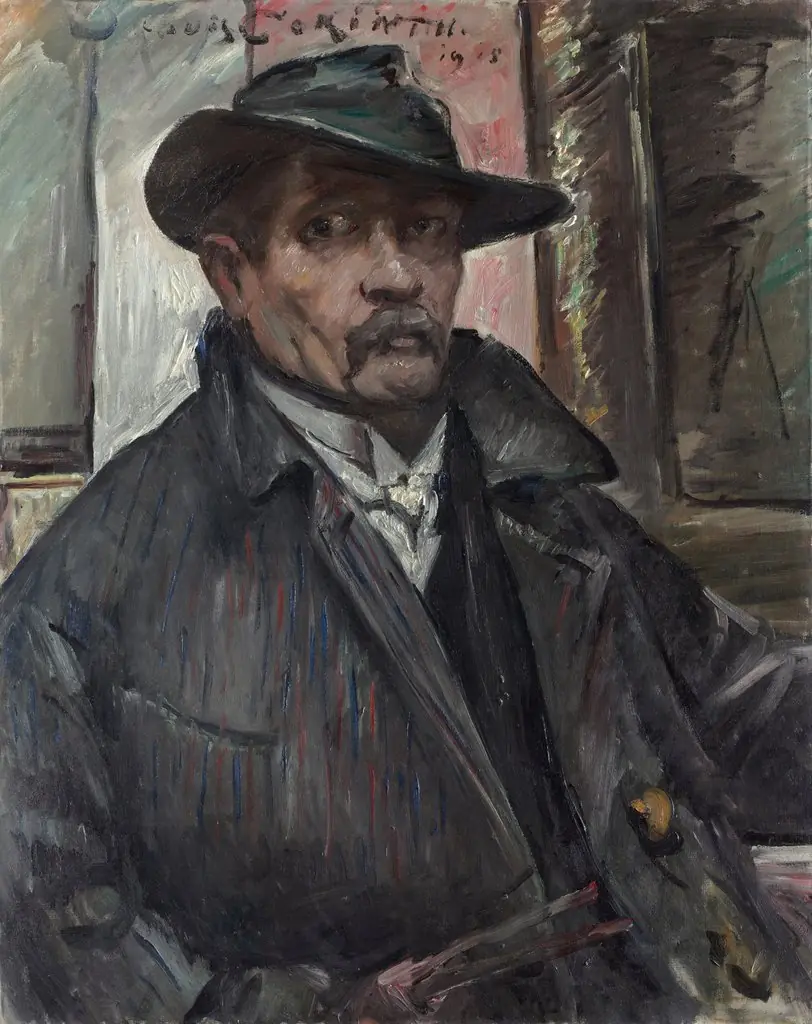
Lovis Corinth was a German artist and writer whose mature work as a painter and printmaker realized a synthesis of impressionism and expressionism.

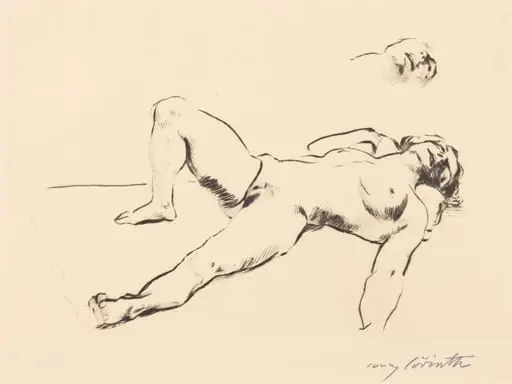 Liegender Weiblicher Akt II (Reclining Female Nude II )
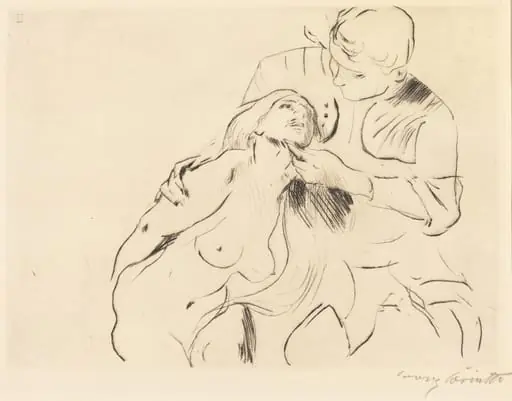 Versöhnung (The Reconciliation)
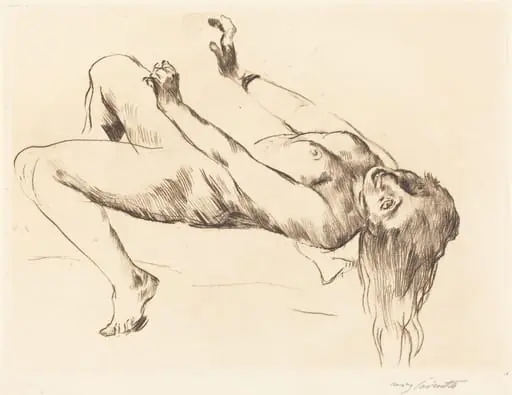 Liegender Weiblicher Akt.—Studie zu "Joseph und Potiphar" (Reclining Female Nude—Study for "Joseph and Potiphar's Wife")
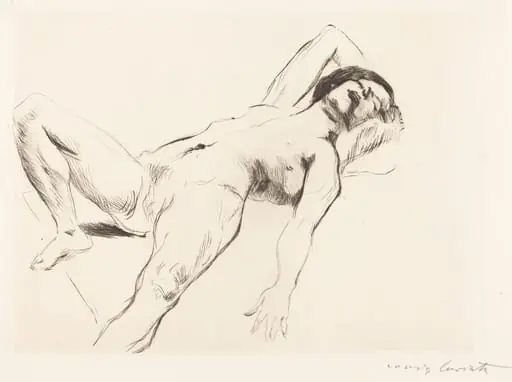 Liegender Weiblicher Akt I (Reclining Female Nude I)
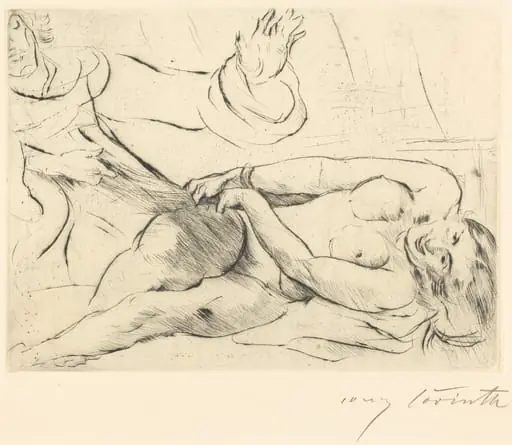 Joseph und Potiphars Weib II (Joseph and Potiphar's Wife II)
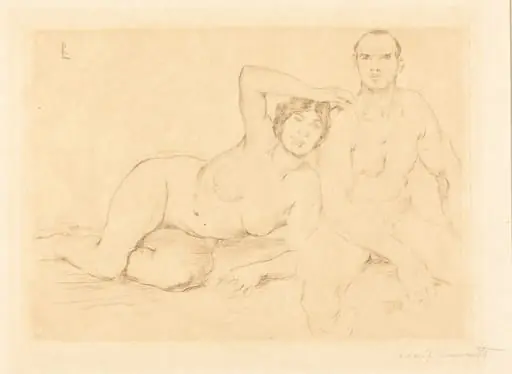 Zwei Menschen (Two Nudes)
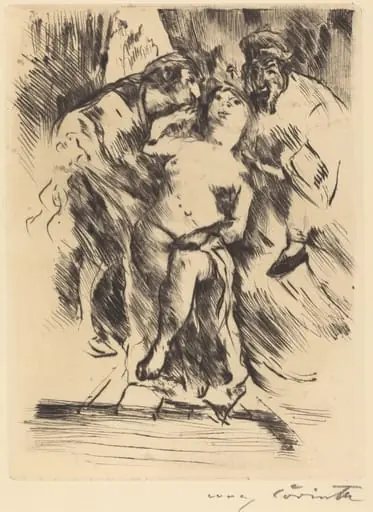 Susanna im Bade (Susanna in the Bath)
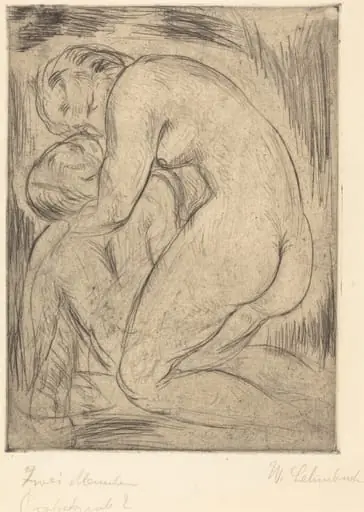 The Dead Man (Der tote Mann)
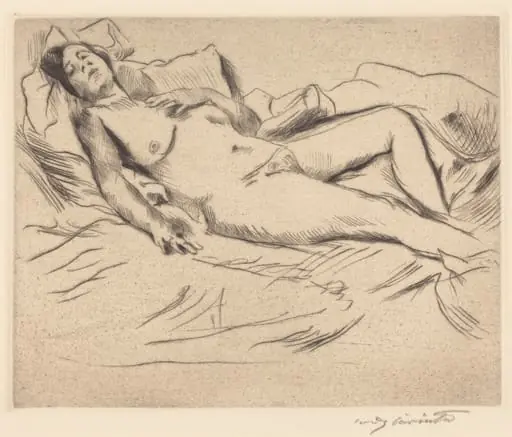 Schlafende (Sleeping Woman)
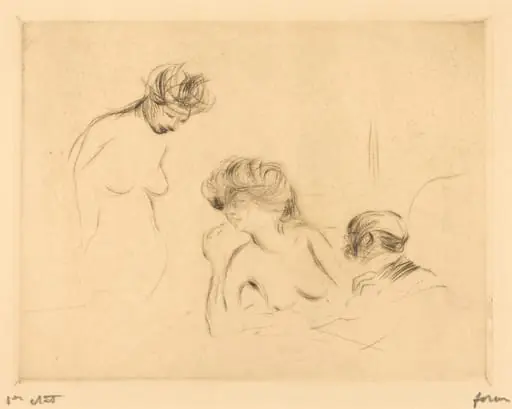 En cabinet particulier (3e planche) (In a Private Room) (third plate)
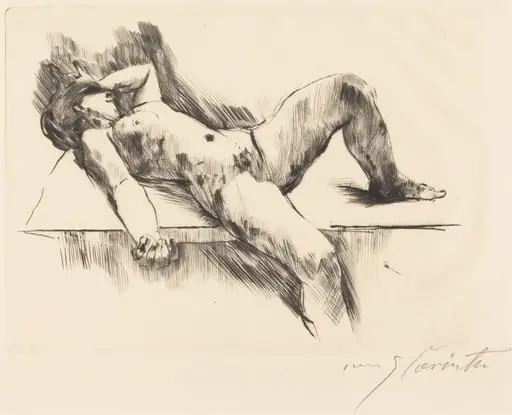 Liegender Weiblicher Akt III (Reclining Female Nude III )
 Weiblicher Akt (Female Nude)