Artwork
Verschiedene Bilnisstudien (Portrait Sketches)
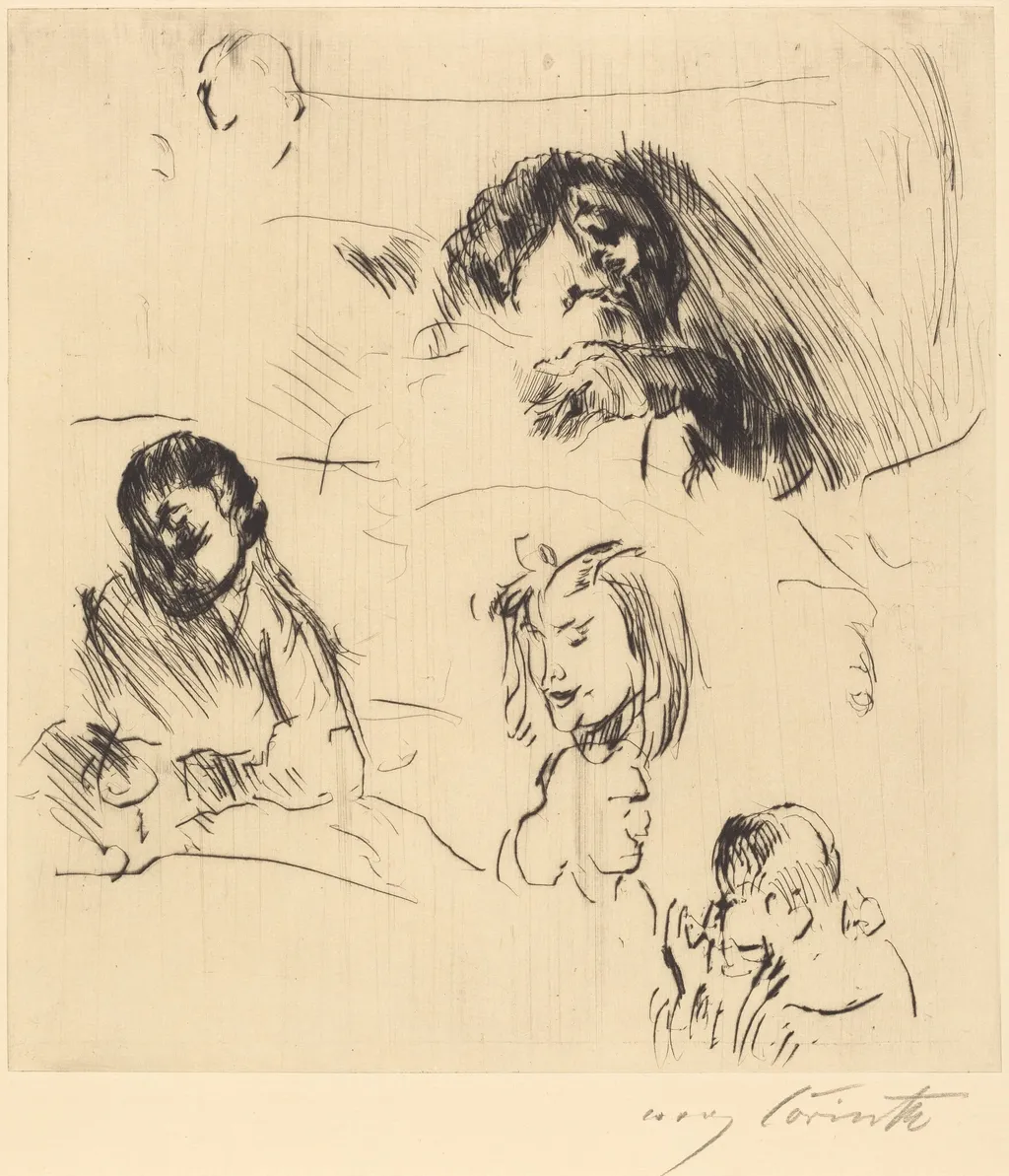
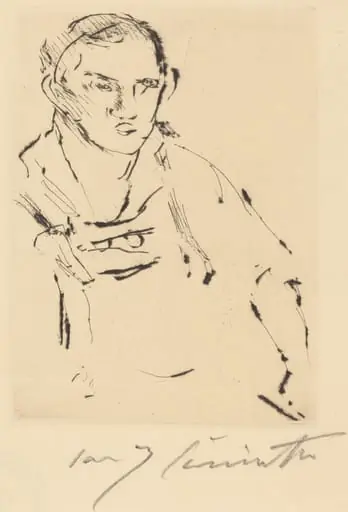
Verschiedene Bilnisstudien (Portrait Sketches) is an ink print by Lovis Corinth. It dates from 1920 and is held in the collection of the National Gallery of Art.
About this work
Overview
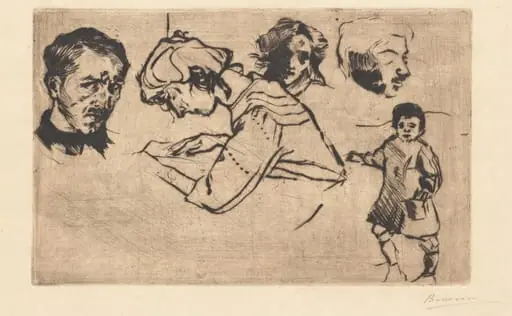
Verschiedene Bilnisstudien (Portrait Sketches) is a 1920 drypoint print on laid paper by Lovis Corinth, a German artist who bridged impressionism and expressionism. The work comprises four loose, sketchy portraits of heads and shoulders, characterized by hurried, scratchy lines and ample negative space.
Subject & Meaning
The subject is a series of quick portrait studies, capturing diverse gazes and postures: one figure looks down, another gazes sideways, and two are half-turned with blurred faces. The emphasis is on spontaneous, unpolished representations of human presence.
Technique & Style
Executed in drypoint with black ink on light paper, the print's aesthetic is marked by loose, expressive lines, reflecting Corinth's post-1910s shift towards more vibrant, expressionistic qualities following an earlier naturalistic period.
History & Provenance
Created in 1920, the print represents Corinth's later work, post-stroke, when his style transitioned to looser, more expressive forms. His background includes studies in Paris and Munich, and leadership in the Berlin Secession.
Context
Part of Corinth's broader exploration of portraitures, this work can be contextualized within his overall stylistic evolution, encouraging comparison with his earlier, more naturalistic works and later, more expressive pieces.
Legacy
Verschiedene Bilnisstudien contributes to the understanding of Corinth's stylistic transition and his influence on the bridge between impressionism and expressionism in early 20th-century German art.
Artist & collection

Artist
Lovis Corinth was a German artist and writer whose mature work as a painter and printmaker realized a synthesis of impressionism and expressionism.

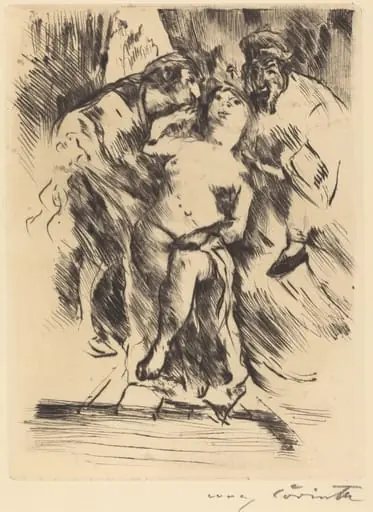 Susanna im Bade (Susanna in the Bath)
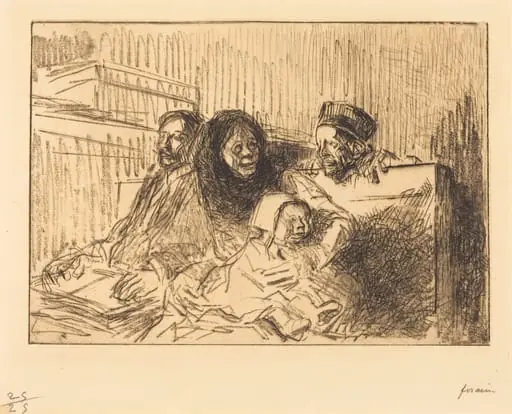 Témoins à l'audience (2e planche) (Evidence at the Hearing) (second plate)
 Self-Portrait with Four Other Studies
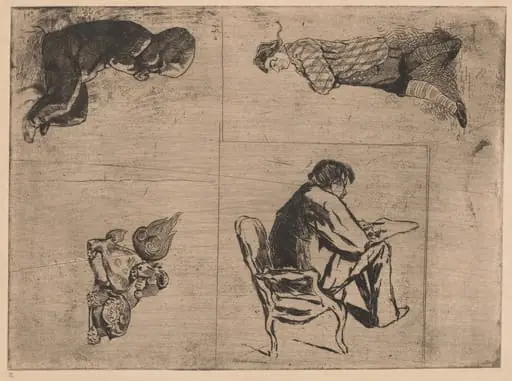 Edmond dessinant (Edmond Drawing, Stenterello, and Other Sketches)
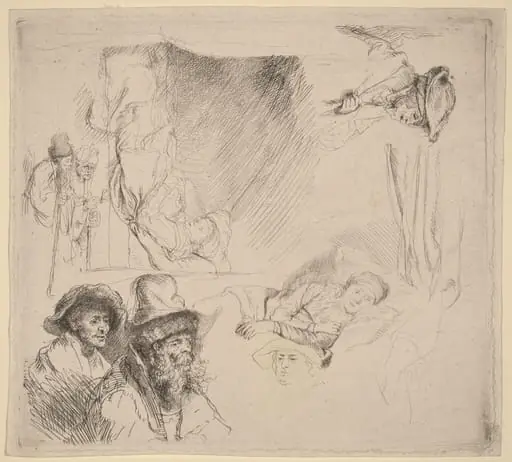 Sheet of Studies including a Woman Lying Ill in Bed
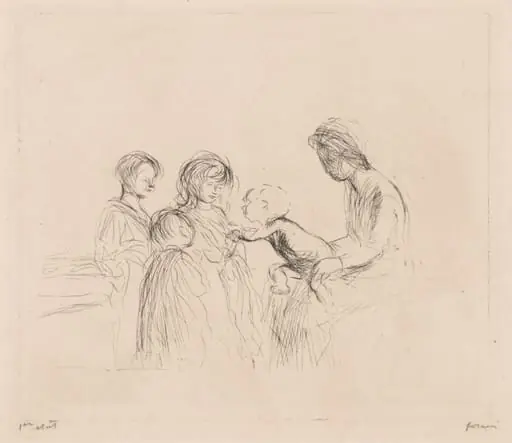 Madonna and Children
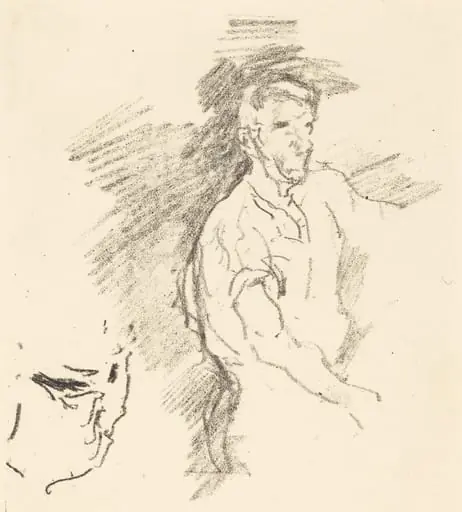 Sketch of a Blacksmith
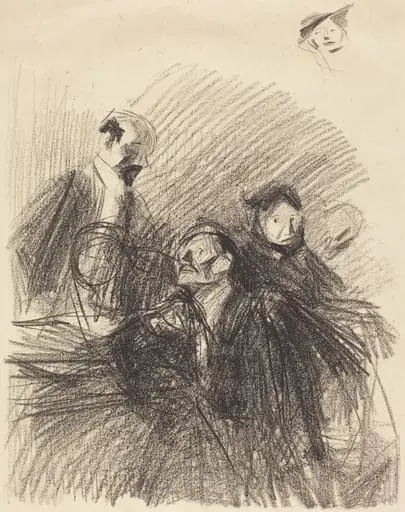 Scène d'audience (les deux avocats) (Scene of a Hearing (The Two Lawyers))
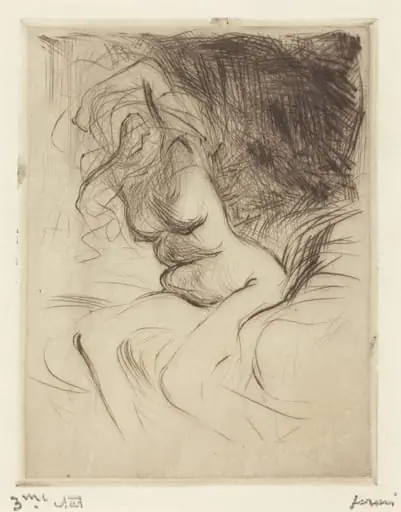 Femme nue passant sa chemise (Nude Woman Taking Off Her Chemise)
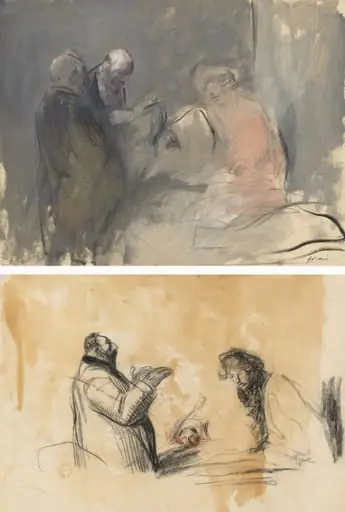 In the Hospital (recto) Sketch for In the Hospital (verso)
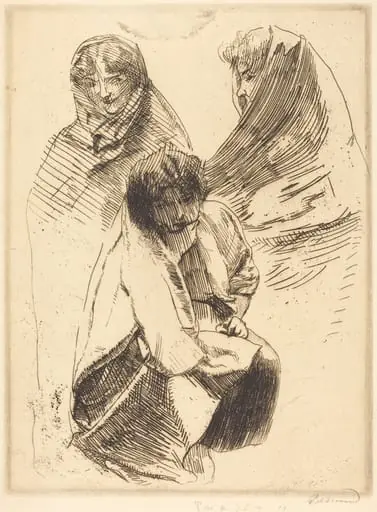 Three Veiled Women (Trois femmes voilées)
 Thomas