Artwork
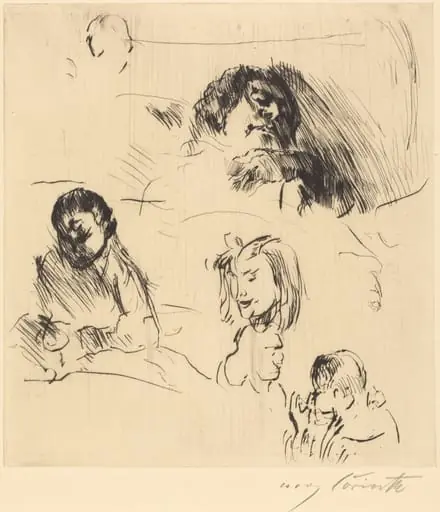
Sheet of Studies including a Woman Lying Ill in Bed
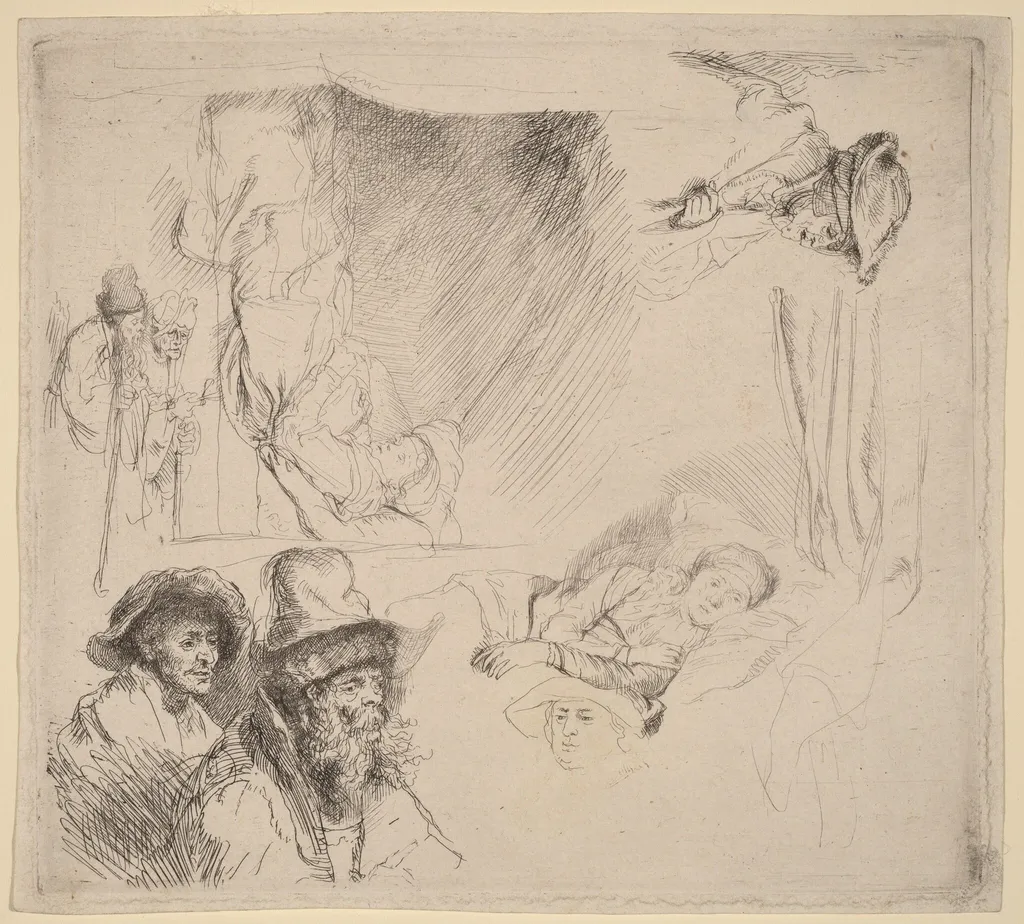
Sheet of Studies including a Woman Lying Ill in Bed is an ink print by the Baroque artist Rembrandt. It dates from 1642 and is held in the collection of the National Gallery of Art.
About this work
Overview
Rembrandt’s sheet of studies, dated around 1642, presents a group scene centered on a woman confined to bed. The work is an etching, part of a series of exploratory drawings that capture a moment of domestic care. Its composition gathers several figures around the patient, emphasizing the immediacy of the encounter.
Subject & Meaning
The central figure is a woman whose facial expression conveys discomfort, suggesting illness or injury. Surrounding attendants—likely family members or caregivers—lean in to observe or assist her, highlighting themes of vulnerability and communal response to suffering within a private interior.
Technique & Style
Executed in etching, the image relies on bold, sweeping lines and stark chiaroscuro to model forms. The marks retain a sketch‑like quality, with rough, scratched textures that give the surface a tactile depth. This loose handling creates a sense of spontaneity, as if the scene were captured in a rapid study rather than a finished composition.
History & Provenance
The sheet belongs to Rembrandt’s mid‑career period, when he frequently produced experimental prints alongside his paintings. Although specific ownership records are limited, the work is catalogued among his known studies and has been referenced in scholarly listings of his print output from the early 1640s.
Artist & collection
Artist
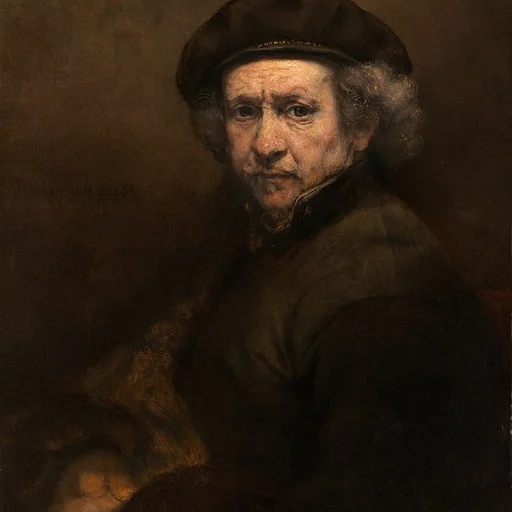
Rembrandt Harmenszoon van Rijn (15 July 1606 – 4 October 1669), known mononymously as Rembrandt, was a Dutch Golden Age painter, printmaker, and draughtsman.

 Verschiedene Bilnisstudien (Portrait Sketches)
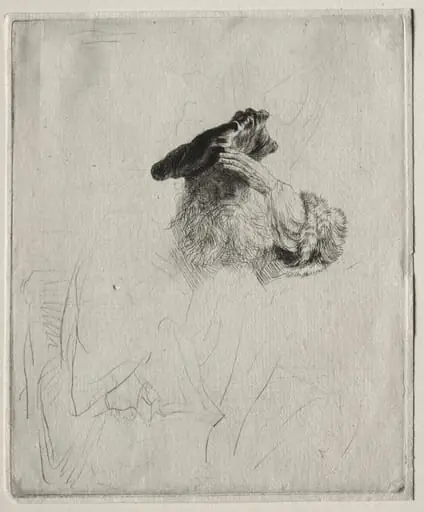 Old Man Shading his Eyes with His Hand
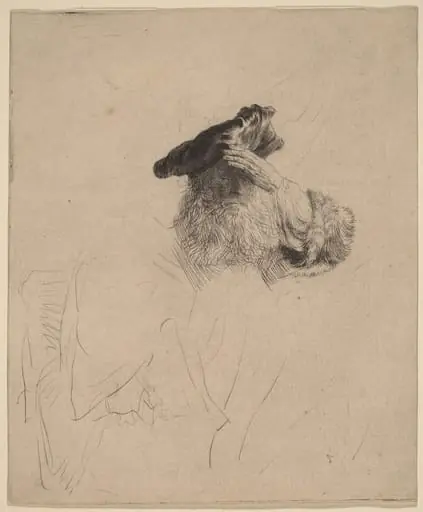 Old Man Shading His Eyes with His Hand
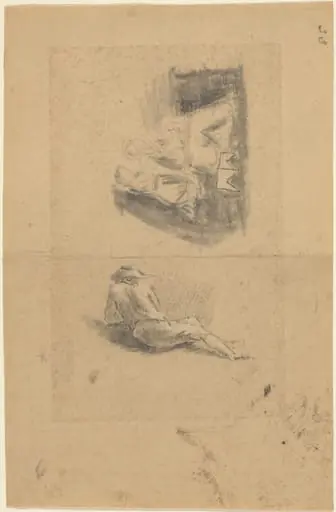 Reclining Man; Two Women
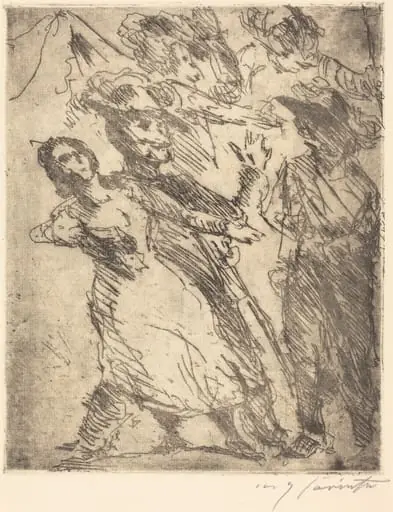 Kavaliere mit einer frau (Cavaliers with a Woman)
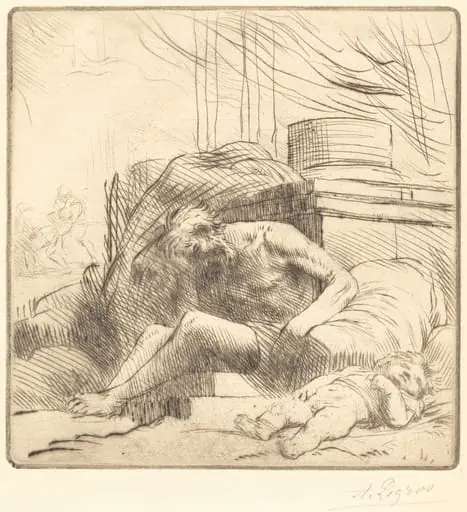 Victim of a Fire (Victime d'un incendie)
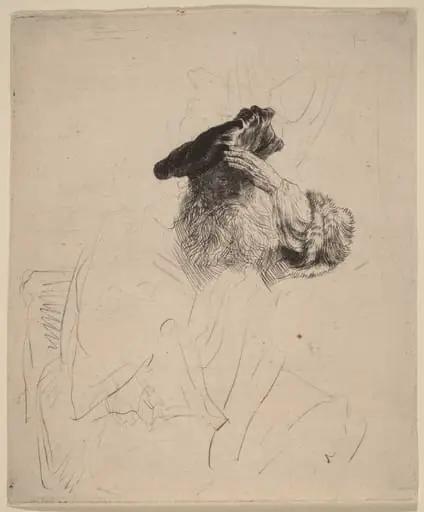 Old Man Shading His Eyes with His Hand
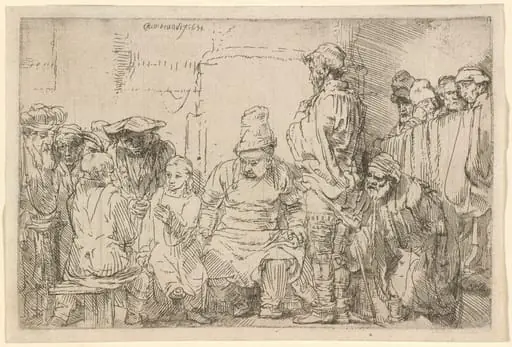 Christ Seated Disputing with the Doctors
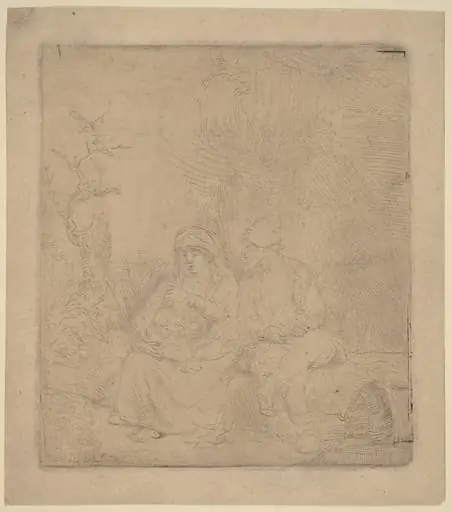 The Rest on the Flight: Lightly Etched
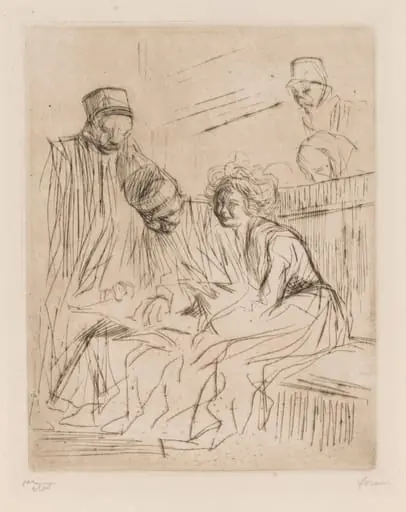 Reading of the Barrister's Brief
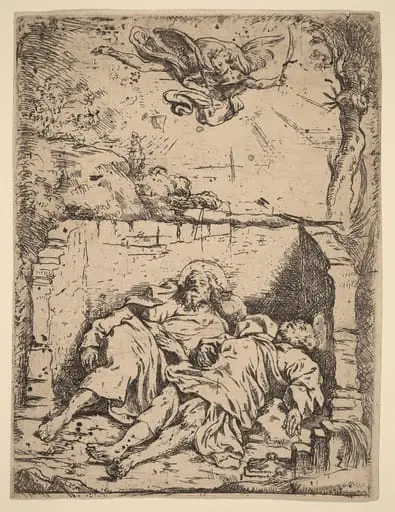 The Bodies of Saints Peter and Paul
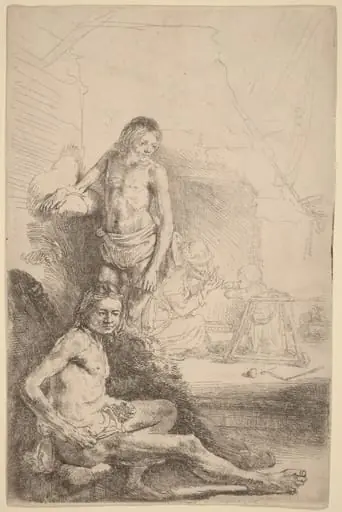 Nude Man Seated and Nude Man Standing, with a Woman and Baby in the Background