Artwork
Walchensee landschaft (Walchensee Landscape)
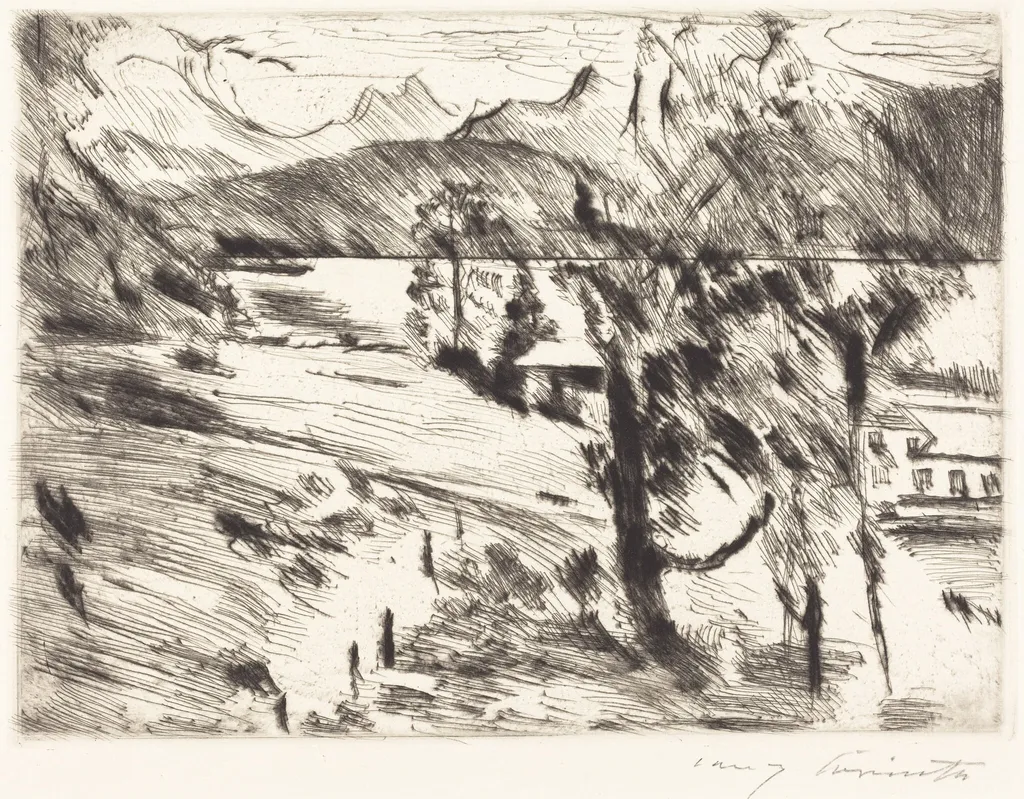
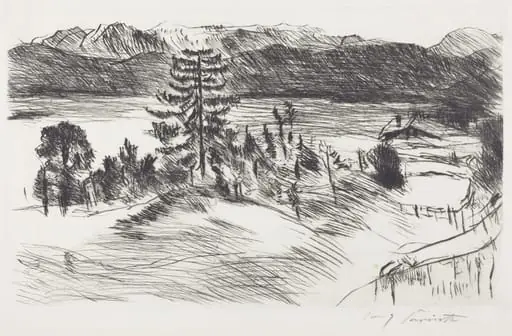
Walchensee landschaft (Walchensee Landscape) is an ink print by Lovis Corinth. It dates from 1919 and is held in the collection of the National Gallery of Art.
About this work
Overview
Walchensee Landscape is a 1919 drypoint print on wove paper by Lovis Corinth, a German artist renowned for blending impressionism and expressionism. Created eight years after a stroke significantly altered his style, the work showcases his post-1911 vibrant and expressive approach.
Subject & Meaning
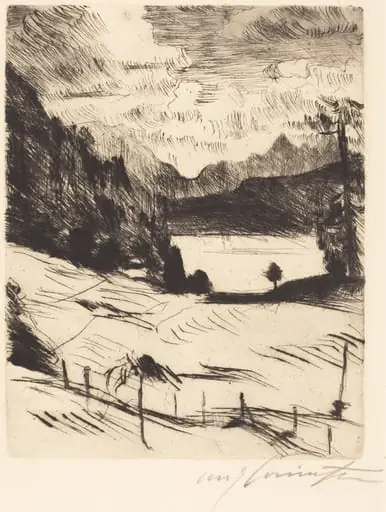
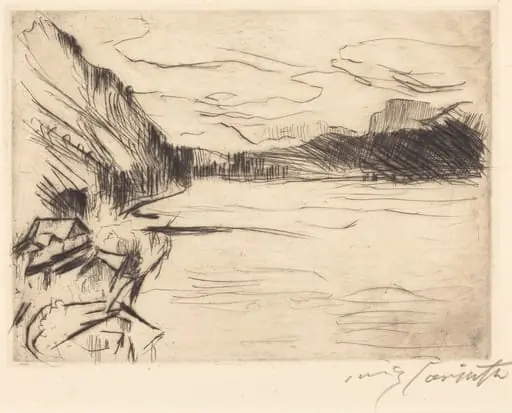
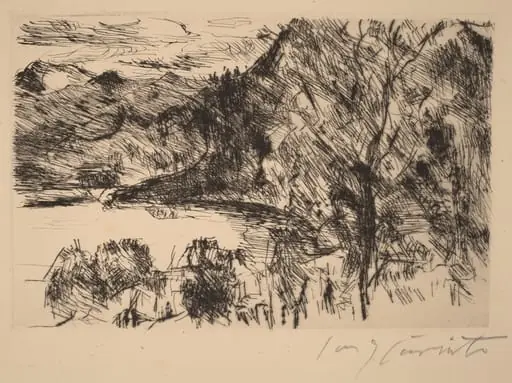
The print depicts a serene Walchensee region landscape, characterized by a prominent lake reflecting surrounding mountains and sky, evoking depth and tranquility. Minimalistic background elements, such as trees and hills, enhance the composition's texture and dimensionality.
Technique & Style
Corinth utilized drypoint to emphasize texture and tone, with black ink on wove paper creating contrast and definition. The technique's inherent roughness on the paper's surface adds a tactile quality to the serene landscape.
History & Provenance
Following a stroke in 1911, Corinth's style evolved to become more expressive. Walchensee Landscape, from 1919, reflects this shift. The artist's background includes studies in Paris and Munich, and leadership in the Berlin Secession.
Context
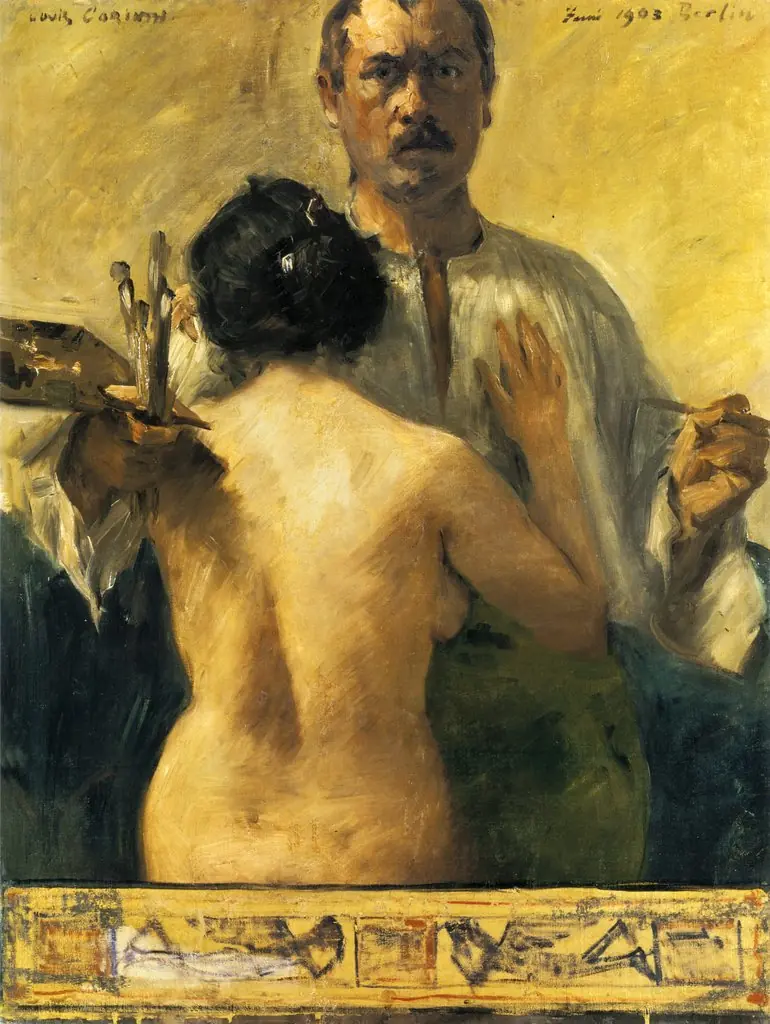
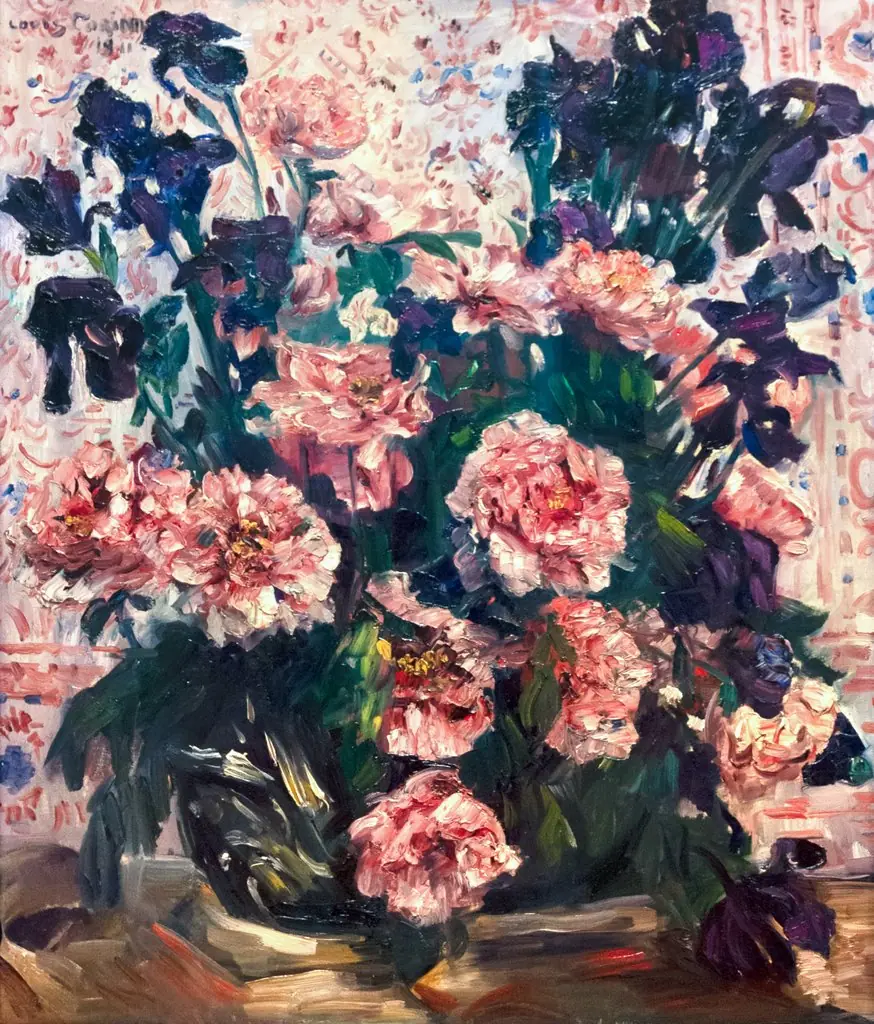
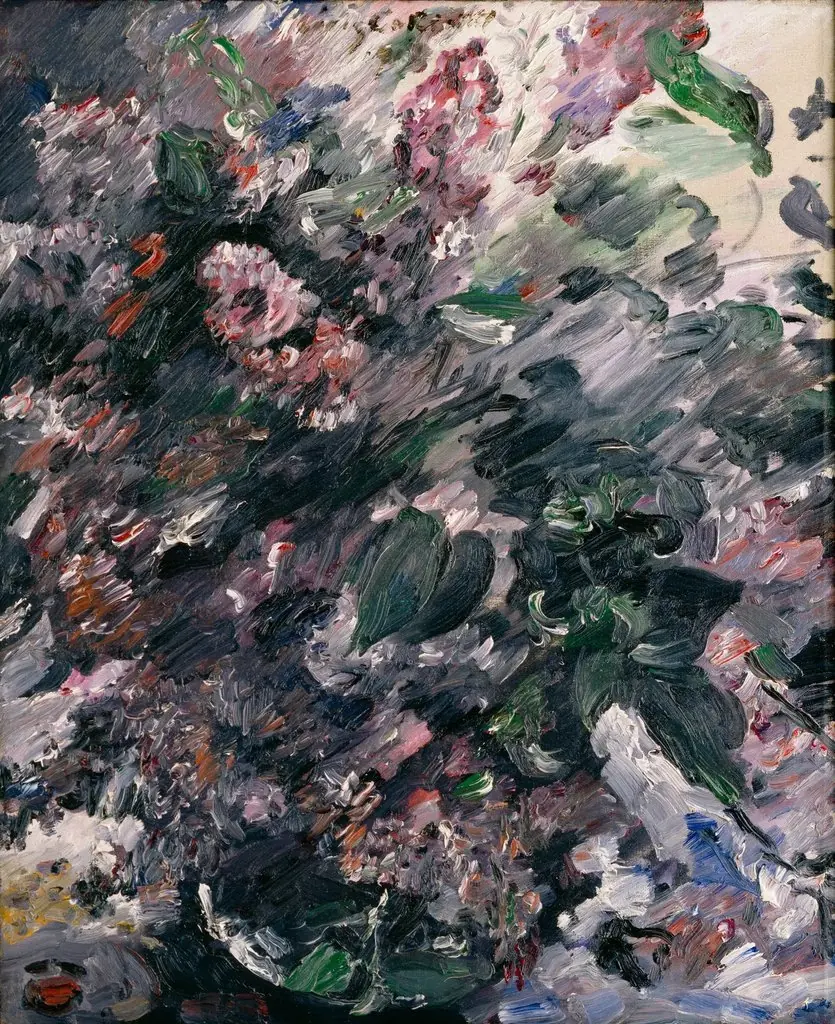
As a key figure in early 20th-century German art, Corinth's work, including Walchensee Landscape, sits at the intersection of impressionist and expressionist movements, contributing to the evolution of European modernism.
Legacy
Walchensee Landscape contributes to Corinth's legacy as a versatile artist, known equally for landscapes and portraits. The piece remains part of a broader body of work accessible through institutions like the National Gallery.
Artist & collection

Artist
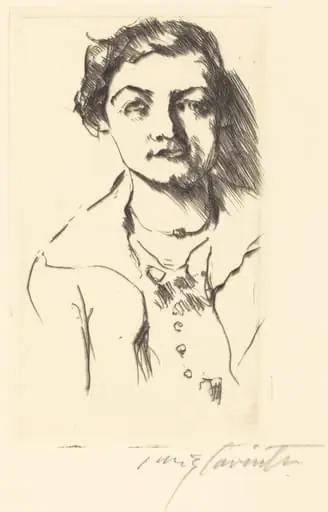
Lovis Corinth was a German artist and writer whose mature work as a painter and printmaker realized a synthesis of impressionism and expressionism.