Artwork
Zwei Menschen (Two Nudes)
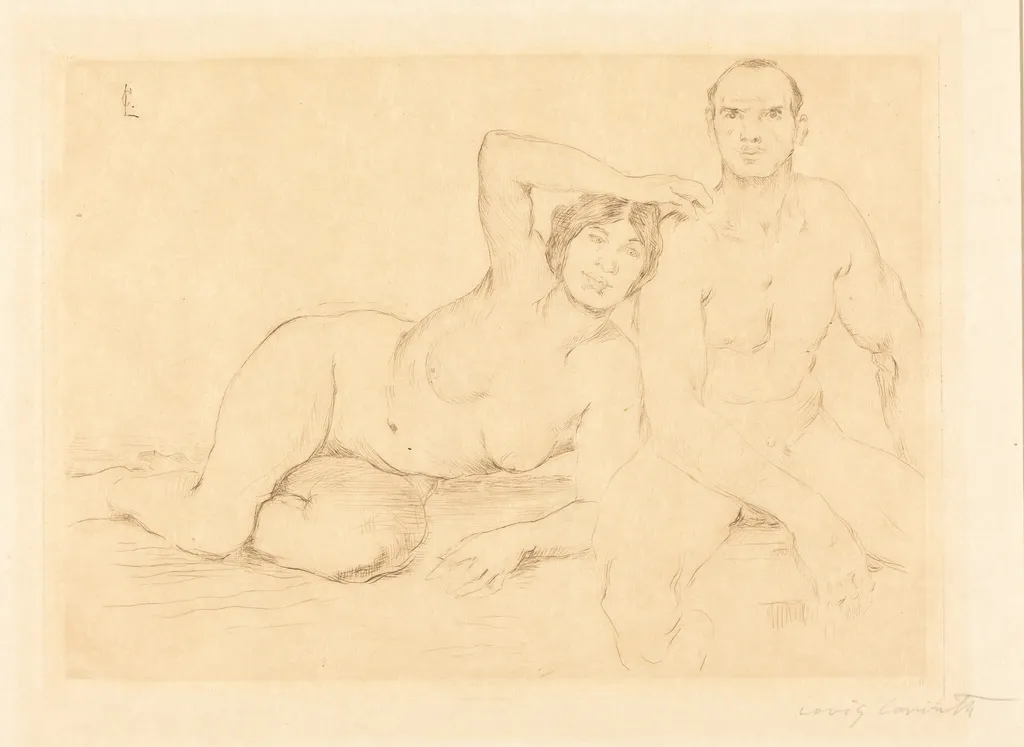
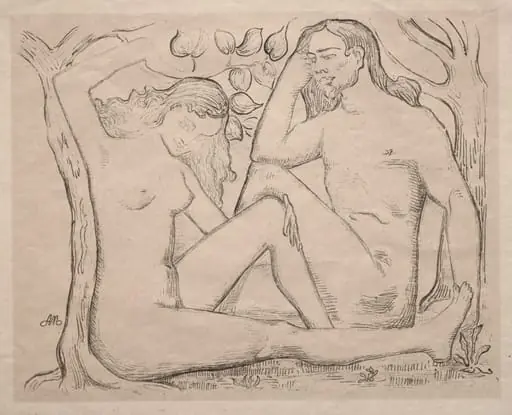
Zwei Menschen (Two Nudes) is an ink print by Lovis Corinth. It dates from 1908 and is held in the collection of the National Gallery of Art.
About this work
Overview
Zwei Menschen (Two Nudes), created by Lovis Corinth in 1908, is a drypoint print on wove paper, executed in brown ink. This work exemplifies Corinth's transitional style, blending impressionist and expressionist elements, preceding a stylistic shift after his 1911 stroke.
Subject & Meaning
The print features two seated nude figures, a common theme in Corinth's work, captured in a moment of quiet intimacy. The depiction emphasizes naturalism and spontaneity, reflecting Corinth's interest in portraying unposed, everyday life.
Technique & Style
Characterized by soft, rounded forms and blurry lines, the piece showcases Corinth's expressive use of drypoint. The rough, brown ink marks on wove paper contribute to an impression of immediacy and informality, akin to a rapid sketch.
History & Provenance
Created during Corinth's association with the Berlin Secession, which he later presided over, Zwei Menschen reflects his artistic influences following studies in Paris and Munich. The work's provenance details are not specified here.
Context
Within the early 20th-century European art landscape, Zwei Menschen sits at the intersection of impressionism's emphasis on light and expressionism's expressive intensity, foreshadowing Corinth's post-stroke stylistic evolution.
Legacy
As part of Corinth's oeuvre, Zwei Menschen contributes to the broader legacy of early 20th-century German printmaking and the Berlin Secession movement, though its individual impact within Corinth's body of work is not further detailed here.
Own this work as a print
Artist & collection

Artist
Lovis Corinth was a German artist and writer whose mature work as a painter and printmaker realized a synthesis of impressionism and expressionism.

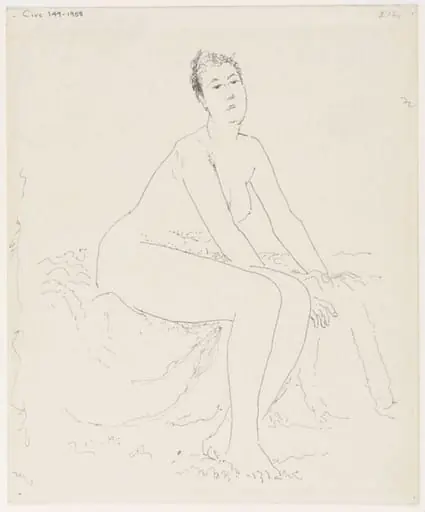 Study of a Seated Female Nude
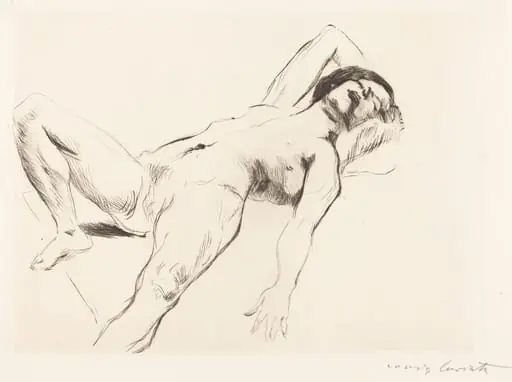 Liegender Weiblicher Akt I (Reclining Female Nude I)
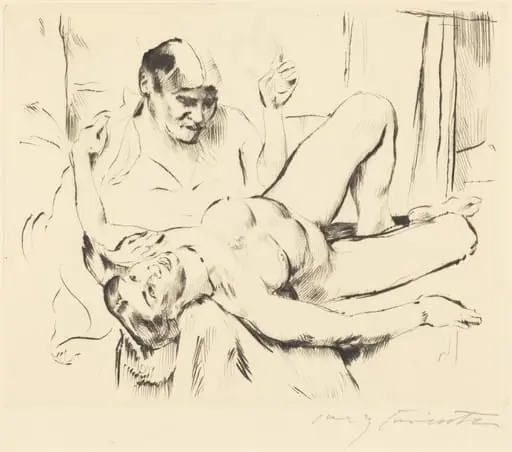 Weissagung (Prophecy)
 Οι δύο φίλες
 Studies of Aphrodite for "Aphrodite and Eros"
 Liegender Weiblicher Akt II (Reclining Female Nude II )
 Ruhende Dreiviertel Akt (Reclining Female Nude)
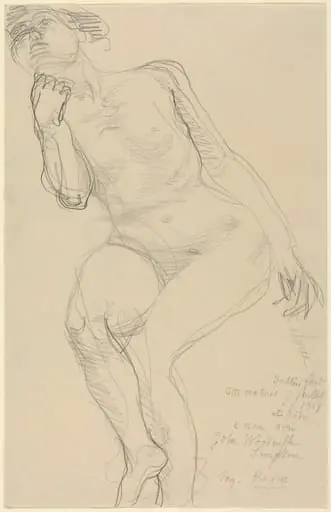 Seated Female Nude Leaning to the Left
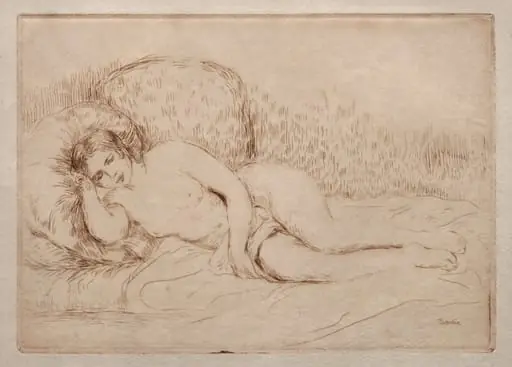 Femme nue couchée
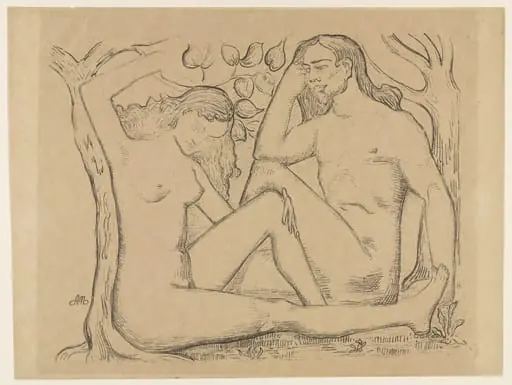 Untitled
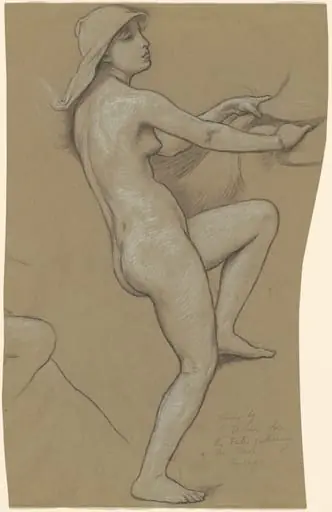 Study for "The Fates Gathering in the Stars"
 Nude Man and Woman