Artwork
Tablou, ulei pe pânză, „Portret Nicolae și Elena Ceaușescu”, nesemnat, atribuit Cornelia Ionescu - Drăgușin. Tabloul îi prezintă pe soții Ceaușescu întru-un peisaj de toamnă pe malul unui lac. Tablou comandat și oferit de Comitetul Județean de Partid Giurgiu (1985).
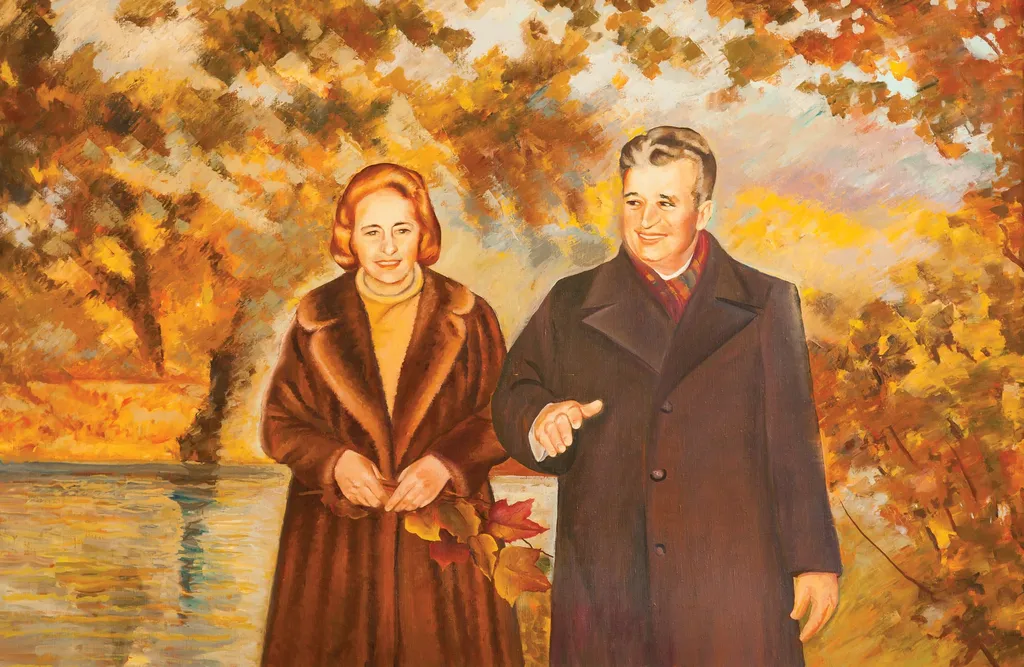
Tablou, ulei pe pânză, „Portret Nicolae și Elena Ceaușescu”, nesemnat, atribuit Cornelia Ionescu - Drăgușin. Tabloul îi prezintă pe soții Ceaușescu întru-un peisaj de toamnă pe malul unui lac. Tablou comandat și oferit de Comitetul Județean de Partid Giurgiu (1985). is a print by Cornelia Ionescu Drăgușin. It is held in the collection of the National Museum of Romanian History. A portrait painted in oil on canvas depicts Nicolae and Elena Ceaușescu standing together in an autumnal landscape beside a lake.
About this work
Overview
A portrait painted in oil on canvas depicts Nicolae and Elena Ceaușescu standing together in an autumnal landscape beside a lake. The work, unsigned and attributed to Cornelia Ionescu-Drăgușin, was commissioned in 1985 by the Giurgiu County Party Committee as a gift. The couple faces the viewer with composed expressions, set against a vivid, loosely rendered backdrop of fall foliage and water.
Subject & Meaning
The painting presents the Ceaușescus in a serene, natural setting, deliberately distancing them from urban or political contexts. Their synchronized posture and direct gaze convey an image of unity and accessibility. The autumnal scenery, rich in warm hues, subtly evokes themes of abundance and cyclical renewal, aligning with state-promoted symbolism of enduring leadership and national vitality.
Technique & Style
The palette favors saturated autumn tones—ochres, crimson, and gold—while the couple’s clothing is rendered in muted, formal hues, reinforcing their prominence.
The background employs thick, expressive brushwork typical of impasto, creating a dynamic texture in the trees and water. In contrast, the figures are rendered with smoother, more controlled strokes, emphasizing their stillness against the energetic landscape. The palette favors saturated autumn tones—ochres, crimson, and gold—while the couple’s clothing is rendered in muted, formal hues, reinforcing their prominence.
History & Provenance
Commissioned in 1985 by the Giurgiu County Party Committee, the portrait was likely intended for display in a public or institutional space. Its attribution to Cornelia Ionescu-Drăgușin, a known state-affiliated artist, reflects the regime’s practice of assigning official portraits to approved painters. The work remains unsigned, consistent with the anonymity often maintained in state-commissioned art.
Context
Created during the final years of Ceaușescu’s rule, the painting reflects the regime’s broader effort to cultivate a cult of personality through idealized imagery. By placing the leaders in a tranquil, natural environment, the artwork avoids overt political symbols, instead relying on emotional resonance and aesthetic harmony to reinforce legitimacy and public affection.
Legacy
The portrait survives as a material artifact of state-sponsored visual propaganda in late communist Romania. It offers insight into how the regime used art to construct a mythic public image, blending personal familiarity with environmental symbolism. Today, it functions primarily as a historical document, revealing the intersection of politics, aesthetics, and control in a closed society.
Artist & collection
Artist

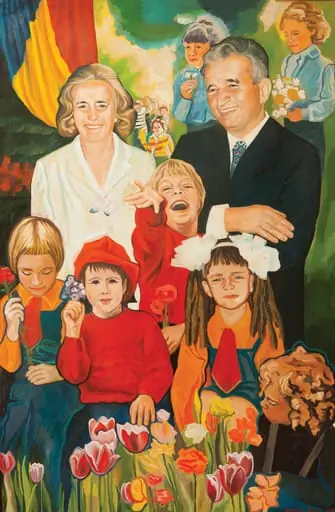 Tablou, ulei pe pânză, „Nicolae și Elena Ceaușescu în mijlocul unui grup de pioneri și șoimi ai patriei”, semant în partea dreaptă jos Cornelia Ionescu și datat 1981. Comandat și oferit de Consiliul Național al Pionerilor, 14.X.1981.
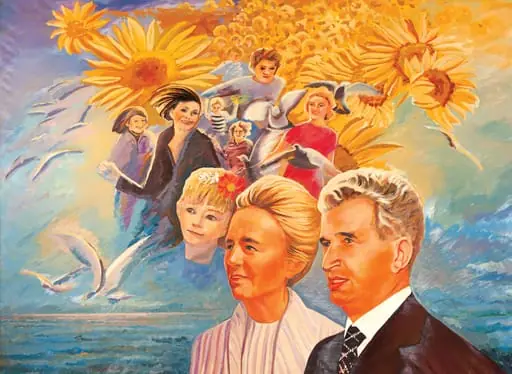 Tablou, „Omagiu”, ulei pe pânză atribuit Cornelia Ionescu Drăgușin. Cuplul Ceaușescu este reprezentat într-o atitudine de contemplare a orizontului, pe fundal marea și pescărușii. În partea de sus un joc de copii printre flori de floarea - soarelui. Oferit de Comitetul pentru Problemele Consiliilor Populare (1984)
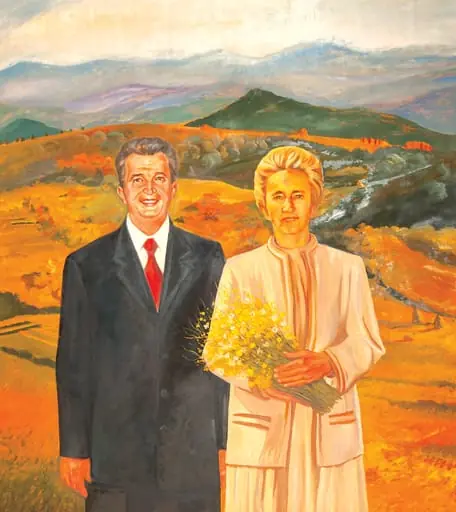 Tablou ulei pe pânză, „Compoziție”, atribuit Corneliei Ionescu Drăgușin, nedatat. Tabloul îi prezintă pe soții Ceaușescu înt-un decor montan. Elena Ceaușescu ține în brațe un buchet de flori de câmp, Nicolae Ceaușescu arborează un zâmbet larg. Tablou comnadat de Consiliul Național al Societății de Cruce Roșie și oferit soților Ceaușescu cu ocazia unei aniversări (1988).
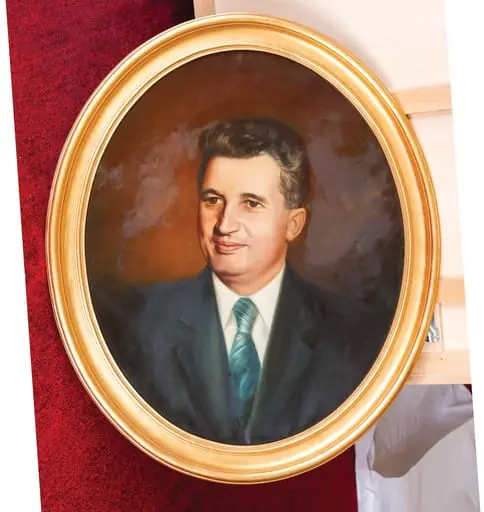 Tablou, ulei pe pânză, portret Nicolae Ceaușescu, atribuit Corneliu Brudașcu. Oferit de Uniunea Artiștilor Plastici (1979).
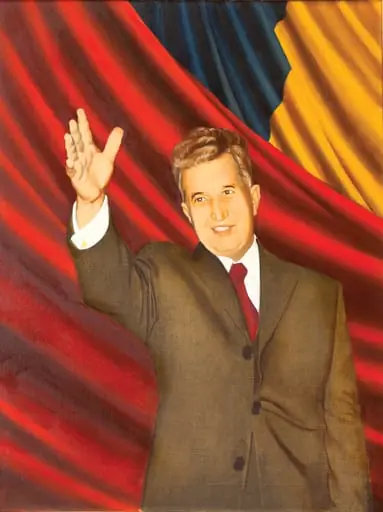 Tablou, ulei pe pânză, „Salutul președintelui”, atribuit lui Viorel Toma, nedatat. Nicolae Ceaușescu este reprezentat în centrul tabloului salutând, pe fundal steagul PCR și cel al RSR. Comandat și oferit de Comitetul Județean de Partid Timiș (1985).
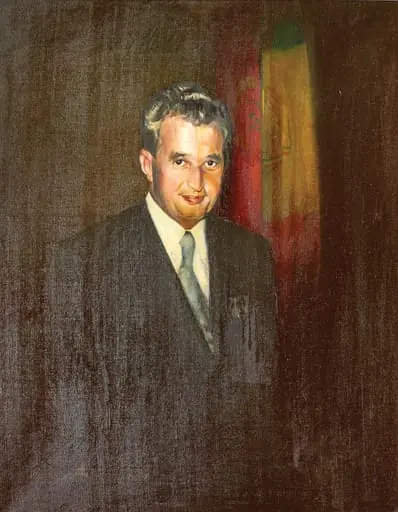 Tablou, ulei pe pânză, Portretul lui Nicolae Ceaușescu, nesemnat, atribiut lui Eugen Palade. Nicolae Ceaușescu cu două însemne de ”Erou al Republicii Socialiste România”, în spatele său steagul cu stema RSR și steagul PCR. Comandat și oferit de Ministerul de Interne, Direcția de Securitate și Gardă, 25 ianuarie 1978.
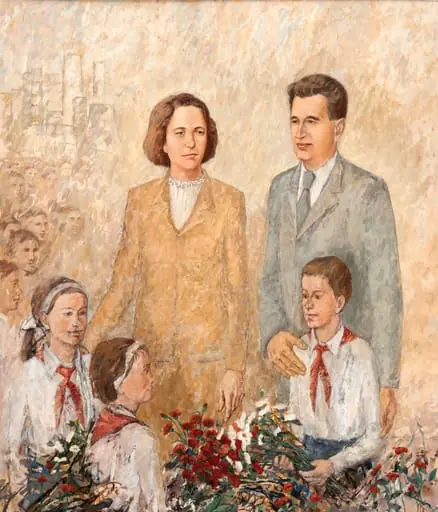 Tablou ulei pe pânză, „Omagiu”, semnat M.B, I.Ș. (atribuit Mircea Bejgu, Ion Șincă), datat 1984 în partea dreaptă jos. Elena și Nicolae Ceaușescu alături de pionieri. Comandat și oferit de Comitetul Județean de Partid Argeș (1984).
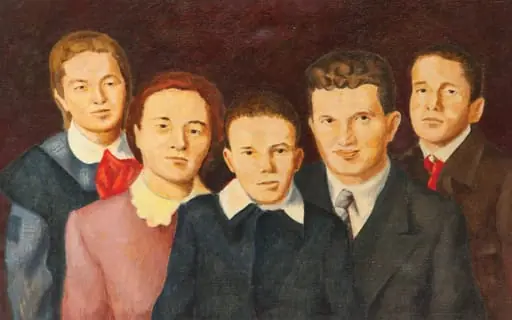 Tablou, ulei pe pânză, „Familia Ceaușescu”, nesemnat, atribuit lui Dumitru Rusu. Este prezentată familia Ceaușescu, de la stânga la dreapta, Zoia, Elena, Nicu, Nicolae, Valentin. Comandat și oferit de Comitetul Județean de Partid Suceava, 4 ianuarie 1979.
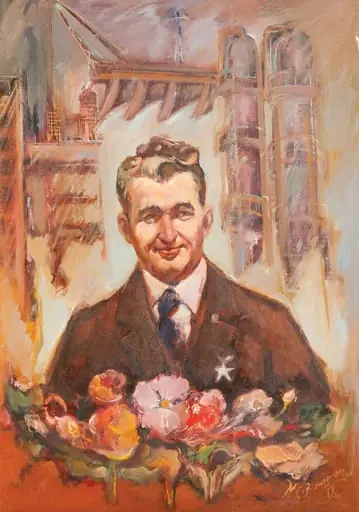 Tablou, ulei pe pânză, „Portret Nicolae Ceaușescu”, semnat C. Radovan și datat în partea dreaptă jos 1978. Nicolae Ceaușescu este reprezentat înt-o atitudine jovială, în piept are însemnul ”Erou al Republicii Socialiste România”. Pe fundal realizări ale regimului comunist. Oferit de Comitetul Județean de Partid Timiș, 22 ianuarie 1978.
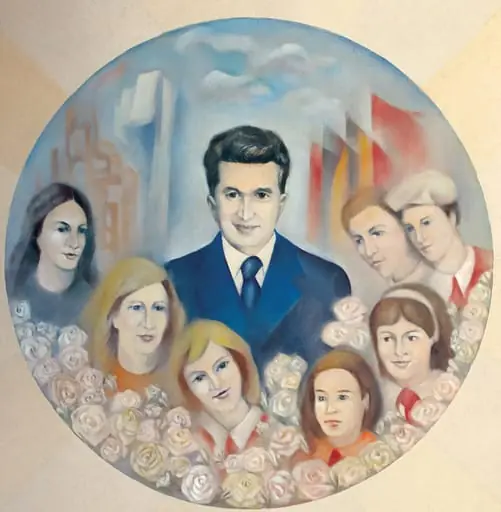 Tablou ulei pe pânză, „Nicolae Ceaușescu”, nesemnat, atribuit lui Ion Pantilie, nedatat. Nicolae Ceaușescu este reprezentat în mijlocul copiilor și tinerilor. Comandat și oferit de Comitetul Județean de Partid Argeș (1988).