Artwork
Tablou ulei pe pânză, „Nicolae Ceaușescu”, nesemnat, atribuit lui Ion Pantilie, nedatat. Nicolae Ceaușescu este reprezentat în mijlocul copiilor și tinerilor. Comandat și oferit de Comitetul Județean de Partid Argeș (1988).
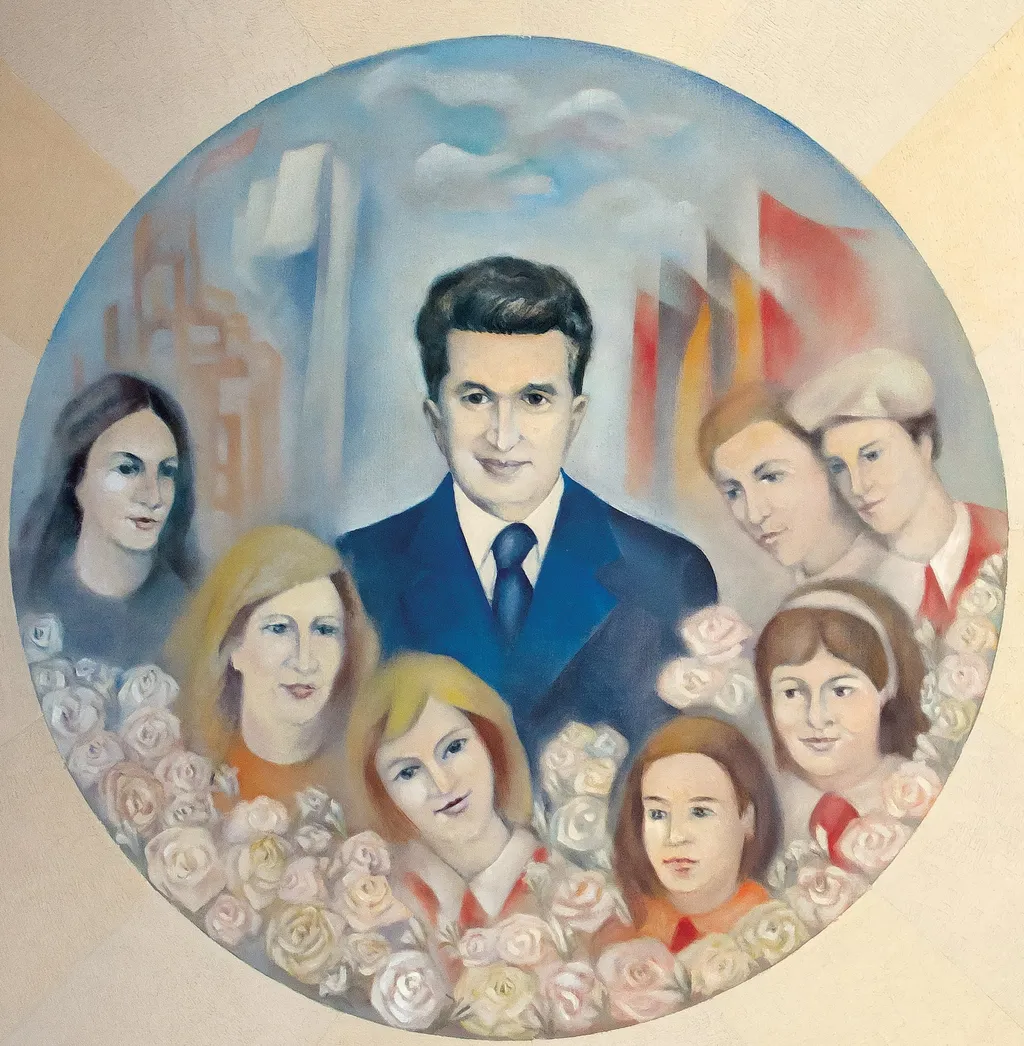
Tablou ulei pe pânză, „Nicolae Ceaușescu”, nesemnat, atribuit lui Ion Pantilie, nedatat. Nicolae Ceaușescu este reprezentat în mijlocul copiilor și tinerilor. Comandat și oferit de Comitetul Județean de Partid Argeș (1988). is a print by Ion Pantilie. It is held in the collection of the National Museum of Romanian History.
About this work
Overview
An oil on canvas painting, titled “Nicolae Ceaușescu,” is attributed to Ion Pantilie, though it bears no signature and lacks a date. The work was commissioned by the Argeș County Party Committee and presented as a gift in 1988, situating it within the final years of the communist regime in Romania.
Subject & Meaning
The central figure is a man in a dark suit, identified as Nicolae Ceaușescu, surrounded by six female youths. The front row holds vivid roses, while a second, slightly blurred row stands behind them. The composition emphasizes the leader’s connection to the younger generation, a common theme in state‑propaganda art of the period.
Technique & Style
Rendered in oil, the painting contrasts sharply detailed roses with smoother, less defined facial features. The sky is a pale blue, its horizon hinted by faint building outlines. The figure’s formal attire is rendered with crisp brushwork, whereas the surrounding figures appear softer, creating a visual hierarchy that draws attention to the central leader.
History & Provenance
Commissioned by the local party organization of Argeș, the canvas was likely displayed in a public or institutional setting to reinforce Ceaușescu’s cult of personality. Its attribution to Pantilie rests on stylistic analysis rather than a signed declaration, and the work has remained within Romanian collections since its creation.
Context
Created in 1988, the painting emerged during a period of intensified propaganda as the regime sought to project stability despite mounting economic and social pressures. Depicting the leader among children aligns with the broader visual strategy of portraying Ceaușescu as a paternal figure guiding the nation’s future.
Artist & collection
Artist

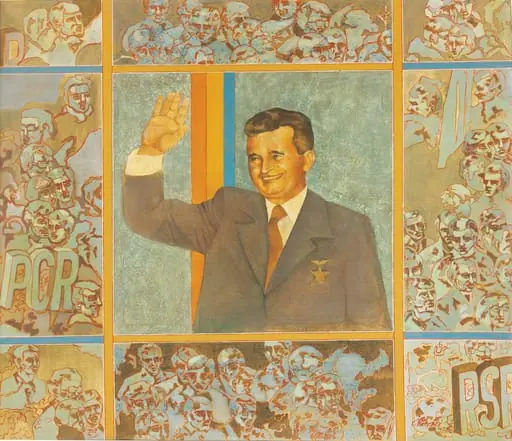 Tablou, ulei pe pânză, „Portret Nicolae Ceaușescu”, semnat în partea dreaptă jos C.Macavei și datat 1978. Tablou împărțit în mai multe registre, în plan central Nicolae Ceaușescu salutând oamenii muncii din celelalte registre. Comandat și oferit de Comitetul Județean de Partid Ilfov, 23 ianuarie 1978.
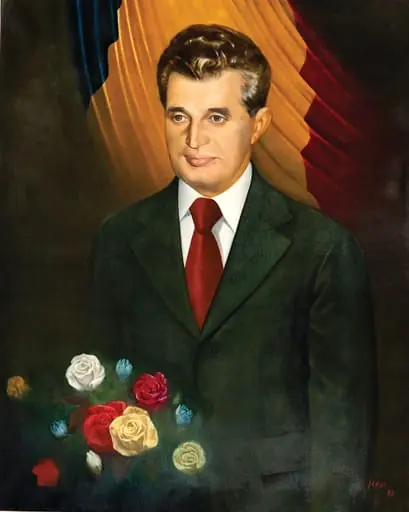 Tablou ulei pe pânză, portret Nicolae Ceaușescu semnat Ispas și datat în partea dreaptă jos. Este prezentat într-o postură solemnă cu un buchet de trandafiri, în spatele său tricolorul. Culorile drapelului se regăsesc și în coloritul trandafirilor. Comandat de Comitetul Județean de Partid Alba (1983).
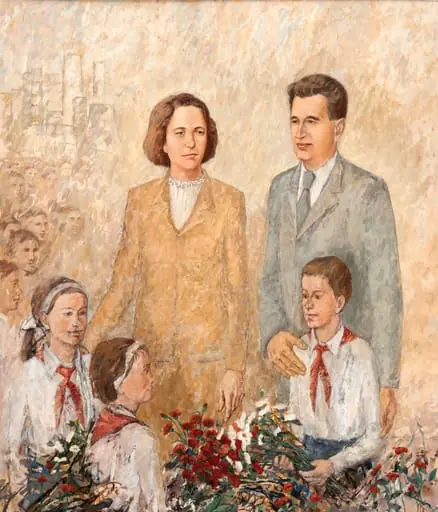 Tablou ulei pe pânză, „Omagiu”, semnat M.B, I.Ș. (atribuit Mircea Bejgu, Ion Șincă), datat 1984 în partea dreaptă jos. Elena și Nicolae Ceaușescu alături de pionieri. Comandat și oferit de Comitetul Județean de Partid Argeș (1984).
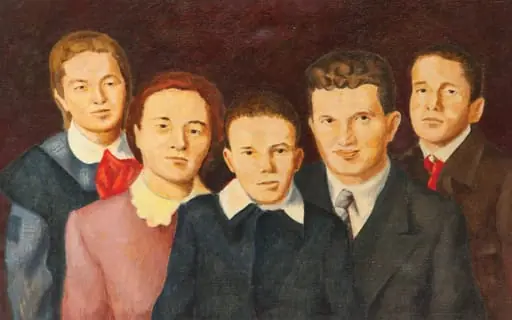 Tablou, ulei pe pânză, „Familia Ceaușescu”, nesemnat, atribuit lui Dumitru Rusu. Este prezentată familia Ceaușescu, de la stânga la dreapta, Zoia, Elena, Nicu, Nicolae, Valentin. Comandat și oferit de Comitetul Județean de Partid Suceava, 4 ianuarie 1979.
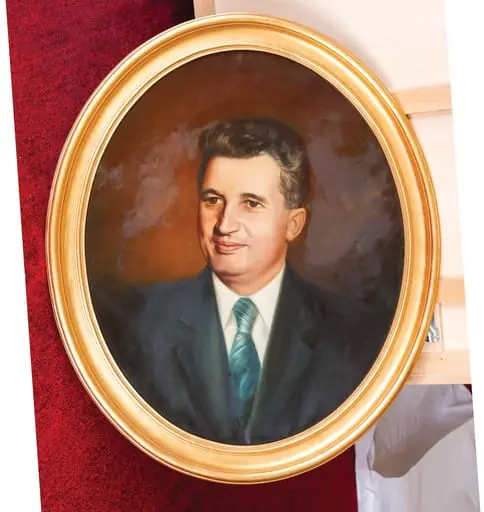 Tablou, ulei pe pânză, portret Nicolae Ceaușescu, atribuit Corneliu Brudașcu. Oferit de Uniunea Artiștilor Plastici (1979).
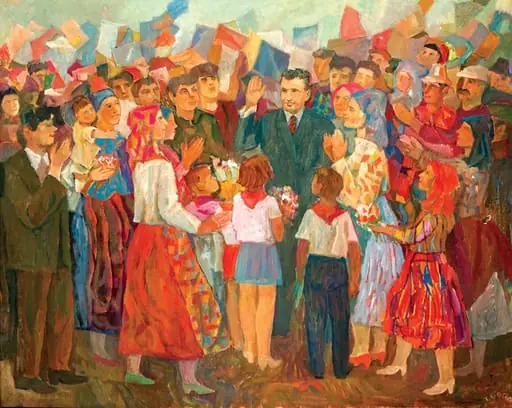 Tablou, ulei pe pânză, „Moment de sărbătoare bihoreană”, semnat T. Goga în partea dreaptă jos. Nicolae Ceaușescu este reprezentat în mijlocul oamenilor munci și al tinerilor din județul Bihor care-l întâmpină cu flori și aplauze. Comandat de Comitetul Județean de Partid Bihor,oferit lui Nicolae Ceaușescu în ianuarie 1978.
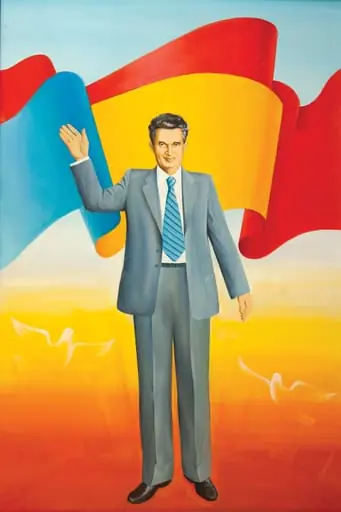 Tablou „ Ceaușescu Pace”, semnat M. Ceacîru și datat dreapta jos. Tabloul îl prezintă pe Nicolae Ceaușescu salutând, în spatele său flutură tricolorul și stegul PCR, în stânga și în dreapta sa doi porumbei albi în zbor.Comandat de Comitetul Județean de Partid Neamț (1989)
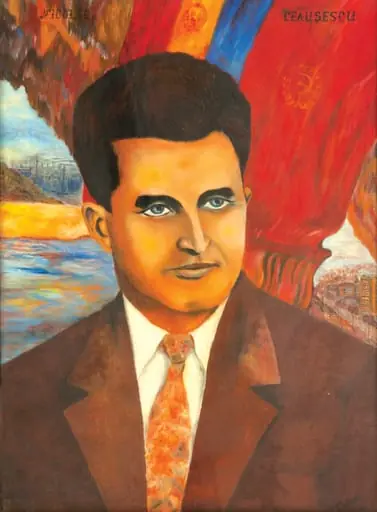 Tablou, ulei pe pânză, ”Portret Nicolae Ceaușescu”, nesemnat, atribuit lui Teodor Istrati. Portret Nicolae Ceaușescu pe fundal steagul cu stema R.S.R. și steagul cu sigla P.C.R., elemente de peisaj urban, inscripție cu majuscule în partea de sus ”NICOLAE CEAUȘESCU”. Oferit de autor lui Nicolae Ceaușescu, București, 25 iunie 1971.
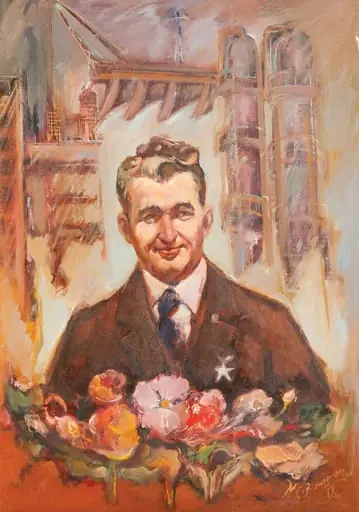 Tablou, ulei pe pânză, „Portret Nicolae Ceaușescu”, semnat C. Radovan și datat în partea dreaptă jos 1978. Nicolae Ceaușescu este reprezentat înt-o atitudine jovială, în piept are însemnul ”Erou al Republicii Socialiste România”. Pe fundal realizări ale regimului comunist. Oferit de Comitetul Județean de Partid Timiș, 22 ianuarie 1978.
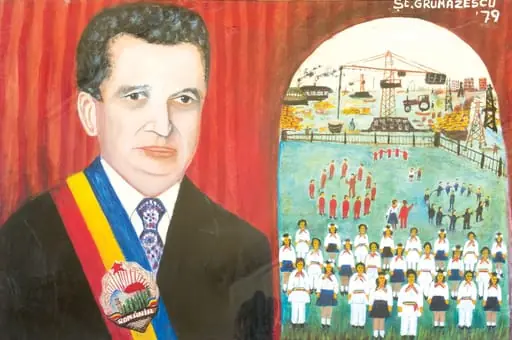 Tablou, ulei pe pânză, Nicolae Ceaușescu și copii, semnat și datat în partea dreaptă sus Șt. Grumăzescu, 1979. Nicolae Ceaușescu este prezentat în partea stângă urmărind o festivitate - pionieri, copii dansând în horă. Maniera de realizare a tabloului este una naivă. Oferit de Ștefan Grumăzescu din București.
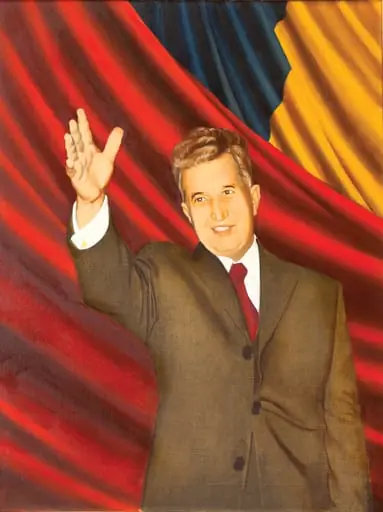 Tablou, ulei pe pânză, „Salutul președintelui”, atribuit lui Viorel Toma, nedatat. Nicolae Ceaușescu este reprezentat în centrul tabloului salutând, pe fundal steagul PCR și cel al RSR. Comandat și oferit de Comitetul Județean de Partid Timiș (1985).
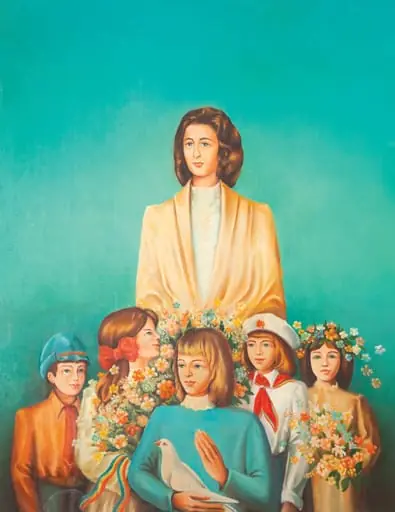 Tablou, ulei pe pânză, „Elena Ceușescu cu un grup de copii”, nesemnat, atribuit Constantin Oprea. Elena Ceaușescu este prezentată înconjurată de copii, șoimi ai patriei, pionieri. Autorul tabloului o înfățișează pe Elena Ceaușescu ca pe o profesoară, o îndrumătoare a tinerei generații. Comandat și oferit de Comitetul Județean de Partid Caraș Severin (1984).
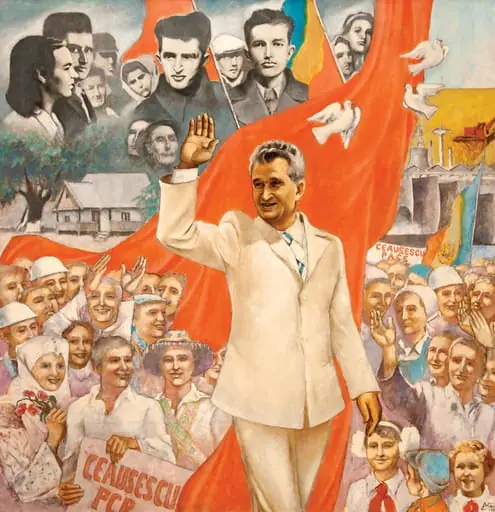 Tablou „Eroul României Socialiste” , semnat și datat în dreapta jos ”Constantin Nițescu 1988”. Comandat de Comitetul Județean de Partid Olt și oferit cadou lui Nicolae Ceaușescu la împlinirea vârstei de 70 de ani (ianuarie 1988).
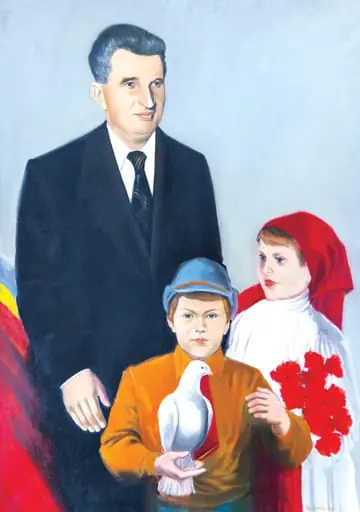 Tablou, ulei pe pânză, „Mesajul României”, semnat Nicolae Costachi în partea dreaptă jos și datat 1984. Nicolae Ceaușescu alături de doi copii, o fată îmbrăcată în costum popular ținând în mâini un buchet de garoafe roșii și un băiat în uniformă de șoim al patriei cu un porumbel alb în palma dreaptă. Comandat și oferit de Comitetul Județean de Partid Bistrița Năsăud (1985).
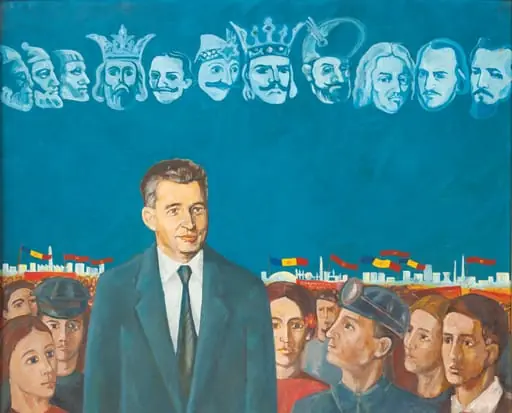 Tablou, ulei pe pânză, „Omagiu”, nesemnat. Nicolae Ceaușescu este prezentat în mijlocul oamenilor muncii vegheat de ”fantomele” eroilor neamului : Burebista, Decebal, Traian, Mircea cel Bătrân, Iancu de Hunedoara, Vlad Țepeș, Ștefan cel Mare, Mihai Viteazul, Dimitrie Cantemir, Nicolae Bălcescu, Alexandru Ioan Cuza (de la stânga la dreapta). Comandat și oferit de Comitetul Județean de Partid Tulcea, 22 ianuarie 1978.
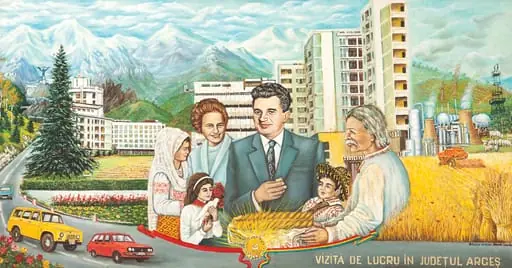 Tablou ”Vizită de lucru în Județul Argeș”, semnat artist amator Manda Vasile. În centru Nicolae și Elena Ceaușescu primind omagiul locuitorilor județului. Tabloul redă imaginea economiei argeșene în care se află fabrica de automobile ”Dacia” de la Colibașu și cea de autoturisme ”ARO” de la Câmpulung. Oferit de Comitetul Județean de Partid Argeș (1982).
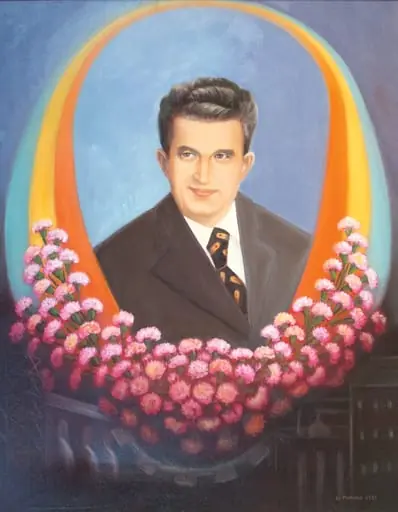 Tablou „Omagiu” semnat N. Porumb și datat în partea dreaptă jos. Tabloul îl reprezintă pe Nicolae Ceaușescu cu tricolorul în spate sub formă de curcubeu; în partea de jos a tabloului o ”mare” de garoafe și realizările socialismului. Comandat de Comitetul Județean de Partid Sibiu și dăruit lui Nicolae Ceaușescu cu ocazia zilie de naștere (ianuarie 1989).
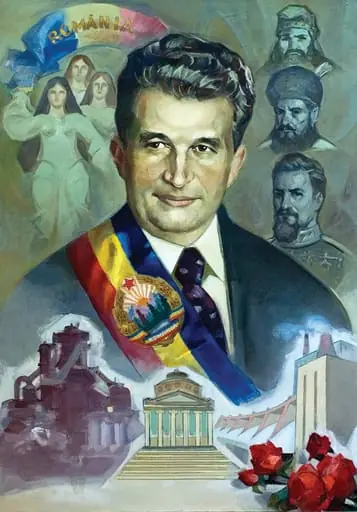 Portret Nicolae Ceaușescu, tablou nesemnat. Comadat de Ministerul de Interne, 1985. Autorul îl prezintă -pe Nicolae Ceaușescu alături de Burebista, Mihai Viteazul și Alexandru Ioan Cuza. În partea de jos a tabloului sunt prezentate alături de Atheneul Român realizările economice ale socialismului.
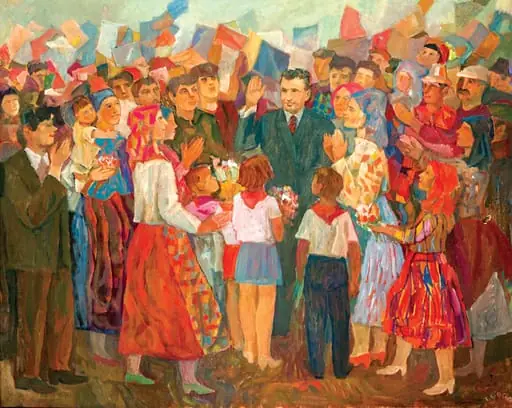 Tablou, ulei pe pânză, „Moment de sărbătoare bihoreană”, semnat în partea dreaptă jos T. Goga. Nicolae Ceaușescu este prezentat în mijolocul oamenilor muncii, bărbați si femei îl înconjoară, pionierii îi oferă flori în semn de bun venit. Oferit de Comitetul Județean de Partid Bihor, 22 ianuarie 1978.