Artwork
Tablou, ulei pe pânză, portret Nicolae Ceaușescu, atribuit Corneliu Brudașcu. Oferit de Uniunea Artiștilor Plastici (1979).
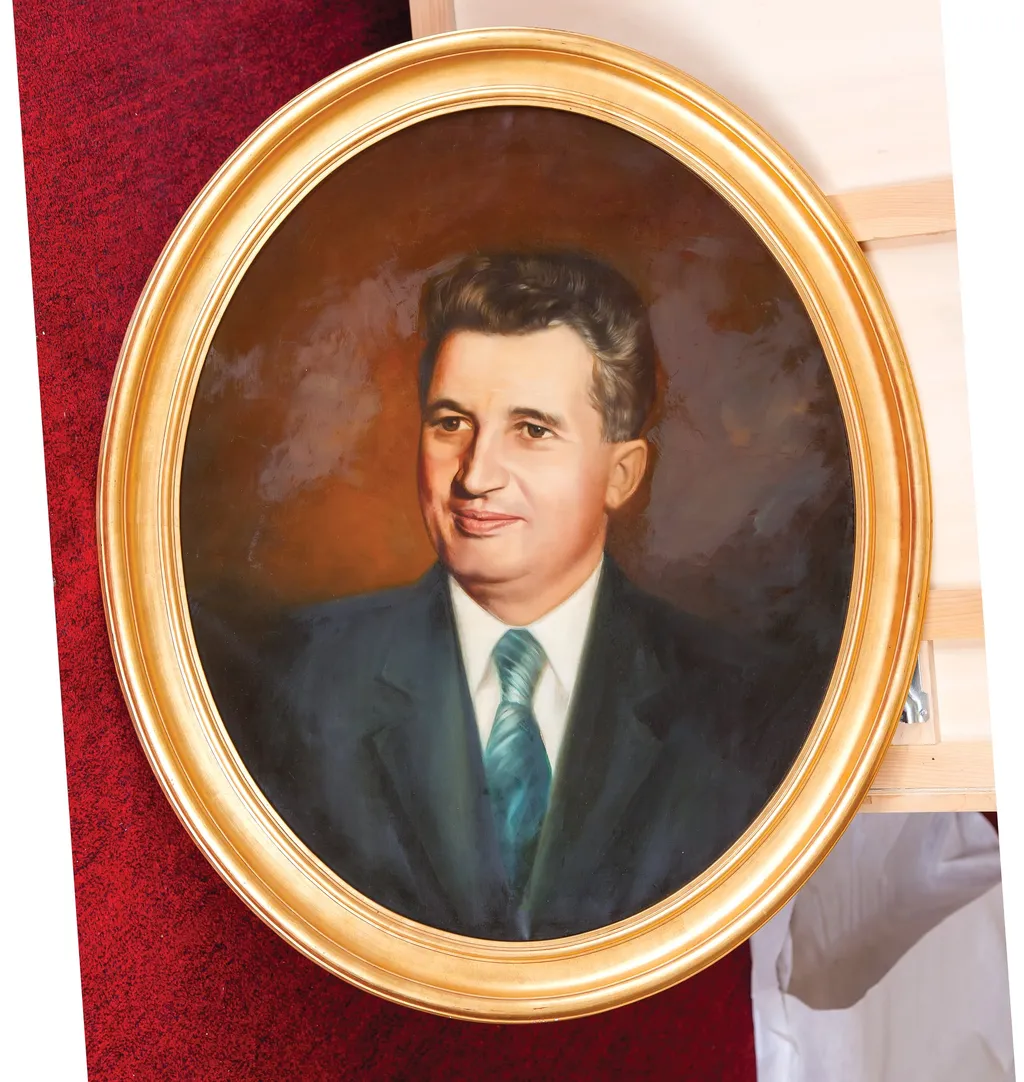
Tablou, ulei pe pânză, portret Nicolae Ceaușescu, atribuit Corneliu Brudașcu. Oferit de Uniunea Artiștilor Plastici (1979). is a print by Corneliu Brudașcu. It is held in the collection of the National Museum of Romanian History.
About this work
Overview
A circular oil painting on canvas depicts Nicolae Ceaușescu, attributed to artist Corneliu Brudașcu. Commissioned in 1979 by the Union of Plastic Artists, the portrait was likely intended for public display. It presents the leader in formal attire, framed in gold against a red backdrop, adhering to the visual conventions of state-sponsored portraiture during the late communist era in Romania.
Subject & Meaning
The portrait portrays Ceaușescu with a composed expression and neatly styled hair, conveying an image of calm authority. The slight smile and illuminated face contrast with the dark suit, aiming to project approachability without diminishing gravitas. The red background and ornate frame reinforce state symbolism, aligning the image with official narratives of leadership and stability.
Technique & Style
Brushwork is refined and seamless, with soft transitions between light and shadow to model the face. The lighting isolates the subject’s features against a muted background, emphasizing facial expression over texture or detail. The circular format and polished finish reflect a deliberate departure from realism, favoring idealized representation typical of state-commissioned imagery.
History & Provenance
Created in 1979 under the auspices of the Union of Plastic Artists, the work was part of a broader state effort to standardize the visual representation of leadership. It was likely displayed in official buildings or cultural institutions. Its attribution to Brudașcu remains unverified, and its current location is not documented beyond its origin in state-sponsored artistic production.
Context
During the late 1970s, Romanian state institutions commissioned portraits of Ceaușescu to reinforce his cult of personality. These images followed strict visual codes: formal dress, controlled expressions, and symbolic colors. The use of gold frames and red backgrounds echoed traditional religious iconography, subtly linking political authority to spiritual legitimacy.
Legacy
The portrait exemplifies the institutionalized use of art to sustain political authority under communist rule. After 1989, such works were largely removed from public view, though some remain in archives or private collections. Its survival reflects the persistence of state imagery beyond the regime’s collapse, now serving as historical artifact rather than propaganda.
Artist & collection
Artist

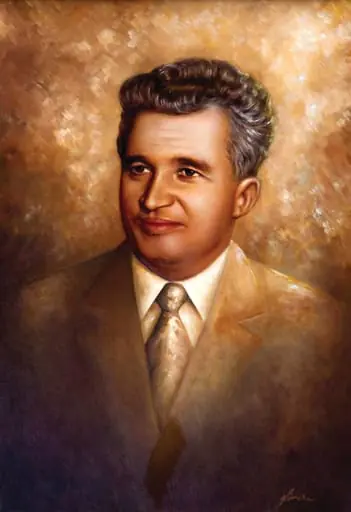 Tablou ulei pe pânză, portret Nicolae Ceaușescu semnat Gheorghe Pîrvu si datat în partea dreaptă jos. Comandat de Comitetul Municipal de Partid Călărași (1982).
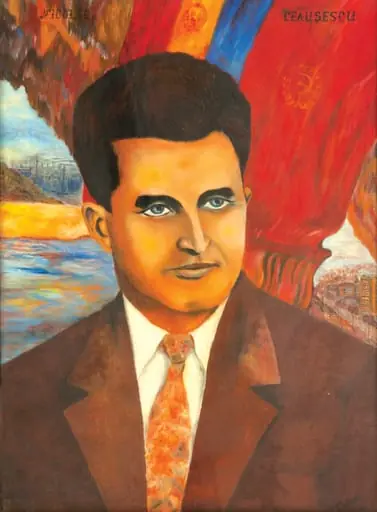 Tablou, ulei pe pânză, ”Portret Nicolae Ceaușescu”, nesemnat, atribuit lui Teodor Istrati. Portret Nicolae Ceaușescu pe fundal steagul cu stema R.S.R. și steagul cu sigla P.C.R., elemente de peisaj urban, inscripție cu majuscule în partea de sus ”NICOLAE CEAUȘESCU”. Oferit de autor lui Nicolae Ceaușescu, București, 25 iunie 1971.
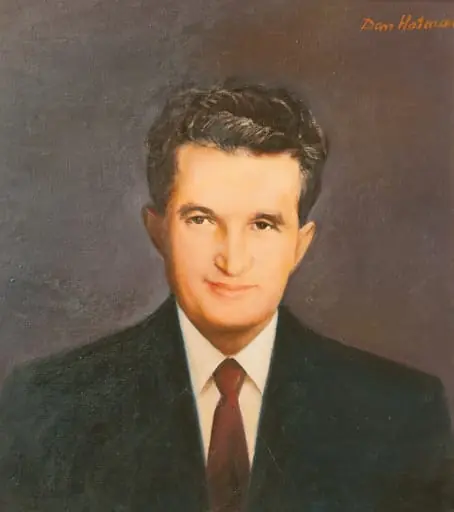 Tablou ulei pe pânză, „Nicolae Ceaușescu” semnat Dan Hatmanu în partea dreaptă sus, nedatat. Comandat de Consiliul Național al Femeilor și oferit cu ocazia aniversării zilei de naștere (ianuarie 1989).
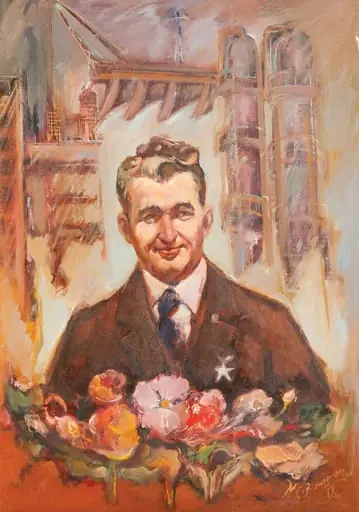 Tablou, ulei pe pânză, „Portret Nicolae Ceaușescu”, semnat C. Radovan și datat în partea dreaptă jos 1978. Nicolae Ceaușescu este reprezentat înt-o atitudine jovială, în piept are însemnul ”Erou al Republicii Socialiste România”. Pe fundal realizări ale regimului comunist. Oferit de Comitetul Județean de Partid Timiș, 22 ianuarie 1978.
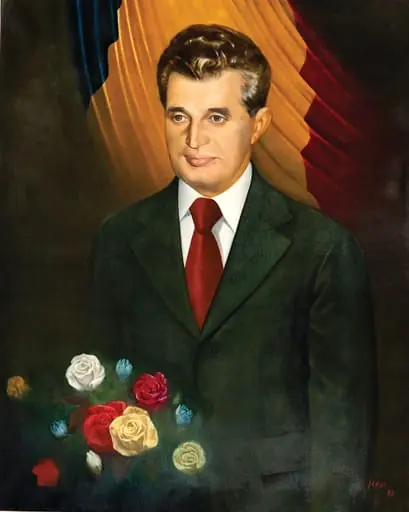 Tablou ulei pe pânză, portret Nicolae Ceaușescu semnat Ispas și datat în partea dreaptă jos. Este prezentat într-o postură solemnă cu un buchet de trandafiri, în spatele său tricolorul. Culorile drapelului se regăsesc și în coloritul trandafirilor. Comandat de Comitetul Județean de Partid Alba (1983).
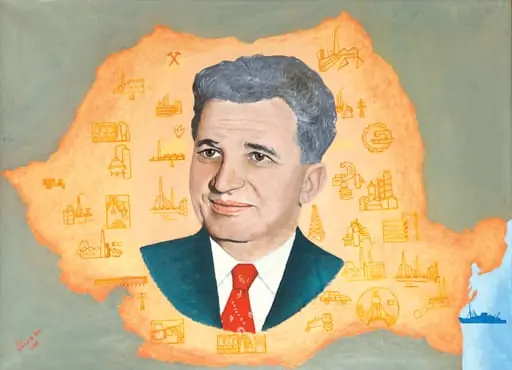 Tablou, ulei pe pânză, portretul lui Nicolae Ceaușescu este redat în mijlocul unei hărți a României, înconjurat de diferite obiective industriale. Comandat și oferit de Comitetul Județean de Partid Alba, 15 octombrie 1981.
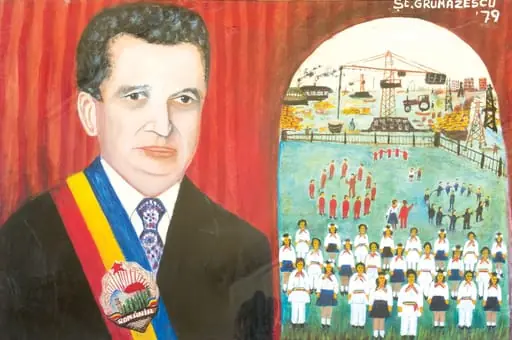 Tablou, ulei pe pânză, Nicolae Ceaușescu și copii, semnat și datat în partea dreaptă sus Șt. Grumăzescu, 1979. Nicolae Ceaușescu este prezentat în partea stângă urmărind o festivitate - pionieri, copii dansând în horă. Maniera de realizare a tabloului este una naivă. Oferit de Ștefan Grumăzescu din București.
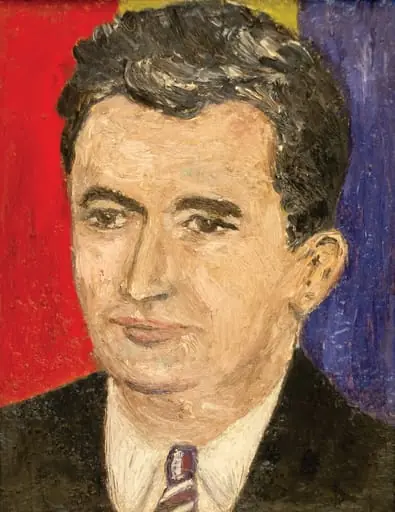 Pablou, ulei pe carton, portret Nicolae Ceaușescu. Oferit lui Nicolae Ceaușescu de Aurica Pânzaru, prof. de matematică fizică din Dorohoi, 23 ianuarie 1978.
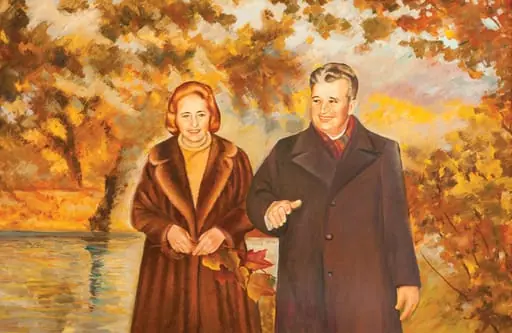 Tablou, ulei pe pânză, „Portret Nicolae și Elena Ceaușescu”, nesemnat, atribuit Cornelia Ionescu - Drăgușin. Tabloul îi prezintă pe soții Ceaușescu întru-un peisaj de toamnă pe malul unui lac. Tablou comandat și oferit de Comitetul Județean de Partid Giurgiu (1985).
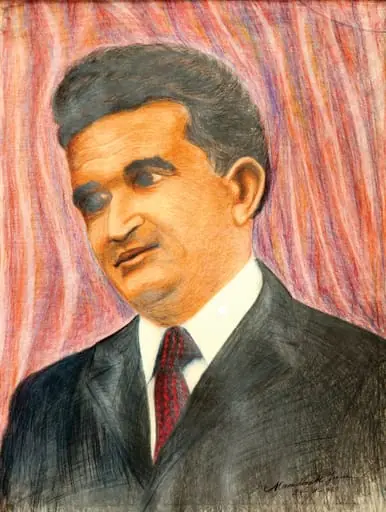 Tablou, desen pe carton, ”Nicolae Ceaușescu”, semnat cu tuș negru Jeana Macedonschi și datat 24.IX.1974, în partea dreaptă jos. Tablou oferit lui Nicolae Ceaușescu de către autor.
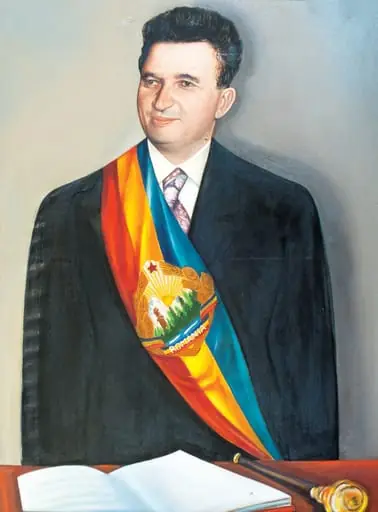 Tablou, ulei pe pânză, ”Portret Nicolae Ceaușescu”, nesemnat, atribui lui Nicolae Toma. Oferit de autor, cu ocazia zilei de naștere a lui Nicolae Ceaușescu, Ploiești, ianuarie 1978.
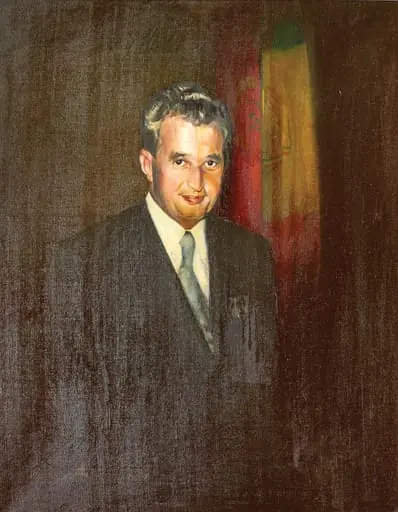 Tablou, ulei pe pânză, Portretul lui Nicolae Ceaușescu, nesemnat, atribiut lui Eugen Palade. Nicolae Ceaușescu cu două însemne de ”Erou al Republicii Socialiste România”, în spatele său steagul cu stema RSR și steagul PCR. Comandat și oferit de Ministerul de Interne, Direcția de Securitate și Gardă, 25 ianuarie 1978.
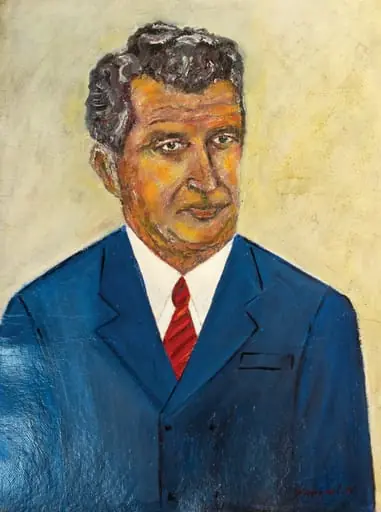 Tablou, ulei pe carton,”Nicolae Ceaușescu”, semnat în pertea dreaptă jos Savopol N., nedatat. Oferit cadou de autor, Nicola Savopol, lui Nicolae Ceaușescu cu ocazia zilei de naștere, București.
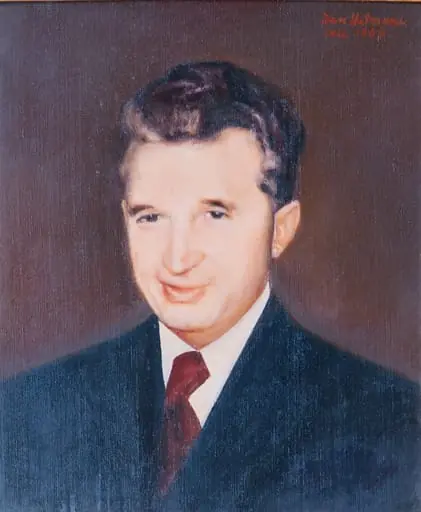 Tablou reprezentându-l pe Nicolae Ceaușescu, semnat Dan Hatmanu. Comandat de Comitetul Județean de Partid Iași și oferit cu ocazia zilei de naștere a președintelui RSR (ianuarie 1989).
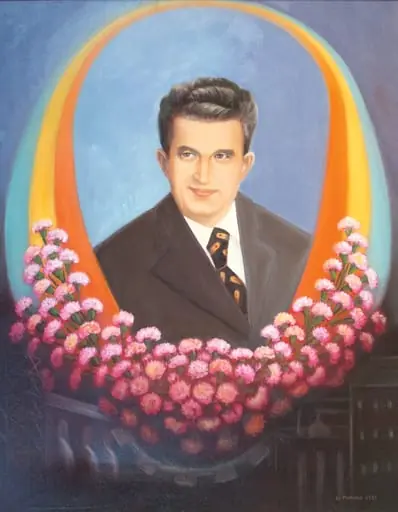 Tablou „Omagiu” semnat N. Porumb și datat în partea dreaptă jos. Tabloul îl reprezintă pe Nicolae Ceaușescu cu tricolorul în spate sub formă de curcubeu; în partea de jos a tabloului o ”mare” de garoafe și realizările socialismului. Comandat de Comitetul Județean de Partid Sibiu și dăruit lui Nicolae Ceaușescu cu ocazia zilie de naștere (ianuarie 1989).
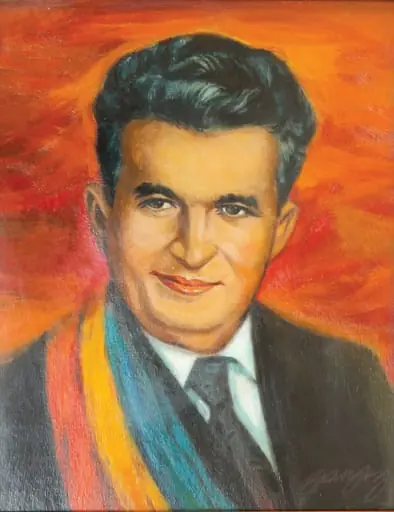 Tablou, „Portret Nicolae Ceaușescu”, semnat Barany în partea dreaptă jos, nedatat. Tabloul prezintă portretul lui Nicolae Caușescu cu banderolă tricoloră pe un fundal roșu - oranj. Comandat și oferit de Comitetul Județean de Partid Arad cu ocazia unei aniverări.
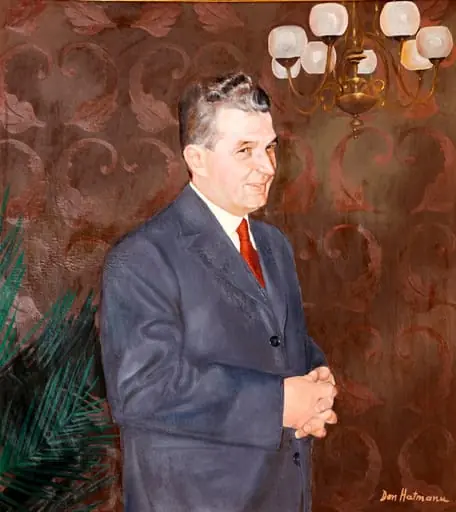 Tablou reprezentându-l pe Nicolae Ceaușescu, semnat dreapta jos Dan Hatmanu. Oferit cadou cu ocazia împlinirii vârstei de 60 de ani de către președintele RSR (ianuarie 1978).
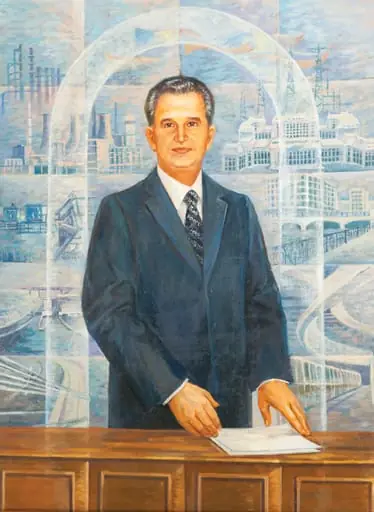 Tablou, „Epoca de aur”, atribuit Doina Catargiu. Tabloul îl prezintă pe Nicolae Ceaușescu într-un cadru oficial, la tribună. În spatele său marile realizări ale epocii sale: Casa Republicii, metroul, Canalul Dunăre - Marea Neagră, rafinării, combinate etc. Comandat și oferit de Comitetul Județean de Partid Suceava (1988).
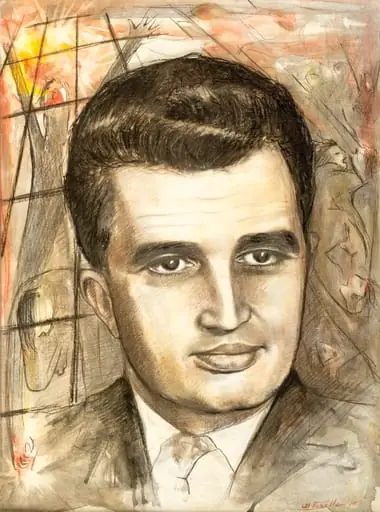 Portret Nicolae Ceaușescu, tablou realixat prin tehnică mixtă, semnat Al. Torella și datat 1975 în partea dreaptă jos.A fost oferit lui Nicolae Ceaușescu de delegația italiană condusă de Benito Craxi cu ocazia vizitei în România din noiembrie 1978