Artwork
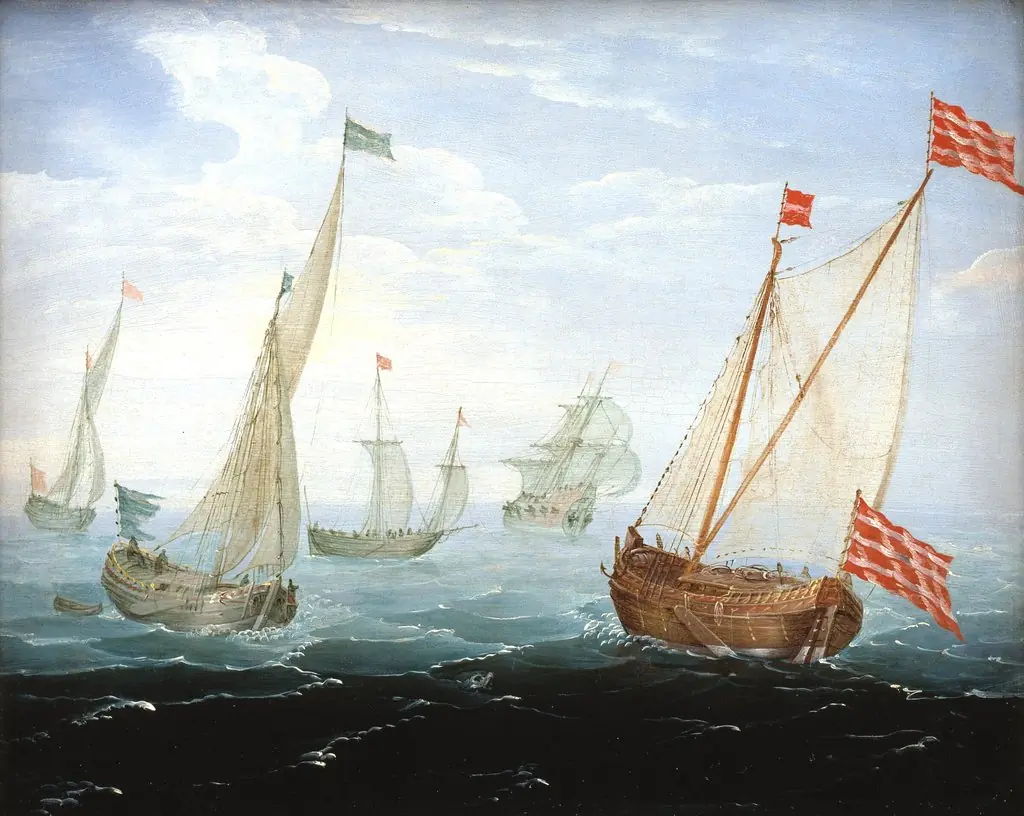
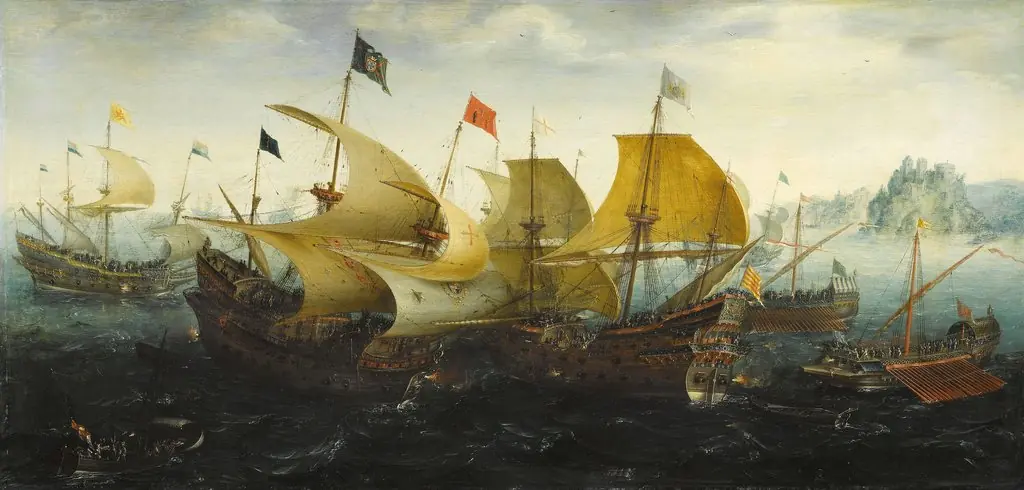
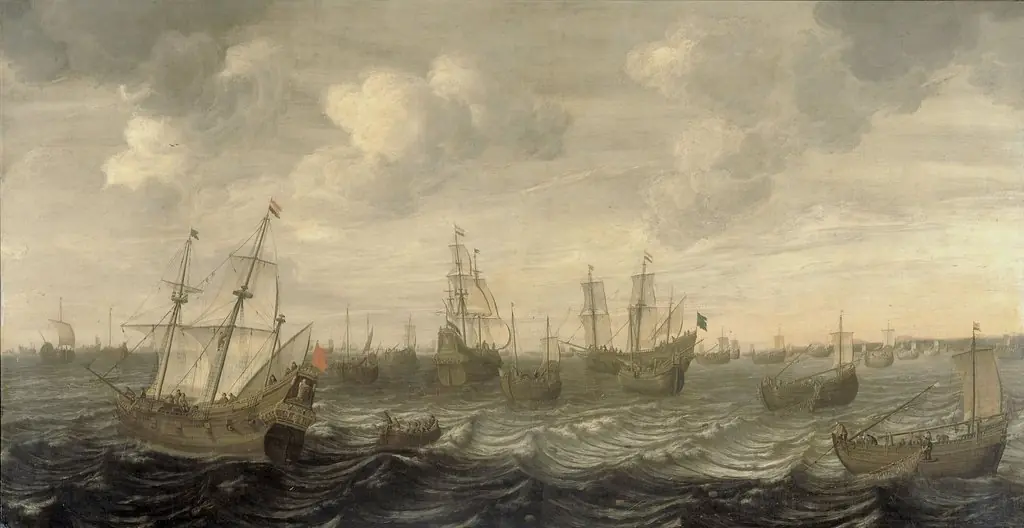
Sail boats on the sea
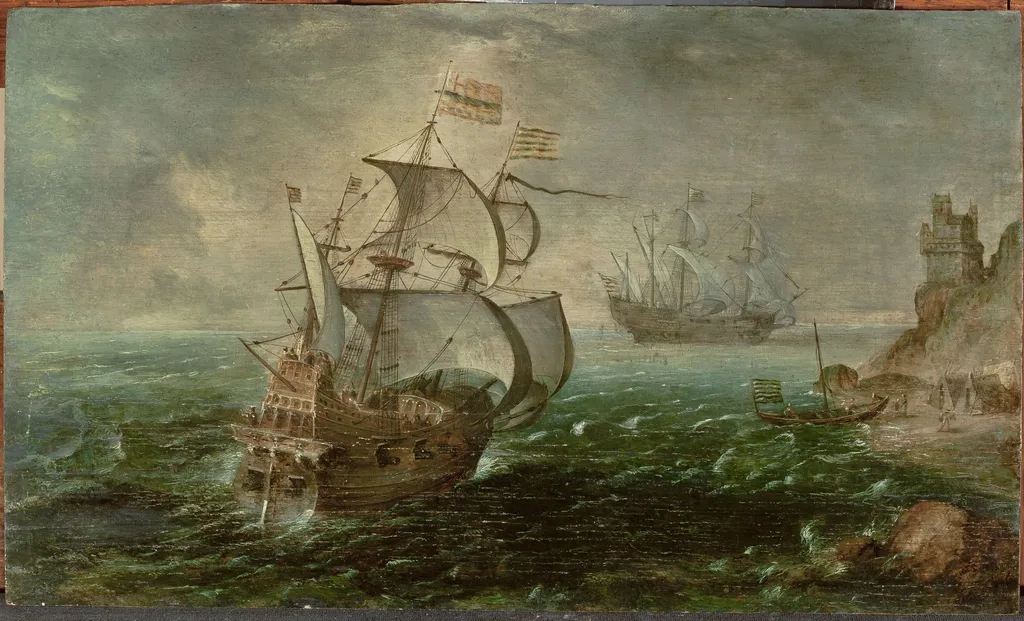
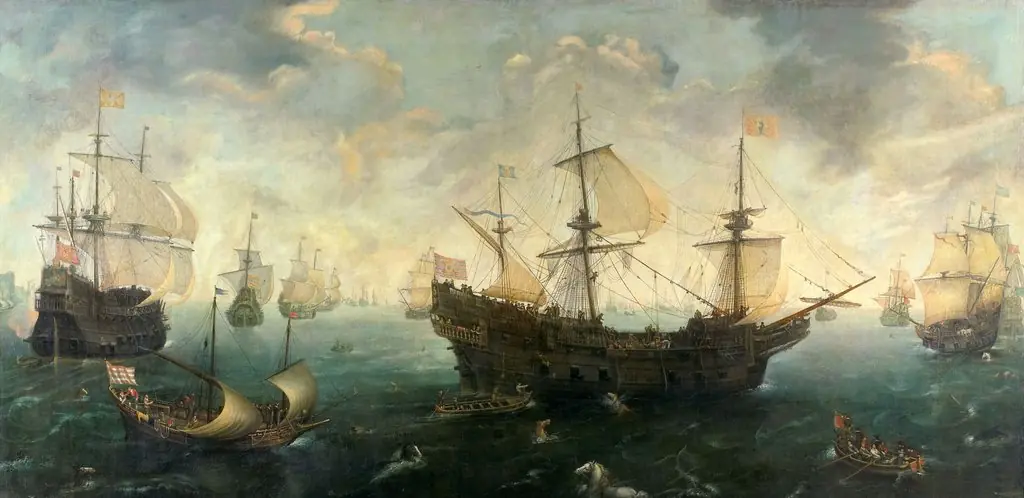
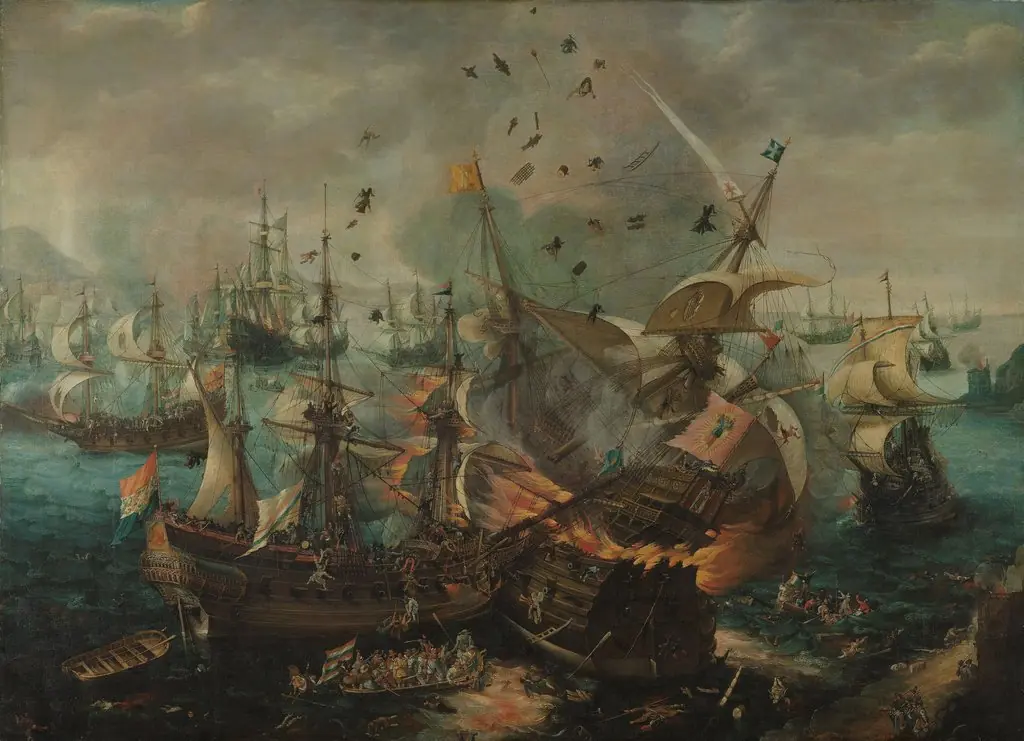
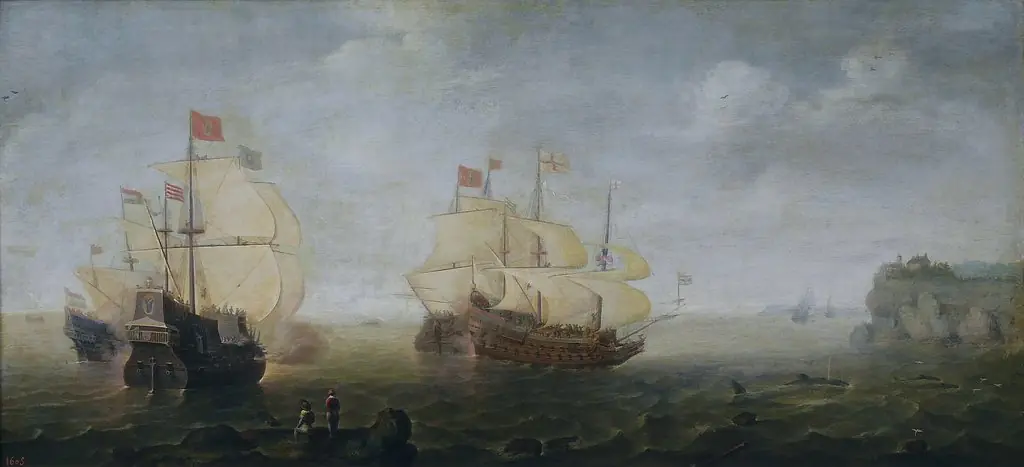
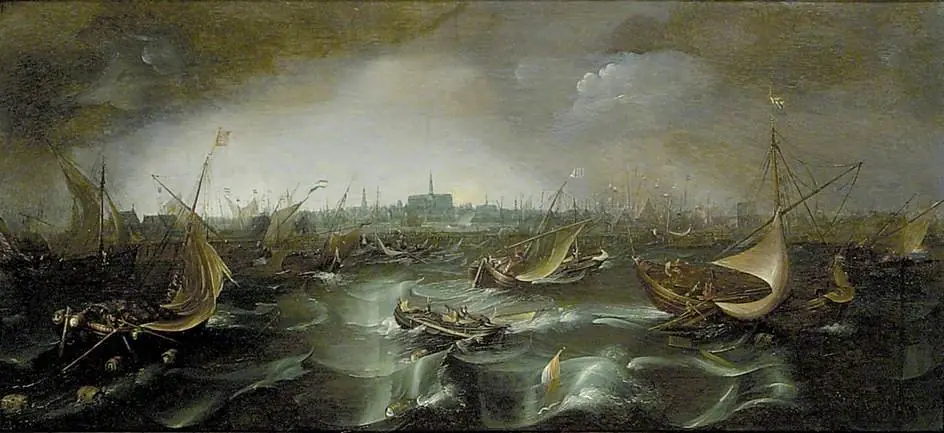
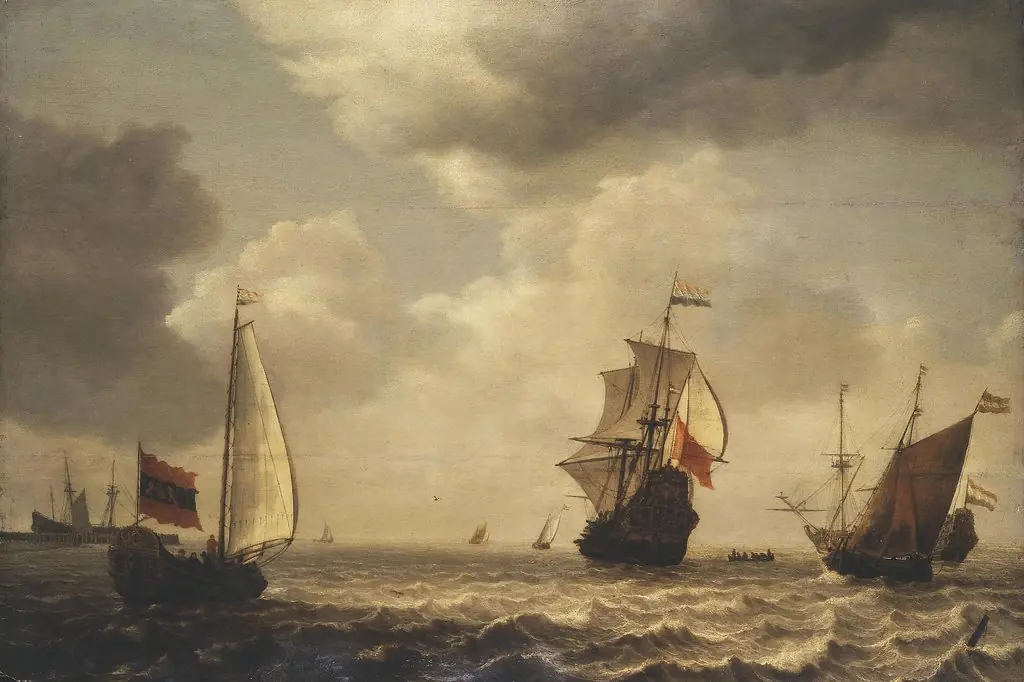
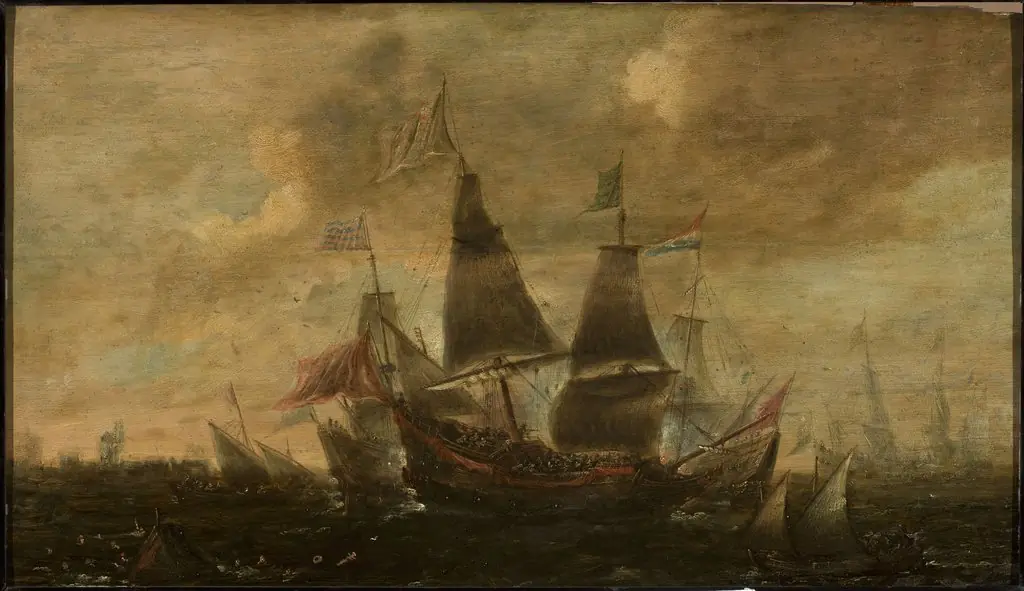
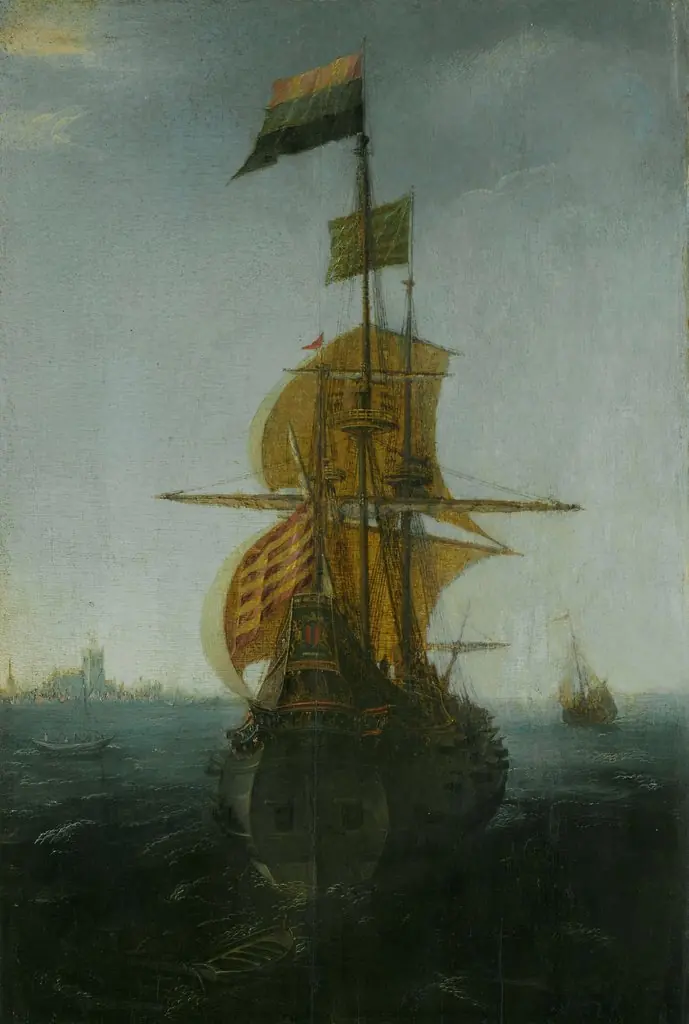
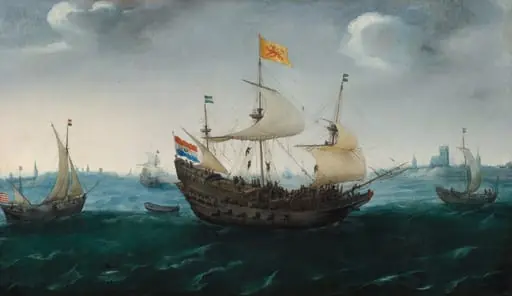
Sail boats on the sea is an oil painting by Cornelis Claesz van Wieringen. It dates from 1615 and is held in the collection of the National Museum in Warsaw.
About this work
Overview
Painted around 1615 by Cornelis Claesz van Wieringen, this oil work depicts a seascape with three sailing vessels caught in turbulent waters.
Painted around 1615 by Cornelis Claesz van Wieringen, this oil work depicts a seascape with three sailing vessels caught in turbulent waters. The composition emphasizes motion through dynamic wave patterns and billowing sails. A distant rocky coastline anchors the right edge, while a heavy, overcast sky dominates the upper half. The palette is restrained, favoring grays, muted blues, and earthy browns, reinforcing the somber mood of the marine environment.
Subject & Meaning
The painting presents three merchant or fishing vessels navigating a stormy sea, their crews rendered as tiny, indistinct figures. The focus is not on individual narratives but on the struggle between human endeavor and nature’s force. The boats’ proximity suggests a shared fate, underscoring the vulnerability of seafarers in unpredictable waters. No heroic or symbolic elements are present—only the raw reality of maritime labor.
Technique & Style
Van Wieringen employs loose, energetic brushwork to convey the chaos of the sea, with thick impasto on wave crests and delicate strokes for spray and wind. The sails are rendered with subtle tonal shifts to suggest fabric tension and movement. Depth is achieved through atmospheric perspective, with the shore fading into haze. The muted color scheme avoids dramatic contrast, favoring tonal harmony to enhance the painting’s somber realism.
History & Provenance
The painting has been part of the National Museum in Warsaw’s collection since at least the early 20th century. Its origins trace to the Dutch Golden Age, where marine subjects were popular among northern European patrons. While specific ownership records before its arrival in Poland are unclear, its style aligns with other works by van Wieringen, known for his detailed seascapes commissioned by coastal communities.
Context
Created during the height of Dutch maritime power, the painting reflects a cultural fascination with the sea as both economic lifeline and existential threat. Unlike mythological or battle scenes common in contemporary art, this work presents an unidealized view of everyday seafaring. It resonates with the practical concerns of a society dependent on trade and fishing, where the sea’s unpredictability was a daily reality.
Legacy
Van Wieringen’s work contributed to the development of Dutch marine painting as a distinct genre, influencing later artists through its emphasis on naturalism and atmospheric conditions. Though not widely exhibited internationally, this painting remains a significant example of early 17th-century Dutch seascapes, valued for its unembellished portrayal of maritime life and technical restraint.
Artist & collection
Artist
Cornelis Claesz van Wieringen (1577–1633) was an artist, born in Haarlem.