Artwork
Ships in a Squall on the Haarlemmer Meer
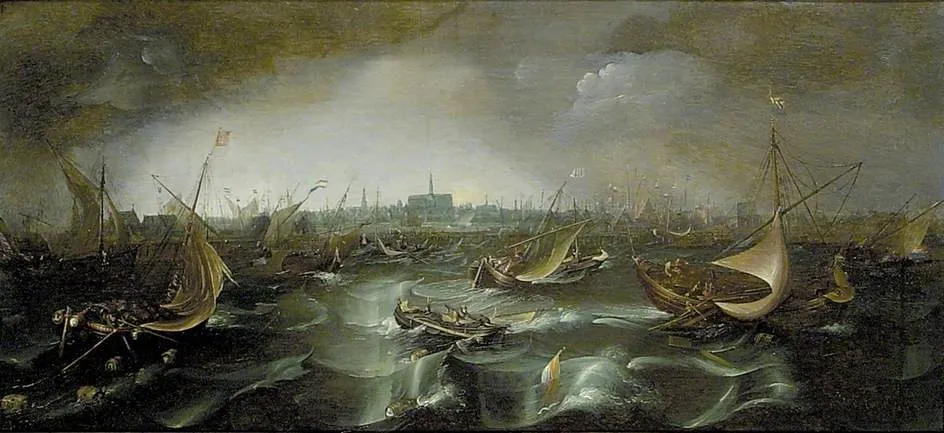
Ships in a Squall on the Haarlemmer Meer is an oil painting by Cornelis Claesz van Wieringen. It dates from 1615 and is held in the collection of the Ashmolean Museum.
About this work
Overview
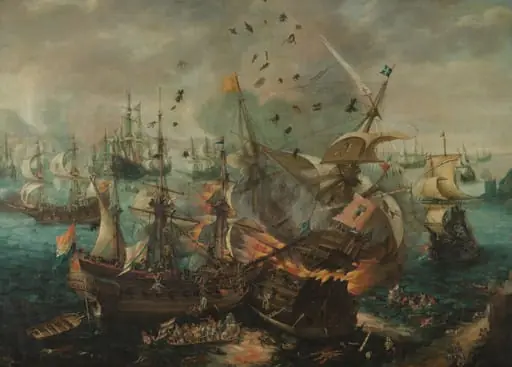
Painted around 1615 by Cornelis Claesz van Wieringen, this oil work captures a violent storm over the Haarlemmer Meer, a former lake near Haarlem. The scene presents multiple vessels struggling against wind and wave, rendered with intense realism. The painting resides in the Ashmolean Museum, Oxford, where it stands as a significant example of early 17th-century Dutch marine painting.
Subject & Meaning
Behind them, the distant skyline of Haarlem—church spires and rooftops—offers a quiet counterpoint, suggesting the stability of land versus the chaos of water.
The painting portrays a fleet of ships caught in a sudden squall, their sails shredded and masts damaged, emphasizing human vulnerability against nature’s force. Behind them, the distant skyline of Haarlem—church spires and rooftops—offers a quiet counterpoint, suggesting the stability of land versus the chaos of water. The scene may reflect contemporary anxieties about maritime safety and the unpredictability of life on the water.
Technique & Style
Van Wieringen employs strong chiaroscuro to heighten emotional tension: dark, churning waters and brooding clouds contrast sharply with the faintly lit cityscape. Brushwork is vigorous, particularly in the depiction of wind-whipped sails and spray. The composition directs the viewer’s eye diagonally across the canvas, from the storm’s center to the distant horizon, reinforcing the sense of movement and impending danger.
History & Provenance
The painting was likely commissioned or collected during the early 1600s, a period when Dutch maritime commerce was expanding rapidly. It entered the Ashmolean’s collection in the 19th century, having passed through private hands in the Netherlands. Its survival is notable, as many similar works from this era were lost to decay or damage from exposure.
Context
In early 17th-century Holland, marine scenes were popular among merchants and civic leaders who took pride in their seafaring economy. Van Wieringen’s work aligns with a growing tradition of depicting storms not as mere landscapes but as dramatic narratives of peril and endurance. His focus on realism and emotional intensity set him apart from more decorative contemporaries.
Legacy
Though less widely known than later Dutch marine painters, Van Wieringen’s work influenced the development of storm scenes in Northern European art. His use of light and motion contributed to a visual language later refined by artists like Willem van de Velde. This painting remains a key reference for understanding how Dutch painters translated maritime experience into compelling visual drama.
Artist & collection
Artist
Cornelis Claesz van Wieringen (1577–1633) was an artist, born in Haarlem.

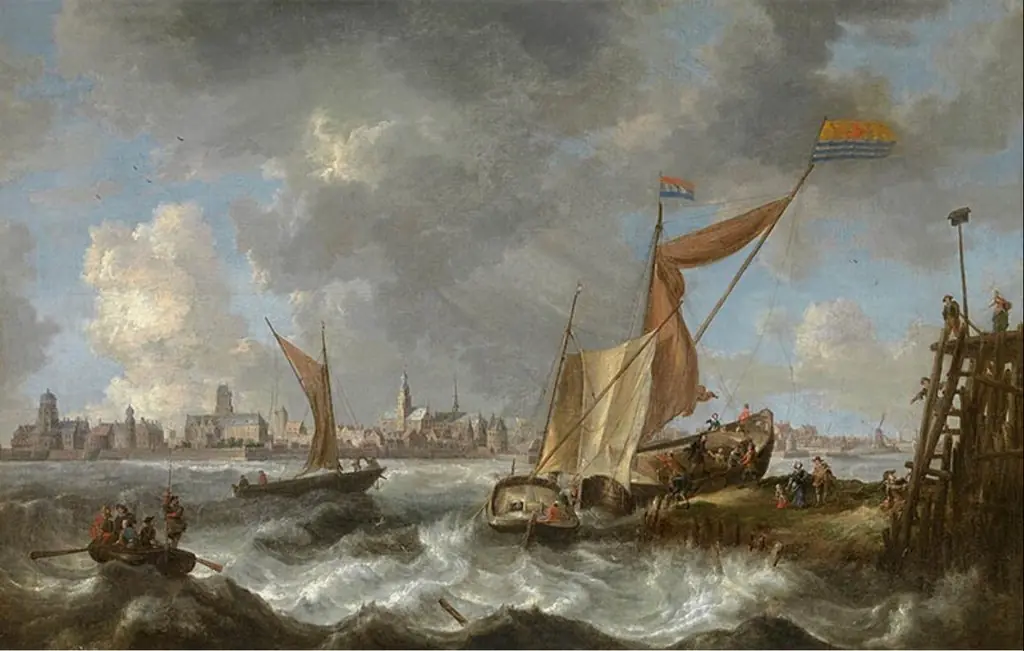 View of Middelburg
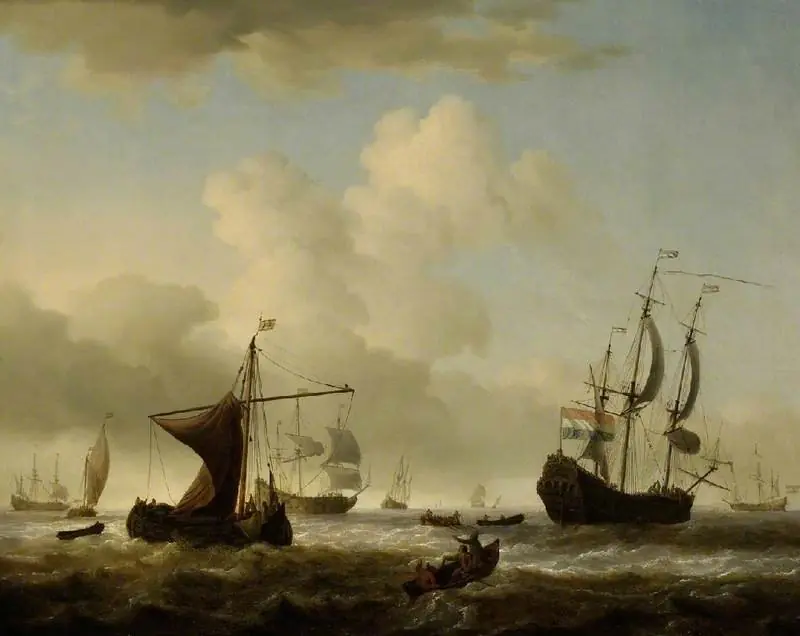 Dutch men o'war and other shipping in choppy seas
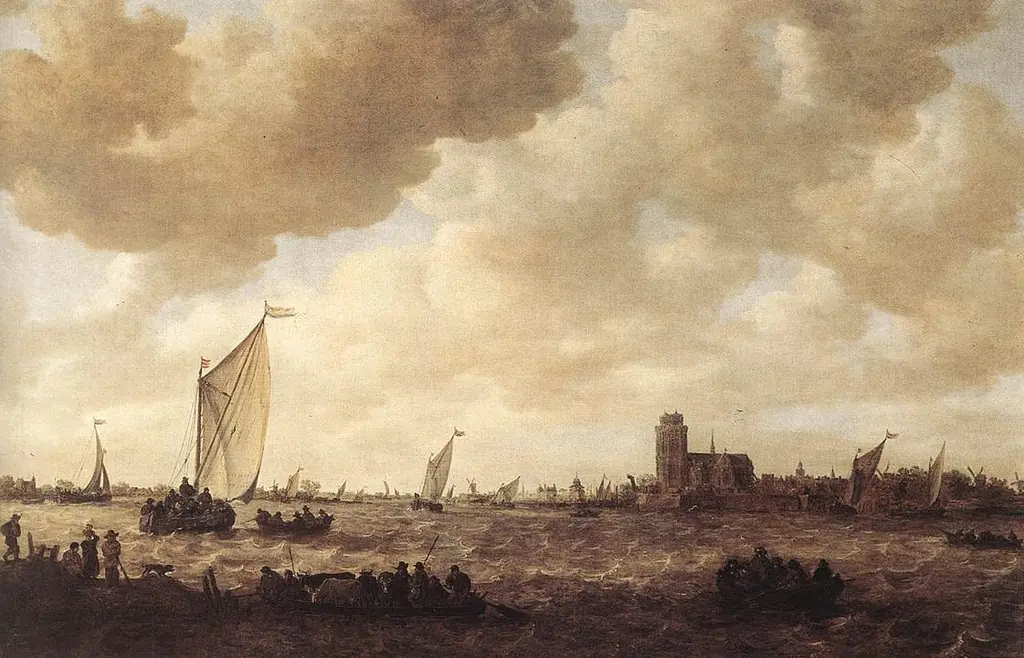 A View of Dordrecht
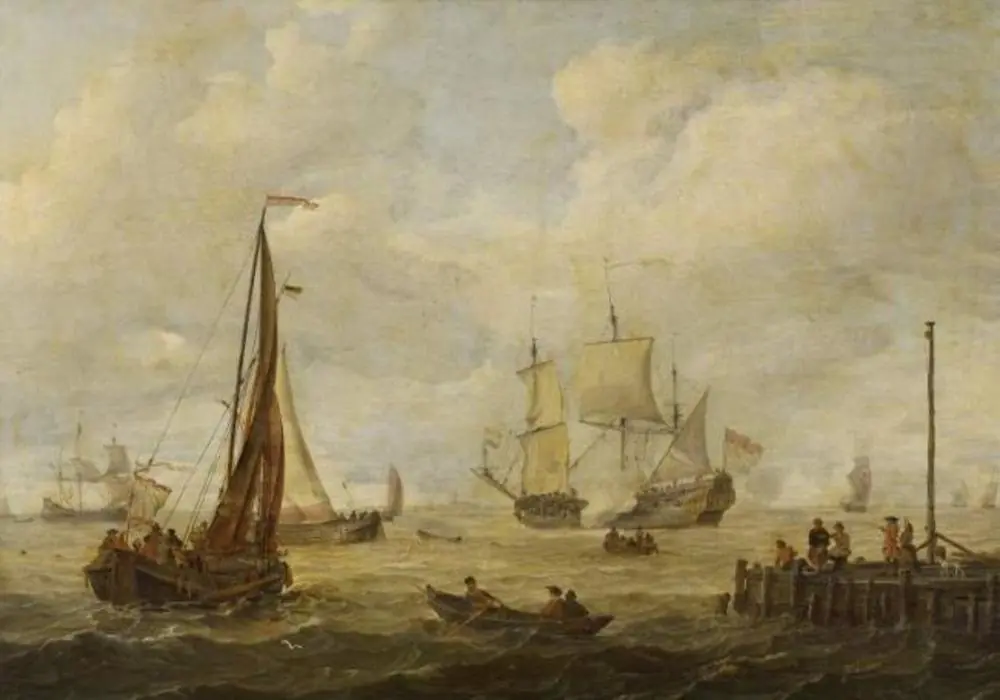 Sea-piece with a Dutch man-of-war
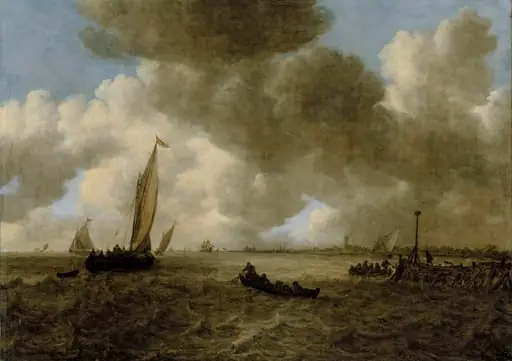 Myrskyinen merimaisema
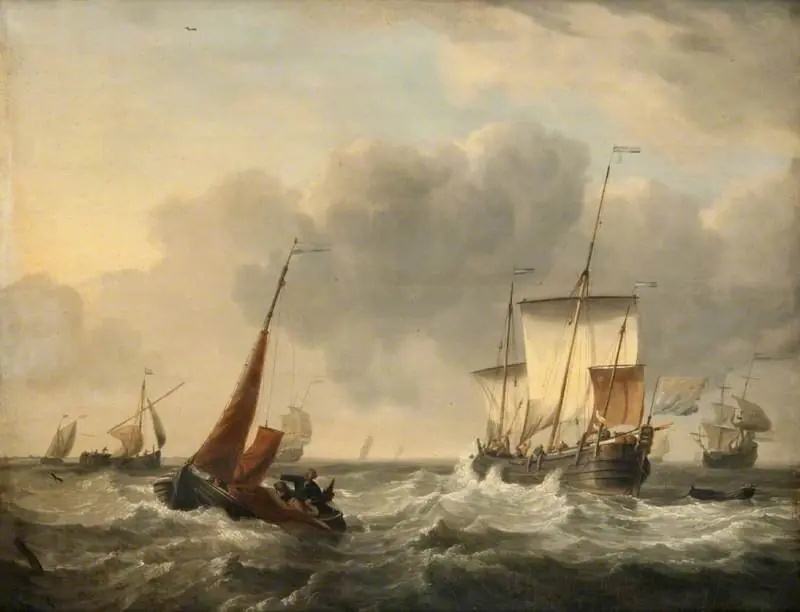 A Dutch Fishing Buss under Sail, with Other Vessels in a Breeze
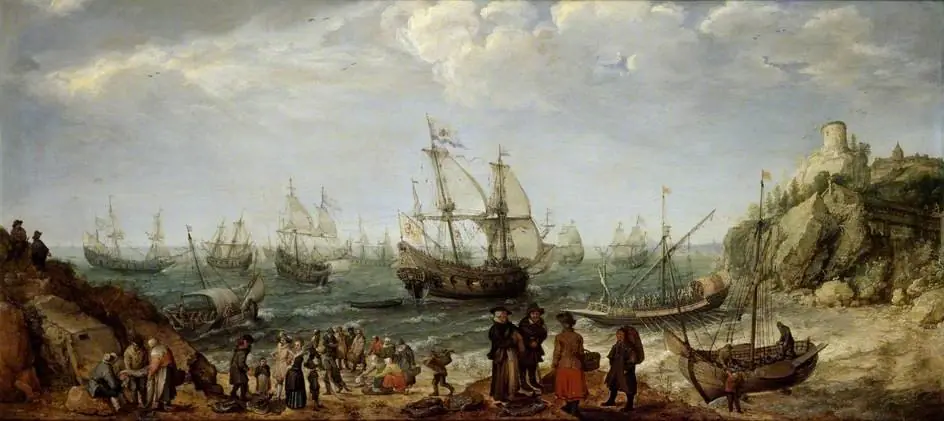 Warships off the Coast with a Fishmarket on the Beach
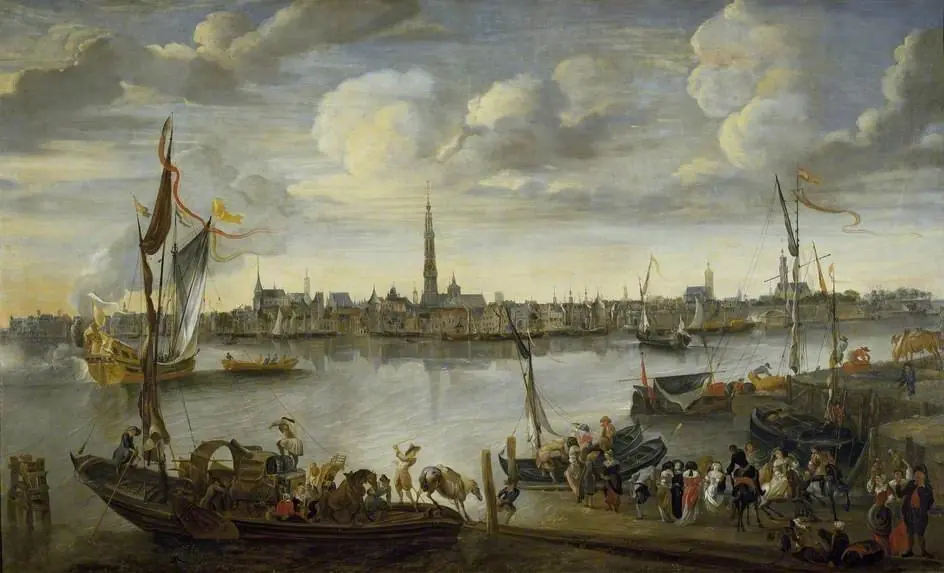 View of the Roads of Antwerp from the West Bank
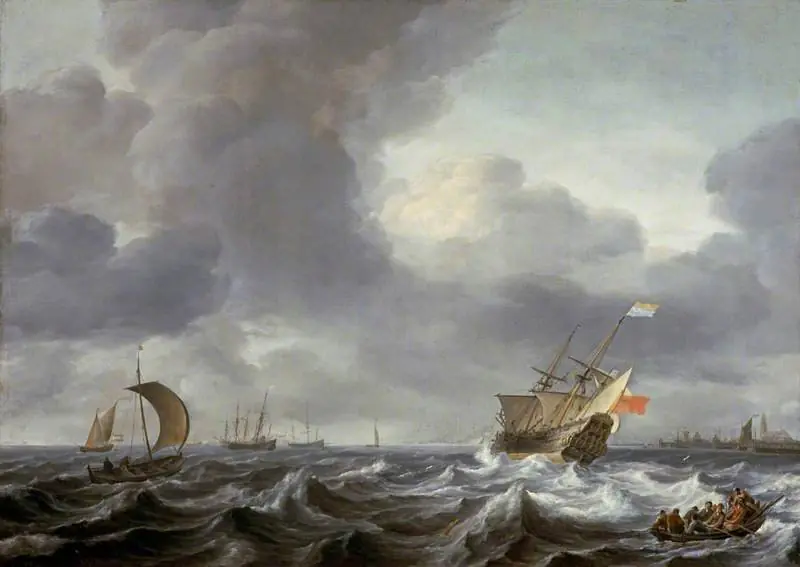 Shipping in a Choppy Sea