Artwork
Fruta
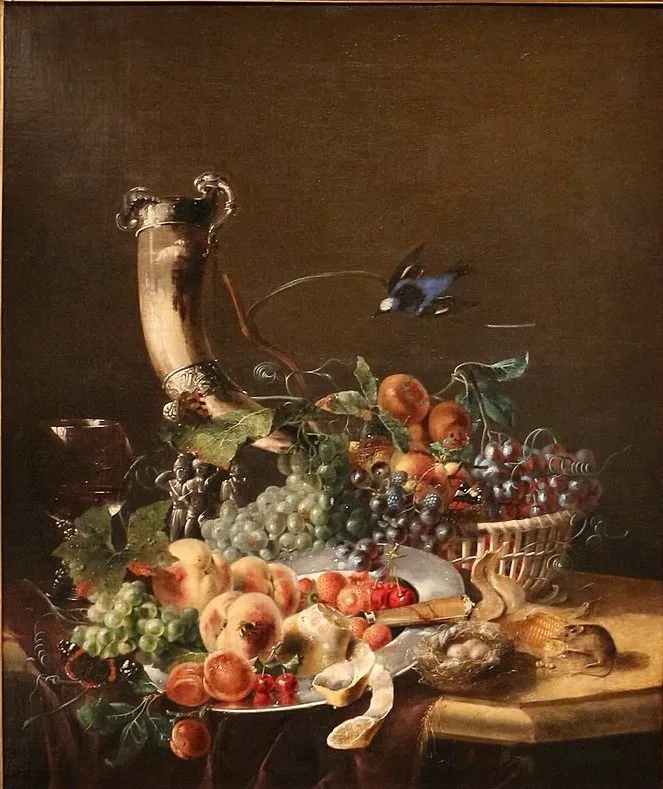
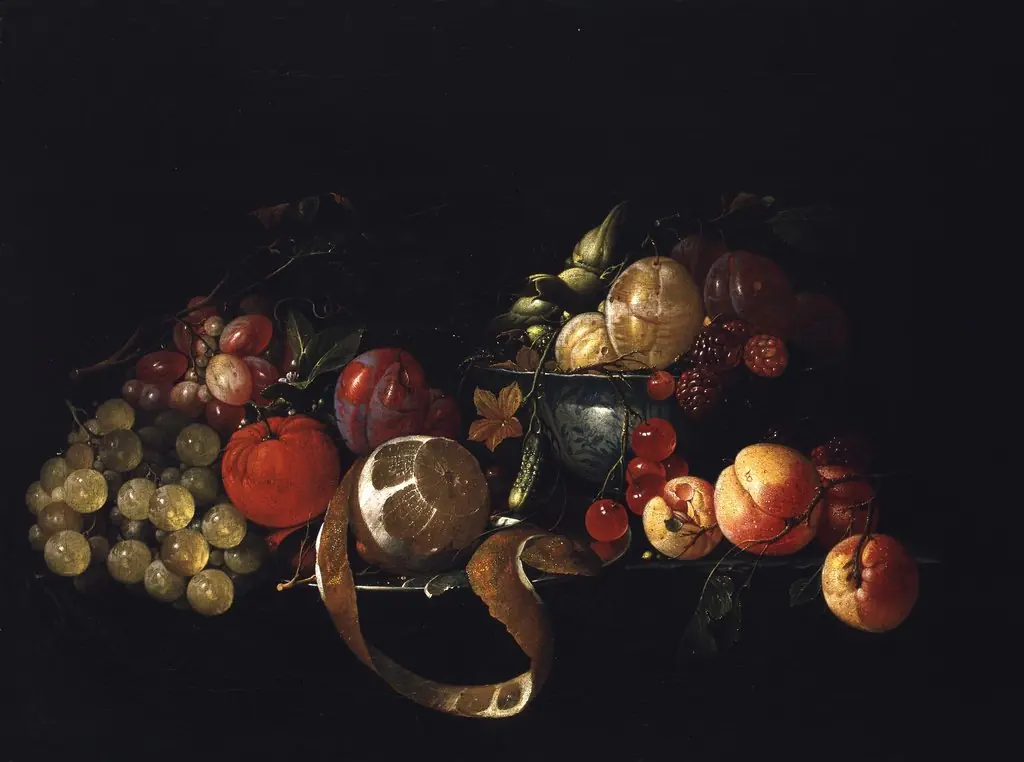
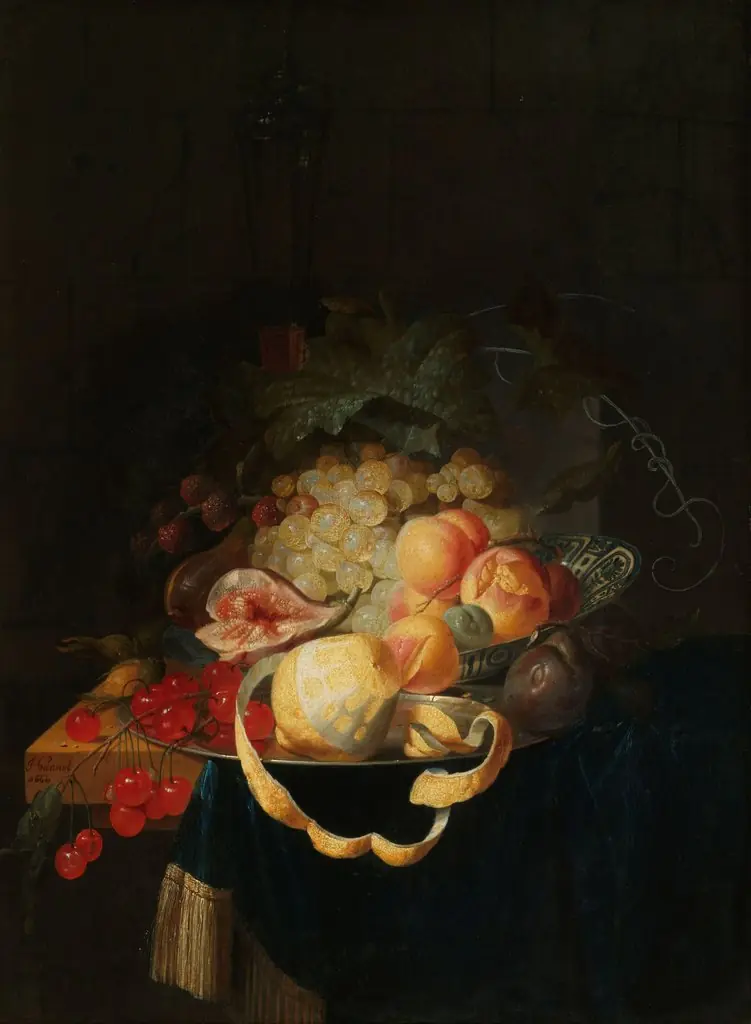
Fruta is an unspecified painting by the Dutch Golden Age artist Cornelis de Heem. It dates from 1650 and is held in the collection of the National Museum of Ancient Art.
About this work
Overview
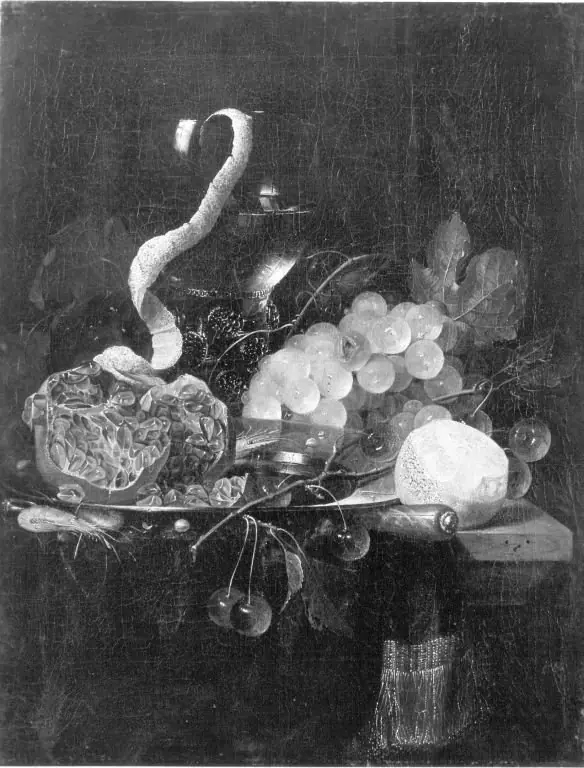
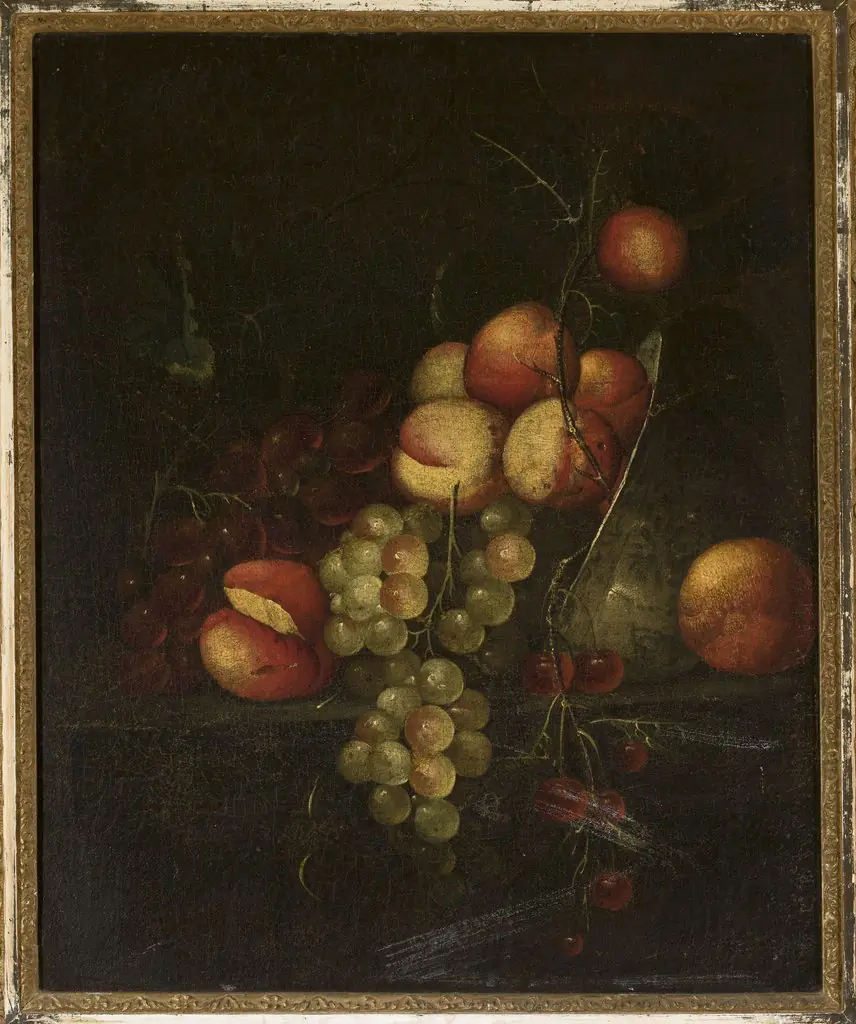
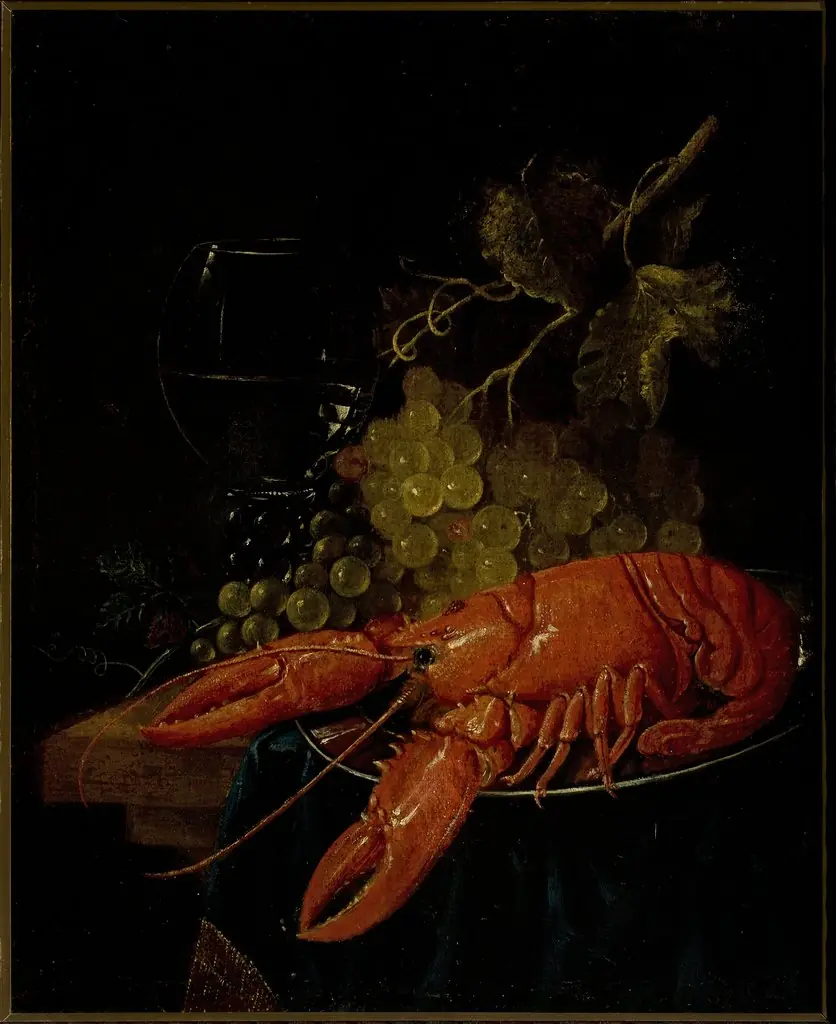
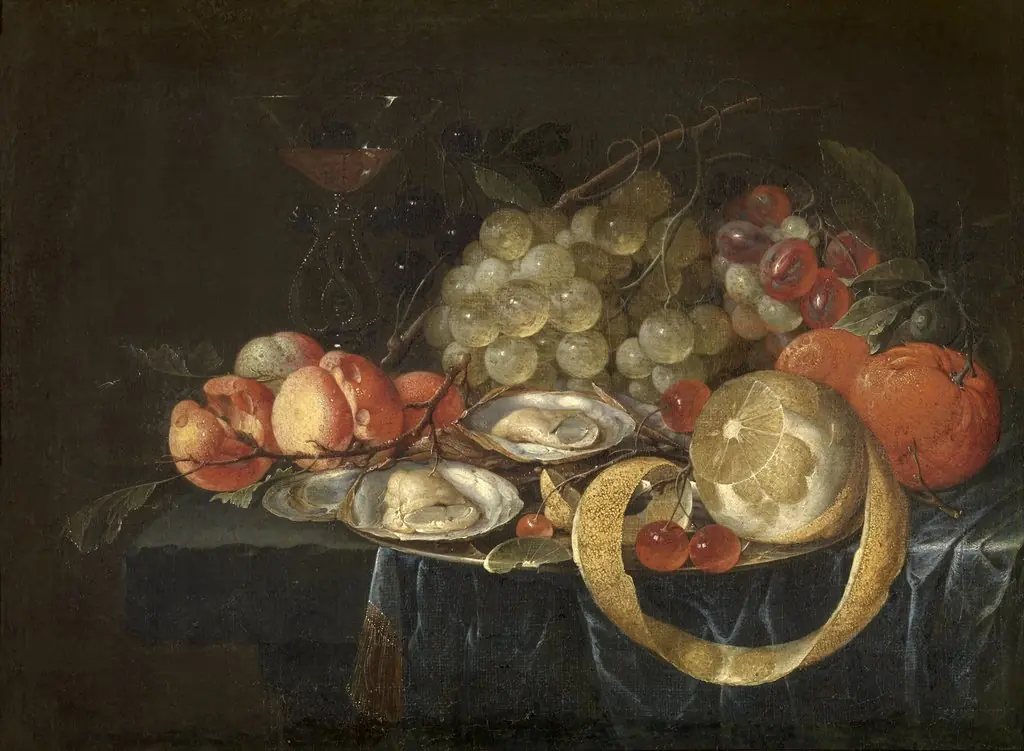
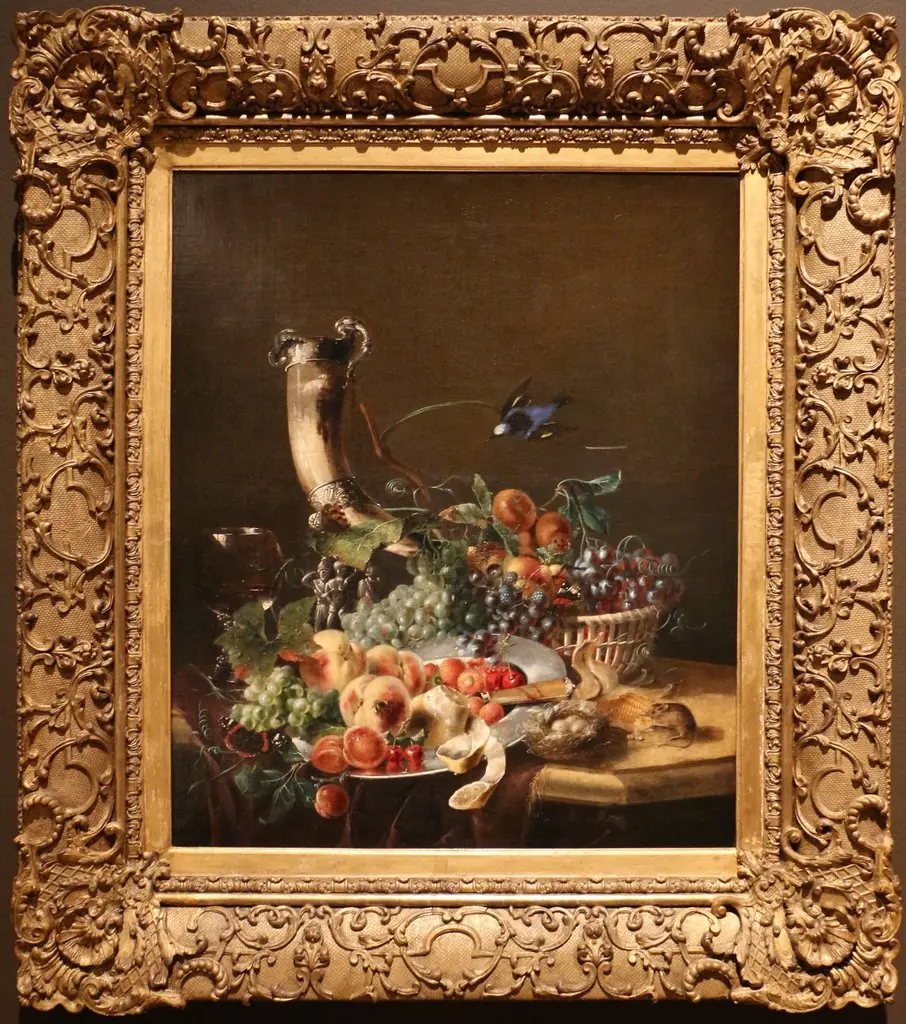
Cornelis de Heem’s still‑life, dated to around 1650, presents a richly arranged tabletop laden with assorted fruit. Grapes, peaches, berries and other produce are grouped alongside a large horn and a woven basket, all set against a deep, almost black background that intensifies the vivid hues of the objects.
Subject & Meaning
The composition celebrates abundance, with the profusion of ripe fruit and luxurious accessories suggesting wealth and the pleasures of the harvest. The inclusion of the horn, a traditional symbol of plenty, reinforces the theme of opulence and the fleeting nature of earthly bounty.
Technique & Style
De Heem employs the chiaroscuro typical of mid‑seventeenth‑century Dutch still lifes, using a dark ground to heighten the contrast and give the fruit a luminous, three‑dimensional quality. Fine brushwork renders the textures of skin, peel and fabric, while subtle glazes create a polished, almost tactile surface.
History & Provenance
Created circa 1650, the work entered the collection of the National Museum of Ancient Art, where it remains on display. Its attribution to Cornelis de Heem aligns with his known output of elaborate fruit arrangements during the later phase of his career.
Artist & collection

Artist
Cornelis de Heem was a still-life painter associated with both Flemish Baroque and Dutch Golden Age painting.

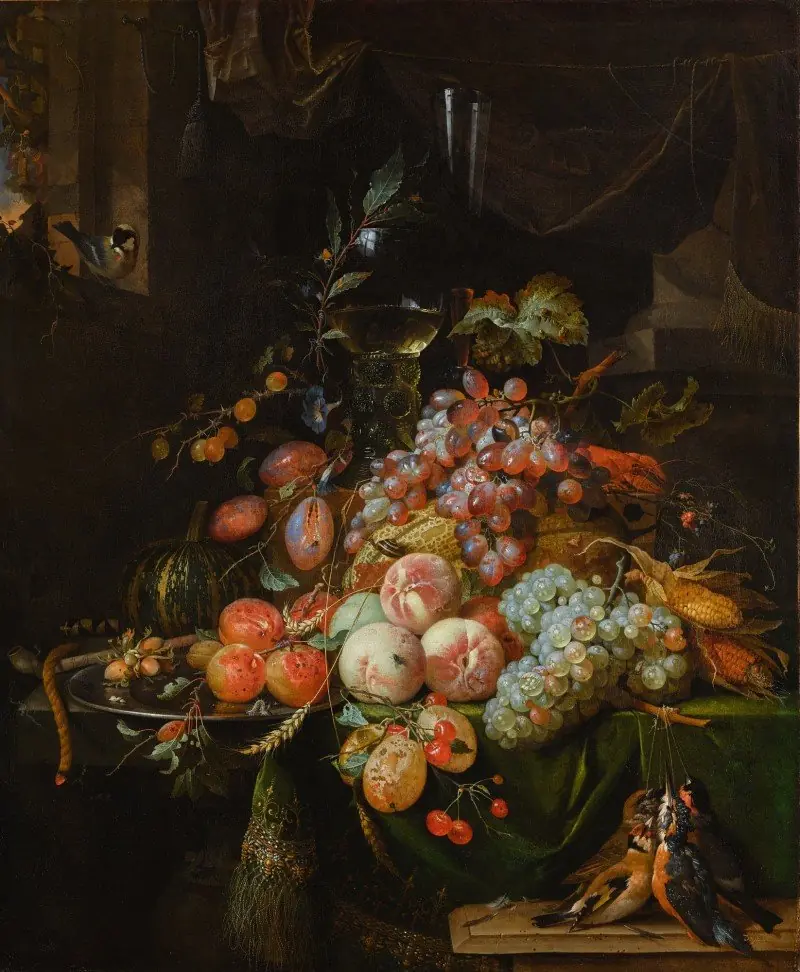 Still Life with Plums, Peaches, Apricots, Grapes and a Melon
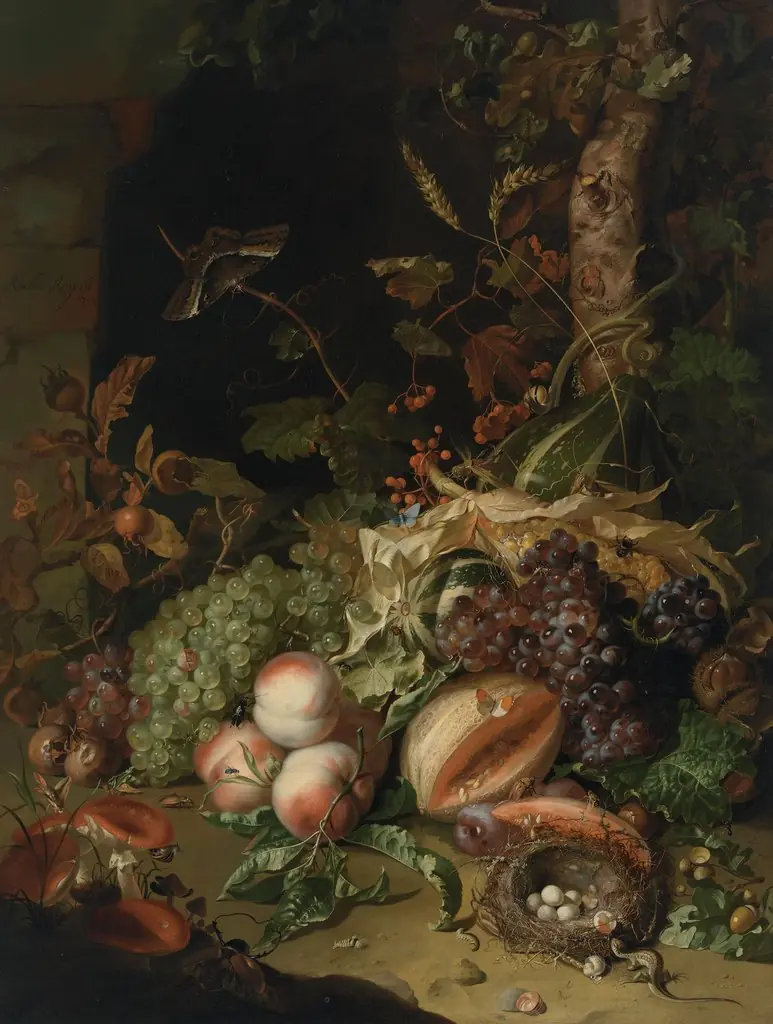 Fruit on a Forest Floor
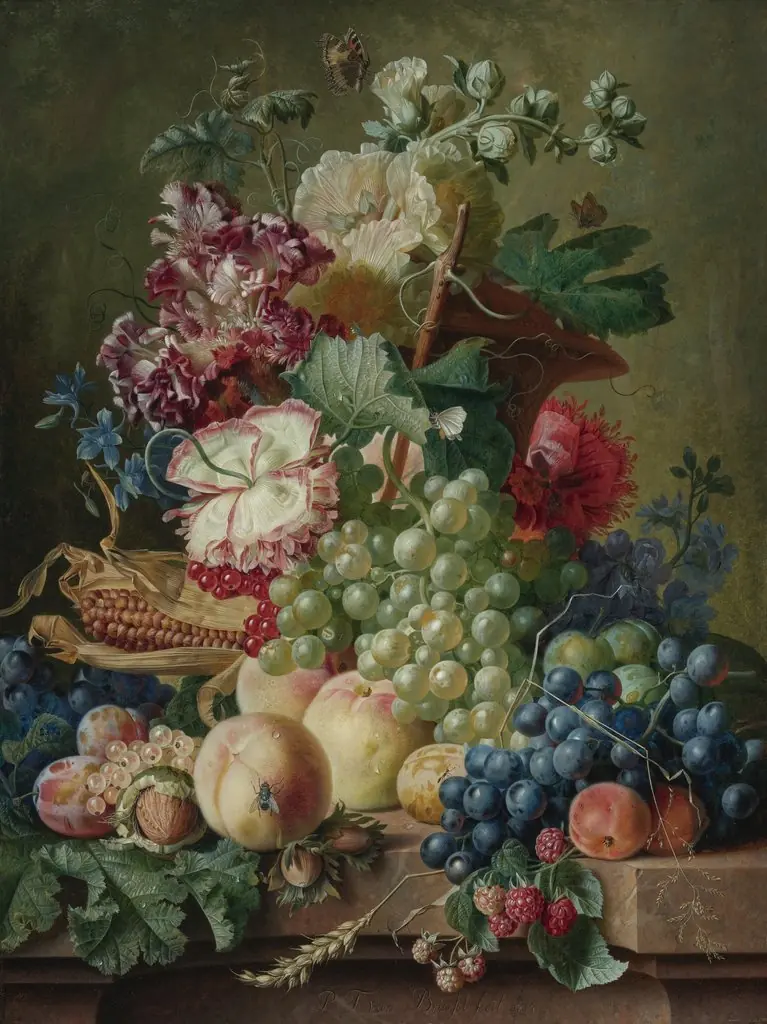 Still life of flowers and fruits on a marble ledge
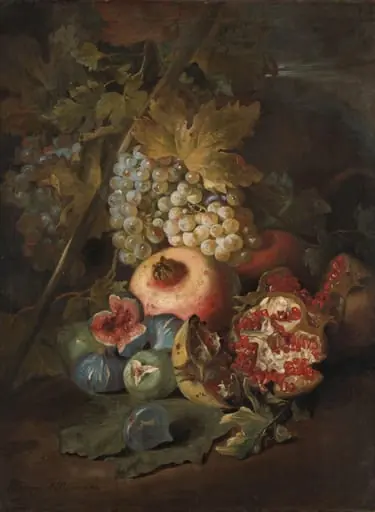 Bunches of Grapes, Pomegranates and Figs in a Landscape
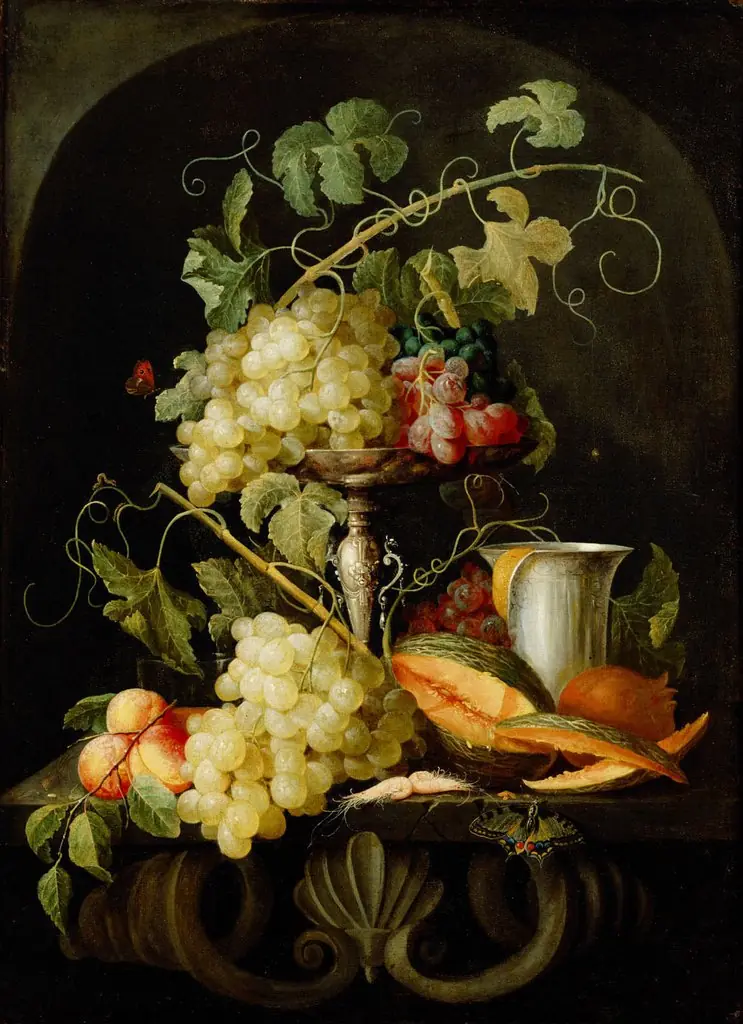 Still life with fruit
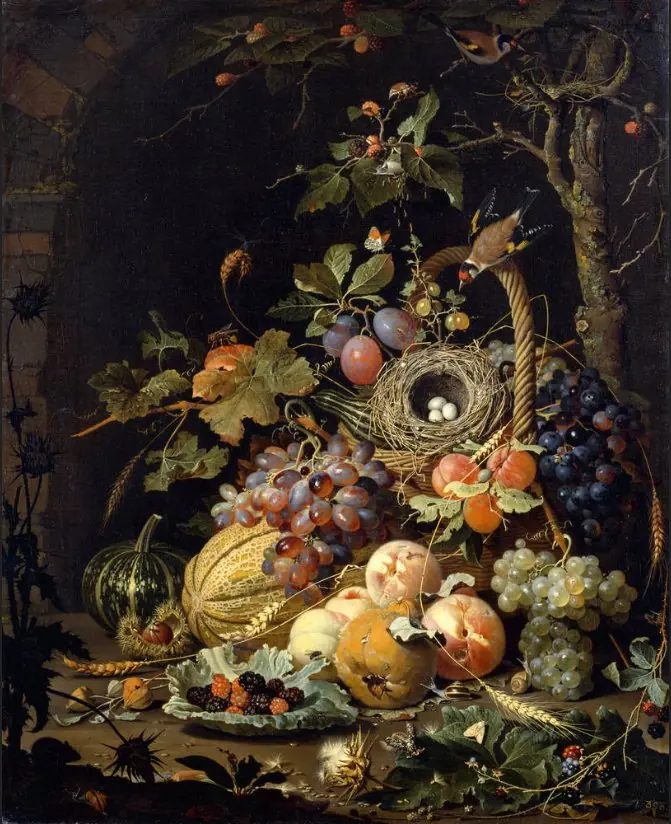 A bird's nest in a fruit basket
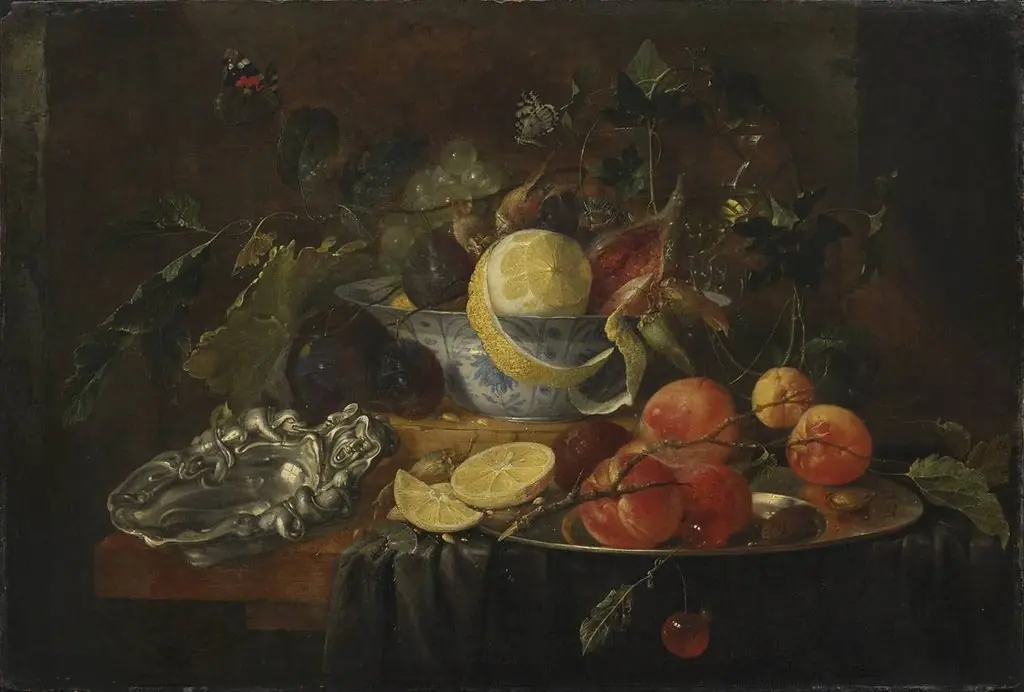 Stillleben mit Früchten und Silberschale
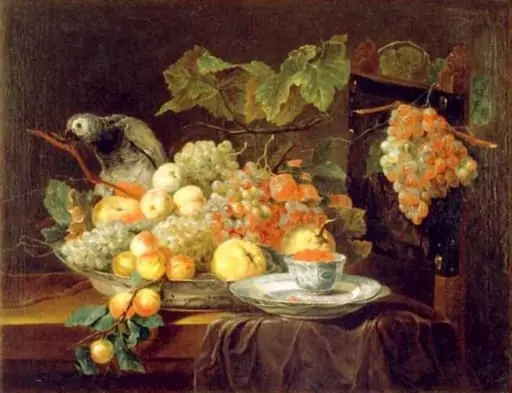 Natura moartă cu papagal
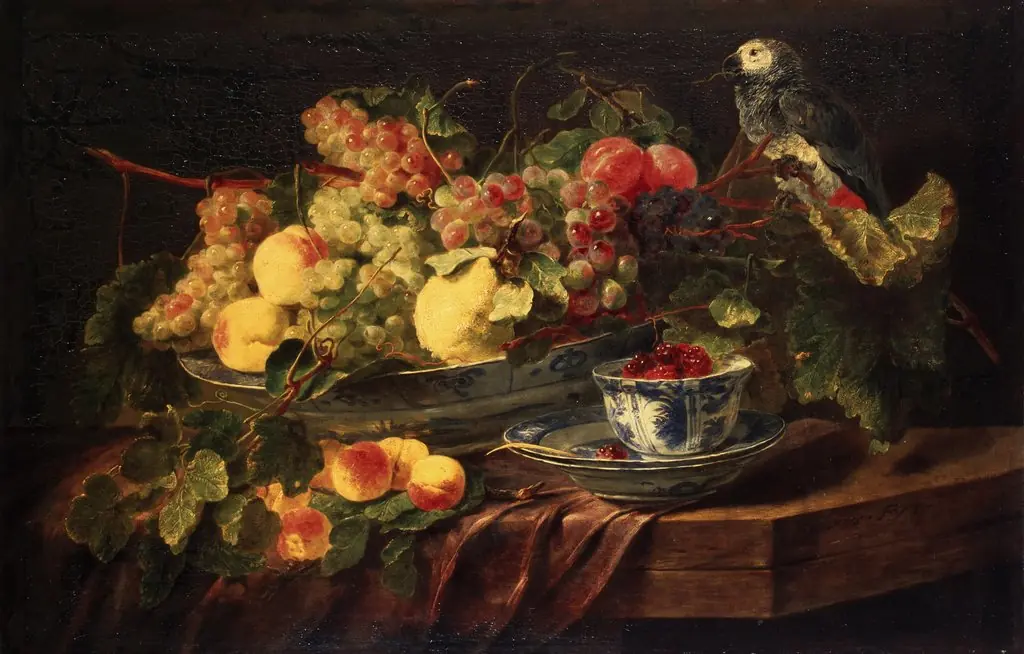 Still Life with Fruit and Parrot
 Fruits
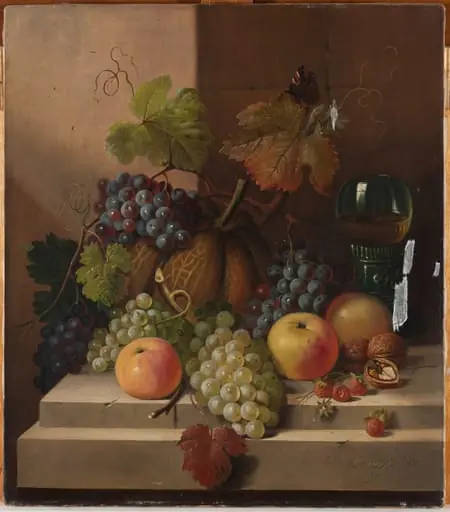 Früchtestillleben
 Still life with fruit