Artwork
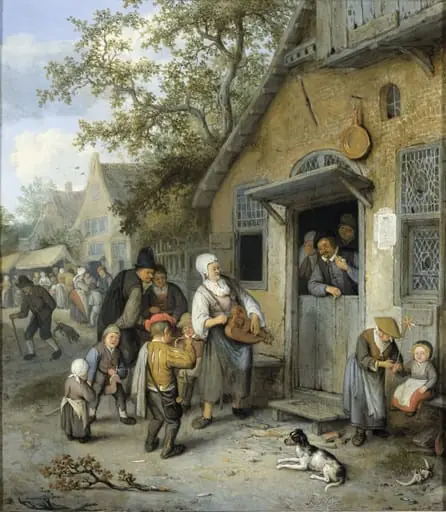
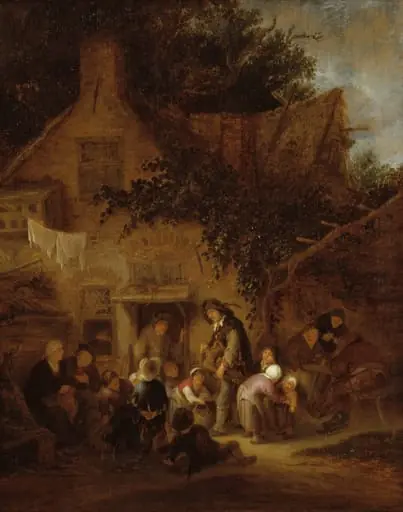
Village inn
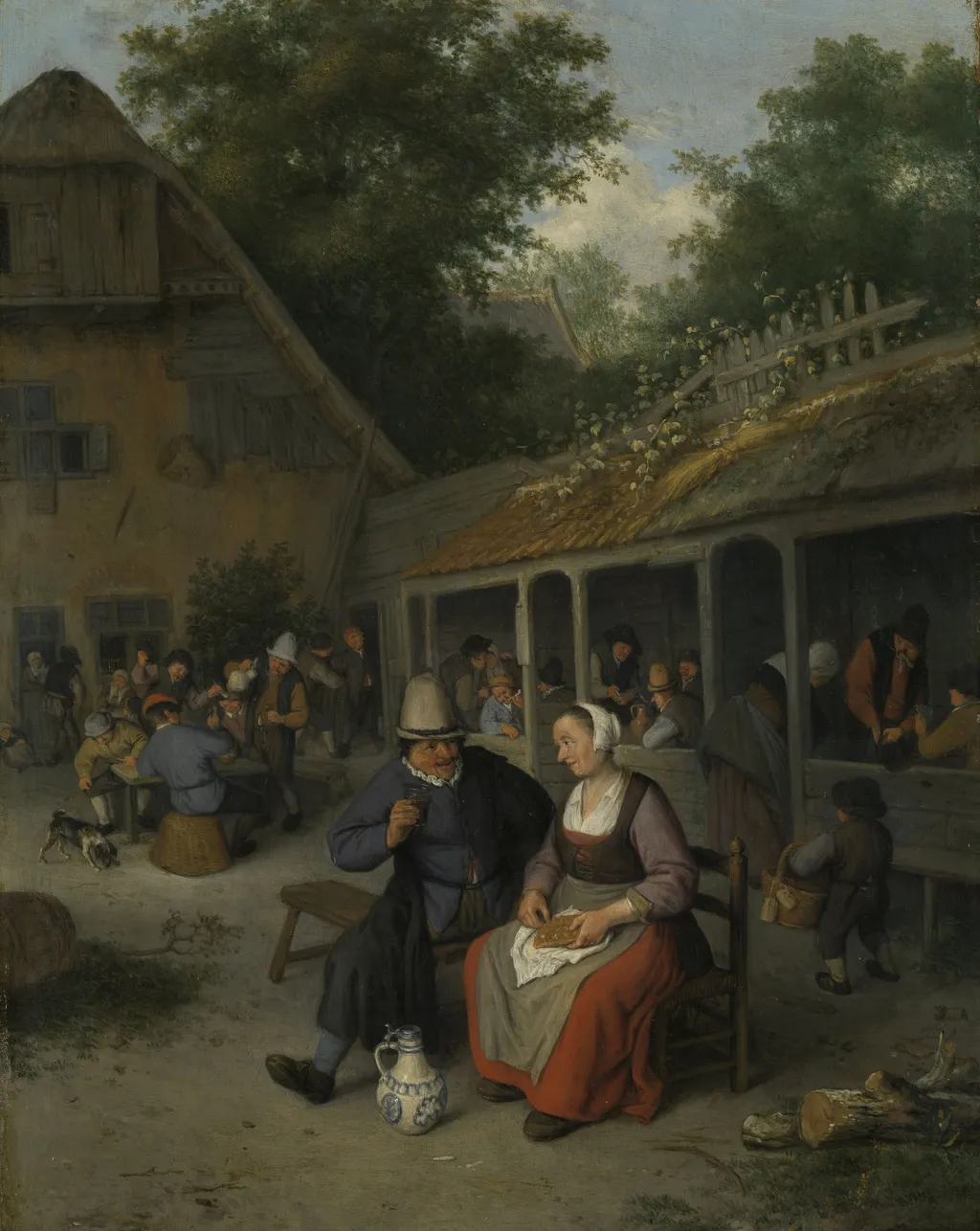
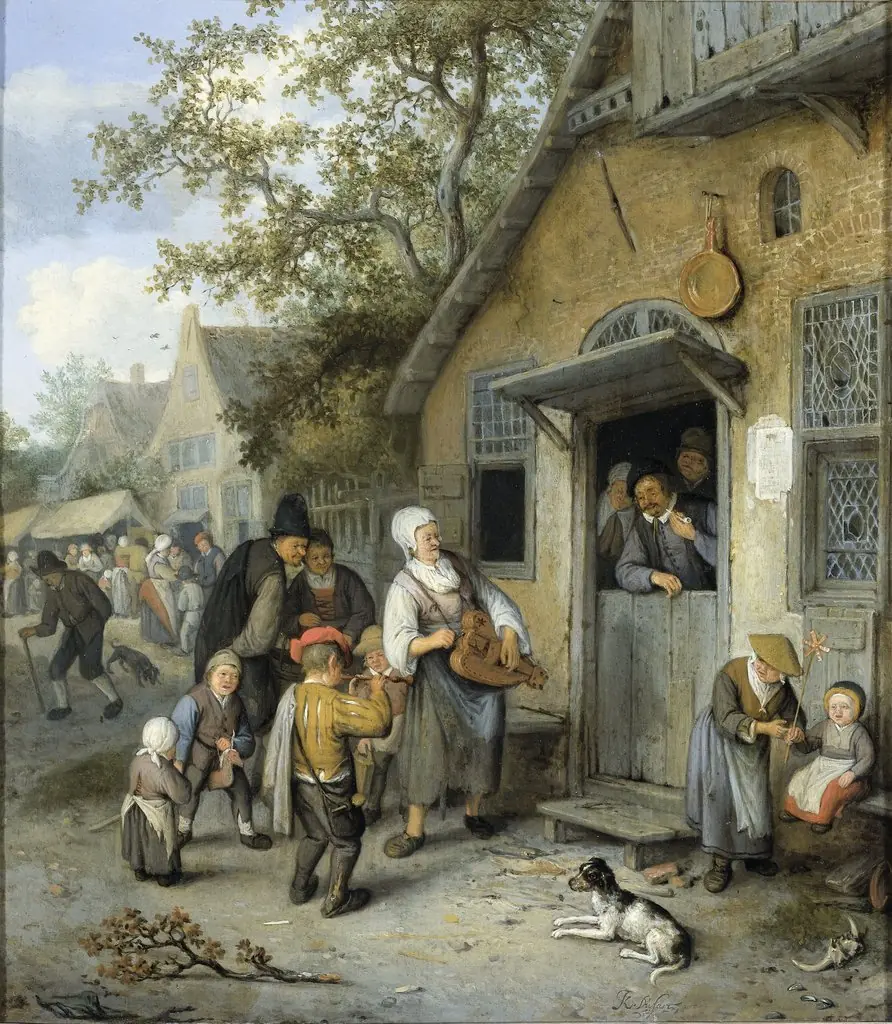
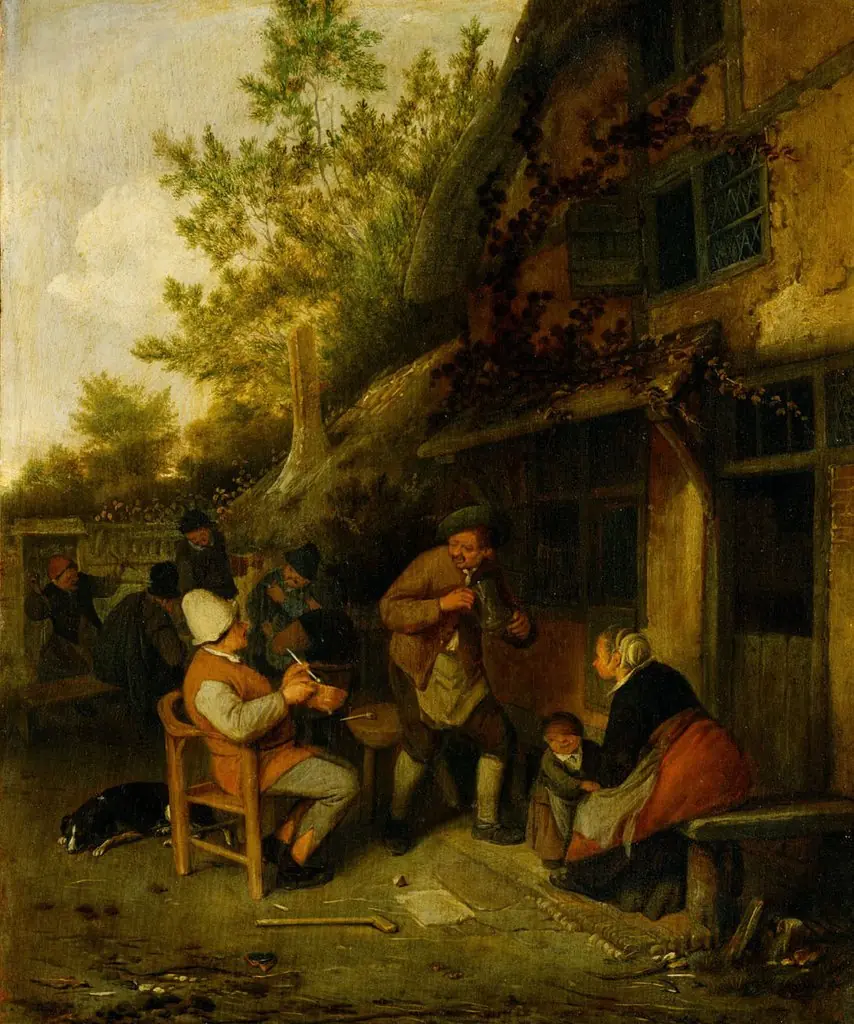
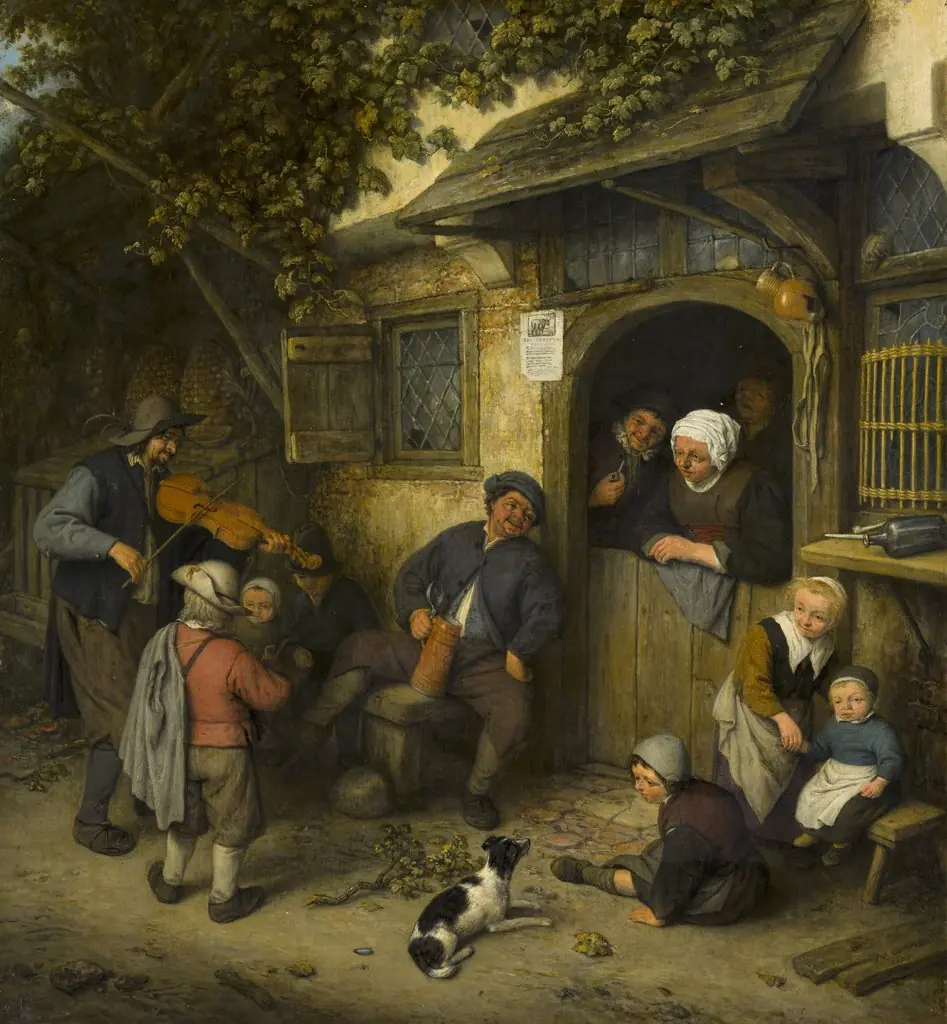
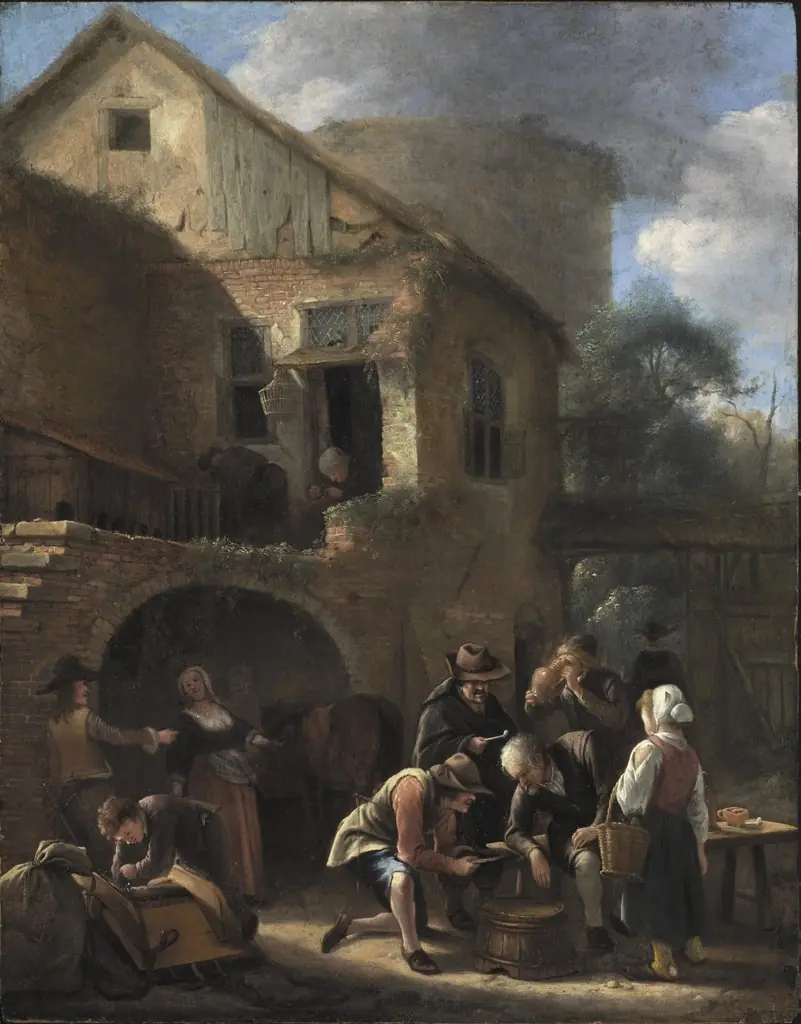
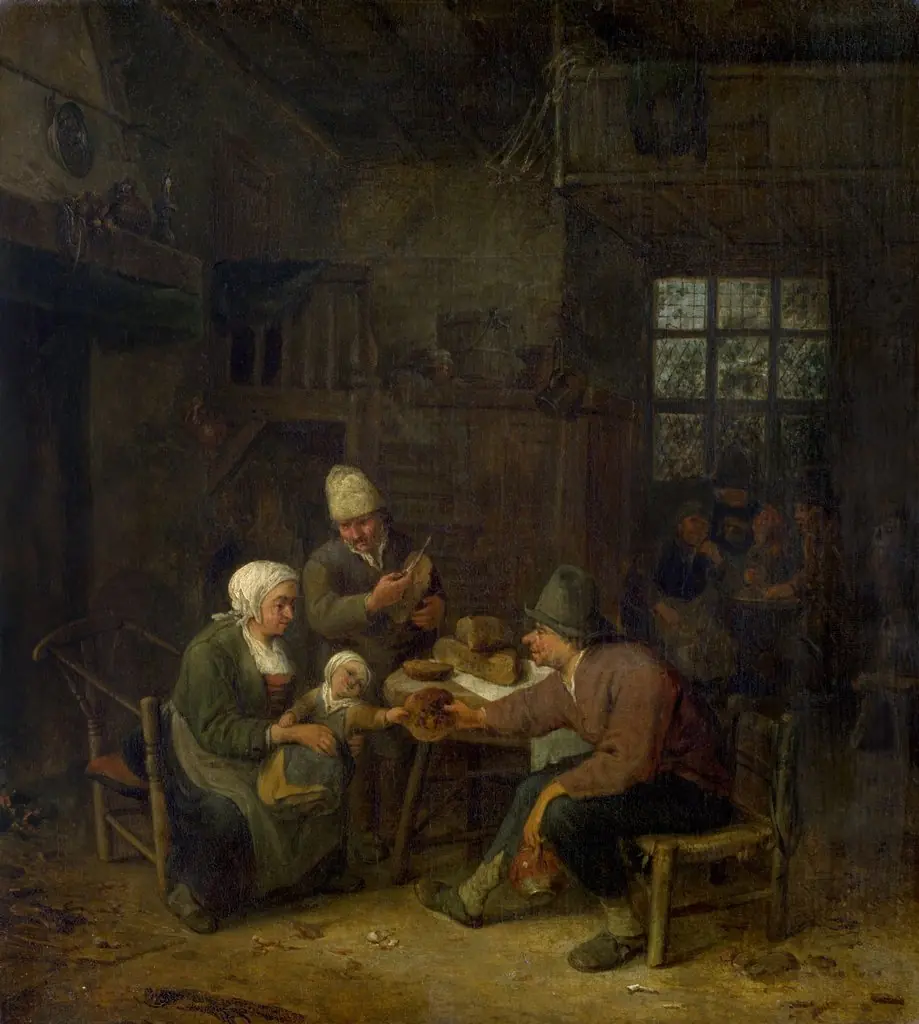
Village inn is an oil painting by the Dutch Golden Age artist Cornelis Dusart. It dates from 1696 and is held in the collection of the Rijksmuseum.
About this work
Overview
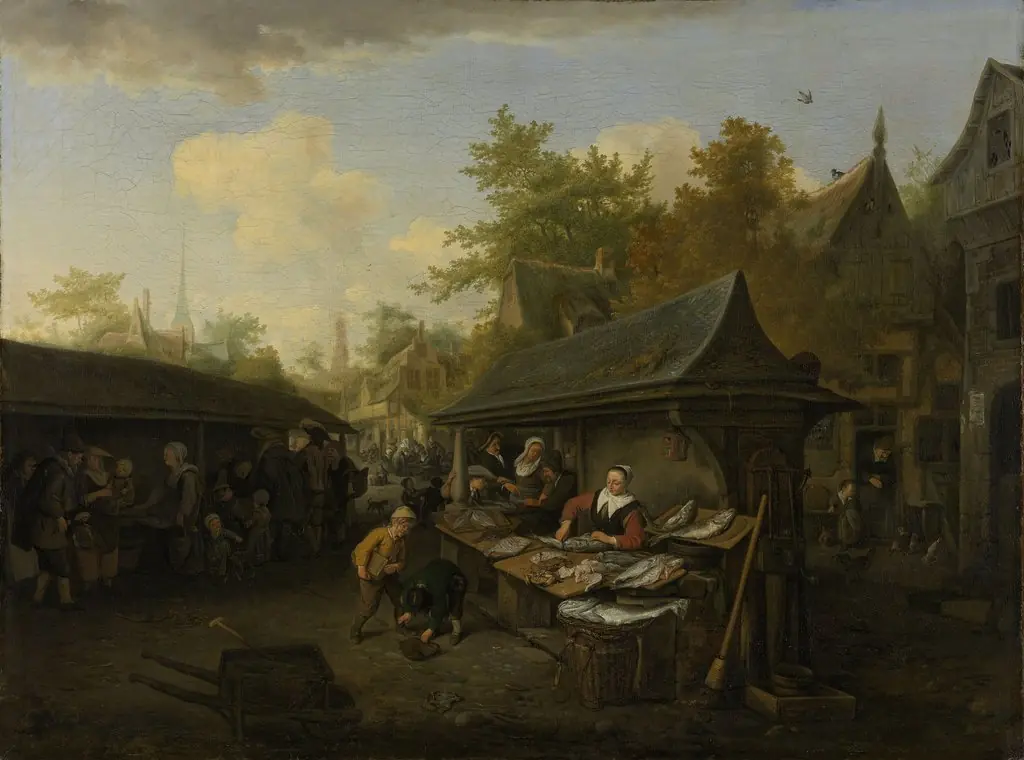
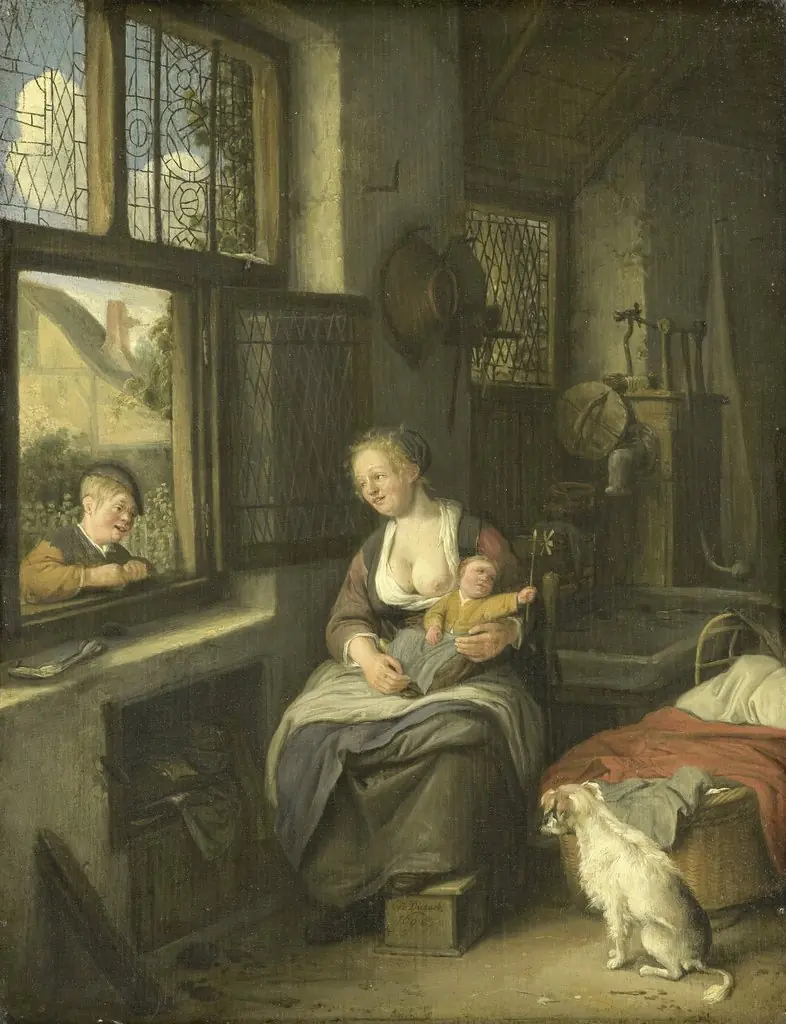
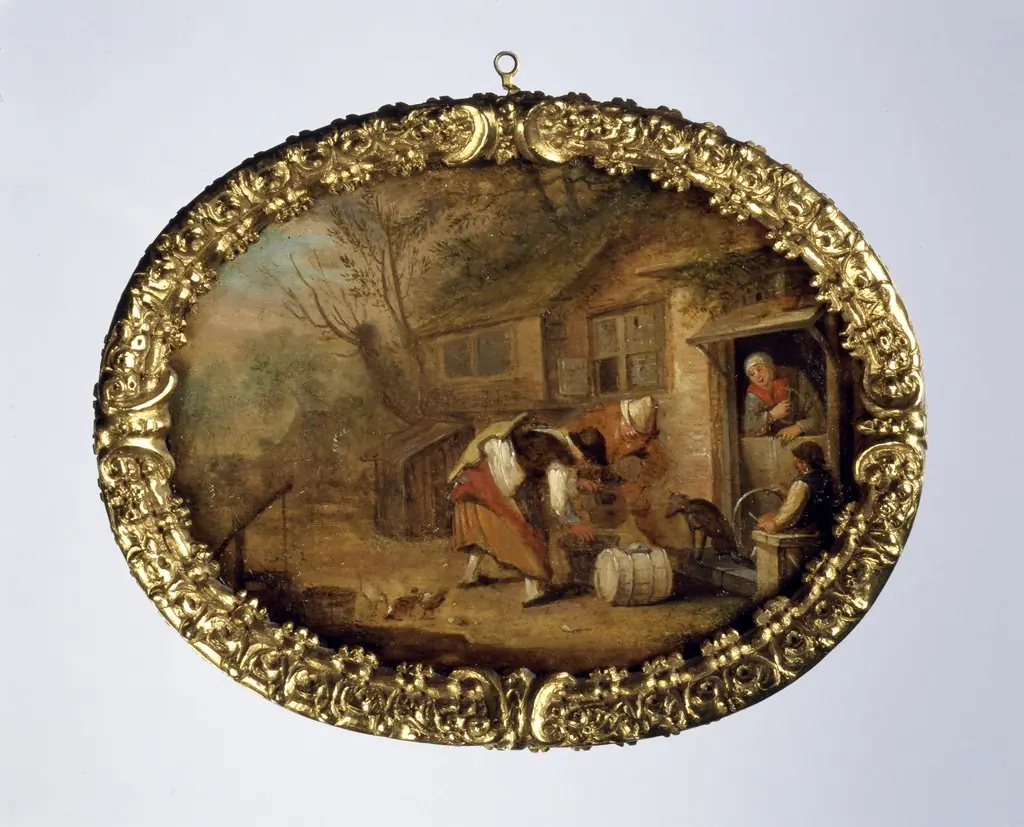
Cornelis Dusart, a Haarlem‑born painter active in the late 17th century, executed the oil painting *Village Inn* in 1696. The work exemplifies Dutch genre painting of the Golden Age, portraying a lively interior scene of a rural tavern. It is part of the Rijksmuseum’s permanent collection.
Subject & Meaning
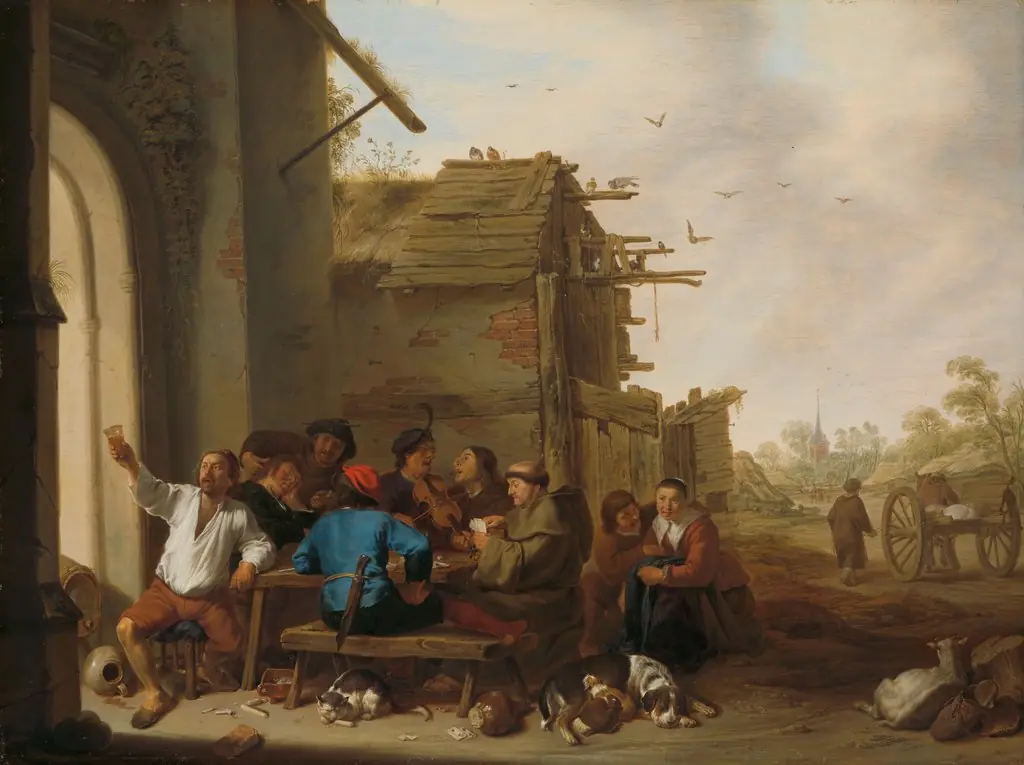
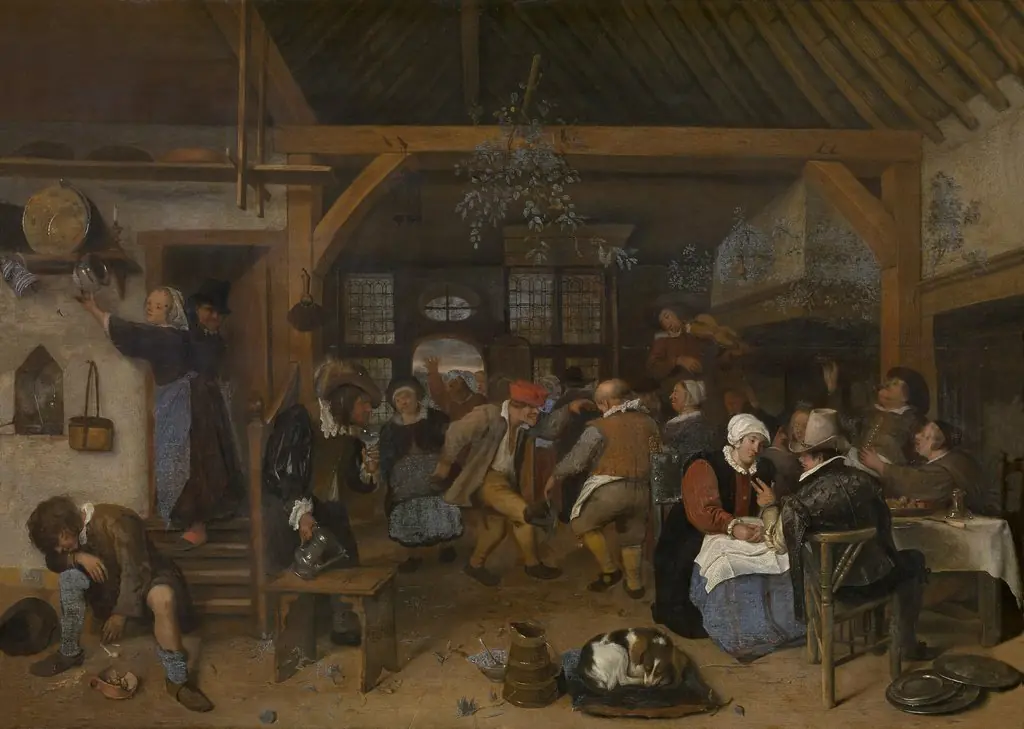
The canvas captures a bustling inn where villagers gather around a low table and a counter. An elderly couple occupies the foreground, one smoking a pipe, the other holding bread, while other patrons converse, stand, or lean on the furnishings. A dog rests near the left wall, adding a domestic touch to the communal atmosphere.
Technique & Style
Dusart employs a restrained palette of earthy hues, punctuated by occasional bright accents such as a woman’s red skirt. Subtle chiaroscuro models faces and hands, allowing light to illuminate select features while deeper shadows recede, thereby enhancing the three‑dimensionality of the interior and conveying a sense of immediacy.
History & Provenance
A pupil of Adriaen van Ostade, Dusart specialized in detailed depictions of peasant life. *Village Inn* remained in private hands before entering the Rijksmuseum’s collection, where it has been displayed as a representative example of late‑seventeenth‑century Dutch genre painting.
Context
The painting belongs to a broader Dutch tradition that favored scenes of everyday activity, especially rural and tavern settings. Such works reflected contemporary interest in moralizing narratives and the observation of common folk, aligning with the market‑driven art culture of the Dutch Golden Age.
Own this work as a print
Artist & collection
Artist
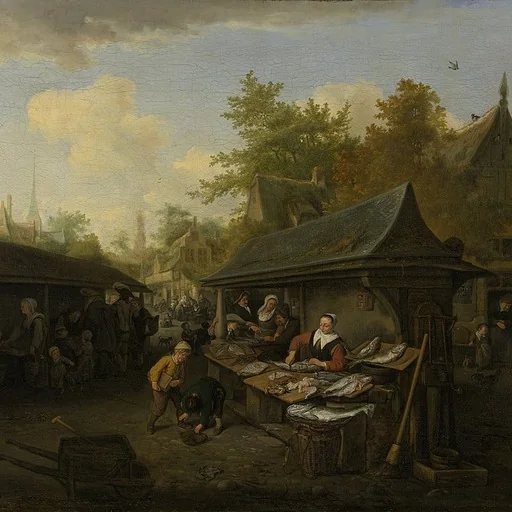
Cornelis Dusart (April 24, 1660 – October 1, 1704) was a Dutch genre painter, drawer (artists), and printmaker.