Artwork
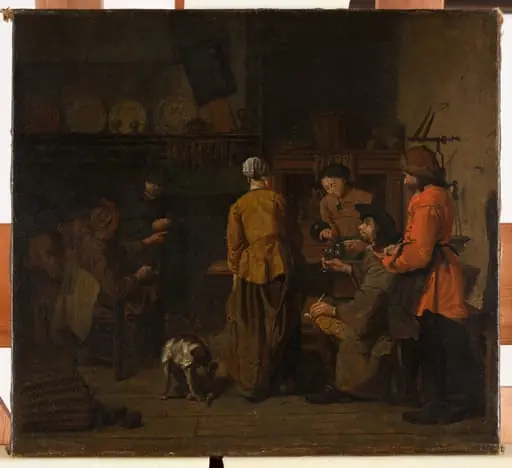
The Tradeswoman
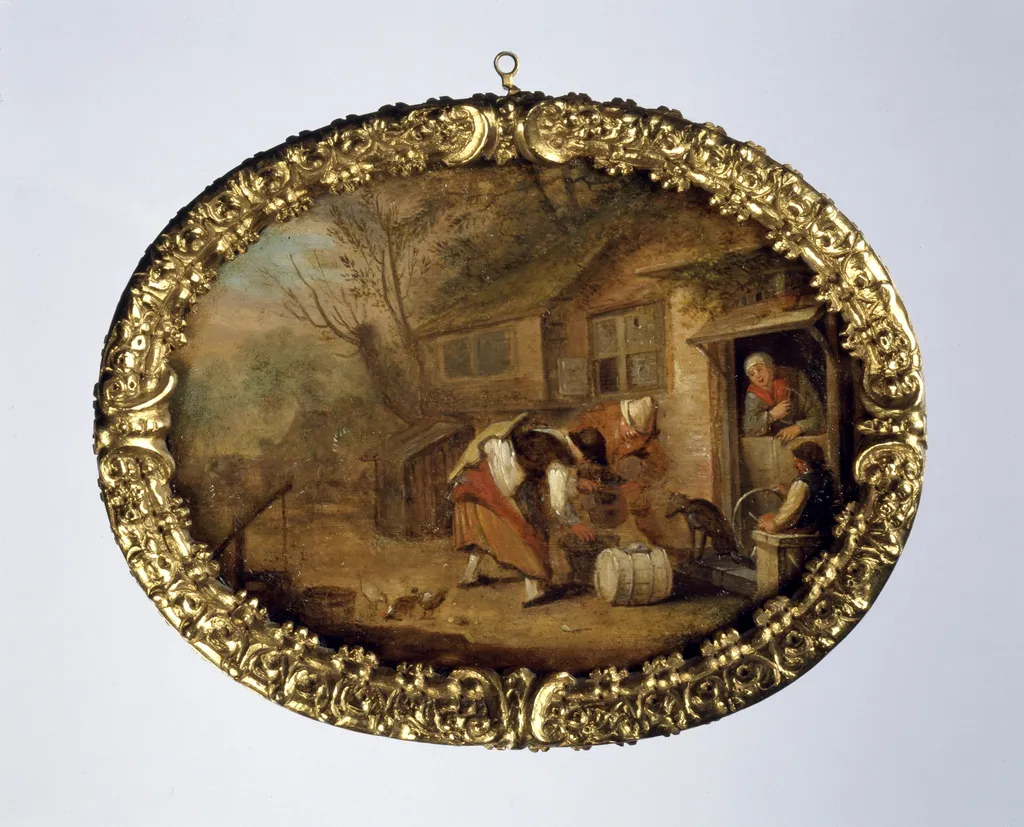
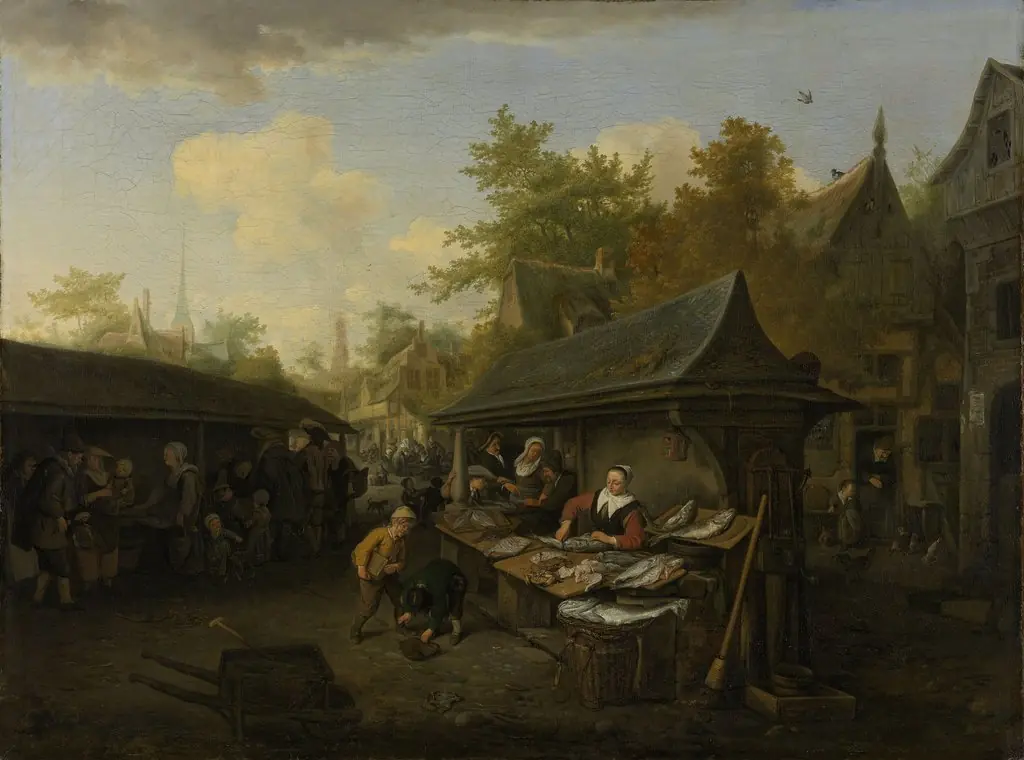
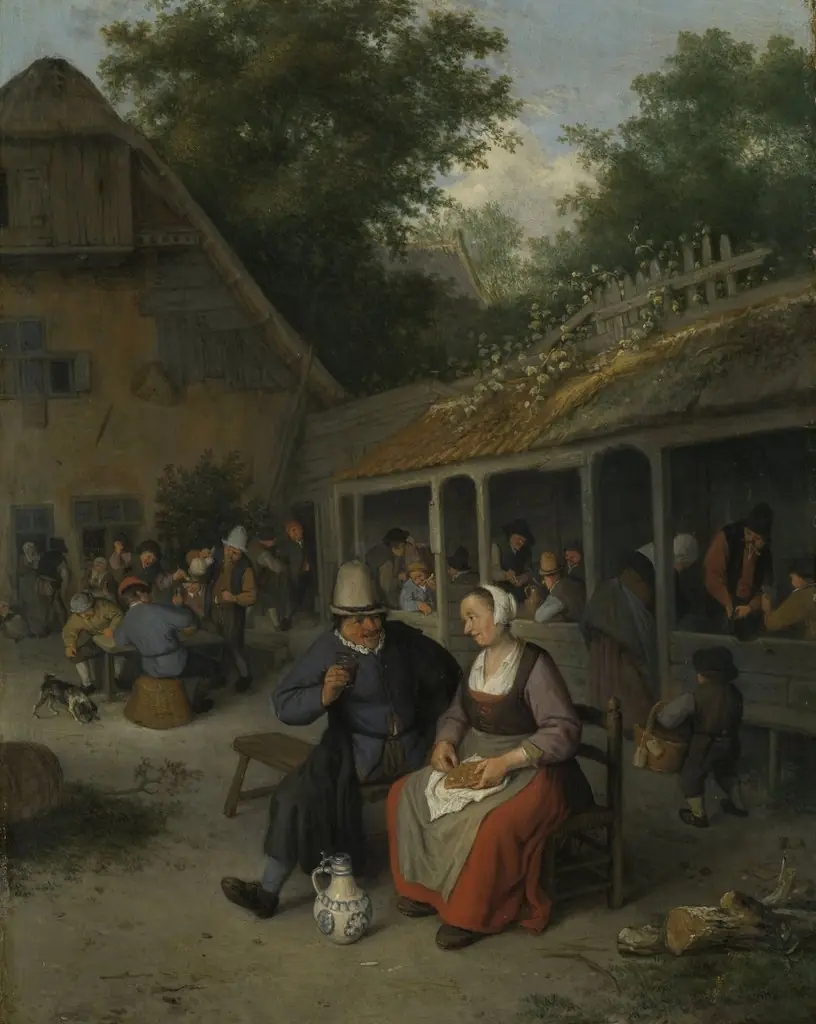
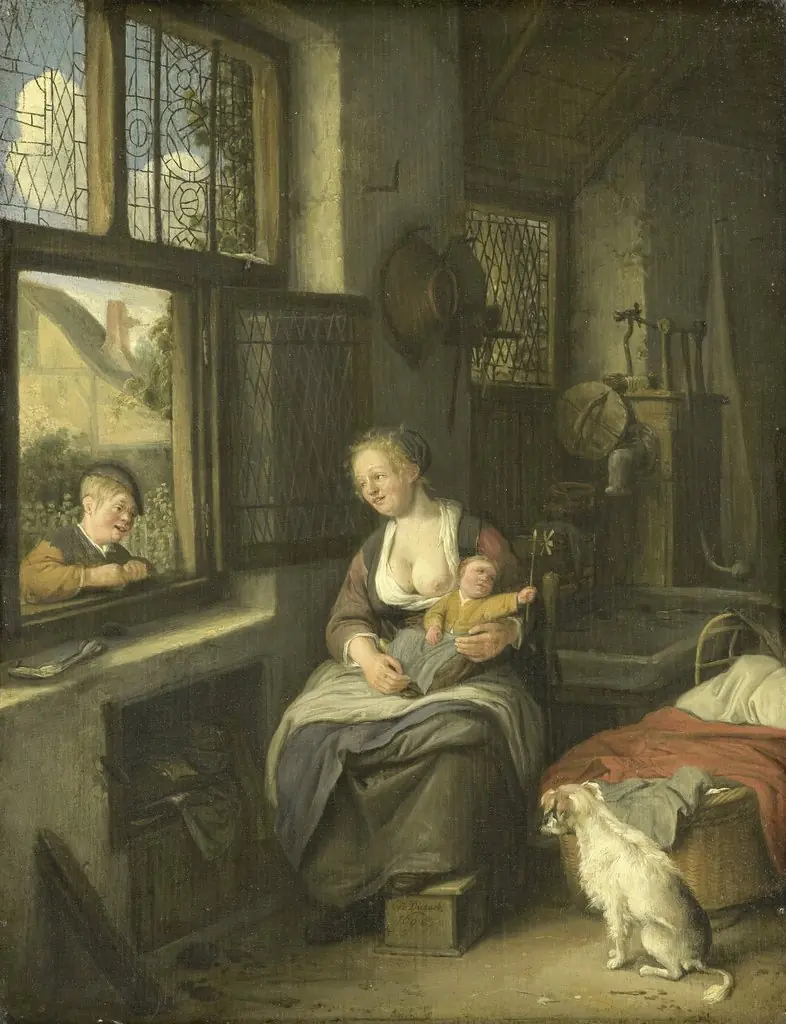
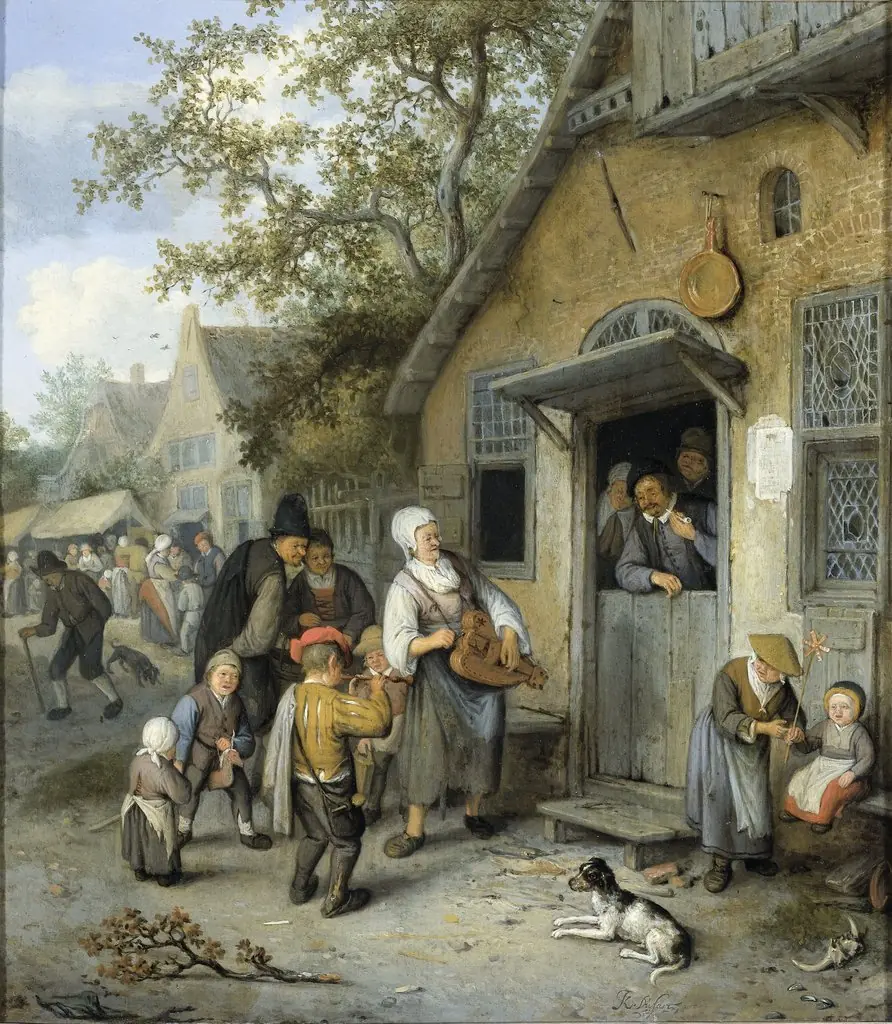
The Tradeswoman is an unspecified painting by the Rococo painting artist Cornelis Dusart. It dates from 1700 and is held in the collection of the Rijksmuseum.
About this work
Overview
The painting is part of the Rijksmuseum’s permanent collection, reflecting its significance in Dutch genre painting of the early 18th century.
Painted in 1700 by Cornelis Dusart, a Dutch artist trained under Adriaen van Ostade, this work captures a quiet moment of rural labor. Dusart, known for his detailed depictions of ordinary life, rendered the scene with careful attention to texture and posture. The painting is part of the Rijksmuseum’s permanent collection, reflecting its significance in Dutch genre painting of the early 18th century.
Subject & Meaning
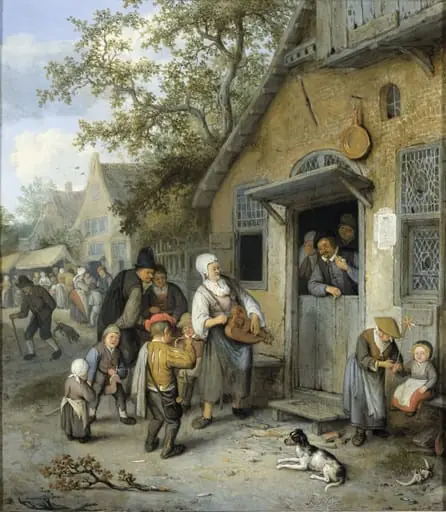
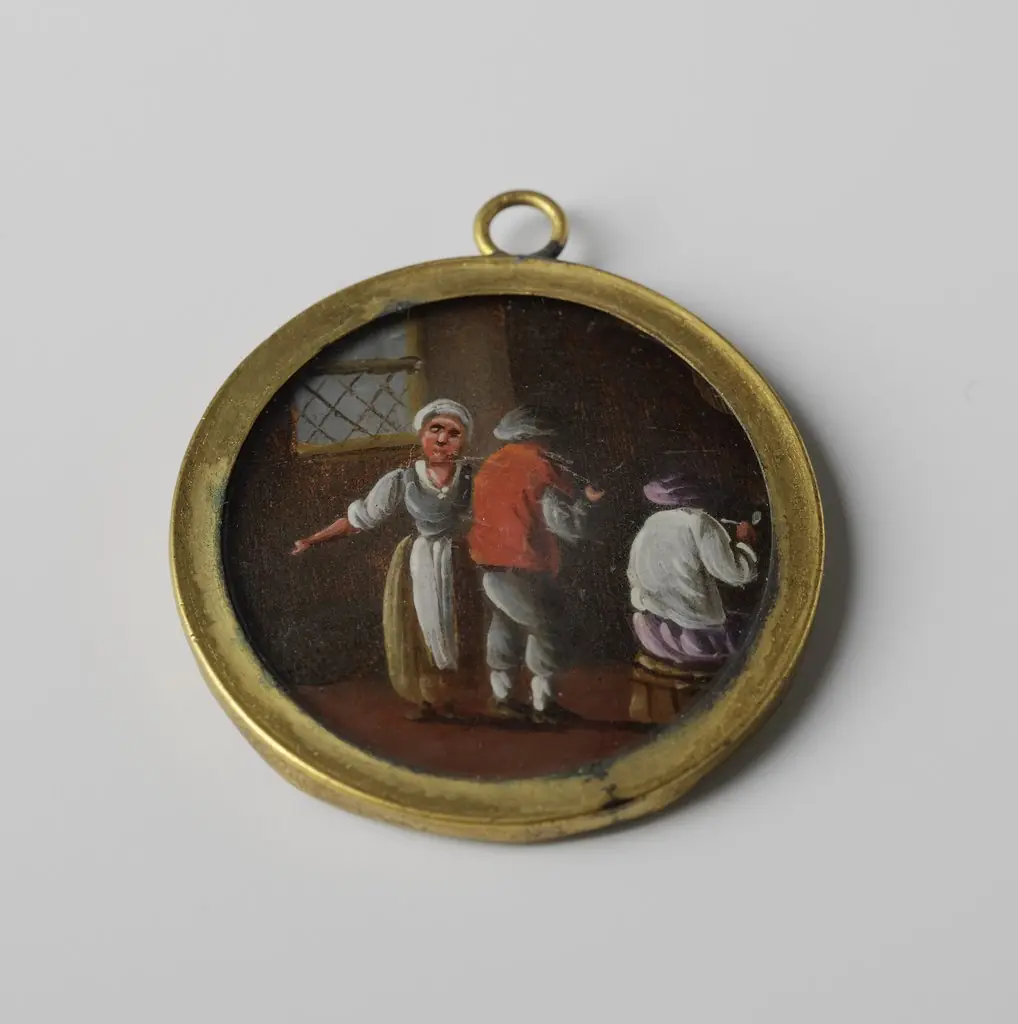
A woman stands in the doorway of a modest brick structure, holding a basket, while a man nearby wears a wide-brimmed hat and red vest. A dog rests at their feet, and scattered objects—a barrel, another basket—suggest recent activity. The figures are engaged in routine tasks, their expressions neutral. The scene conveys no narrative climax, instead emphasizing the dignity of daily labor in a provincial setting.
Technique & Style
Dusart employed fine brushwork to render fabrics, wood, and stone with quiet precision. The palette is muted, with accents of red in the woman’s scarf and the man’s vest providing subtle contrast. Shadows are softly modeled, and the composition is grounded in horizontal lines, reinforcing the calm, uneventful tone. His style reflects the influence of his mentor, van Ostade, in its focus on humble subjects rendered with observational clarity.
History & Provenance
The painting entered the Rijksmuseum’s collection in the 19th century, following the museum’s broader effort to preserve Dutch Golden Age and post-Golden Age genre works. While little is documented about its early ownership, its presence in the museum’s holdings confirms its recognition as a representative example of Dusart’s oeuvre and the enduring interest in Dutch domestic scenes.
Context
In early 18th-century Holland, genre painting remained popular despite shifting tastes toward more ornate styles. Dusart’s work stood apart from the Rococo’s elegance, instead continuing the tradition of depicting peasant life with restraint and realism. His paintings offered a counterpoint to aristocratic themes, grounding art in the textures of common experience.
Legacy
Dusart’s focus on unidealized labor contributed to a broader Dutch tradition of visual ethnography. Though less celebrated than his contemporaries, his works provide insight into the material culture and social rhythms of rural communities. Today, *The Tradeswoman* endures as a quiet testament to the artistic value placed on ordinary moments in Dutch painting.
Artist & collection
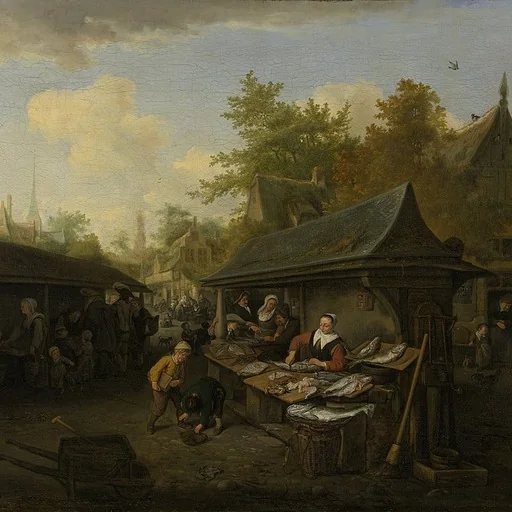
Artist
Cornelis Dusart (April 24, 1660 – October 1, 1704) was a Dutch genre painter, drawer (artists), and printmaker.