Artwork
Peasant Smoking
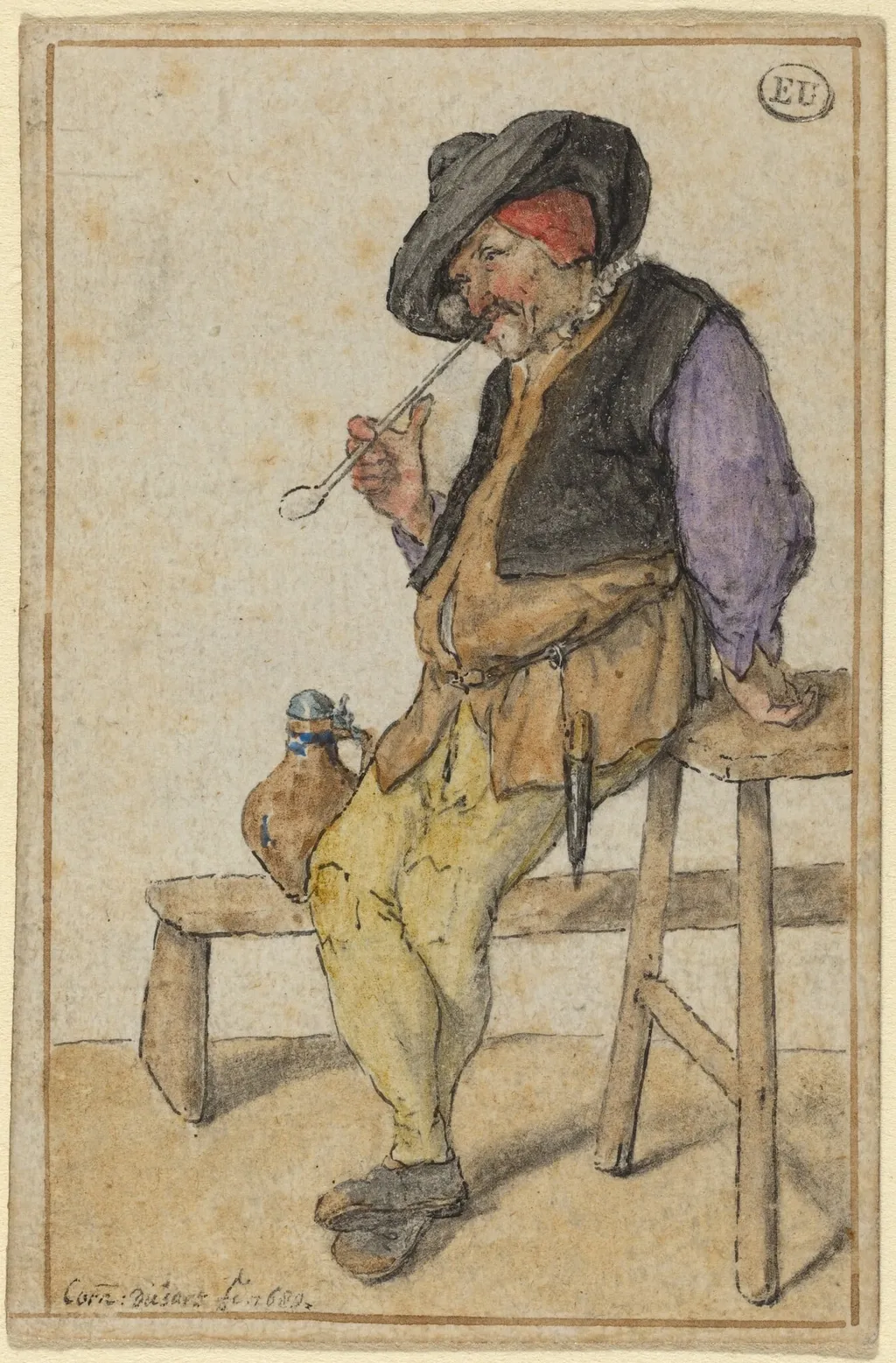
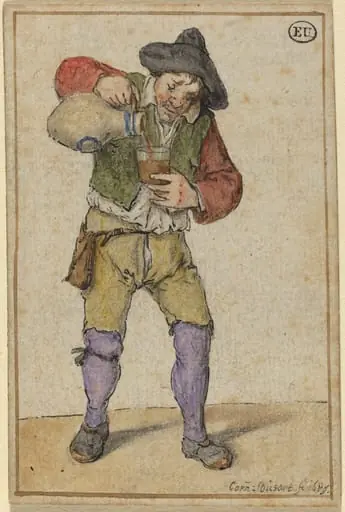
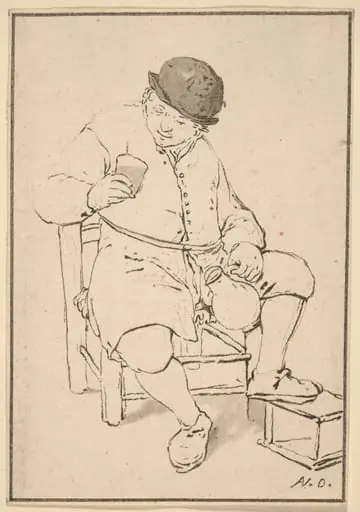
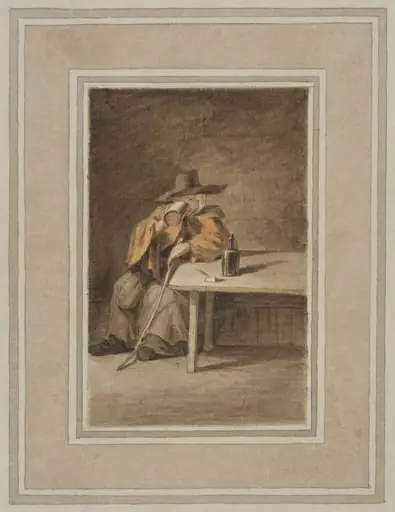
Peasant Smoking is an ink drawing by the Baroque artist Cornelis Dusart. It dates from 1689 and is held in the collection of the National Gallery of Art.
About this work
Overview
Cornelis Dusart, a Haarlem‑born artist active in the late 17th century, produced the drawing *Peasant Smoking* in 1689. Executed with pen, black ink and watercolor on laid paper, the work presents a single figure seated on a bench, pipe in hand, dressed in a dark hat, vest and yellow trousers.
Subject & Meaning
The composition captures an informal moment of rural life: a solitary peasant pauses to smoke, suggesting a brief respite from daily labor. The focus on a single, unembellished figure underscores the genre tradition of observing everyday activities without moralizing.
Technique & Style
Dusart combines fine pen work with washes of watercolor, allowing the ink lines to define form while the pigments provide subtle tonal variation. The handling is relatively loose, with visible brushstrokes that convey texture and a sense of immediacy, characteristic of his later drawings.
History & Provenance
Trained between 1675 and 1679 under Adriaen van Ostade, Dusart joined the Haarlem Guild of St. Luke in 1679. *Peasant Smoking* dates from the period when he was establishing his reputation for detailed genre scenes. He remained in Haarlem until his death in 1704.
Context
The drawing reflects the influence of Dusart’s mentor, Ostade, whose works often depicted the lives of the lower classes. While rooted in the Dutch Golden Age’s interest in genre subjects, the piece anticipates a more informal, observational approach that would later appear in 18th‑century Dutch drawing.
Artist & collection
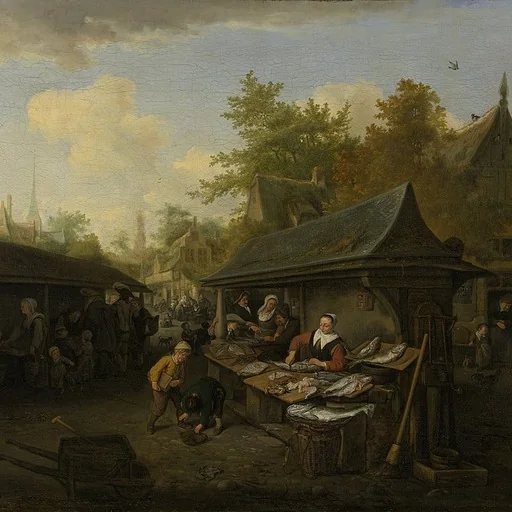
Artist
Cornelis Dusart (April 24, 1660 – October 1, 1704) was a Dutch genre painter, drawer (artists), and printmaker.