Artwork
Landscape with figures
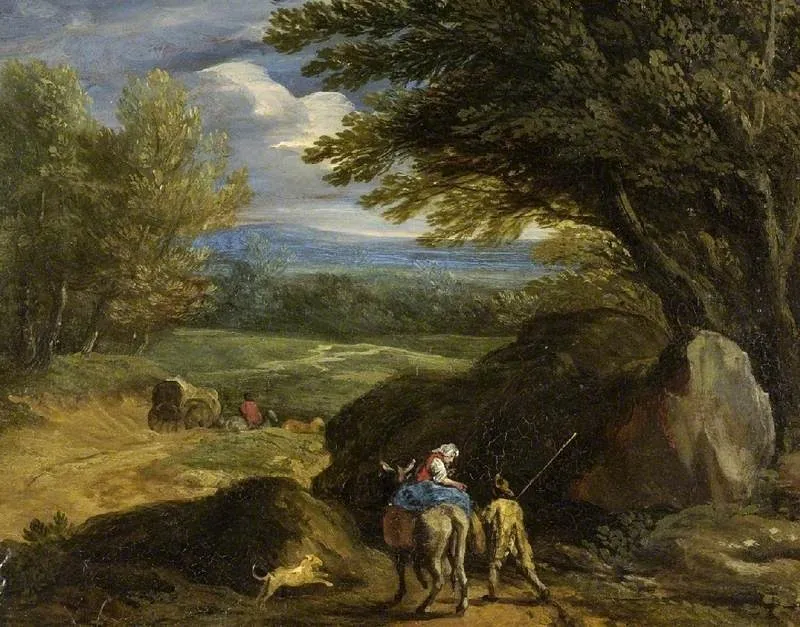
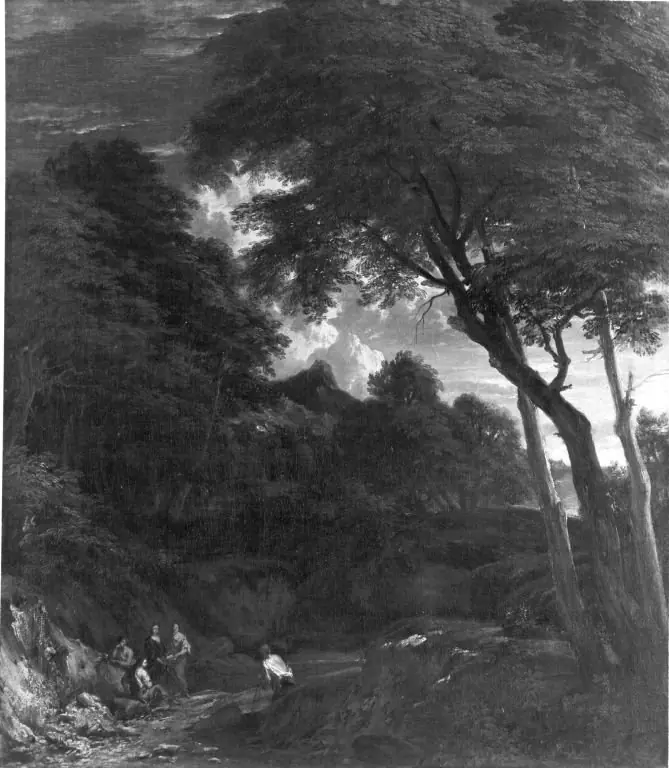
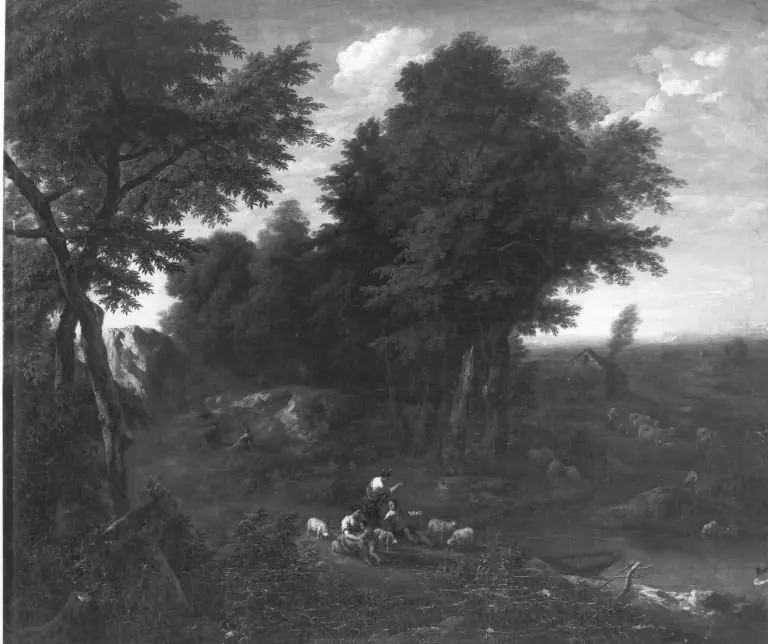
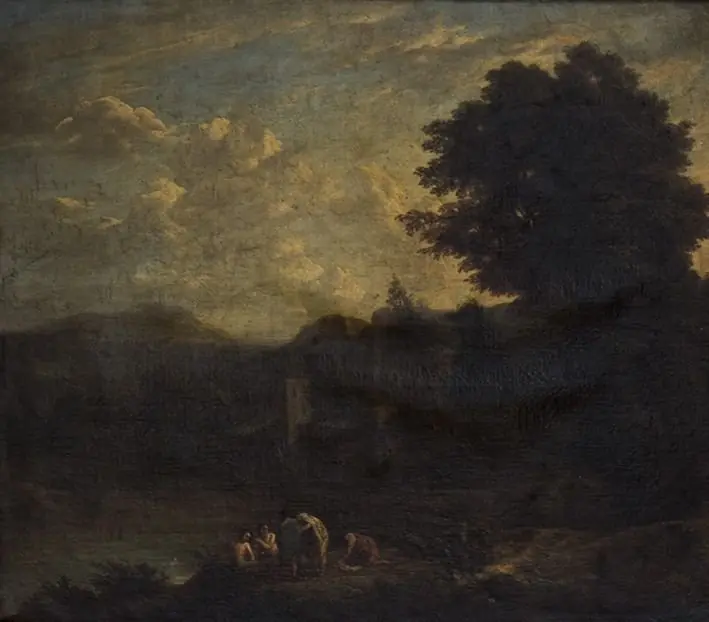
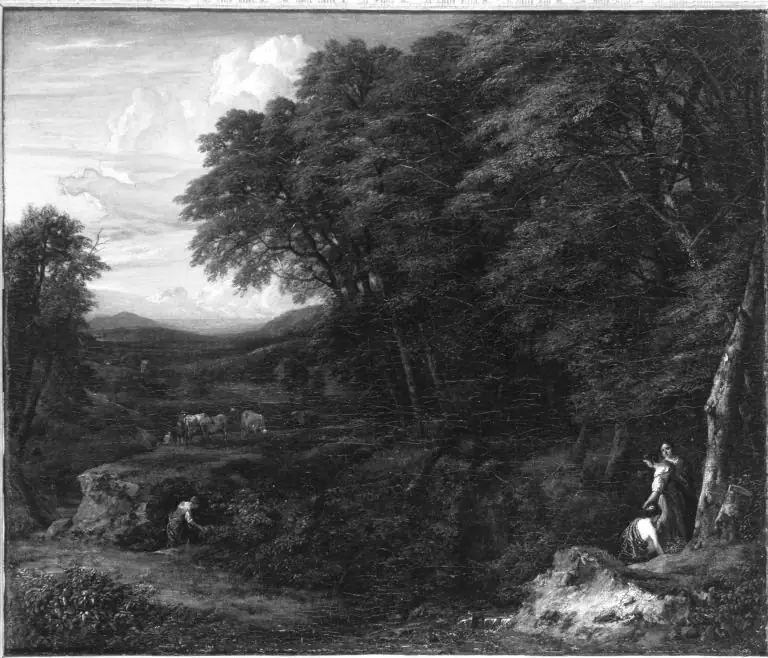
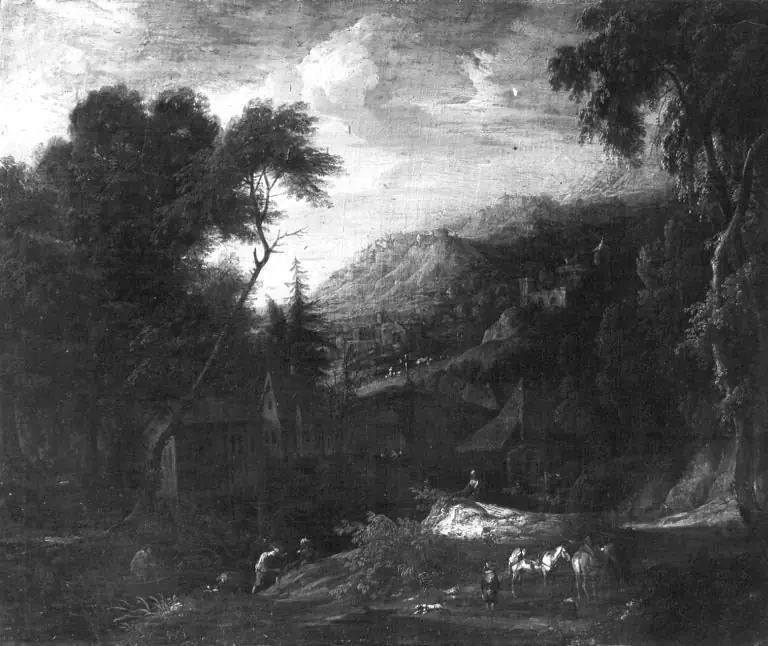
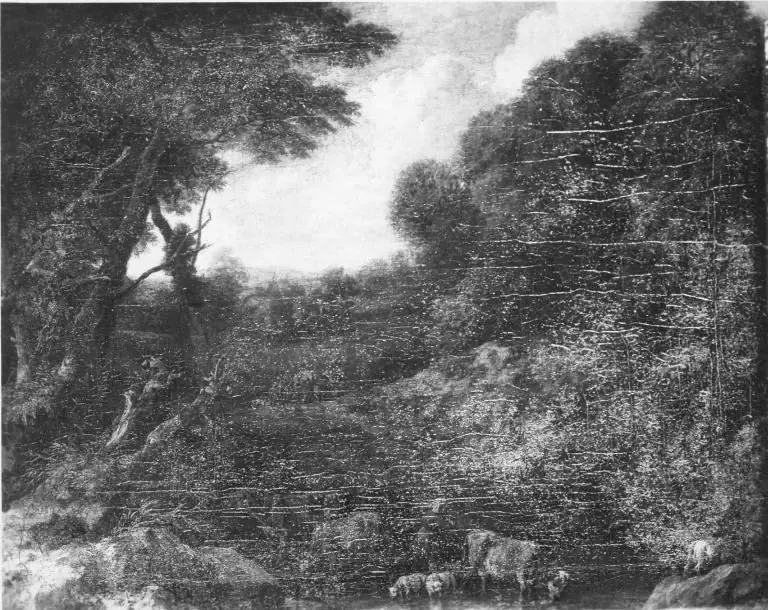
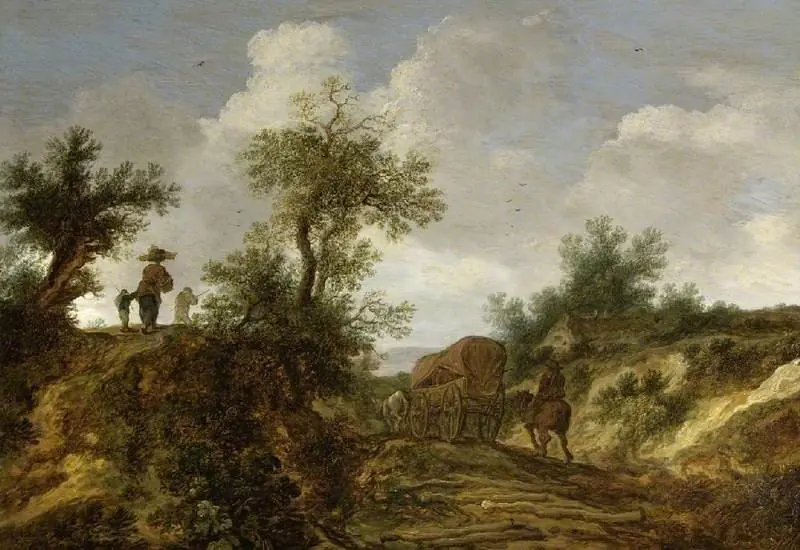
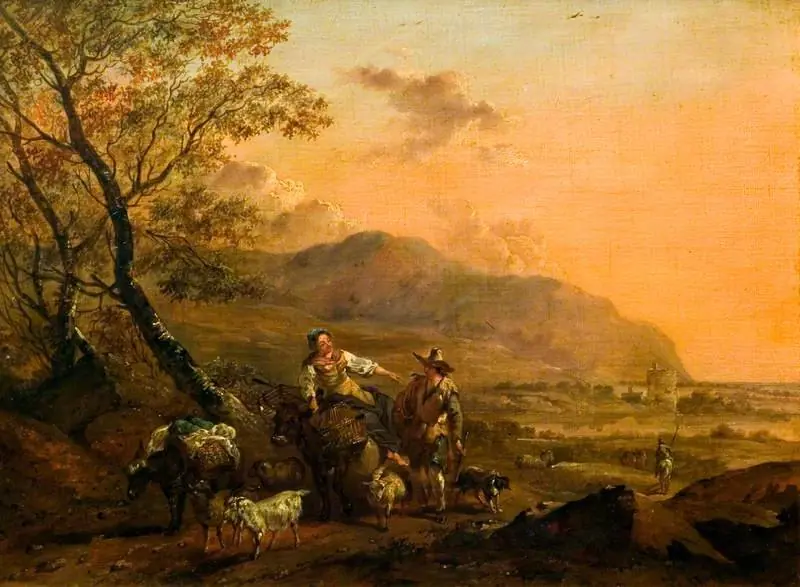
Landscape with figures is an oil painting by Cornelis Huysmans. It dates from 1697 and is held in the collection of the Fitzwilliam Museum.
About this work
Overview
Painted around 1697 on copper, this landscape by Cornelis Huysmans reflects the Flemish tradition of small-scale, finely detailed scenes.
Painted around 1697 on copper, this landscape by Cornelis Huysmans reflects the Flemish tradition of small-scale, finely detailed scenes. Executed during his active years in Antwerp and Brussels, the work exemplifies his preference for compact, atmospheric compositions. The support of copper allowed for precise brushwork and luminous color, common among Northern European painters of the period seeking to emulate Italianate ideals in a more intimate format.
Subject & Meaning
The scene depicts two figures in a quiet rural setting: one riding a donkey, accompanied by a dog, and another seated at a distance. Their presence is subtle, not narrative-driven, serving instead to scale the landscape and evoke a sense of solitude. The figures are incidental to the environment, reinforcing the painting’s focus on natural harmony rather than human drama. The composition invites contemplation of stillness and the passage of time within an untouched countryside.
Technique & Style
Huysmans employed chiaroscuro to model forms and suggest spatial depth, using controlled contrasts of light and shadow across the rocky terrain and foliage. The copper support enhanced the luminosity of pigments, allowing fine details in the trees and distant hills to remain crisp. His style blends Flemish precision with the compositional order of Italianate landscapes, avoiding dramatic flair in favor of balanced, serene arrangements that recall the work of Poussin and d'Arthois.
History & Provenance
The painting entered the collection of the Fitzwilliam Museum in Cambridge, where it remains today. While its early ownership is undocumented, its survival in good condition suggests it was valued by collectors who appreciated small-scale landscapes of the late 17th century. Huysmans’ works were sought after in the Low Countries, and this piece reflects the market demand for tranquil, pseudo-Italian scenes among bourgeois patrons.
Context
In the late 1600s, Flemish painters increasingly turned to idealized landscapes as a means of escaping urban life and aligning with classical ideals. Huysmans’ pseudo-Italianate style responded to this trend, blending Northern attention to detail with imagined southern topography. These works were not topographical records but poetic evocations, offering viewers a retreat into a timeless, orderly nature — a counterpoint to the political and religious tensions of the era.
Legacy
Huysmans’ landscapes, though not widely celebrated today, represent a significant strand of Flemish painting that bridged Northern realism and Italianate composition. His use of copper and restrained palette influenced contemporaries and later collectors who prized technical refinement over grandeur. The Fitzwilliam’s holding preserves an example of this quiet, deliberate tradition, offering insight into how landscape was understood as a meditative form in early modern Europe.
Artist & collection
Artist
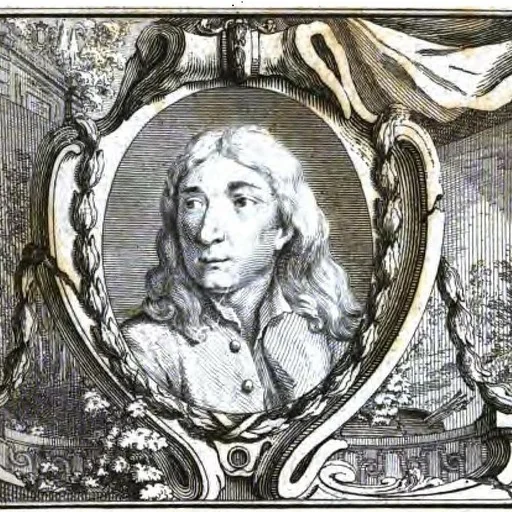
Cornelis Huysmans (baptized 2 April 1648 in Antwerp; died 1 June 1727 in Mechelen) was a Flemish landscape painter who was active in Antwerp, Brussels and Mechelen.

 Landscape with figures
 Landscape with Figures
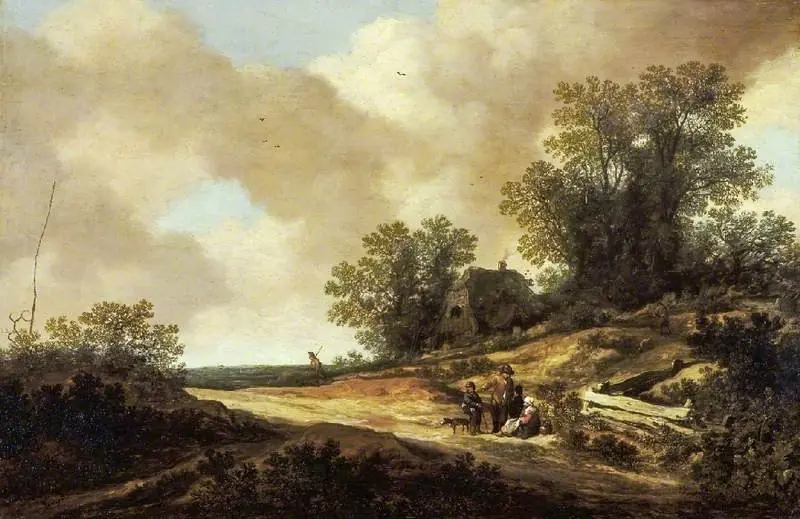 Landscape with figures
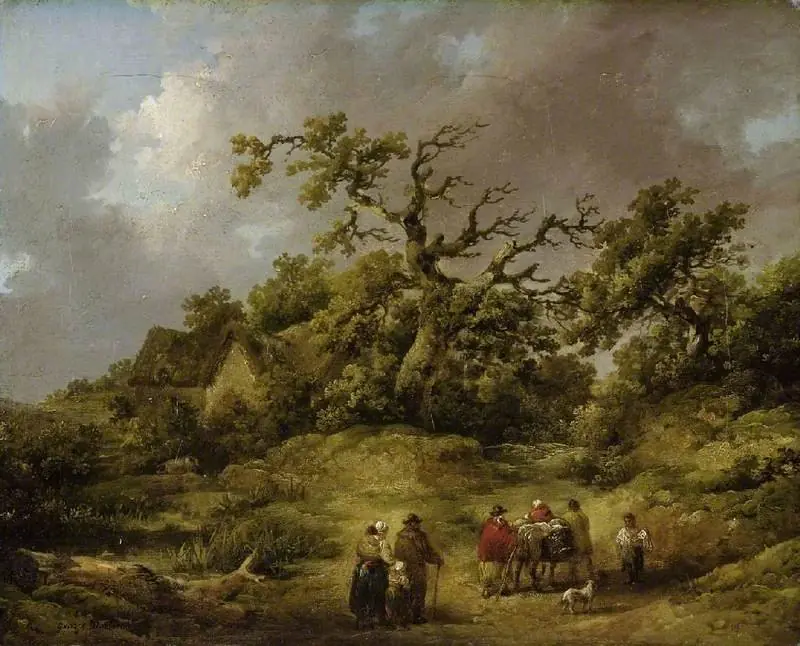 Landscape with figures
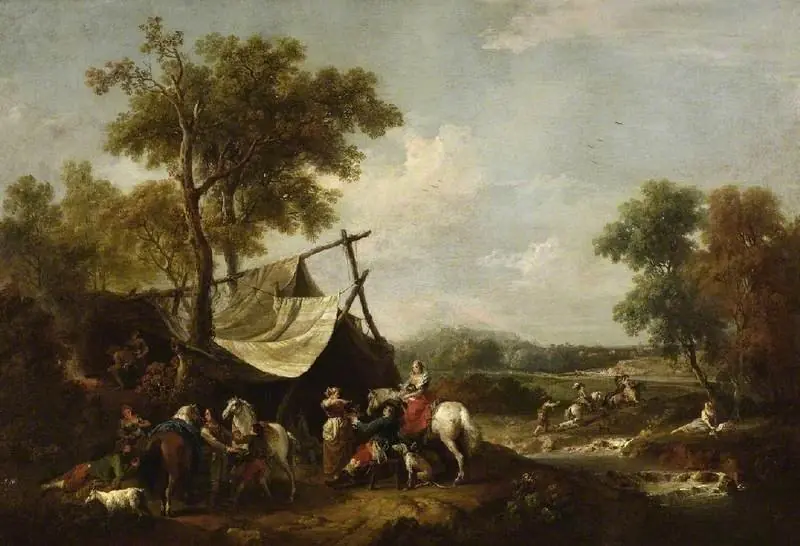 Refreshment during the ride
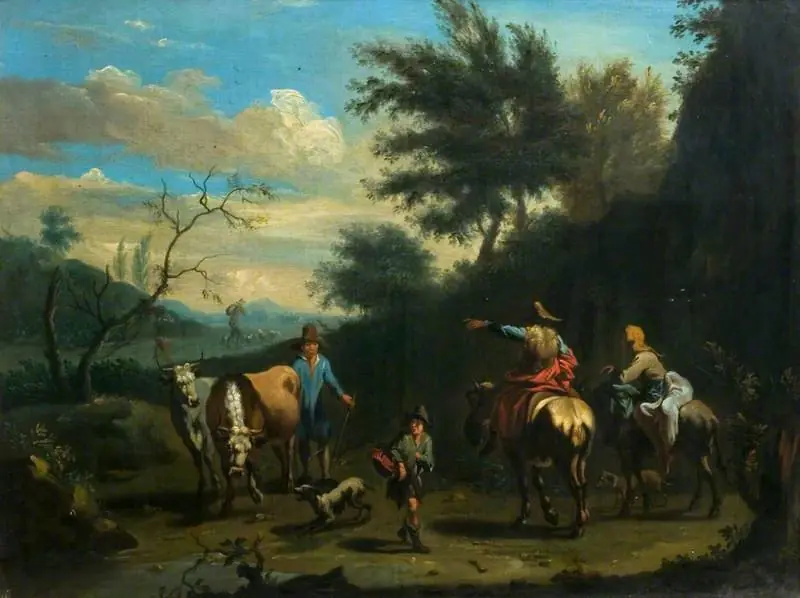 Landscape with Figures and Cattle
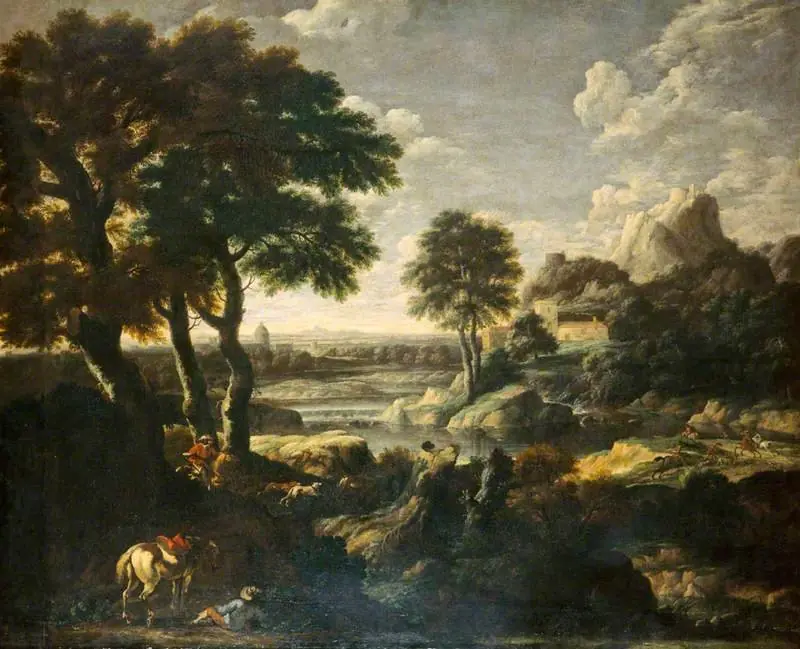 River Landscape with a Hunt
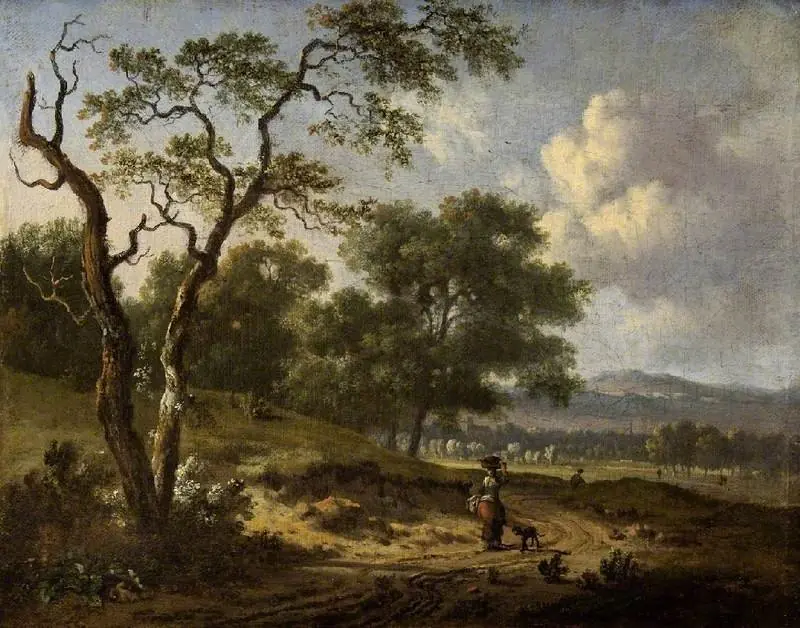 Landscape with a woman and a dog
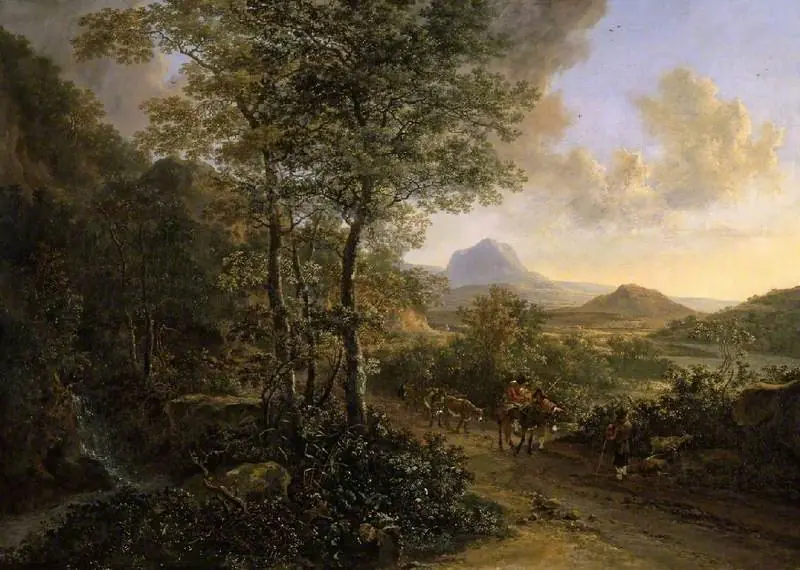 Italian Landscape with Monte Socrate
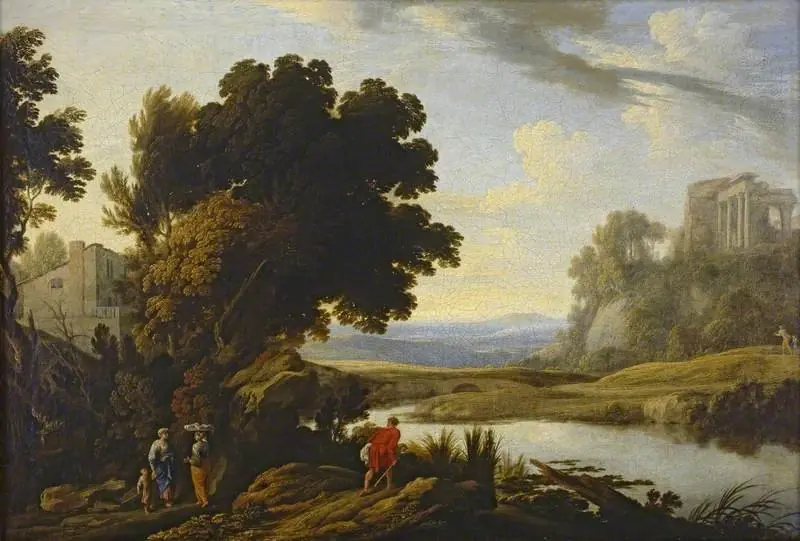 Landscape in the Roman Campagna
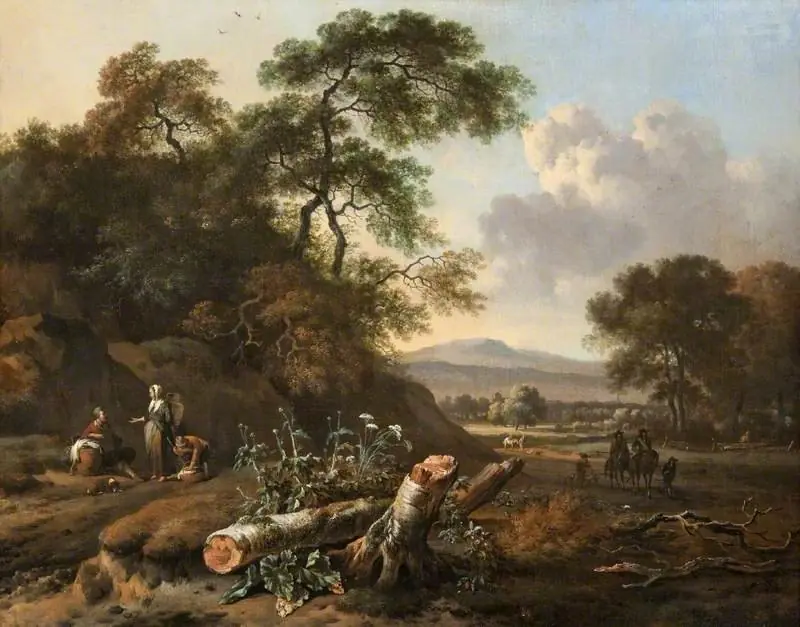 Landscape with a Fallen Tree, Peasants and Huntsmen
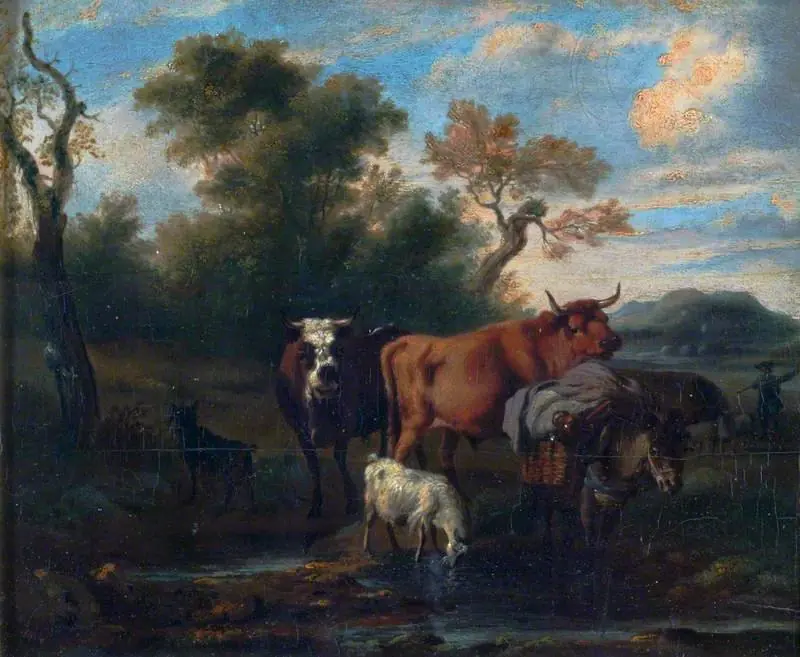 Landscape with Cattle