Artwork
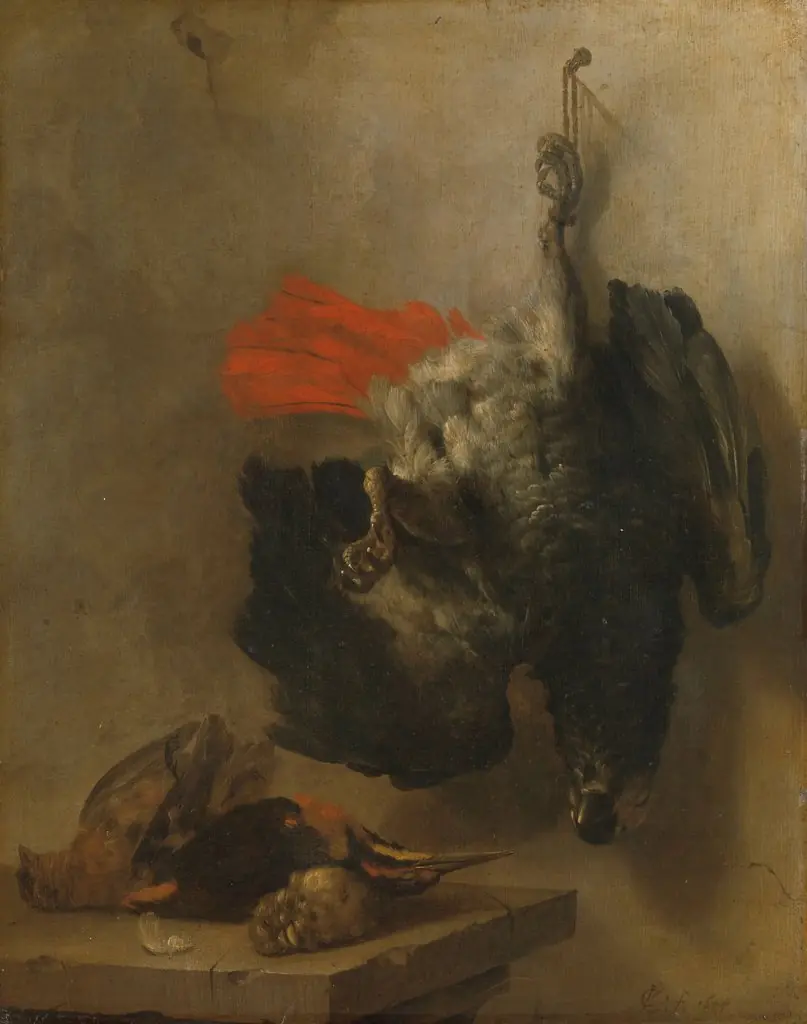
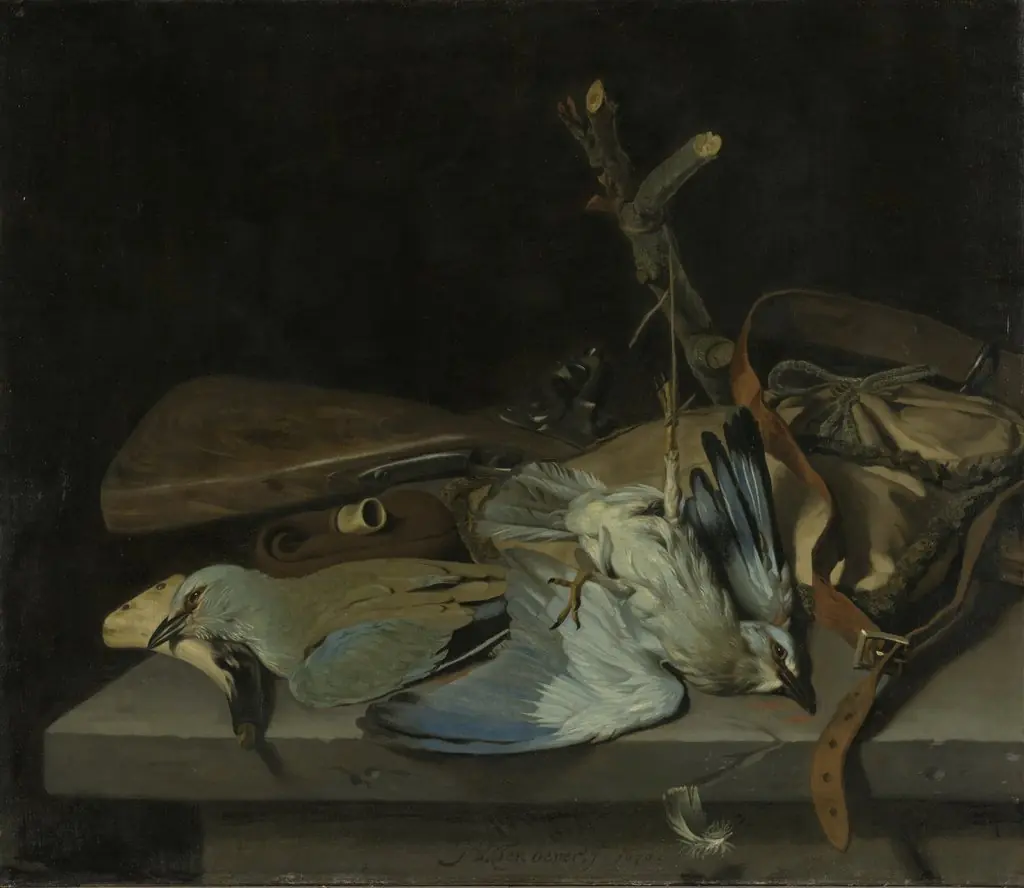
Still life with woodpecker and snipes
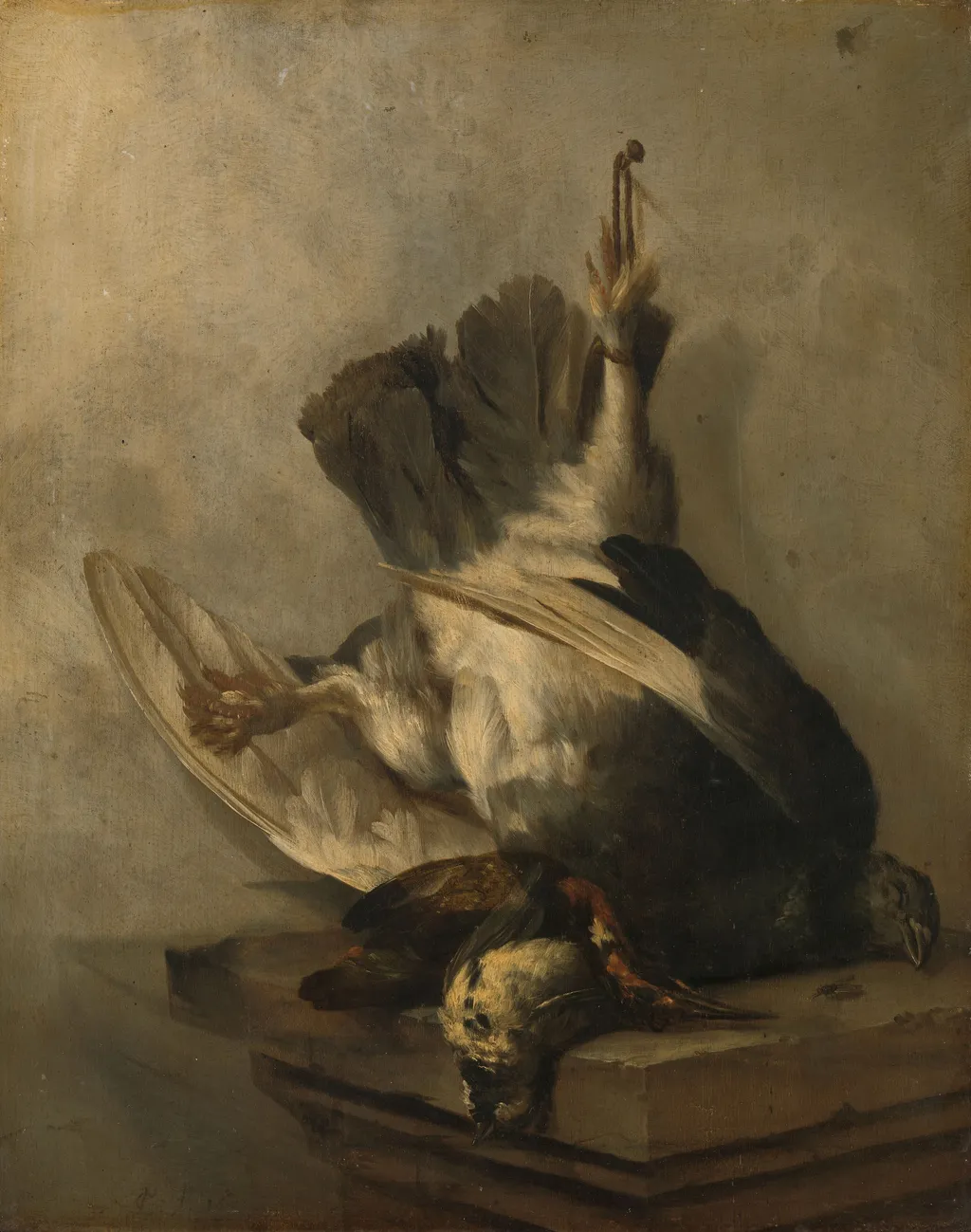
Still life with woodpecker and snipes is an oil painting by the Dutch Golden Age artist Cornelis Lelienbergh. It dates from 1655 and is held in the collection of the Rijksmuseum.
About this work
Overview
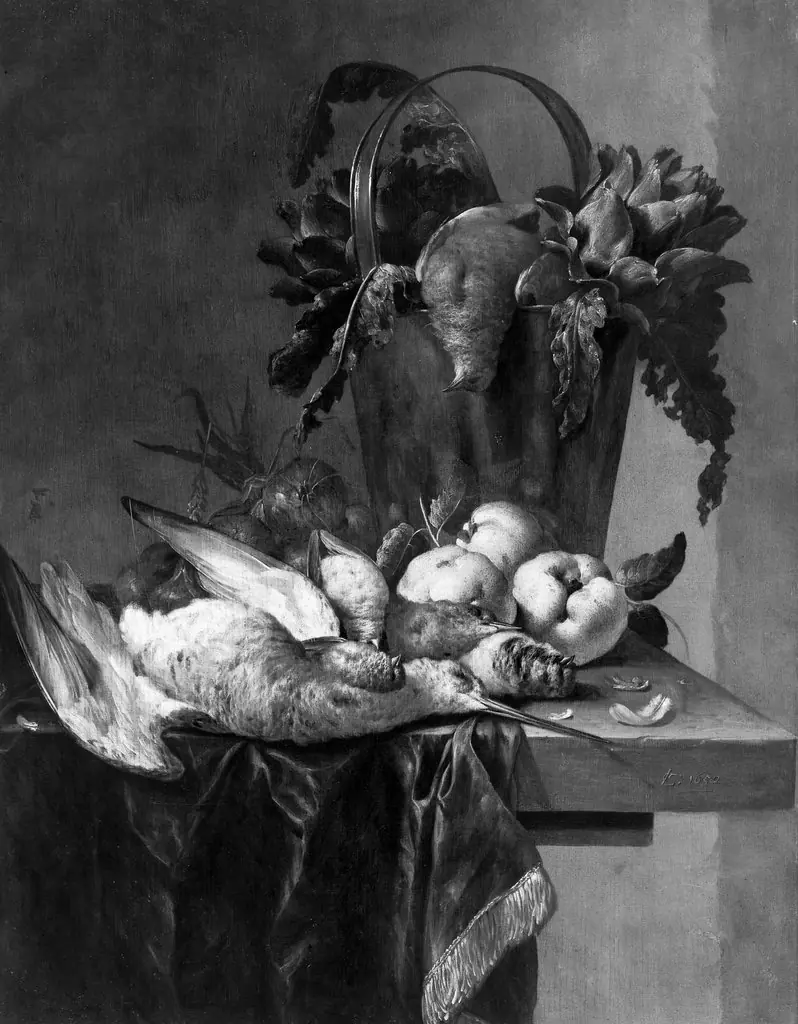
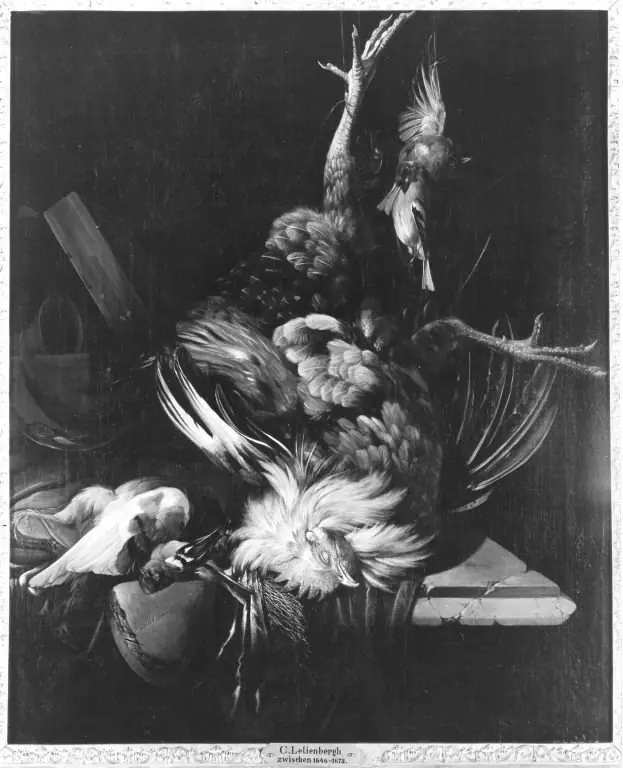
Cornelis Lelienbergh’s oil painting, dated 1655, presents a stark still‑life composition centered on a dead woodpecker with its wings fully extended. The bird rests on a textured surface, while two smaller, disheveled birds lie beneath it. A plain, dark background isolates the subjects, emphasizing their forms and the contrast between light and shadow.
Subject & Meaning
The work depicts a moment of death and decay, common in seventeenth‑century Dutch vanitas themes. The prominently displayed woodpecker, a creature associated with persistence, alongside the limp snipes, may suggest the fleeting nature of life and the inevitability of mortality, inviting contemplation of the viewer’s own transience.
Technique & Style
Lelienbergh employs careful modelling of feather texture, alternating between soft, downy areas and coarser, worn patches. Subtle illumination causes the woodpecker’s plumage to catch a faint glow, while the surrounding darkness deepens the sense of volume. The chiaroscuro treatment creates a three‑dimensional effect, guiding the eye across the composition.
History & Provenance
Created in 1655, the painting entered the collection of the Rijksmuseum in Amsterdam, where it remains on display. Its provenance prior to museum acquisition is not extensively documented, but the work is recognized as a representative example of Lelienbergh’s oeuvre within the Dutch Golden Age.
Context
During the mid‑1600s, Dutch artists frequently explored still‑life subjects that combined naturalistic detail with moral symbolism. Lelienbergh’s focus on avian specimens aligns with contemporary interests in scientific observation and the moralizing tradition of depicting dead game as a reminder of earthly impermanence.
Own this work as a print
Artist & collection