Artwork
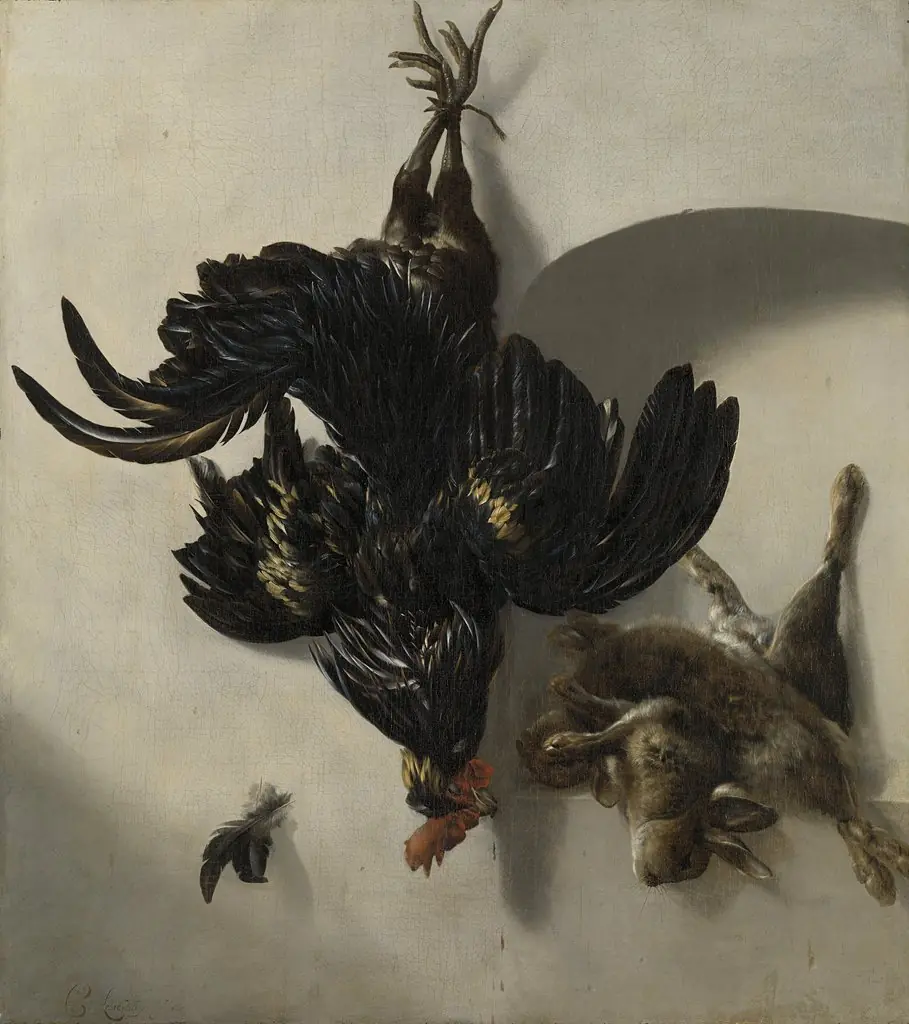
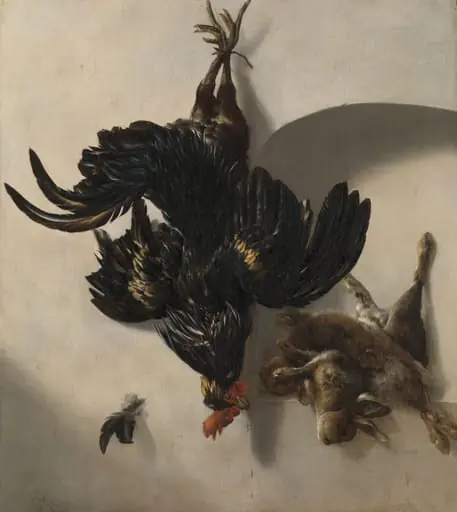
Still life with hare and black rooster
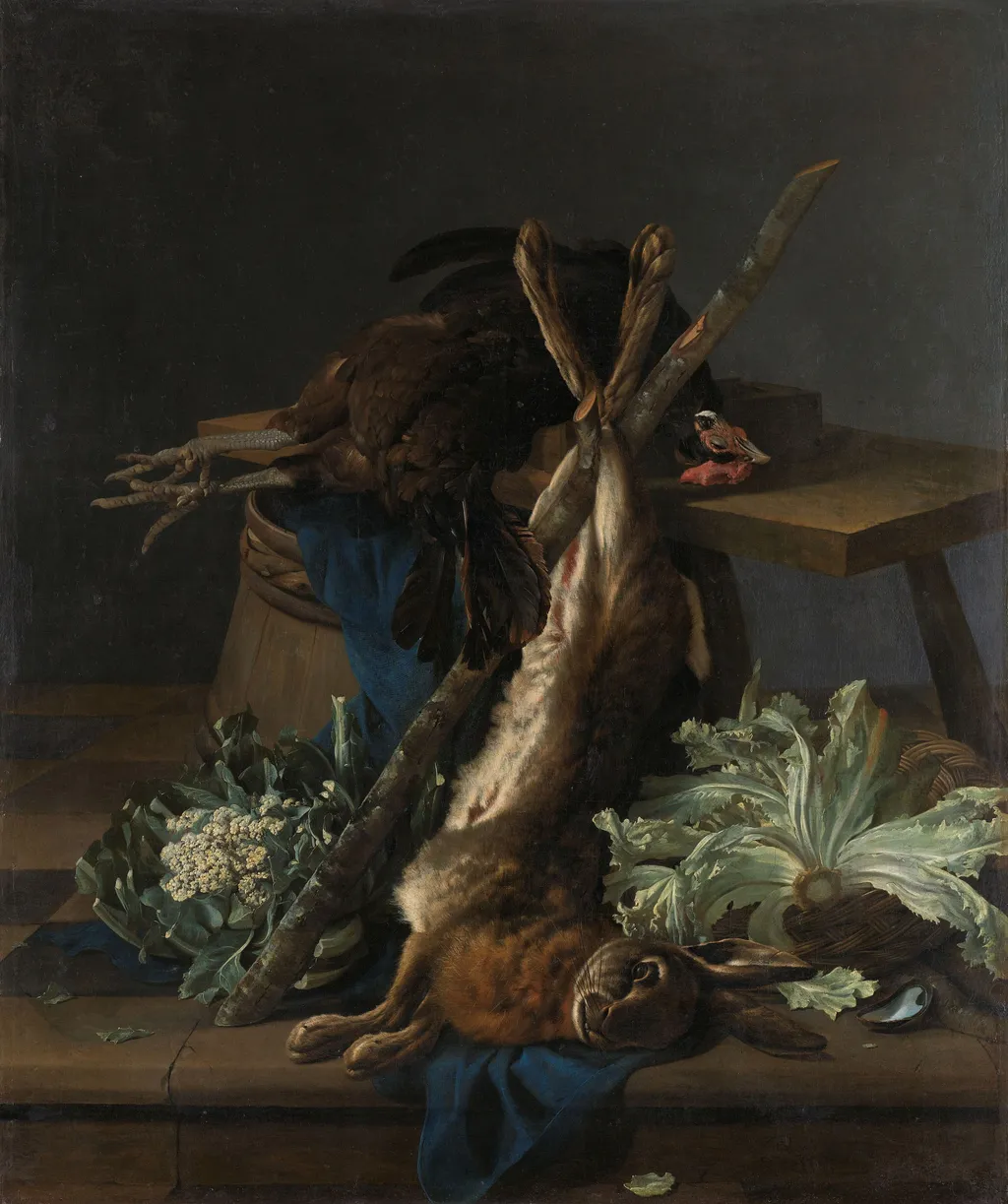
Still life with hare and black rooster is an oil painting by the Dutch Golden Age artist Cornelis Lelienbergh. It dates from 1659 and is held in the collection of the Rijksmuseum.
About this work
Overview
Cornelis Lelienbergh’s oil painting Still life with hare and black rooster, executed in 1659, is part of the Rijksmuseum’s collection.
Cornelis Lelienbergh’s oil painting Still life with hare and black rooster, executed in 1659, is part of the Rijksmuseum’s collection. The work presents a tabletop arrangement that juxtaposes a lifeless hare with fresh vegetables and a small white blossom, while a figure in the distance lifts a dead rooster and a live bird perches nearby. The composition balances the starkness of death with the vitality of the surrounding produce.
Subject & Meaning
The tableau combines elements of the hunt and domestic abundance, a common motif in 17th‑century Dutch still lifes that invites reflection on mortality and the transience of material goods. The hare, rendered with its limbs splayed, and the suspended rooster serve as memento mori symbols, whereas the crisp cabbage, broccoli and delicate flower suggest seasonal bounty and the continuity of life.
Technique & Style
Lelienbergh employs a pronounced chiaroscuro, allowing a single light source to illuminate the fur of the hare and the sheen of the feathers, while the surrounding darkness deepens the visual impact of the colors. The brushwork captures the texture of animal pelage and the crispness of vegetable leaves, creating a tactile realism that heightens the contrast between the illuminated foreground and the shadowed background.
History & Provenance
Painted in the late Dutch Golden Age, the piece entered the Rijksmuseum’s holdings as part of its extensive Dutch collection, though the exact acquisition path remains undocumented in public records. Its survival in a museum setting attests to the enduring interest in genre still lifes that blend naturalistic detail with symbolic content.
Context
The work reflects the Dutch Republic’s fascination with detailed observation of everyday objects, a practice rooted in the country’s thriving mercantile culture. By integrating both dead and living creatures, Lelianberg aligns with contemporaries who used still‑life arrangements to comment on the fleeting nature of prosperity and the moral lessons embedded in ordinary scenes.
Own this work as a print
Artist & collection

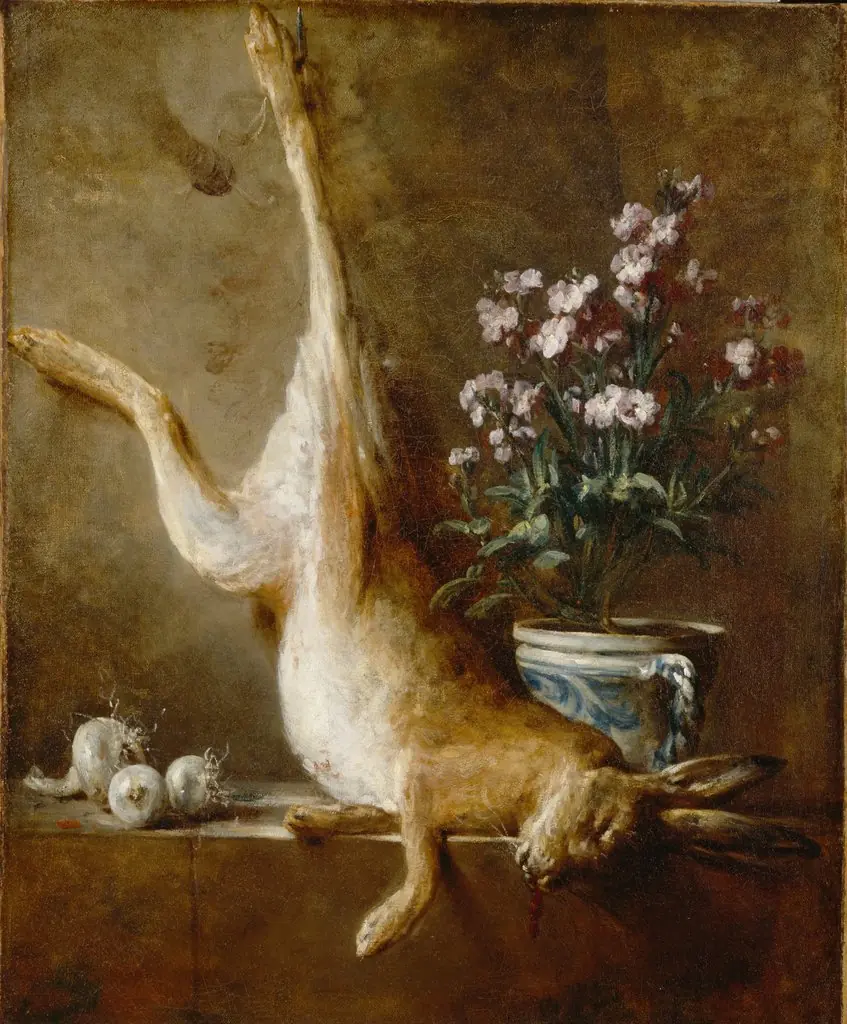 Still Life with Dead Hare
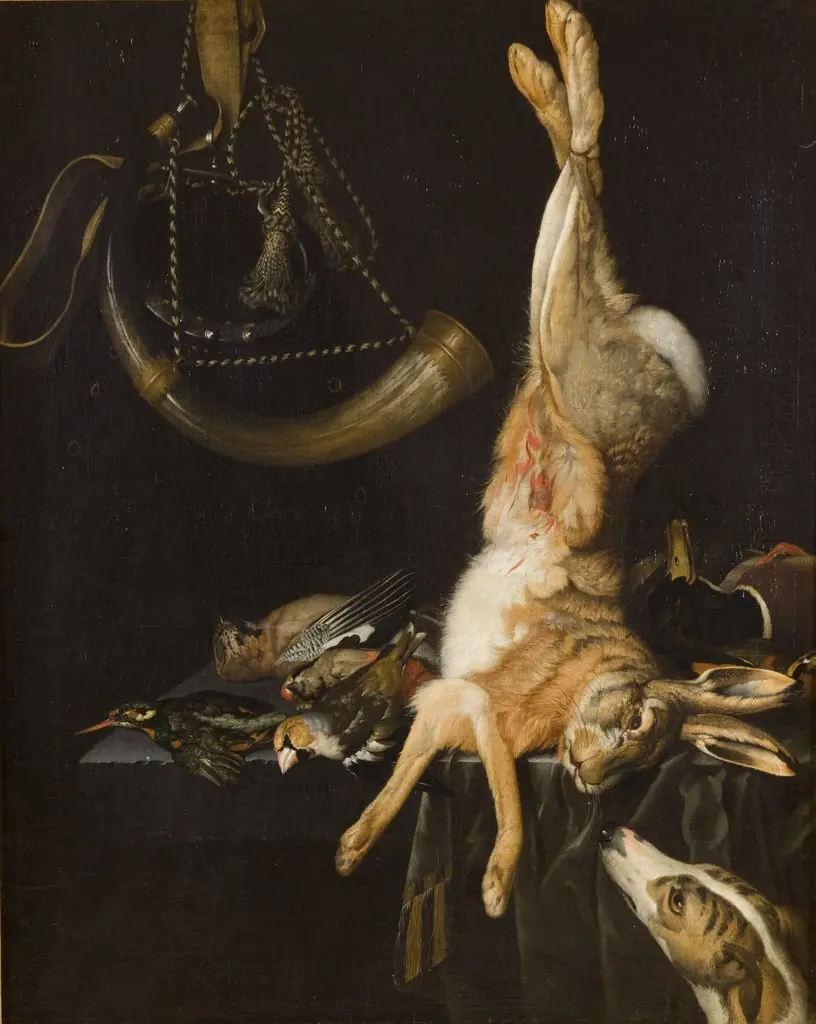 Still Life with a Hare
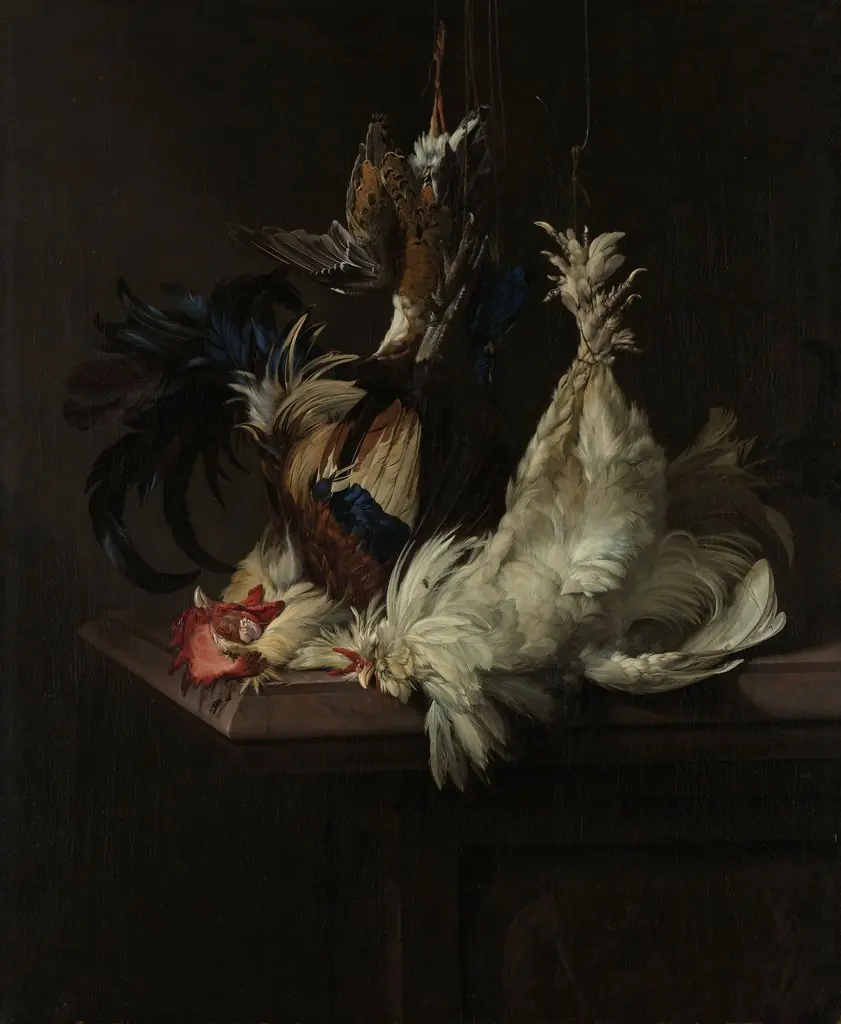 Still Life with Poultry
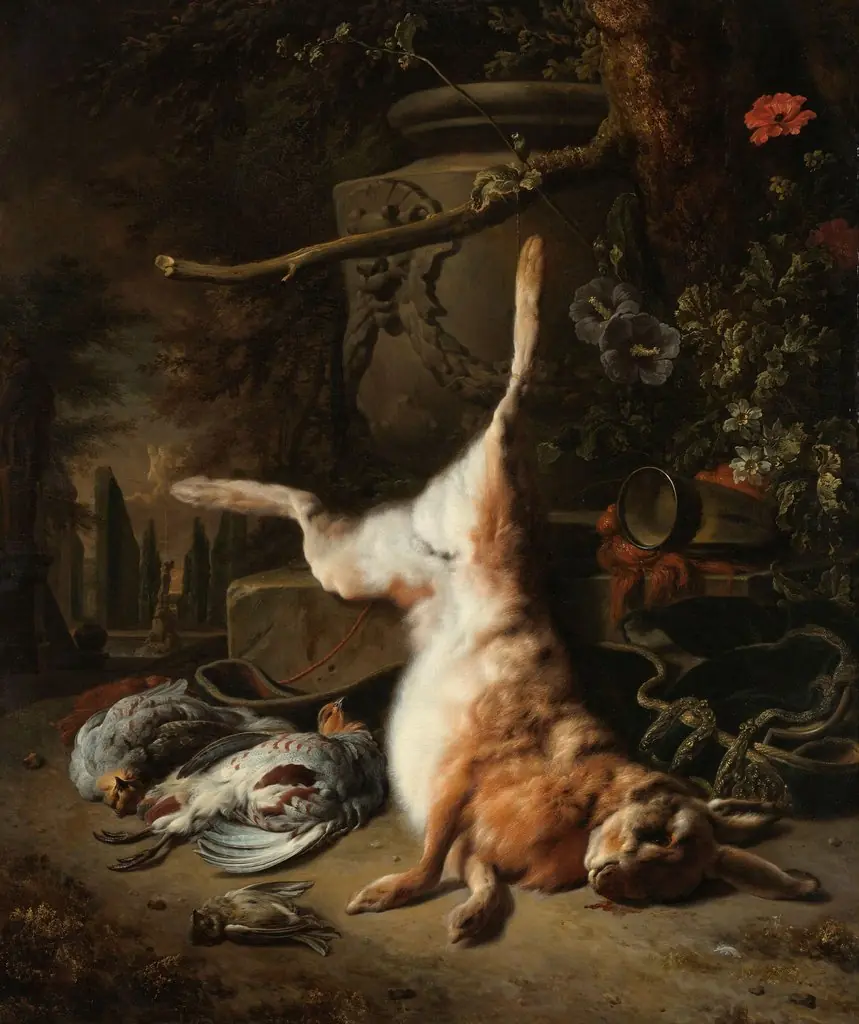 Still life with a Hare and Other Game
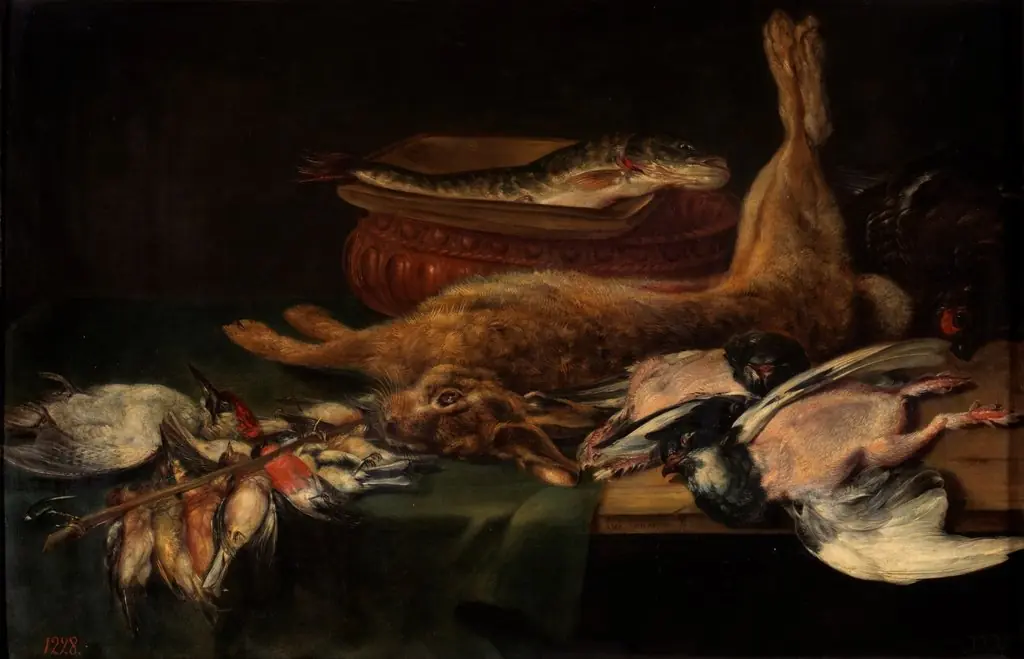 Still life with a hare, dead birds and fish
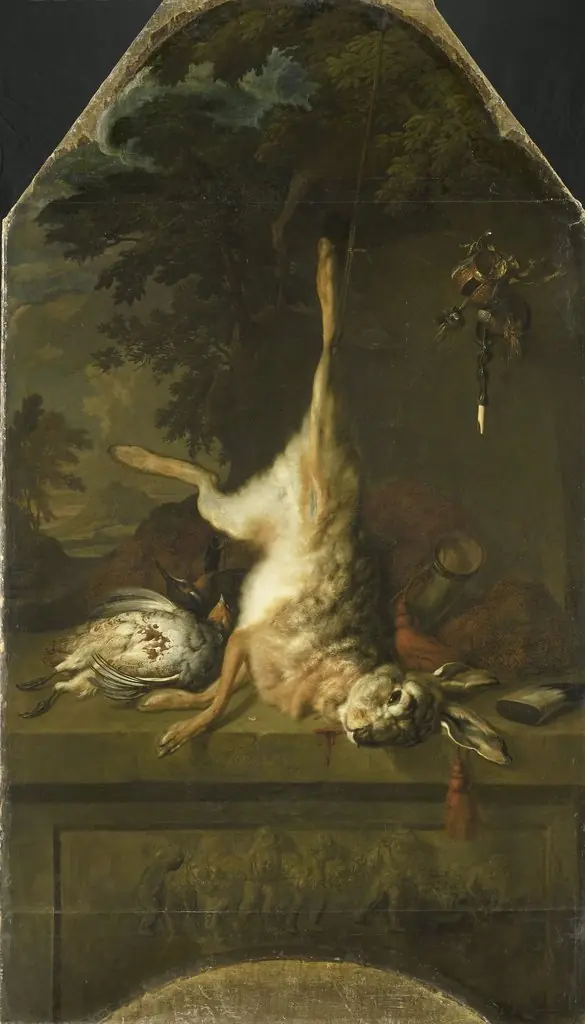 Still Life with Dead Hare and Partridges
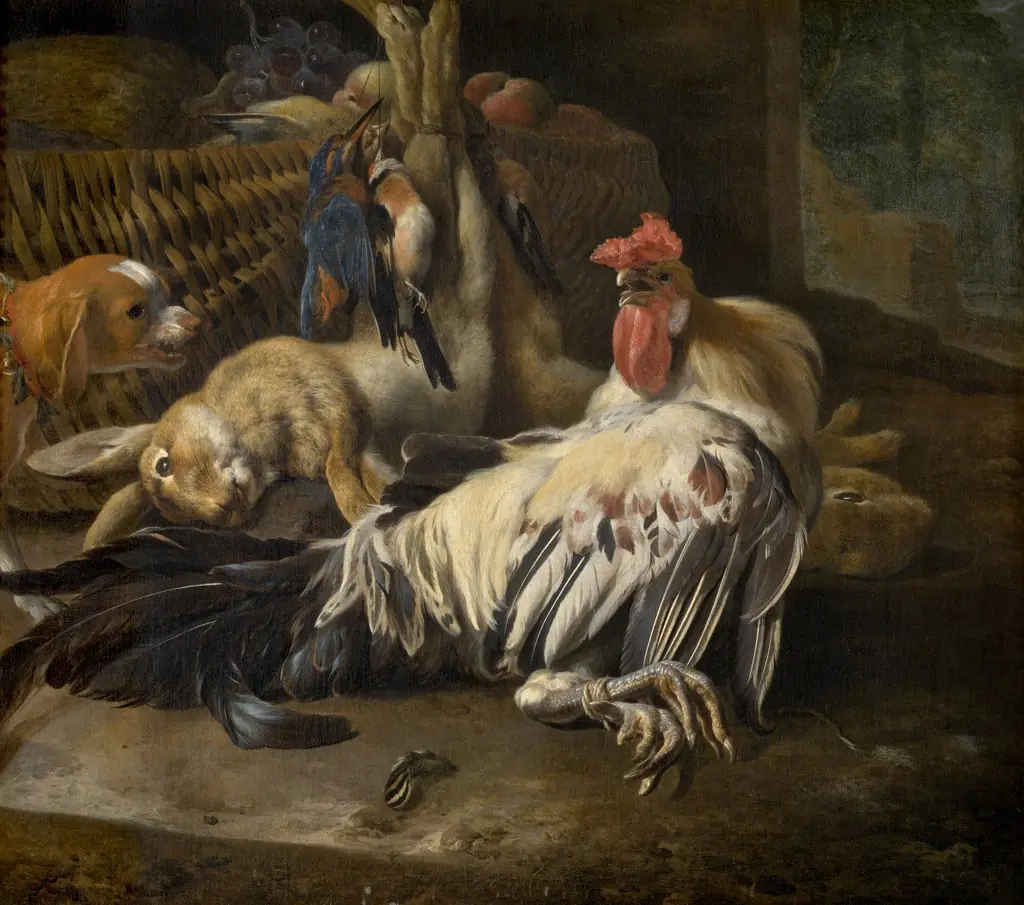 Still Life with Cock
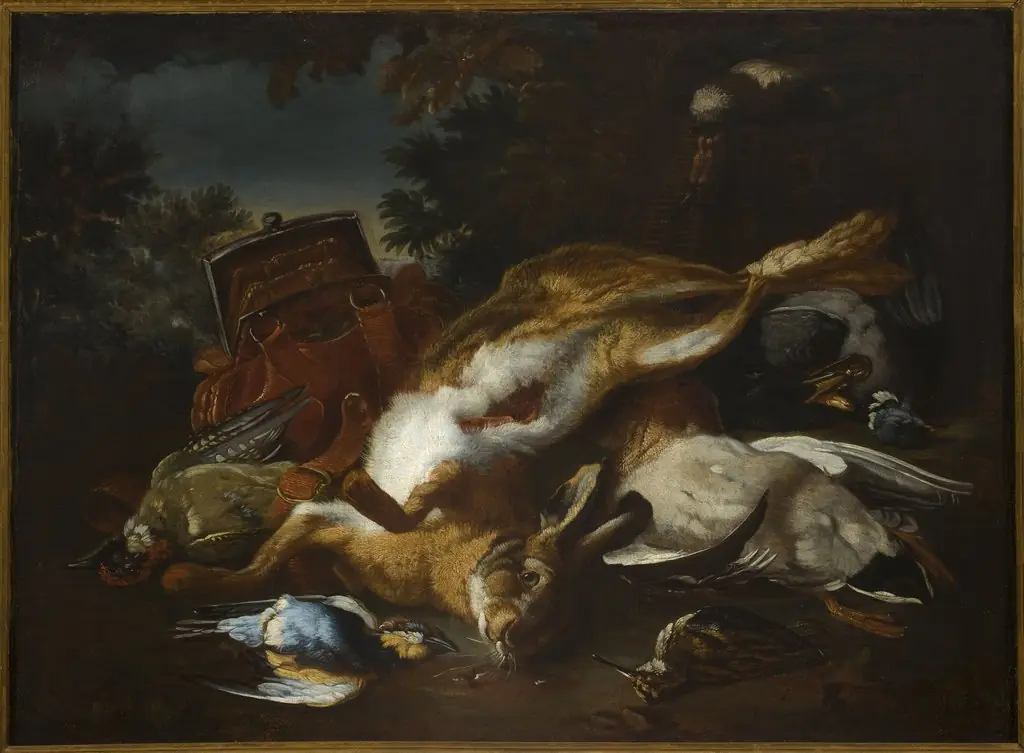 Still Life with a Hare, Wild Fowl and a Hunter's Bag
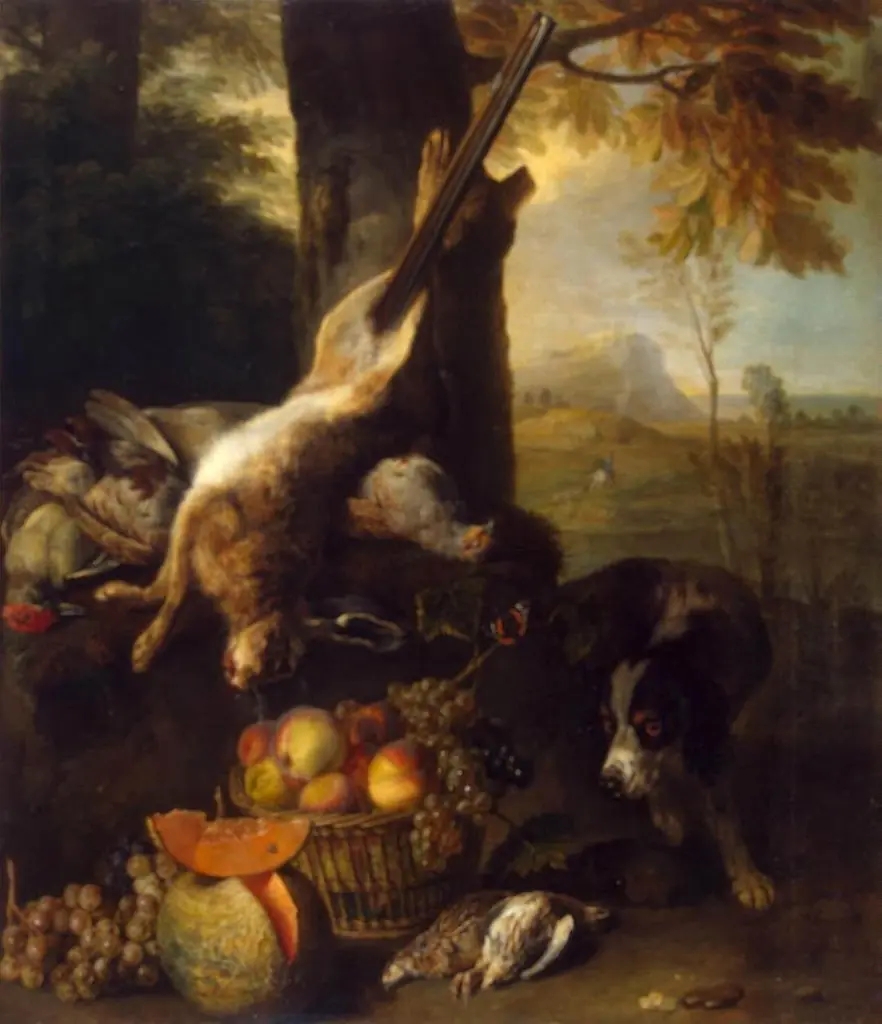 Still Life with a Dead Hare and Fruit
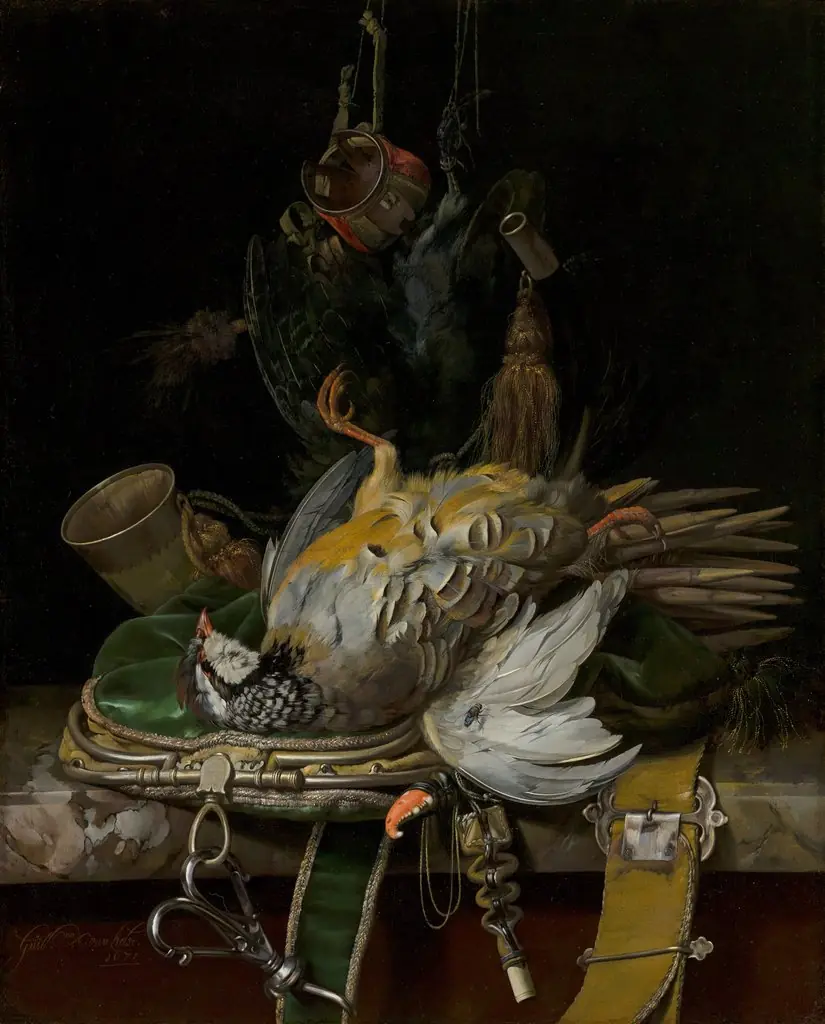 Still Life with Partridges