Artwork
Still life with a brass pail
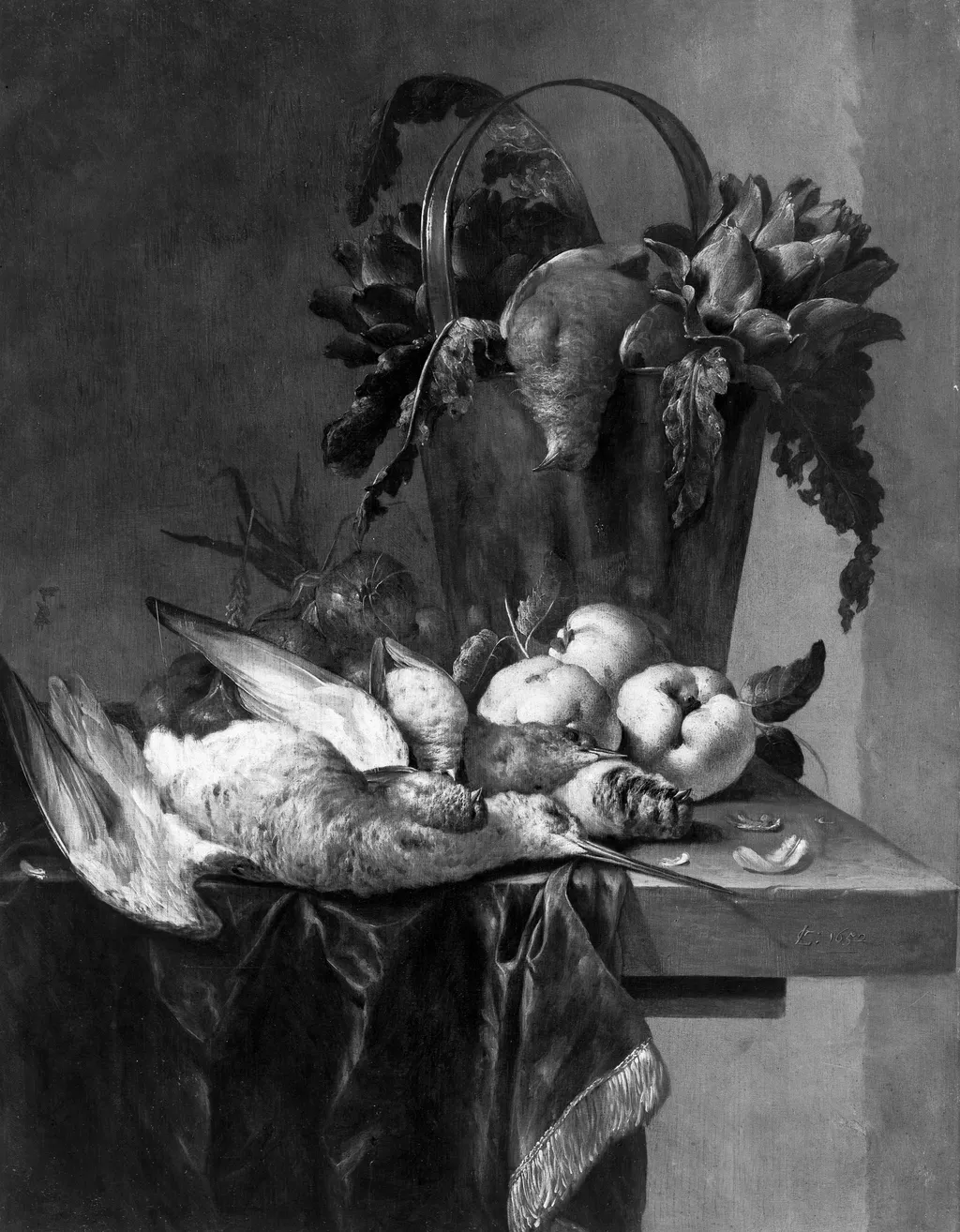
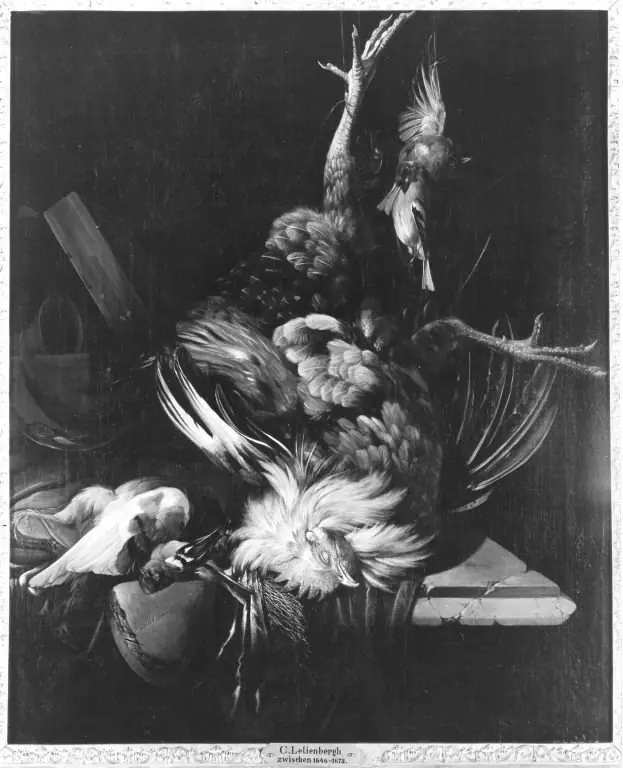
Still life with a brass pail is a paint painting by the Dutch Golden Age artist Cornelis Lelienbergh. It dates from 1652 and is held in the collection of the Gemäldegalerie Berlin.
About this work
Overview
Lelienbergh employs a restrained palette and precise brushwork to render the reflective qualities of the brass and the delicate details of the natural elements.
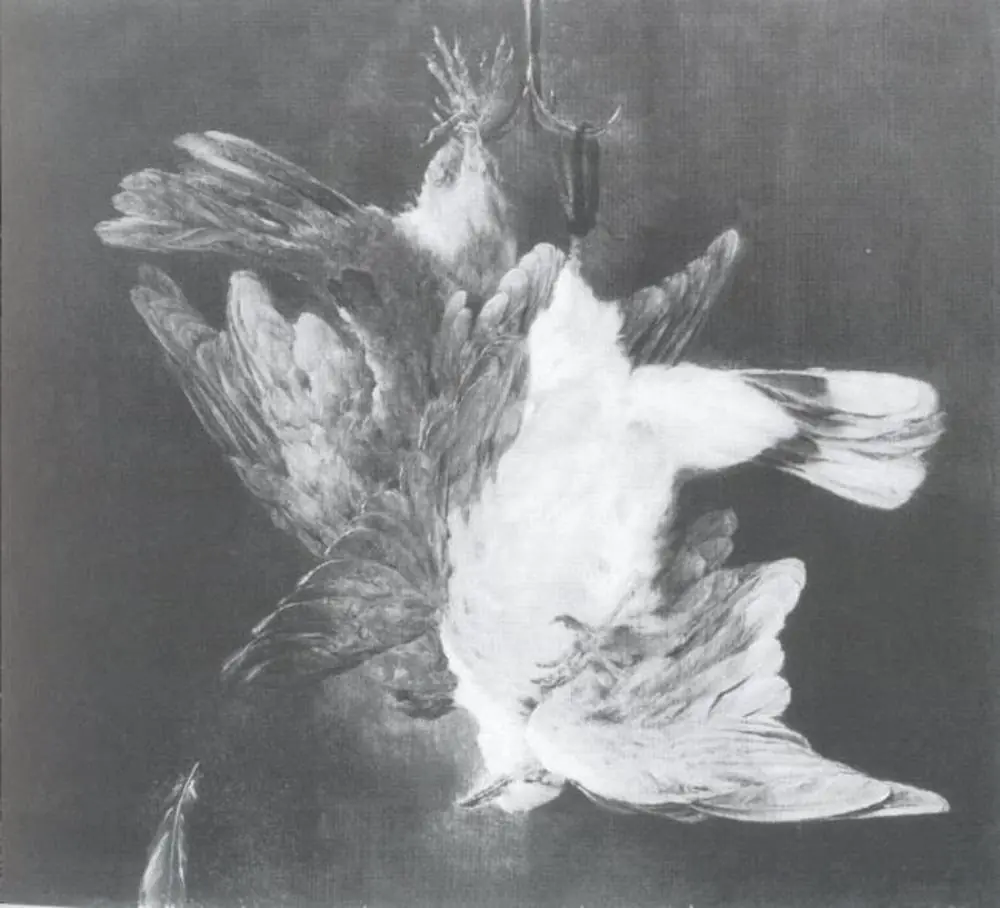
Cornelis Lelienbergh's 'Still life with a brass pail,' executed in 1652, is a characteristic example of Dutch Golden Age still life painting. The composition centers on a large brass pail resting on a table draped with a dark cloth, overflowing with a variety of fresh vegetables and leafy greens. Positioned prominently in the foreground is a dead bird with its wings spread, creating a textural contrast between the metallic sheen of the vessel, the organic forms of the produce, and the plumage of the game. Lelienbergh employs a restrained palette and precise brushwork to render the reflective qualities of the brass and the delicate details of the natural elements. This work reflects the artist's specialization in modest, intimate still lifes that emphasize the tactile reality of everyday objects rather than grand allegorical narratives. Created during the height of his career in the Netherlands, the painting demonstrates the period's fascination with the accurate depiction of materials and the transient nature of life, themes common in 17th-century Dutch art. The arrangement balances abundance with a sense of quiet order, showcasing Lelienbergh's skill in capturing light and texture within a confined domestic setting.
Subject & Meaning
The work juxtaposes the abundance of fresh harvest, symbolized by the leafy greens and root vegetables, with the stark presence of a lifeless bird, a common memento mori element in 17th‑century Dutch genre painting. This contrast invites reflection on the transience of life and the cycles of consumption, underscoring the moral undertones often embedded in seemingly ordinary domestic scenes.
Technique & Style
Lelienbergh employs a meticulous, naturalistic approach, rendering the reflective surface of the brass pail and the varied textures of foliage with precise brushwork. Light falls from the left, producing a chiaroscuro effect that models forms and enhances the three‑dimensional illusion. The palette remains restrained, emphasizing earthy greens, muted browns, and the warm metallic sheen of the vessel.
History & Provenance
Created in 1652, the painting entered the collection of the Gemäldegalerie in Berlin, where it remains on display. Its attribution to Lelienbergh aligns with his known oeuvre of still lifes from the Dutch Golden Age, and the work has been documented in the museum’s catalogues since the early 20th century.
Own this work as a print
Artist & collection

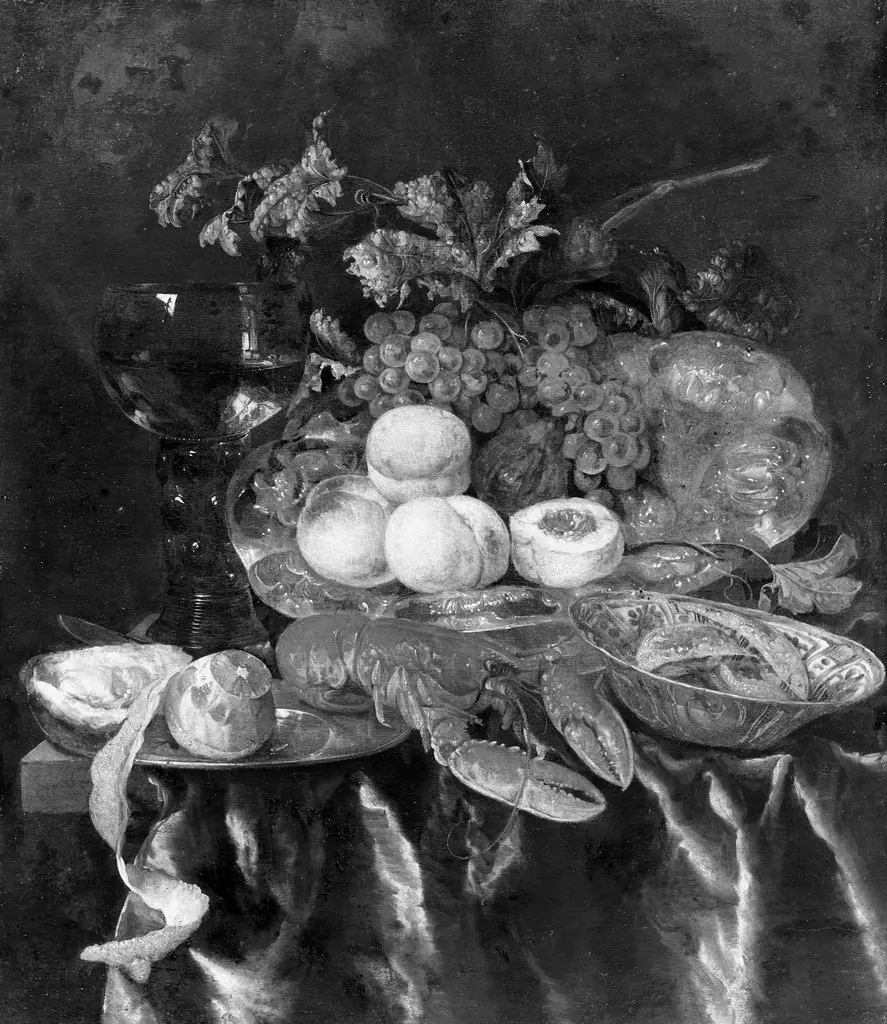 Still life with lobster, fruit, peeled lemon, rummer, silver dish and faience dish on a dark tablecloth
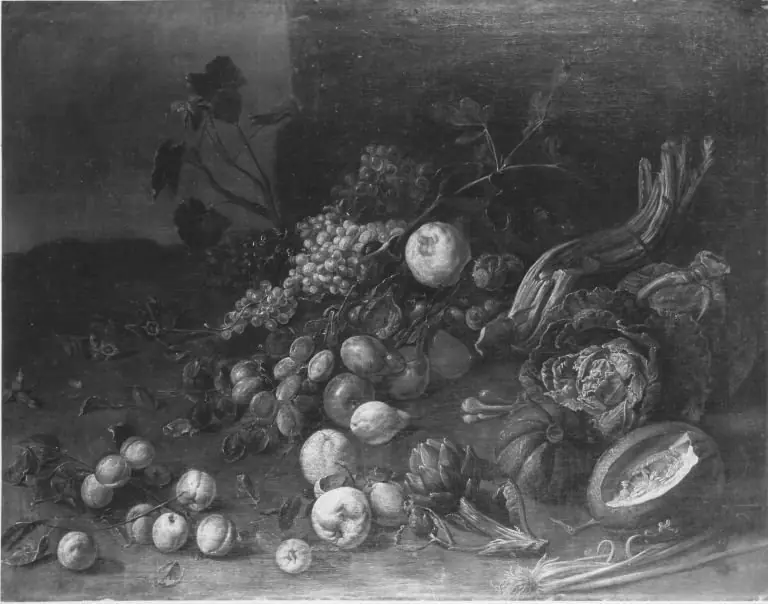 Früchtestück
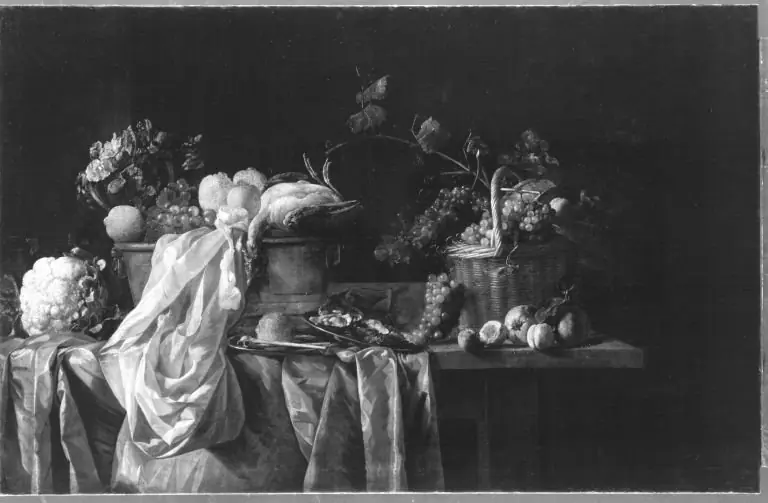 Früchtestück
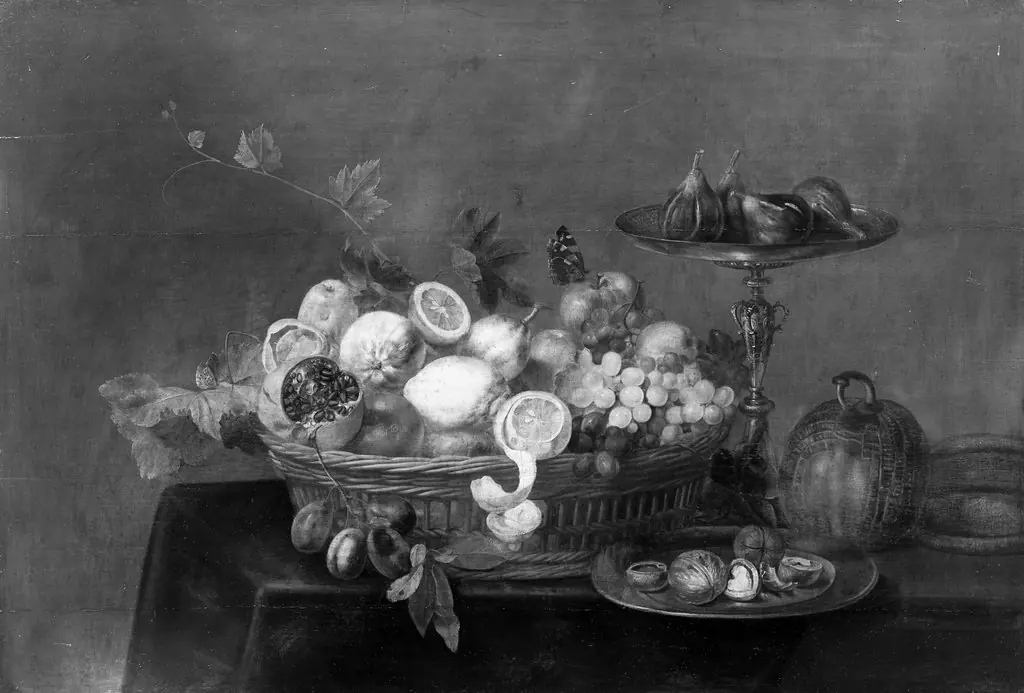 Still life with fruits
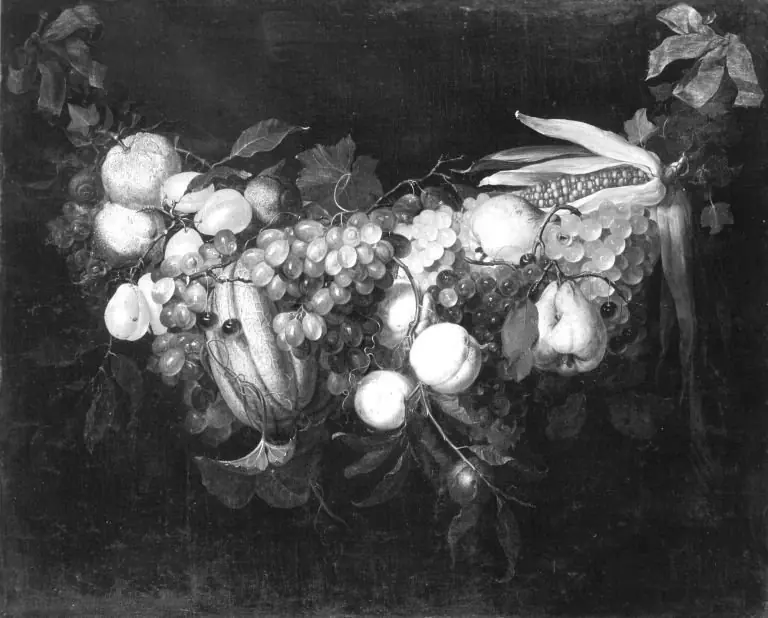 Früchtegirlande
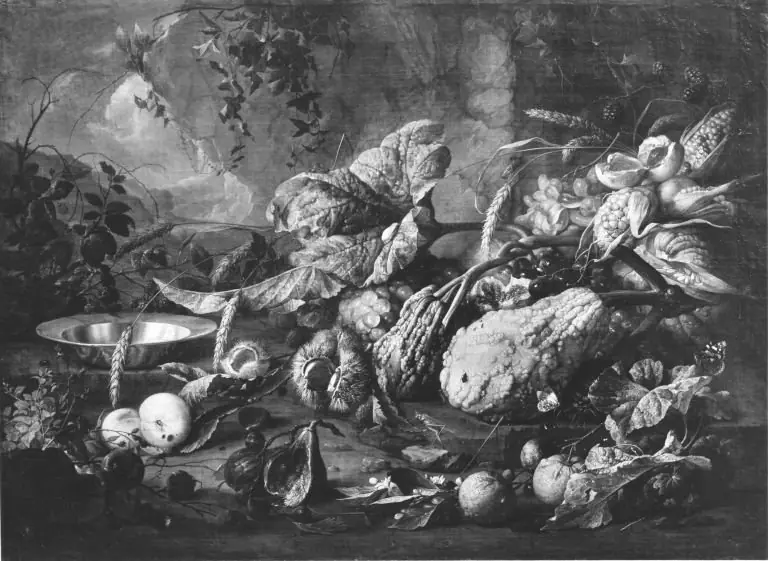 Früchtestück in einer Landschaft
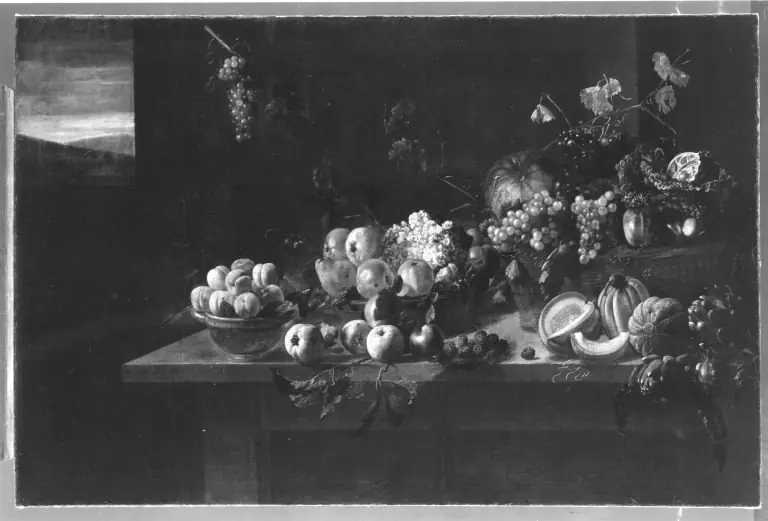 Früchtestück
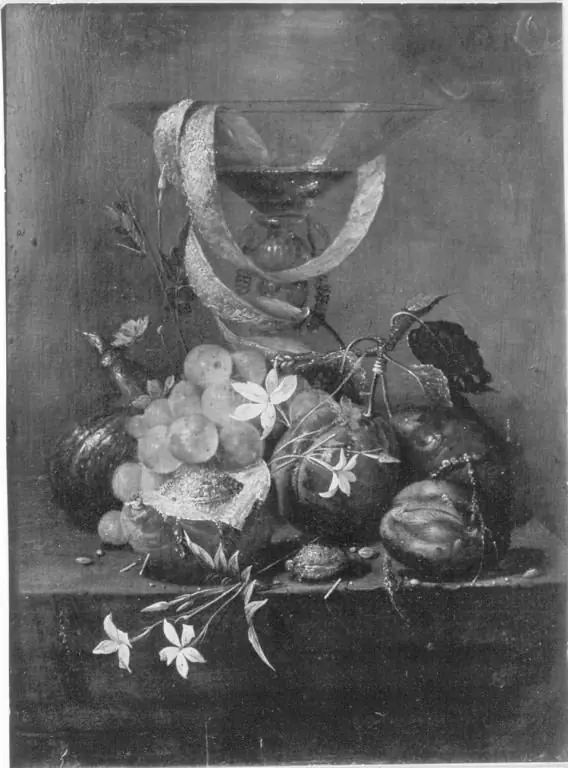 Fruit piece
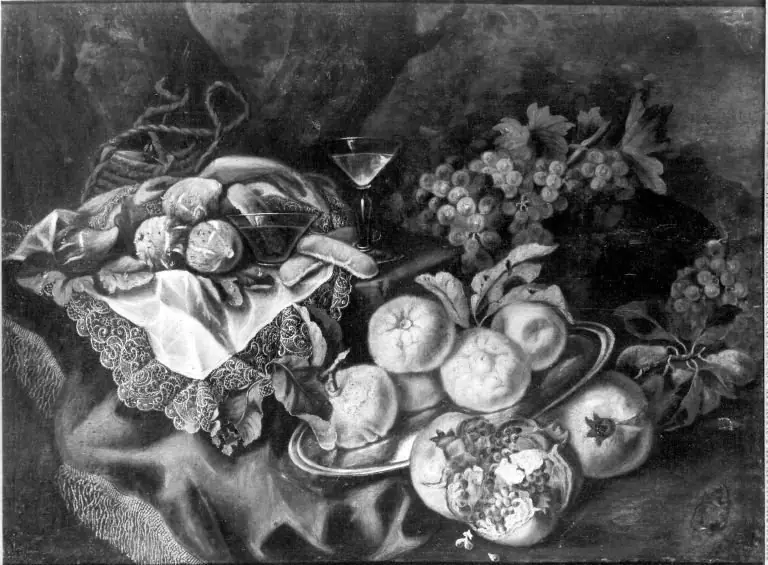 Stillleben mit Früchten
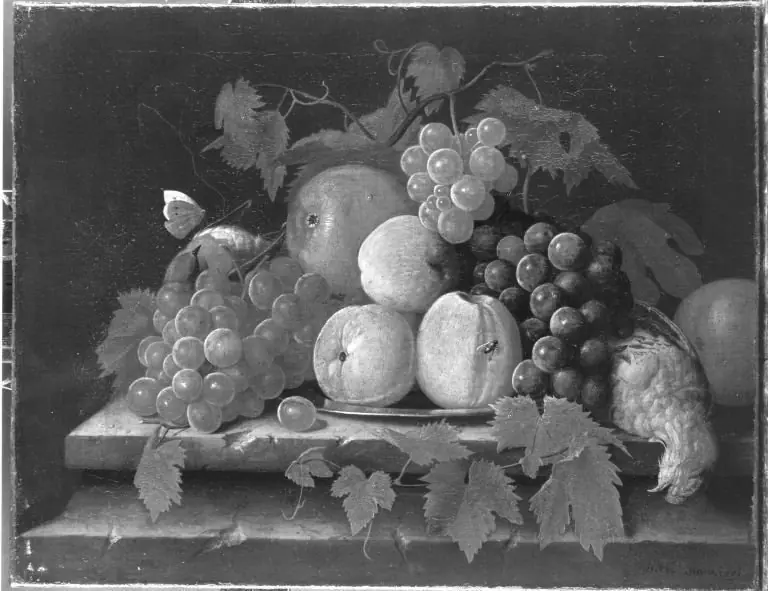 Stillleben mit Früchten und toten Vögeln
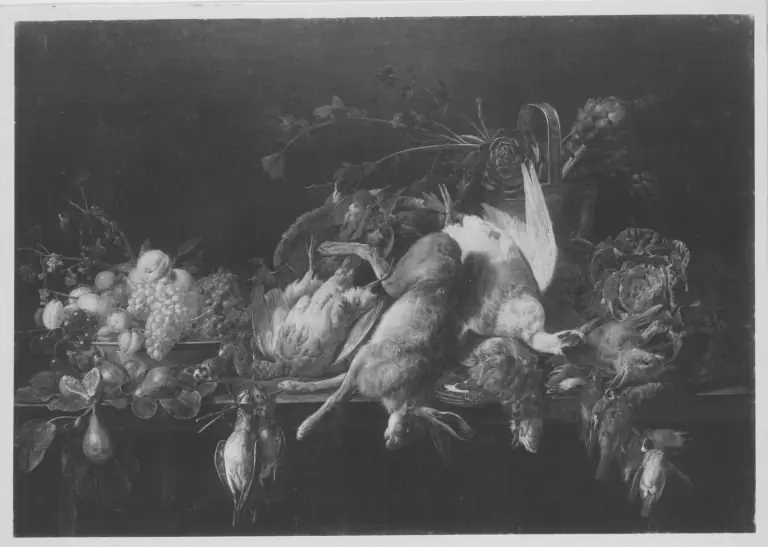 Stillleben mit Jagdbeute
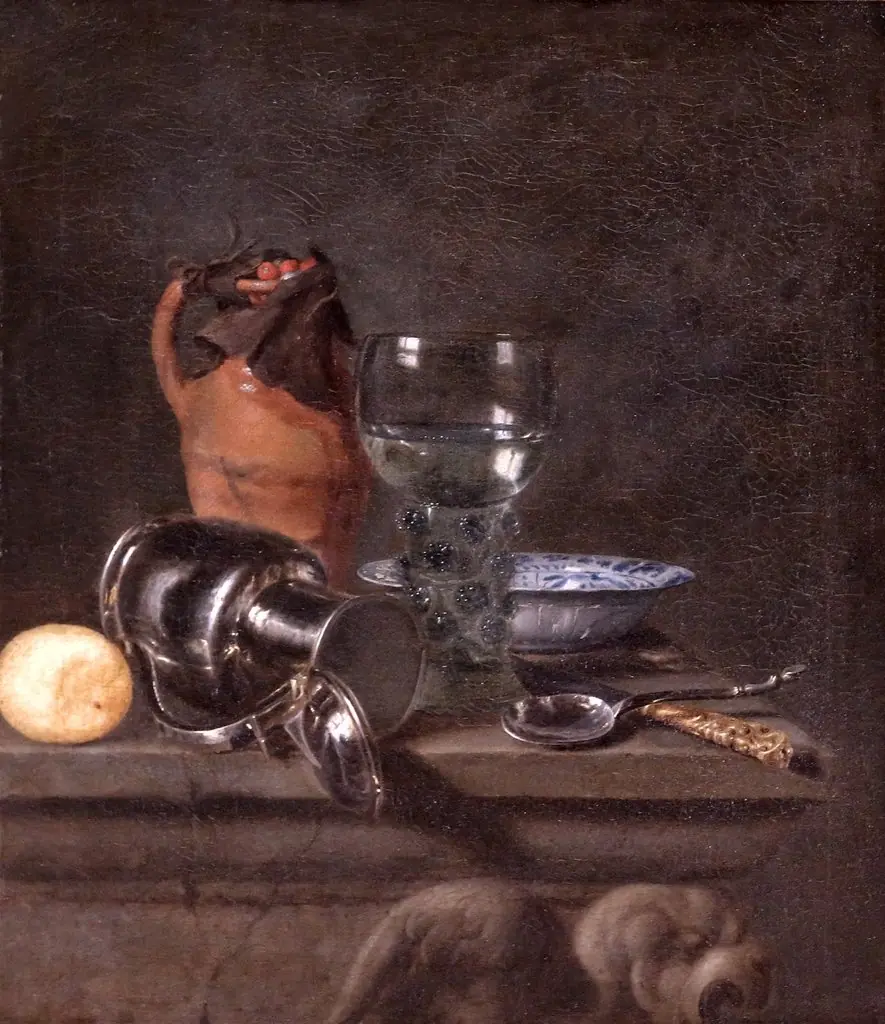 Still life with fallen pewter jug and roemer