Artwork
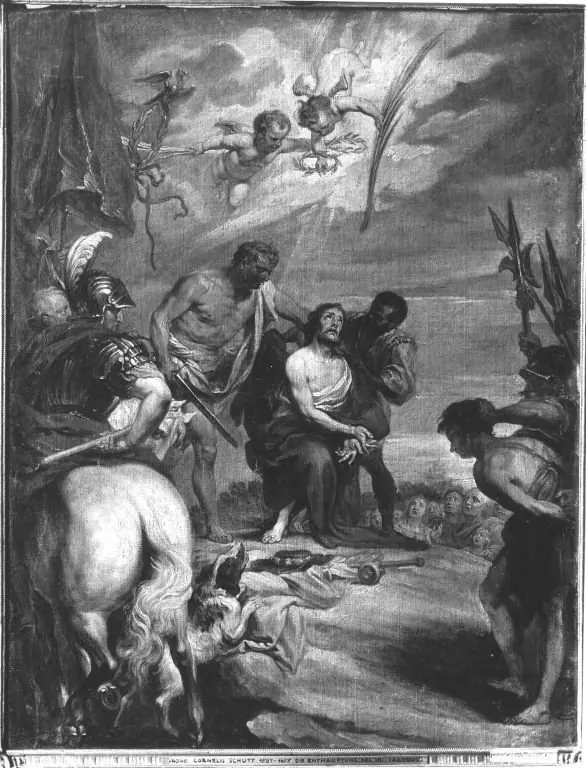
The beheading of Saint George
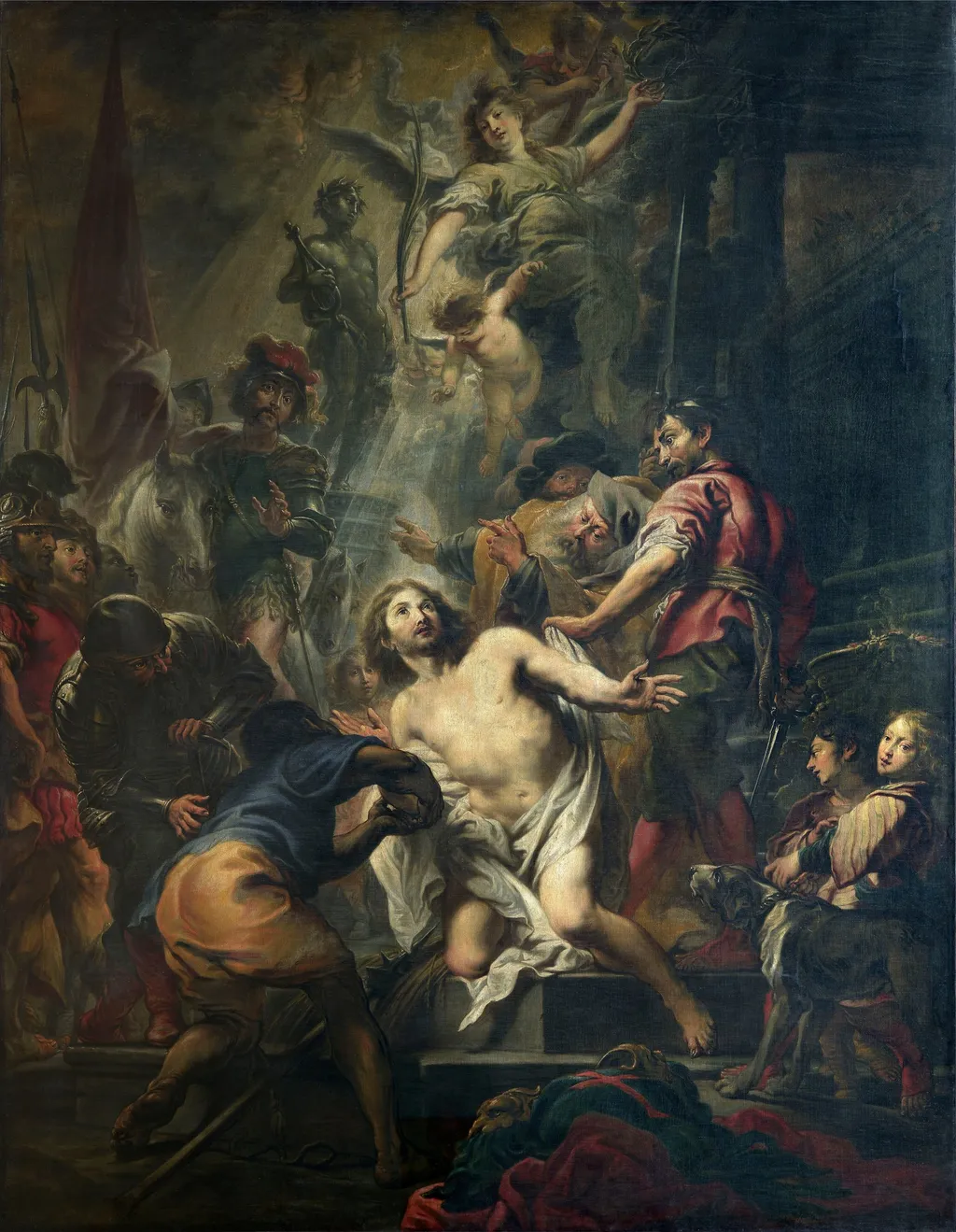
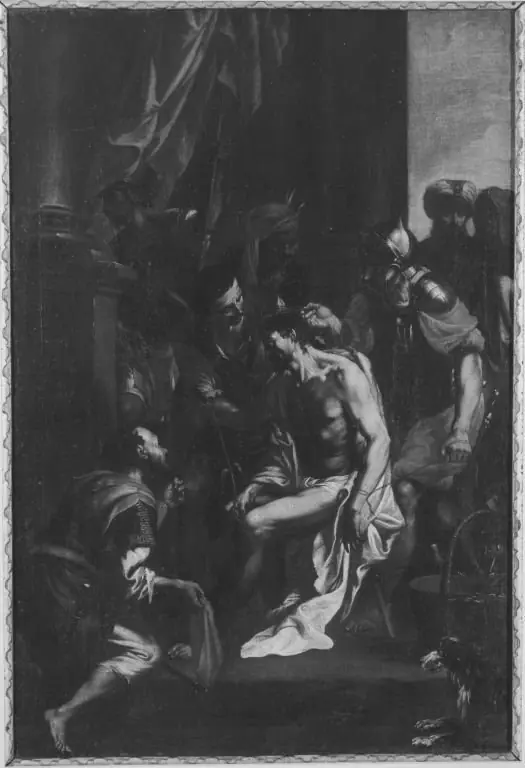
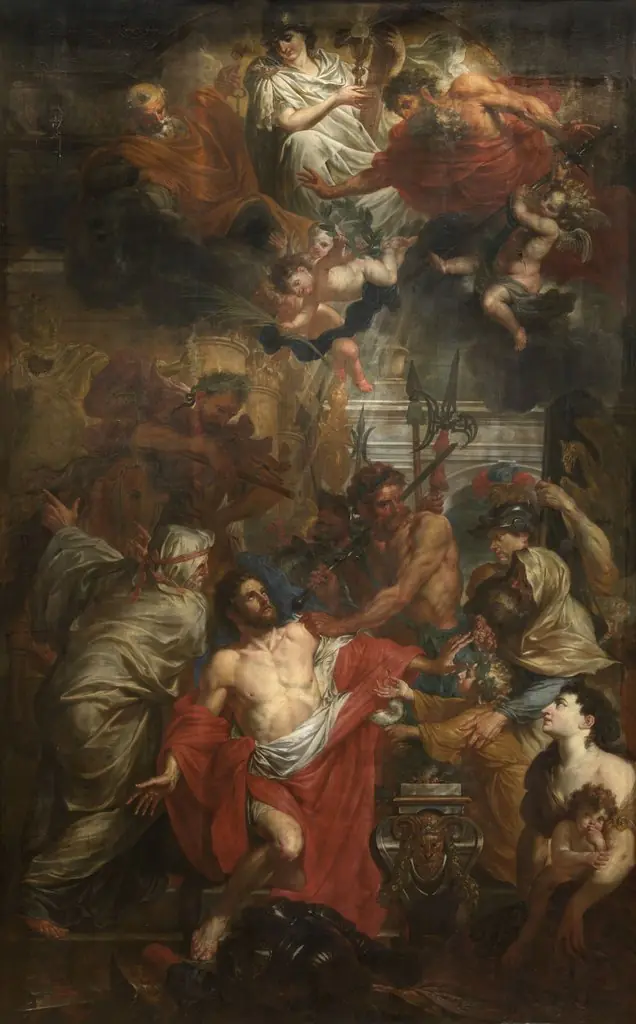
The beheading of Saint George is an oil painting by the Flemish Baroque painting artist Cornelis Schut. It dates from 1653 and is held in the collection of the Onze-Lieve-Vrouwekathedraal.
About this work
Overview
The work is part of the Royal Museum of Fine Arts Antwerp’s collection, illustrating Schut’s command of dramatic narrative within a religious subject.
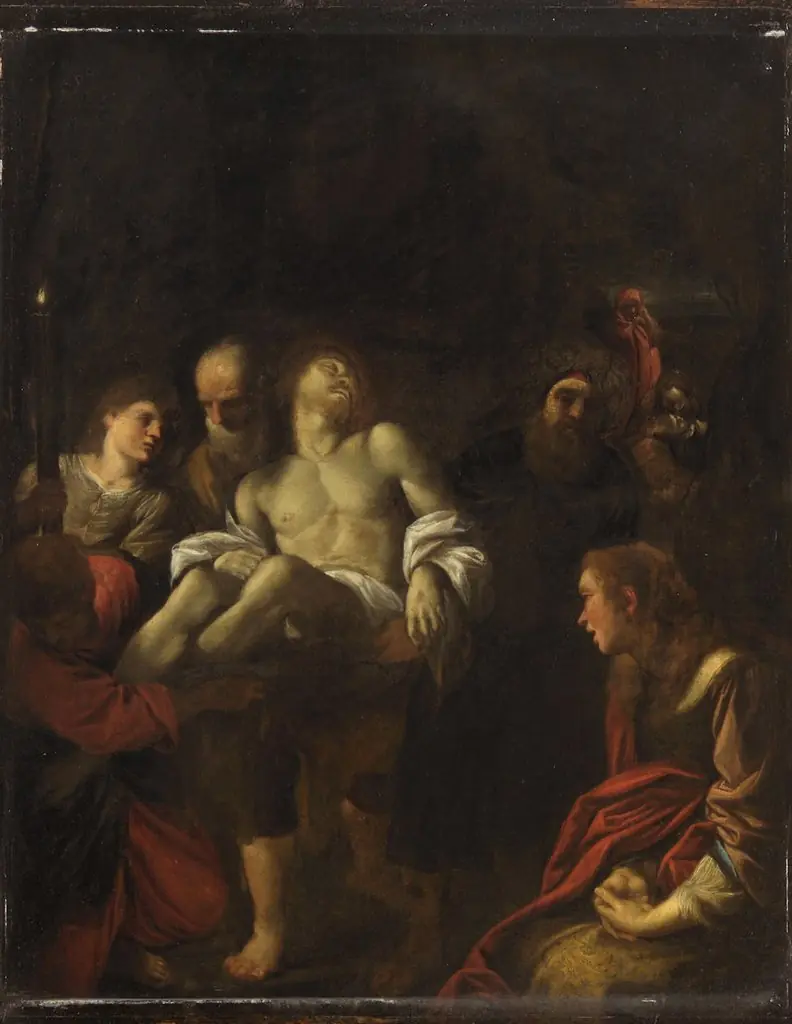
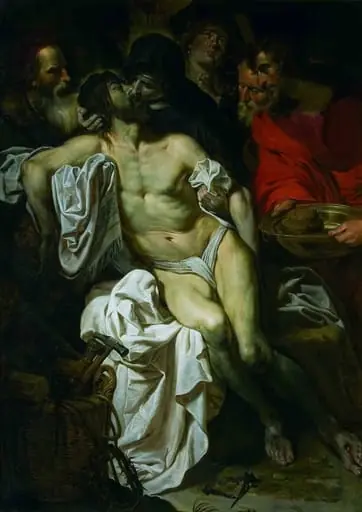
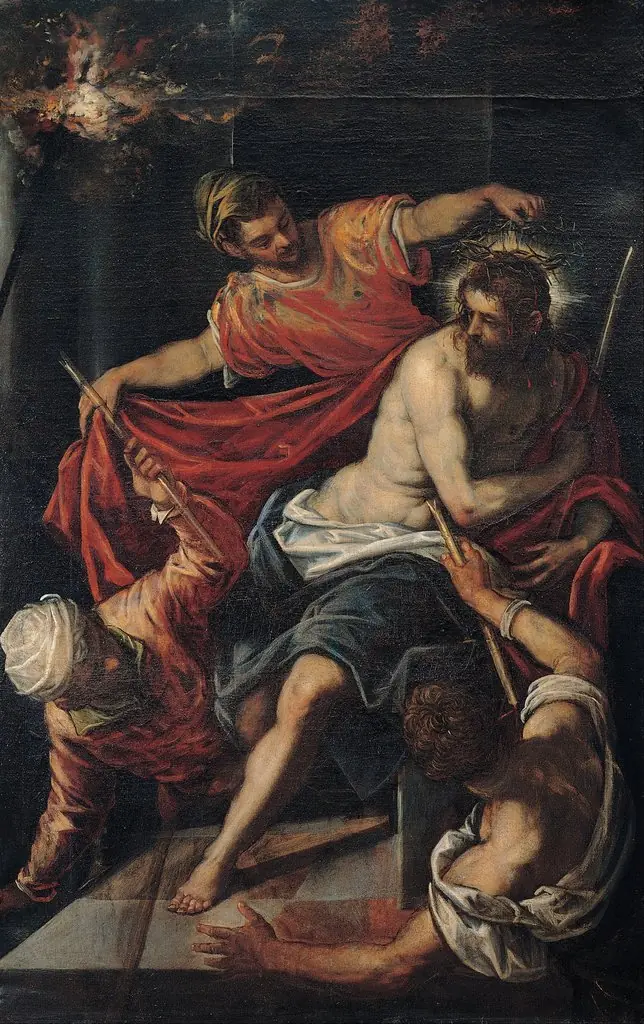
Cornelis Schut’s oil painting, dated 1653, captures the moment of Saint George’s execution. Executed in the Flemish Baroque idiom, the canvas presents a tightly arranged group of figures surrounding the martyr, whose white robe and outstretched arms dominate the composition. The work is part of the Royal Museum of Fine Arts Antwerp’s collection, illustrating Schut’s command of dramatic narrative within a religious subject.
Subject & Meaning
The scene portrays the legendary saint at the instant of his beheading, emphasizing his serene acceptance amid violence. Saint George’s upright posture and tilted head convey a blend of sacrifice and spiritual triumph, while the surrounding onlookers—some brandishing weapons, others recoiling in horror—reflect the tension between faith and persecution that the legend traditionally embodies.
Technique & Style
Schut employs a pronounced chiaroscuro, allowing torchlight and candle flames to carve out luminous faces and bodies against a somber backdrop. The stark contrast between illuminated figures and deep shadows creates a three‑dimensional effect and heightens the emotional intensity. Brushwork is vigorous yet controlled, typical of High‑Baroque dynamism, and the palette of muted earth tones punctuated by bright highlights reinforces the scene’s drama.
History & Provenance
Born in Antwerp, Schut trained with Peter Paul Rubens and spent formative years in Italy before establishing himself as a leading history painter in his native city. After its completion in 1653, the painting entered private collections before being acquired by the Royal Museum of Fine Arts Antwerp, where it remains on display as part of the museum’s Flemish Baroque holdings.
Context
The work reflects the Counter‑Reformation’s demand for emotionally compelling religious imagery, using martyrdom to inspire devotion. Schut’s choice of Saint George—a patron saint associated with chivalry and Christian triumph—aligns with contemporary Flemish interests in heroic virtue. The painting also demonstrates the diffusion of Italian chiaroscuro techniques into Northern Europe, illustrating the cross‑regional artistic exchanges of the early seventeenth century.
Own this work as a print
Artist & collection
Artist
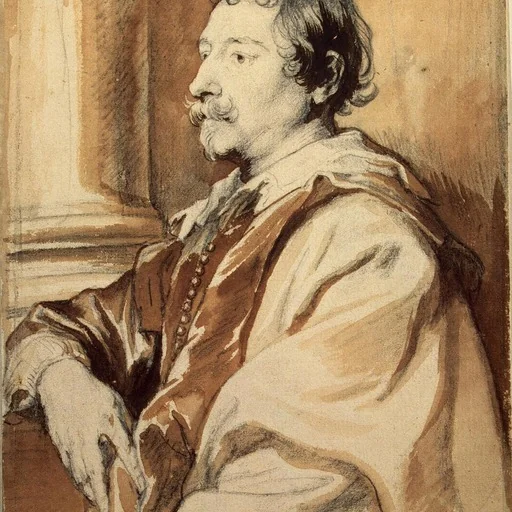
Cornelis Schut (13 May 1597 – 29 April 1655) was a Flemish painter, draughtsman, engraver and tapestry designer who specialized in religious and mythological scenes.