Artwork
Tablou, ulei pe pânză, portretul lui Nicolae Ceaușescu este redat în mijlocul unei hărți a României, înconjurat de diferite obiective industriale. Comandat și oferit de Comitetul Județean de Partid Alba, 15 octombrie 1981.
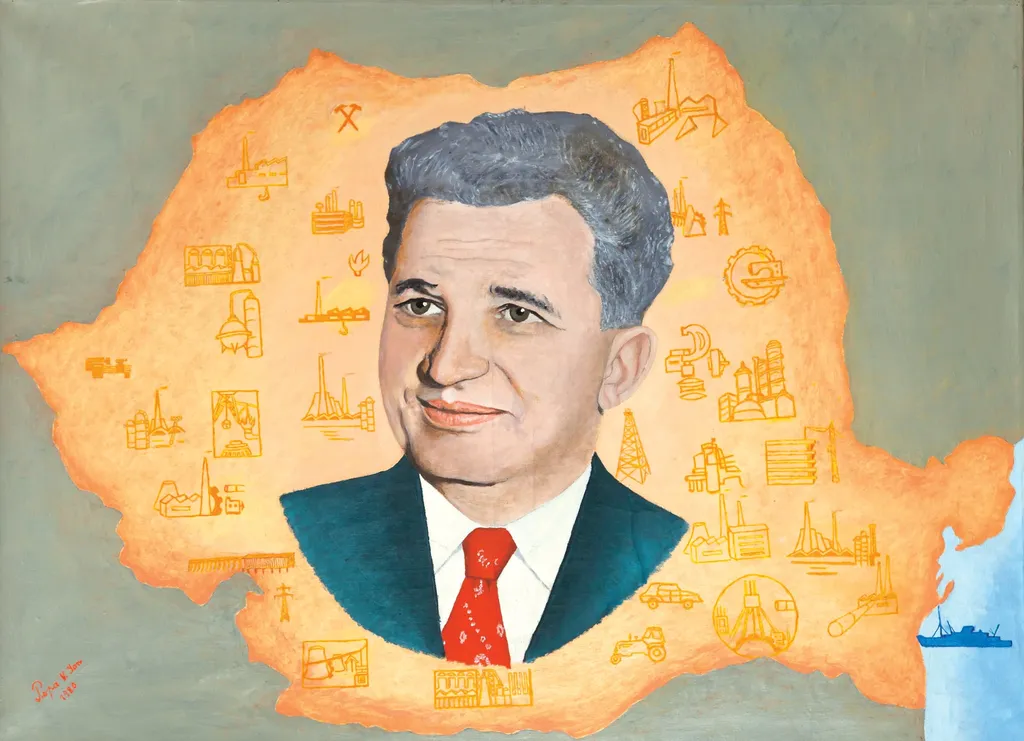
Tablou, ulei pe pânză, portretul lui Nicolae Ceaușescu este redat în mijlocul unei hărți a României, înconjurat de diferite obiective industriale. Comandat și oferit de Comitetul Județean de Partid Alba, 15 octombrie 1981. is a print by V. Ion Popa. It is held in the collection of the National Museum of Romanian History. A portrait of Nicolae Ceaușescu is painted in oil on canvas, positioned centrally over a stylized map of Romania.
About this work
Overview
Commissioned by the Alba County Party Committee and presented on October 15, 1981, the work merges political imagery with geographic symbolism.
A portrait of Nicolae Ceaușescu is painted in oil on canvas, positioned centrally over a stylized map of Romania. Commissioned by the Alba County Party Committee and presented on October 15, 1981, the work merges political imagery with geographic symbolism. The leader’s likeness, rendered in realistic detail, is framed by industrial icons scattered across the map, suggesting a fusion of authority and national development.
Subject & Meaning
Ceaușescu is depicted in formal attire—dark suit, white shirt, red tie—emphasizing his role as head of state. His face, centered on the map, visually anchors the nation’s territory, implying his dominion over its land and resources. The surrounding industrial symbols—factories, chimneys, machinery—evoke state-promoted economic progress, reinforcing the regime’s narrative of self-reliance and modernization.
Technique & Style
The portrait employs traditional academic realism, with careful modeling of light and shadow to render the figure with lifelike precision. In contrast, the map is rendered in flat, schematic tones of orange and yellow, with simplified icons representing industrial sites. The stylistic dissonance between the detailed head and the symbolic background underscores the painting’s function as political propaganda rather than artistic experimentation.
History & Provenance
Commissioned by the Alba County Party Committee in 1981, the painting was likely displayed in official buildings as a symbol of loyalty and ideological alignment. After the 1989 revolution, it was removed from public view and later transferred to the Museum of Ethnography, where it is preserved as a historical artifact of state imagery rather than as a celebrated work of art.
Context
Created during the height of Ceaușescu’s cult of personality, the painting reflects the regime’s use of visual culture to legitimize power. Industrial motifs were commonly employed in state propaganda to highlight achievements in heavy industry, despite widespread economic hardship. The map served as a territorial assertion, reinforcing the idea that the leader embodied the nation itself.
Legacy
Today, the painting functions as a relic of a collapsed political system, offering insight into how authoritarian regimes weaponized art for ideological control. Its presence in a museum of ethnography signals a shift from veneration to documentation, allowing viewers to examine the visual rhetoric of power without endorsing its message.
Artist & collection
Artist
This Romanian painter worked mostly in propaganda posters, but his 1981 portrait of Ceaușescu stands out.

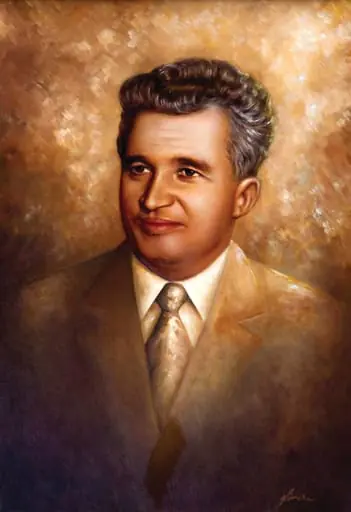 Tablou ulei pe pânză, portret Nicolae Ceaușescu semnat Gheorghe Pîrvu si datat în partea dreaptă jos. Comandat de Comitetul Municipal de Partid Călărași (1982).
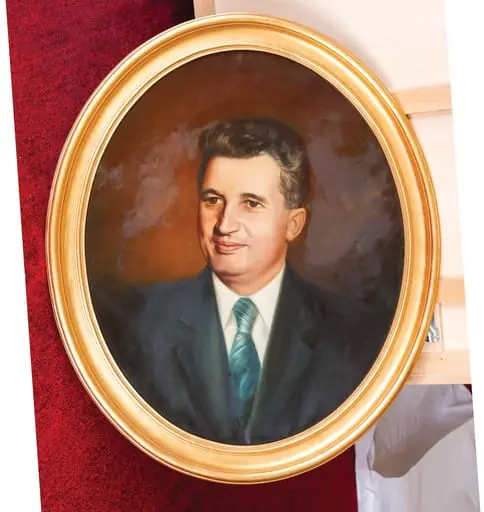 Tablou, ulei pe pânză, portret Nicolae Ceaușescu, atribuit Corneliu Brudașcu. Oferit de Uniunea Artiștilor Plastici (1979).
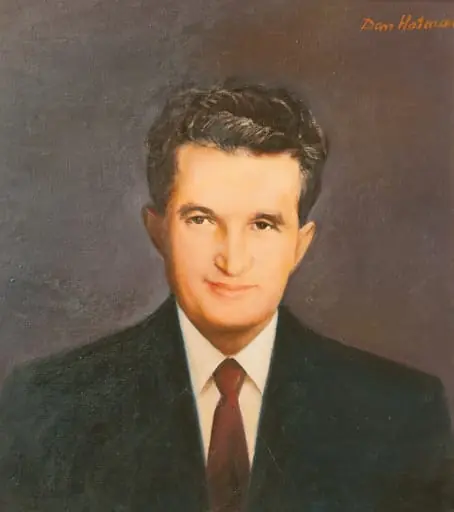 Tablou ulei pe pânză, „Nicolae Ceaușescu” semnat Dan Hatmanu în partea dreaptă sus, nedatat. Comandat de Consiliul Național al Femeilor și oferit cu ocazia aniversării zilei de naștere (ianuarie 1989).
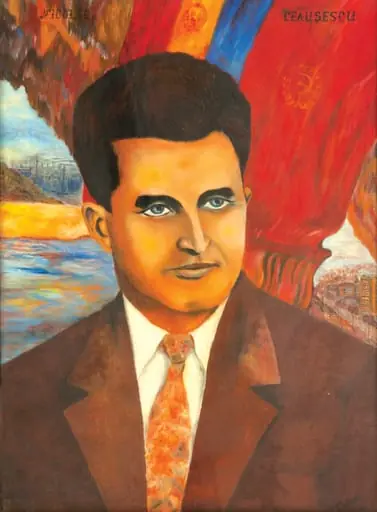 Tablou, ulei pe pânză, ”Portret Nicolae Ceaușescu”, nesemnat, atribuit lui Teodor Istrati. Portret Nicolae Ceaușescu pe fundal steagul cu stema R.S.R. și steagul cu sigla P.C.R., elemente de peisaj urban, inscripție cu majuscule în partea de sus ”NICOLAE CEAUȘESCU”. Oferit de autor lui Nicolae Ceaușescu, București, 25 iunie 1971.
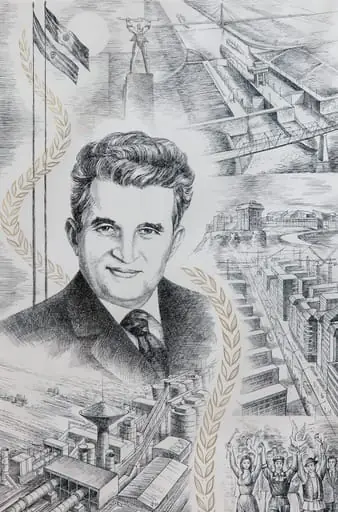 Tablou, tuș pe hârtie, „Ctitorul”, atribuit lui Levente Csutak. Tabloul îl prezintă pe Nicolae Ceaușescu și realizările sale - Canalul Dunăre Marea Neagră, Combinatul Petrochimic Midia Năvodari, Prometeu (statuia de la Barajul Vidraru), modernizarea orașelor - construcția de blocuri de locuințe pentru oamenii muncii. În partea dreaptă jos este reprezentat un grup de oameni entuziaști. Comandat și oferit de Comitetul Județean de Partid Brașov (1983).
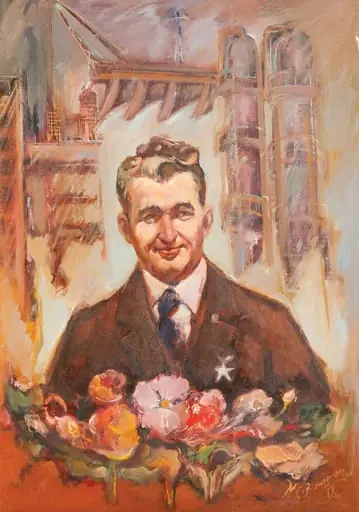 Tablou, ulei pe pânză, „Portret Nicolae Ceaușescu”, semnat C. Radovan și datat în partea dreaptă jos 1978. Nicolae Ceaușescu este reprezentat înt-o atitudine jovială, în piept are însemnul ”Erou al Republicii Socialiste România”. Pe fundal realizări ale regimului comunist. Oferit de Comitetul Județean de Partid Timiș, 22 ianuarie 1978.
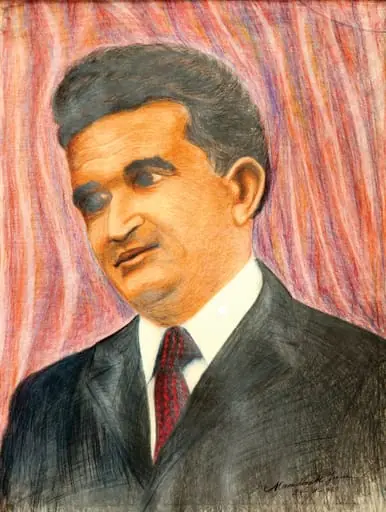 Tablou, desen pe carton, ”Nicolae Ceaușescu”, semnat cu tuș negru Jeana Macedonschi și datat 24.IX.1974, în partea dreaptă jos. Tablou oferit lui Nicolae Ceaușescu de către autor.
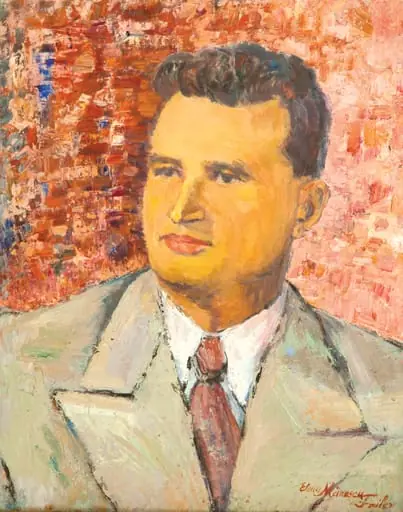 Tablou, ulei pe pânză, ”Portret Nicolae Ceaușescu”, semnat Elena Mănescu-Failer în partea dreaptă jos. Autoarea tabloului a folosit ca sursă de inspirație pentru acest tablou primul portret oficial a lui Nicolae Ceaușescu. Oferit lui Nicolae Ceaușescu de autoare, Elena Mănescu-Failer, 1978.
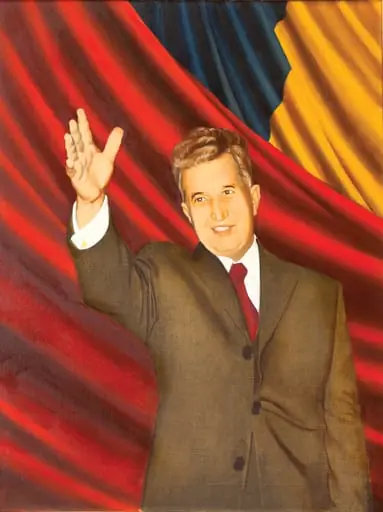 Tablou, ulei pe pânză, „Salutul președintelui”, atribuit lui Viorel Toma, nedatat. Nicolae Ceaușescu este reprezentat în centrul tabloului salutând, pe fundal steagul PCR și cel al RSR. Comandat și oferit de Comitetul Județean de Partid Timiș (1985).
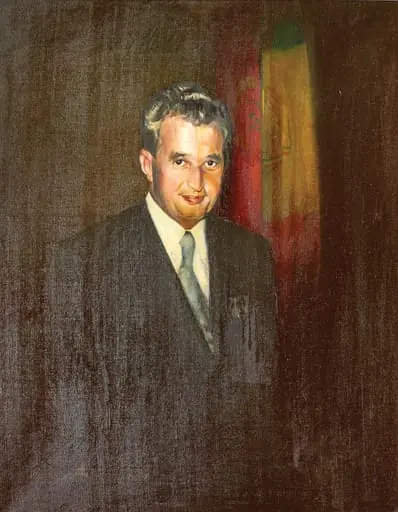 Tablou, ulei pe pânză, Portretul lui Nicolae Ceaușescu, nesemnat, atribiut lui Eugen Palade. Nicolae Ceaușescu cu două însemne de ”Erou al Republicii Socialiste România”, în spatele său steagul cu stema RSR și steagul PCR. Comandat și oferit de Ministerul de Interne, Direcția de Securitate și Gardă, 25 ianuarie 1978.
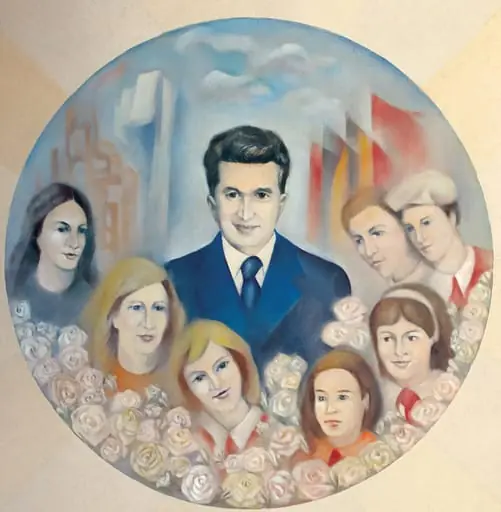 Tablou ulei pe pânză, „Nicolae Ceaușescu”, nesemnat, atribuit lui Ion Pantilie, nedatat. Nicolae Ceaușescu este reprezentat în mijlocul copiilor și tinerilor. Comandat și oferit de Comitetul Județean de Partid Argeș (1988).
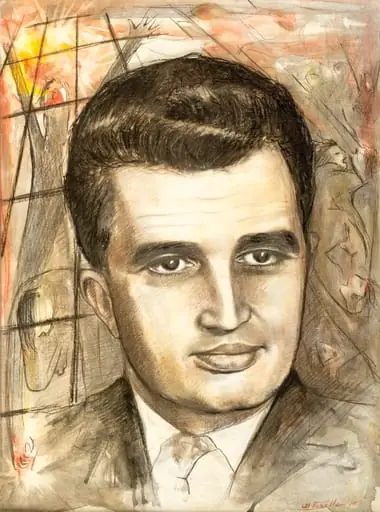 Portret Nicolae Ceaușescu, tablou realixat prin tehnică mixtă, semnat Al. Torella și datat 1975 în partea dreaptă jos.A fost oferit lui Nicolae Ceaușescu de delegația italiană condusă de Benito Craxi cu ocazia vizitei în România din noiembrie 1978
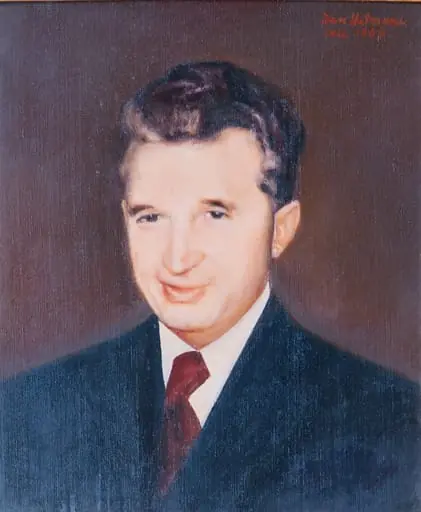 Tablou reprezentându-l pe Nicolae Ceaușescu, semnat Dan Hatmanu. Comandat de Comitetul Județean de Partid Iași și oferit cu ocazia zilei de naștere a președintelui RSR (ianuarie 1989).
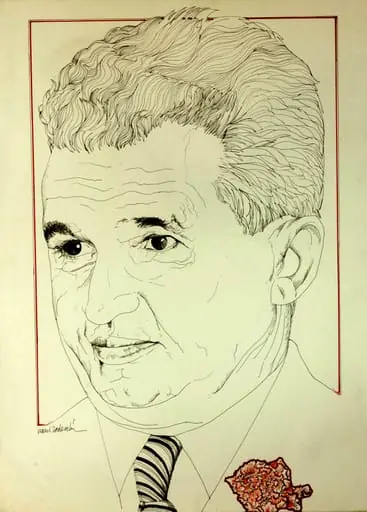 Grafică, portretul lui Nicolae Ceaușescu, semnat stânga jos Nanni Tedeschi, nedatat. Oferit de delegația italiană condusă de Benito Craxi cu ocazia vizitei în România. București, noiembrie 1978.
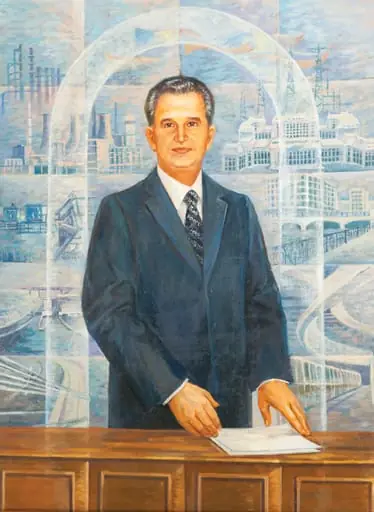 Tablou, „Epoca de aur”, atribuit Doina Catargiu. Tabloul îl prezintă pe Nicolae Ceaușescu într-un cadru oficial, la tribună. În spatele său marile realizări ale epocii sale: Casa Republicii, metroul, Canalul Dunăre - Marea Neagră, rafinării, combinate etc. Comandat și oferit de Comitetul Județean de Partid Suceava (1988).
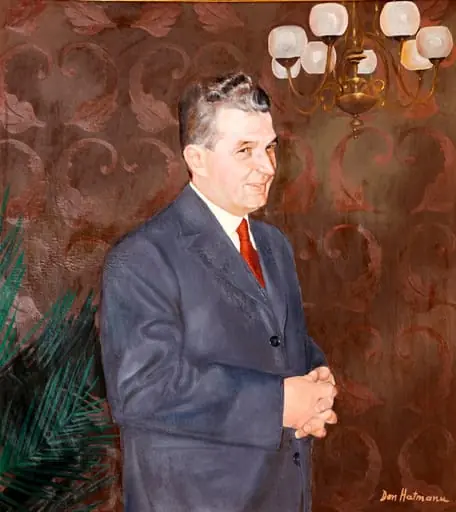 Tablou reprezentându-l pe Nicolae Ceaușescu, semnat dreapta jos Dan Hatmanu. Oferit cadou cu ocazia împlinirii vârstei de 60 de ani de către președintele RSR (ianuarie 1978).
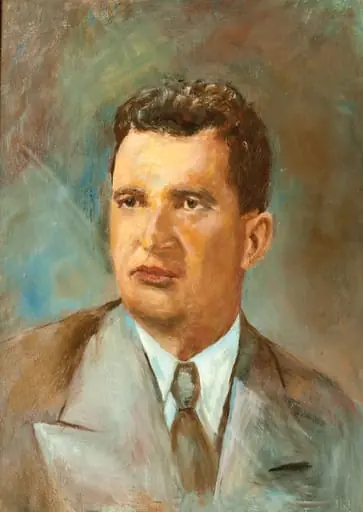 Tablou, pictură pe șevalet, ”Nicolae Ceaușescu”, nesemnat, atribuit Elena Popovici Brăila. Tablou realizat după primul portret oficial a lui Nicolae Ceaușescu. Oferit cadou de autoare, Elena Popovici Brăila din Câmpulung Muscel, lui Nicolae Ceaușescu cu ocazia aniversării zilei de naștere, ianuarie 1978.
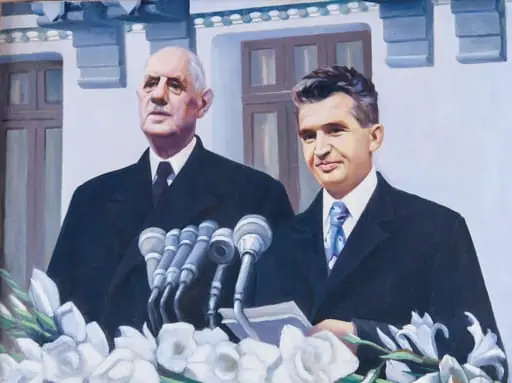 Tablou, ulei pe pânză, Nicolae Ceaușescu și Charles de Gaulle la o adunare populară în Piața Unirii din Craiova, nesemnat, nedatat. Tablou realizat în urma vizitei generalului du Gaulle în România din mai 1968. A fost prima vizită a unui conducător de stat din Occident în România după 1945. Oferit lui Nicolae Ceaușescu în 1973.