Artwork
Shepherd's Bath (Le Bain du berger)
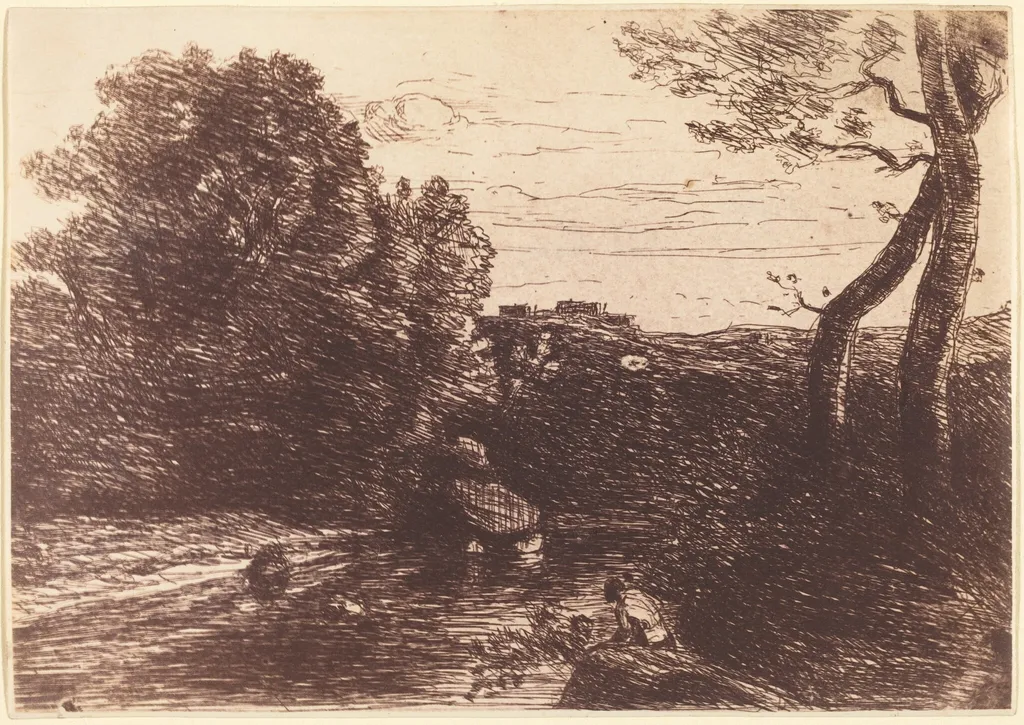
Shepherd's Bath (Le Bain du berger) is a print by the Impressionist artist Jean Baptiste Camille Corot. It dates from 1853 and is held in the collection of the National Gallery of Art.
About this work
Overview
The result is a work that feels neither fully drawn nor fully photographic, capturing the quiet intimacy of a rural moment with a soft, atmospheric quality.
Created in 1853, *Shepherd's Bath* is a cliché-verre print by Jean-Baptiste-Camille Corot, blending drawing and photographic processes to produce a delicate, tonal image. Unlike traditional prints, this method involved drawing on glass with opaque material, then exposing it to light-sensitive paper. The result is a work that feels neither fully drawn nor fully photographic, capturing the quiet intimacy of a rural moment with a soft, atmospheric quality.
Subject & Meaning
The print depicts a solitary shepherd in a river, bent forward as if washing or cooling himself, surrounded by the subdued forms of trees and distant structures. The figure is not idealized but rendered with naturalism, suggesting a moment of private, everyday labor. The scene evokes a quiet harmony between human presence and the natural world, reflecting Corot’s interest in unembellished rural life rather than mythological or heroic narratives.
Technique & Style
Corot employed cliché-verre, a process where he drew directly onto a glass plate with opaque mediums, then used it as a negative to expose photographic paper. The resulting image has a sketchlike looseness, with blurred edges and uneven tonal gradations. The water is suggested through agitated, irregular lines, while the landscape recedes in hazy washes. This technique allowed Corot to capture the fleeting effects of light and movement with a spontaneity rare in printmaking of the time.
History & Provenance
Produced during a period when Corot was actively experimenting with printmaking alongside his painting, *Shepherd's Bath* belongs to a small group of cliché-verre works he created in the early 1850s. These prints were often made in limited numbers, sometimes altered by hand, and circulated among collectors and fellow artists. The work reflects Corot’s interest in alternative methods to translate his plein-air sketches into reproducible forms, distinct from his more formal oil paintings.
Context
In mid-19th-century France, landscape painting was gaining new legitimacy, moving beyond historical or religious themes. Corot’s focus on humble, unidealized rural scenes aligned with broader shifts toward realism and direct observation. His use of cliché-verre placed him at the intersection of traditional drawing and emerging photographic technologies, positioning him as a quiet innovator who valued process as much as subject.
Legacy
Corot’s cliché-verre prints, including *Shepherd's Bath*, influenced later artists exploring the boundaries between drawing, photography, and print. Their atmospheric ambiguity and emphasis on mood over detail prefigured aspects of Impressionist and Symbolist aesthetics. Though less widely known than his paintings, these works reveal a sustained engagement with the material possibilities of image-making and the quiet poetry of ordinary moments.
Own this work as a print
Artist & collection
Artist
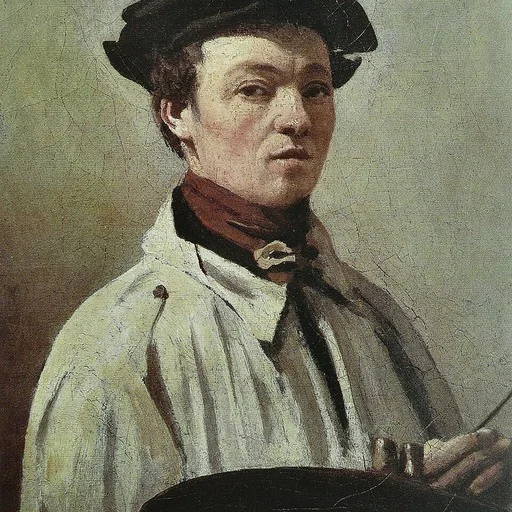
Jean-Baptiste-Camille Corot (UK: KORR-oh, US: kə-ROH, kor-OH; French: ; 16 July 1796 – 22 February 1875), or simply Camille Corot, was a French landscape and portrait painter as well as a printmaker in etching.

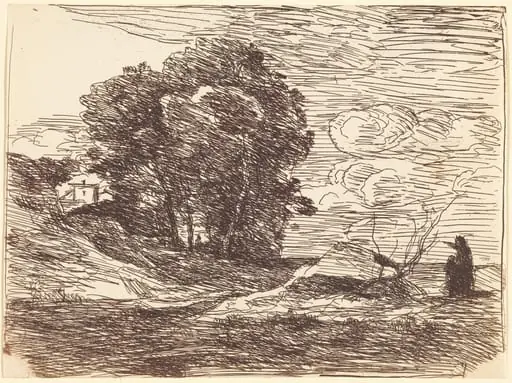 Poet's Dwelling (La Demeure du poete)
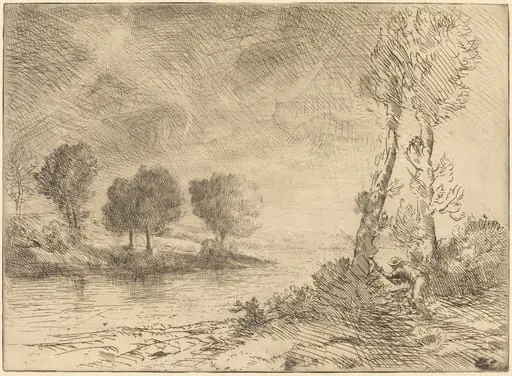 Salmon Fisher (Le pecheur de saumon)
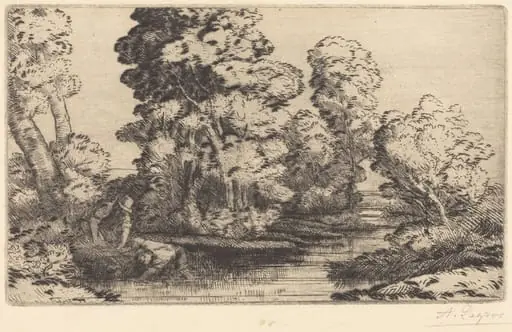 Valley in Bourgogne (Une vallee en Bourgogne)
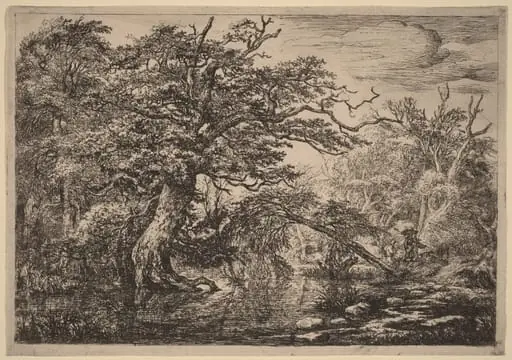 A Forest Marsh with Travelers on a Bank (The Travelers)
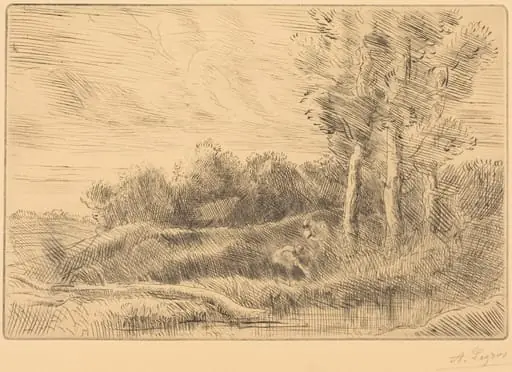 The House of the Well (La maison du puits)
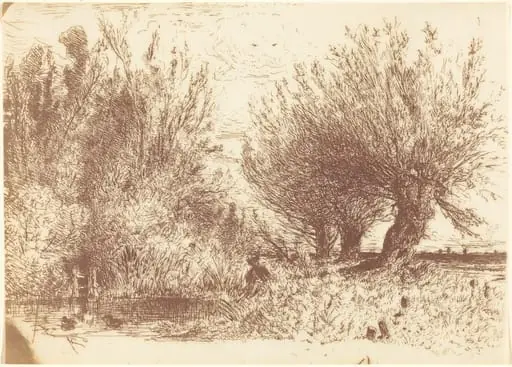 Banks of a River (Bords de Riviere)
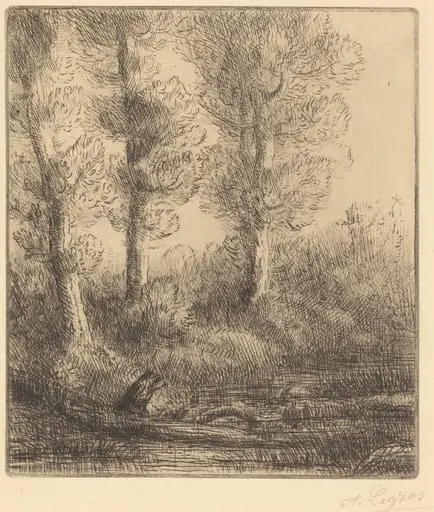 Banks of the Saint-Pre (Rive du Saint-Pre)
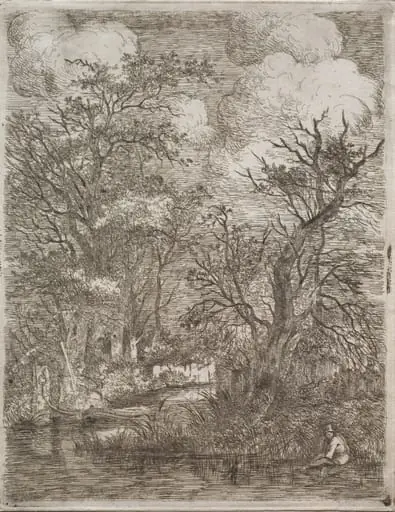 Back of the Mills
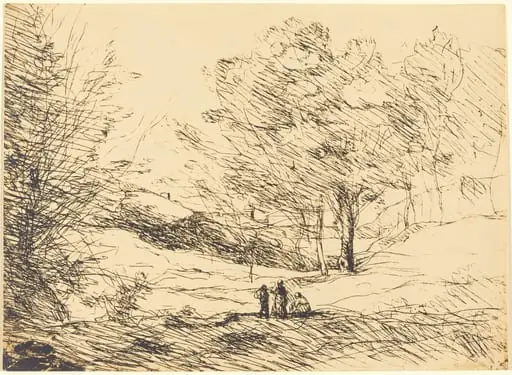 Souvenir of Lake Maggiore (Souvenir du Lac Majeur)
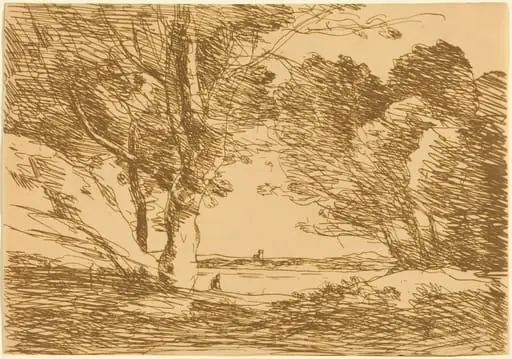 Tower on the Horizon of a Lake (Tour a l'horizon d'un lac)
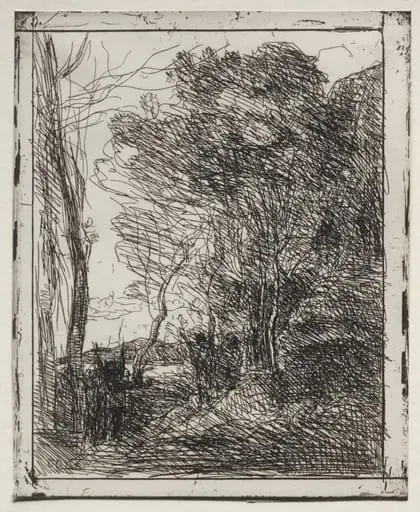 The Gallic Round
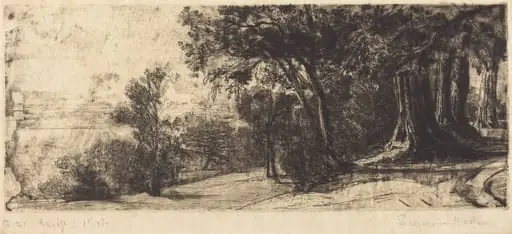 Early Morning - Richmond