Artwork
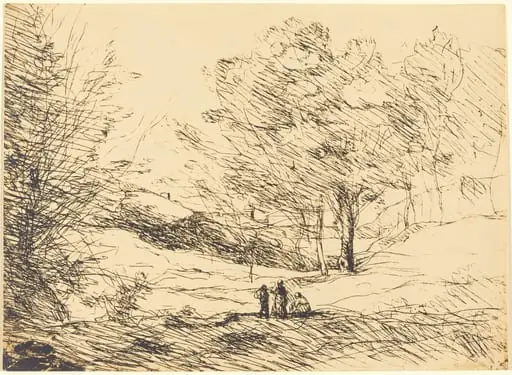
Banks of a River (Bords de Riviere)
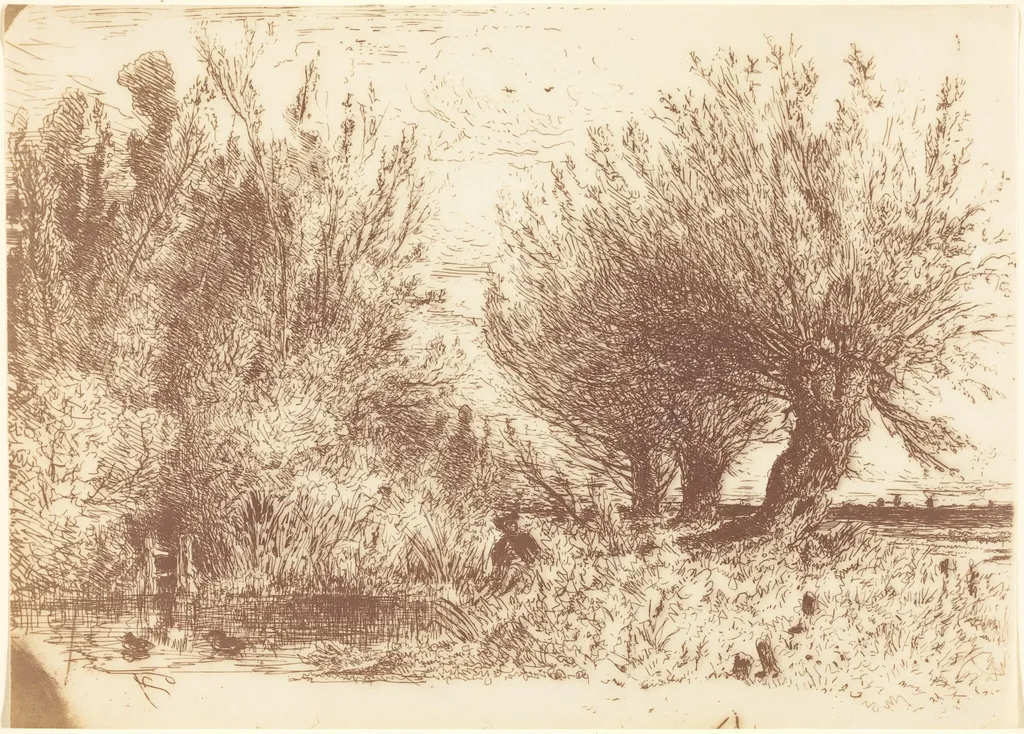
Banks of a River (Bords de Riviere) is a print by the Impressionist artist Paul Huet. It dates from 1866 and is held in the collection of the National Gallery of Art.
About this work
Overview
Banks of a River (Bords de Rivière) is a mid‑nineteenth‑century work by French artist Paul Huet, executed around 1866. The piece is a cliché‑verre print, a technique that combines photography and printmaking to produce a single, tonal image.
Subject & Meaning
The composition presents a tranquil river winding through a wooded bank. Trees and low shrubs line the water’s edge, their foliage casting mottled shadows across the ground. Rocks and tufts of grass in the foreground add texture, while the water mirrors the muted sky, reinforcing a sense of quiet stillness.
Technique & Style
Huet employs the cliché‑verre process, exposing a glass plate coated with a light‑sensitive emulsion to capture the scene’s tonal range. The resulting print emphasizes subtle variations of light and shadow, with soft, hazy grays in the sky and dappled illumination on the vegetation, creating depth without relying on strong color.
History & Provenance
Created circa 1866, the work reflects Huet’s engagement with Realist concerns for natural observation. While specific ownership records are limited, the print has been catalogued among Huet’s later output, illustrating his experimentation with photographic methods during the period.
Own this work as a print
Artist & collection


 Banks of the Saint-Pre (Rive du Saint-Pre)
 Birch Trees: Water's Edge Seen in Morning Light (Les bouleaux: Bord de l'eau, effet du matin
 The House of the Well (La maison du puits)
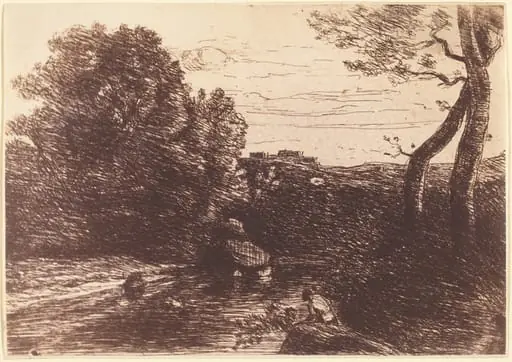 Shepherd's Bath (Le Bain du berger)
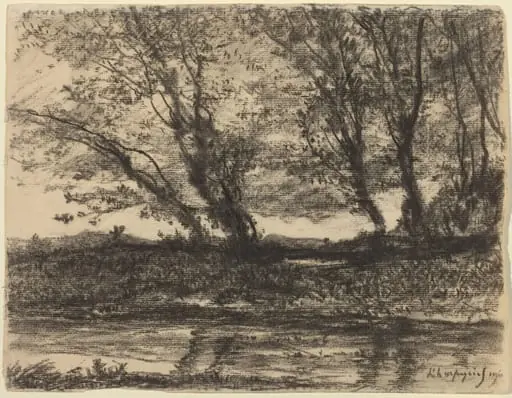 Landscape
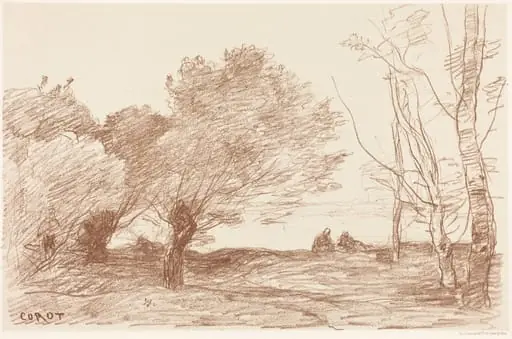 Willows and White Poplars (Saules et peupliers blancs)
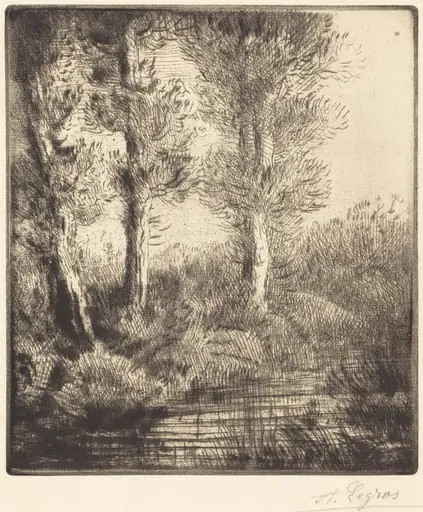 Banks of the Saint-Pre (Rive du Saint-Pre)
 Souvenir of Lake Maggiore (Souvenir du Lac Majeur)