Artwork
allegoria della fortezza e della vigilanza
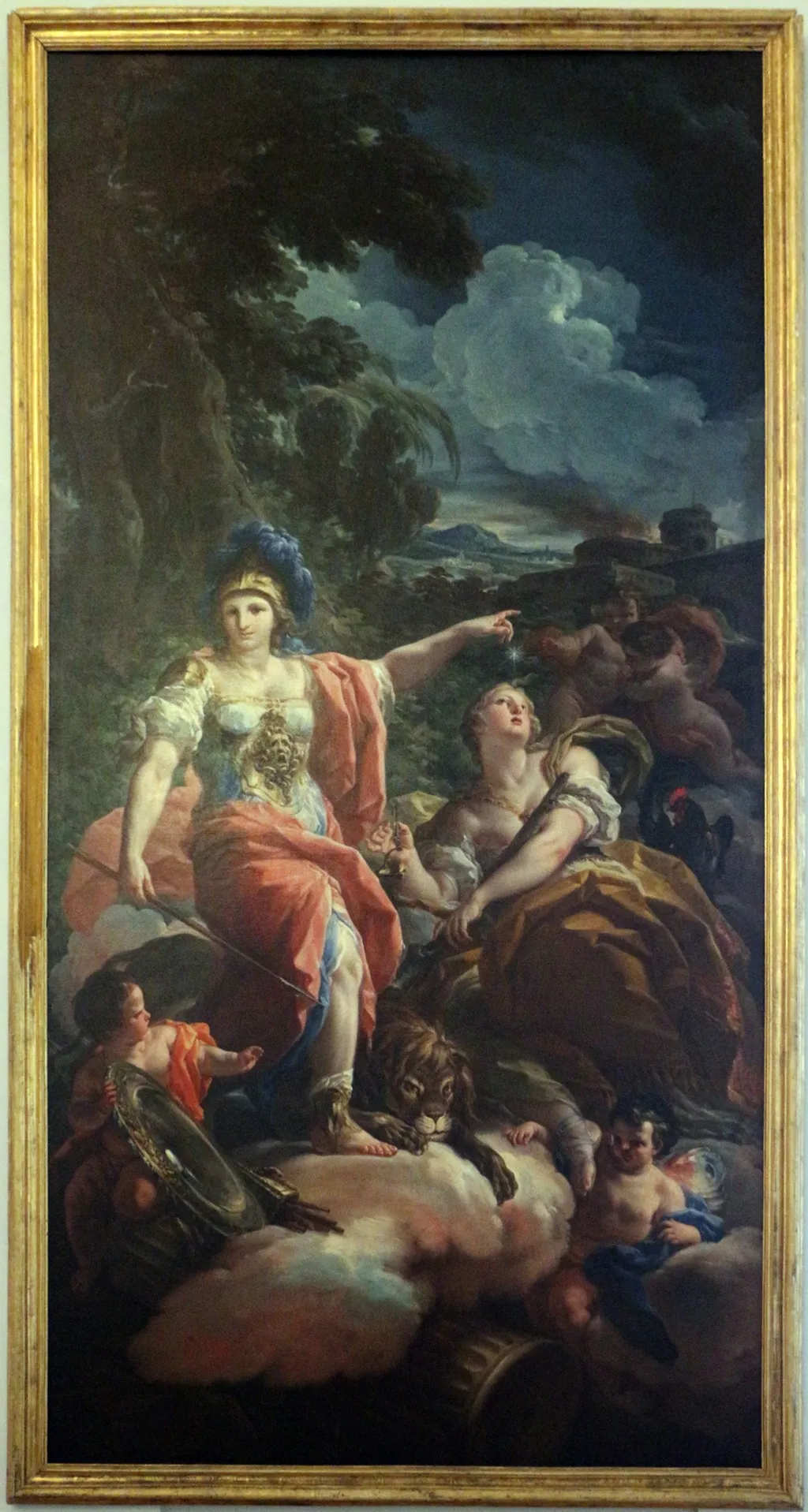
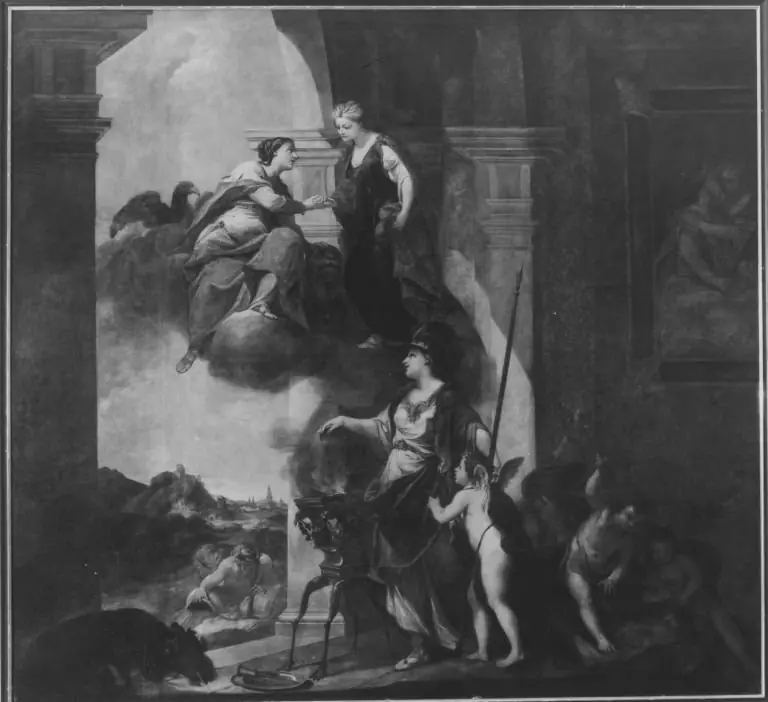
allegoria della fortezza e della vigilanza is an unspecified painting by Corrado Giaquinto. It dates from 1744 and is held in the collection of the Palace of Caserta.
About this work
Overview
It presents a symbolic composition centered on the virtues of strength and vigilance, rendered in the Rococo idiom with soft modeling and delicate coloration.
Painted around 1744 by Corrado Giaquinto, this allegorical work resides in the Palace of Caserta. It presents a symbolic composition centered on the virtues of strength and vigilance, rendered in the Rococo idiom with soft modeling and delicate coloration. The scene unfolds in a naturalistic landscape under a hazy sky, integrating human figures with atmospheric elements to convey abstract ideals through visual narrative.
Subject & Meaning
The central figure, a woman in red and blue, embodies Fortitude and Vigilance, her gesture directing attention beyond the frame as if signaling awareness or impending action. Surrounding figures—a man in red, a woman in yellow, and children—likely represent related virtues or attendant qualities. The composition avoids literal representation, instead using posture and arrangement to suggest moral and civic ideals valued in 18th-century courtly culture.
Technique & Style
Giaquinto employs fluid brushwork and luminous pastel tones typical of Rococo painting, blending figures seamlessly into the landscape. The sky is rendered with hazy gradients, enhancing the ethereal mood. Figures are softly modeled, with attention to drapery and subtle gestures rather than anatomical precision. The painting’s lightness and compositional flow reflect the artist’s training in Naples and his engagement with contemporary European decorative traditions.
History & Provenance
Commissioned for the Royal Palace of Caserta during its early decorative phase, the painting was part of a broader program to adorn the Bourbon court with allegorical imagery. It remained in situ after completion, never leaving the palace grounds. Documentation from the mid-18th century confirms its placement in a ceremonial chamber, aligning with the monarchy’s use of art to project enlightened authority.
Context
Created during the reign of Charles III of Bourbon, the work reflects the court’s interest in moral allegory as a tool of political expression. Similar themes appeared in frescoes and tapestries across European royal residences, where virtue was visually codified to reinforce ideals of governance. Giaquinto’s approach, less rigid than Baroque predecessors, aligned with the era’s preference for grace and subtle symbolism over overt drama.
Legacy
Though not widely reproduced or studied outside Italian court art circles, the painting remains a representative example of mid-18th-century Neapolitan allegory. It contributes to understanding how moral concepts were visualized in Bourbon patronage, bridging French and Italian aesthetic currents. Its preservation in the original setting offers rare insight into the integration of painting within architectural and ideological programs of the time.
Artist & collection

Artist
Corrado Giaquinto was an Italian Rococo painter who worked in Naples, Rome, Turin and Madrid.





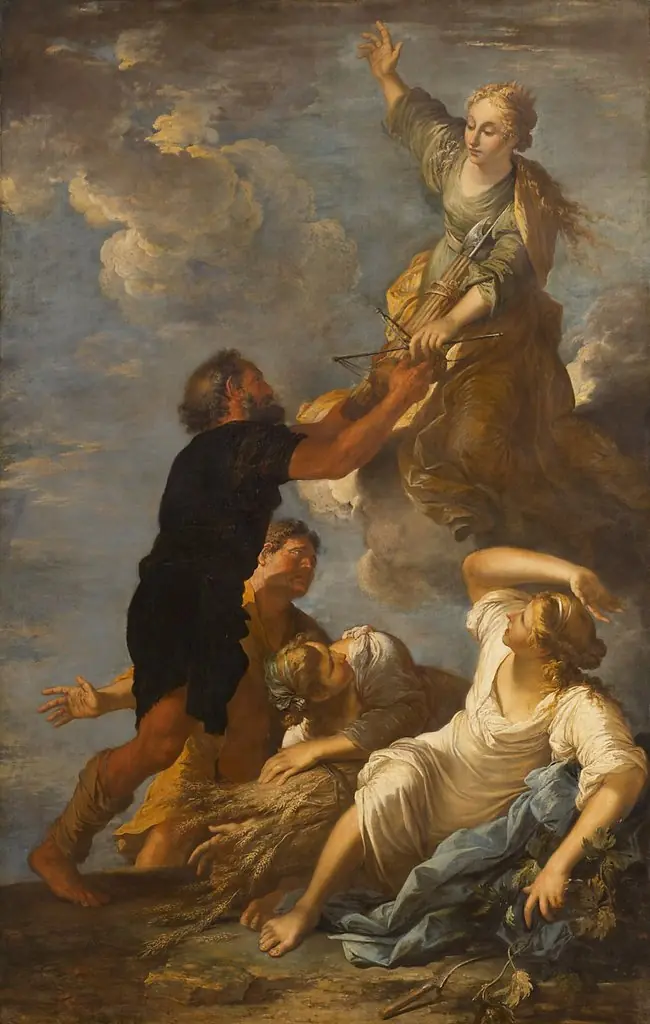 Astraea leaves the earth
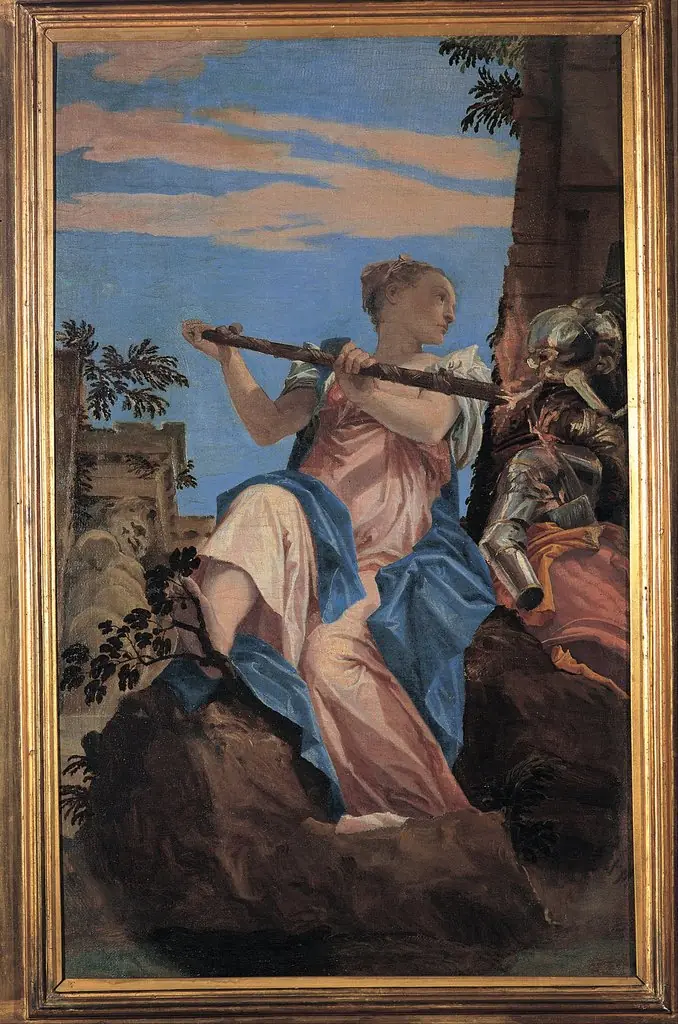 The Peace
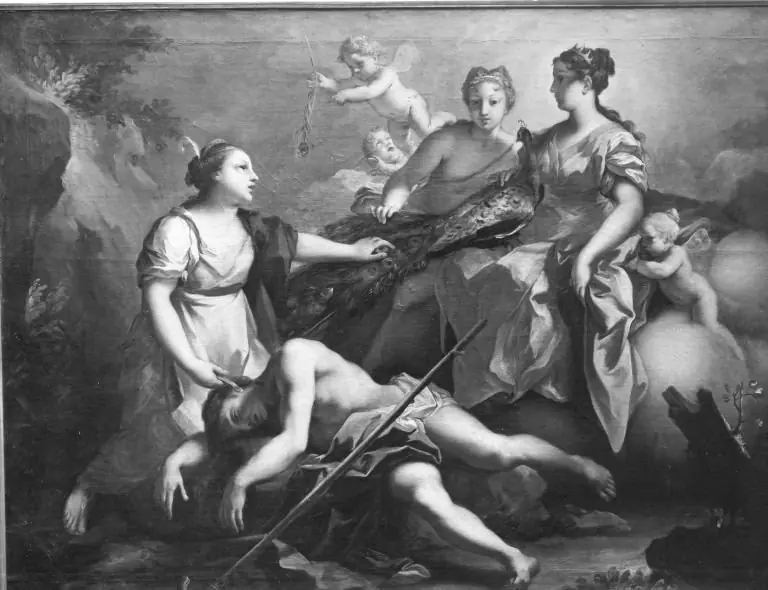 Die Argusaugen
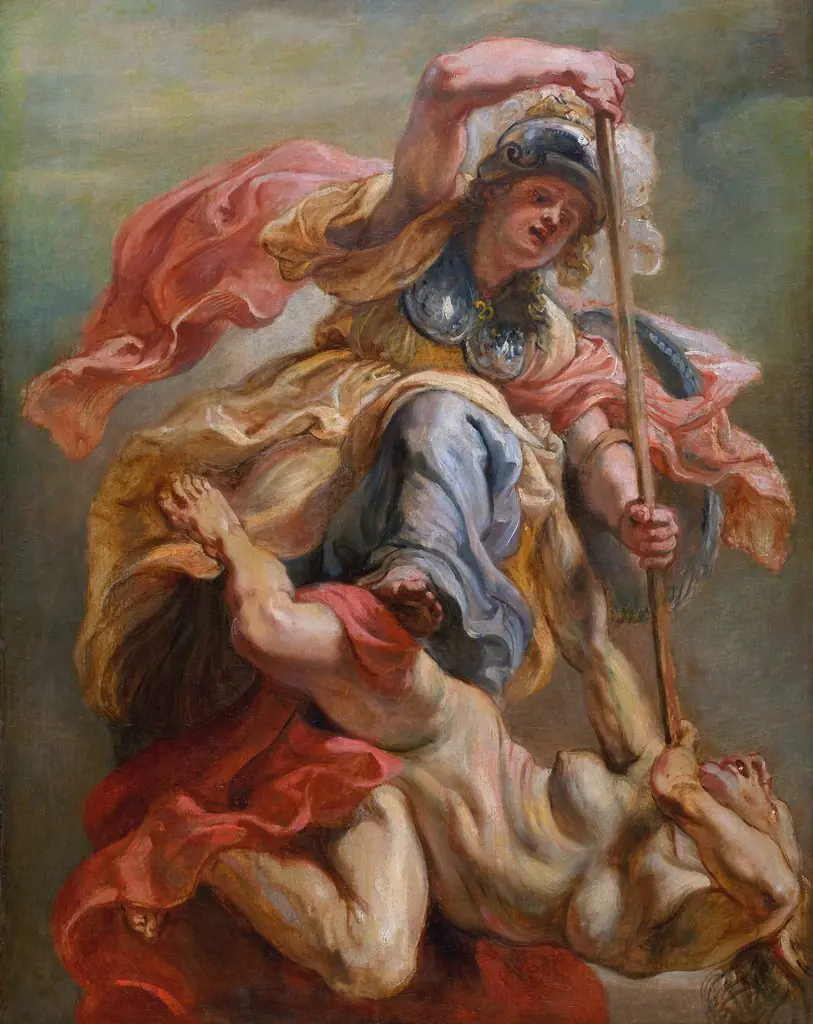 Minerva overcoming Ignorance
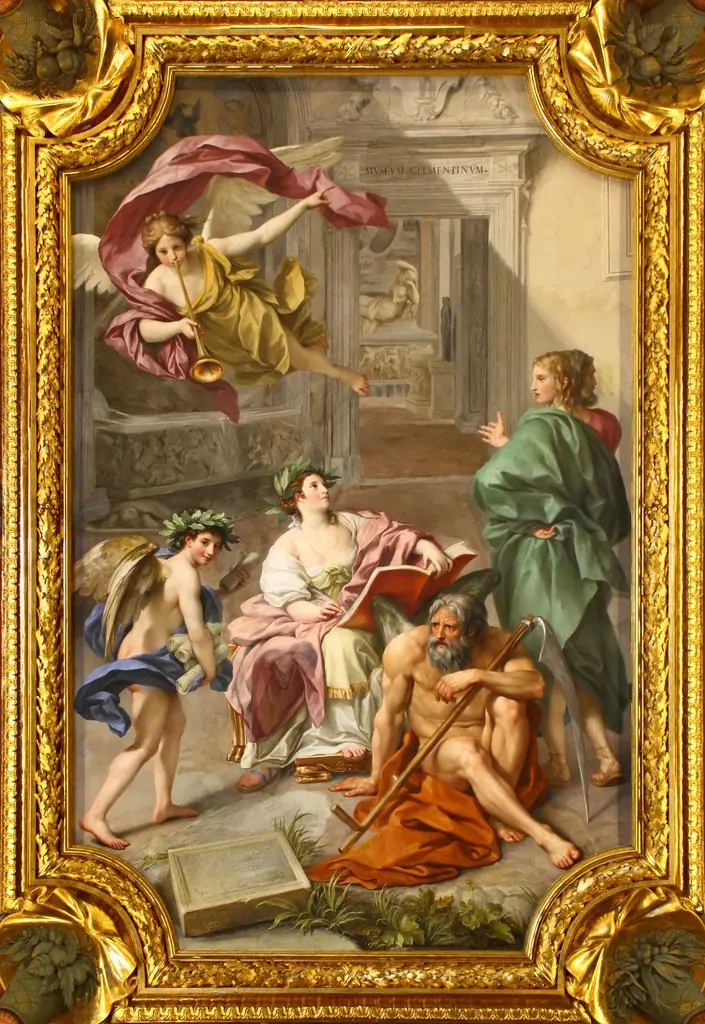 The Triumph of History over Time
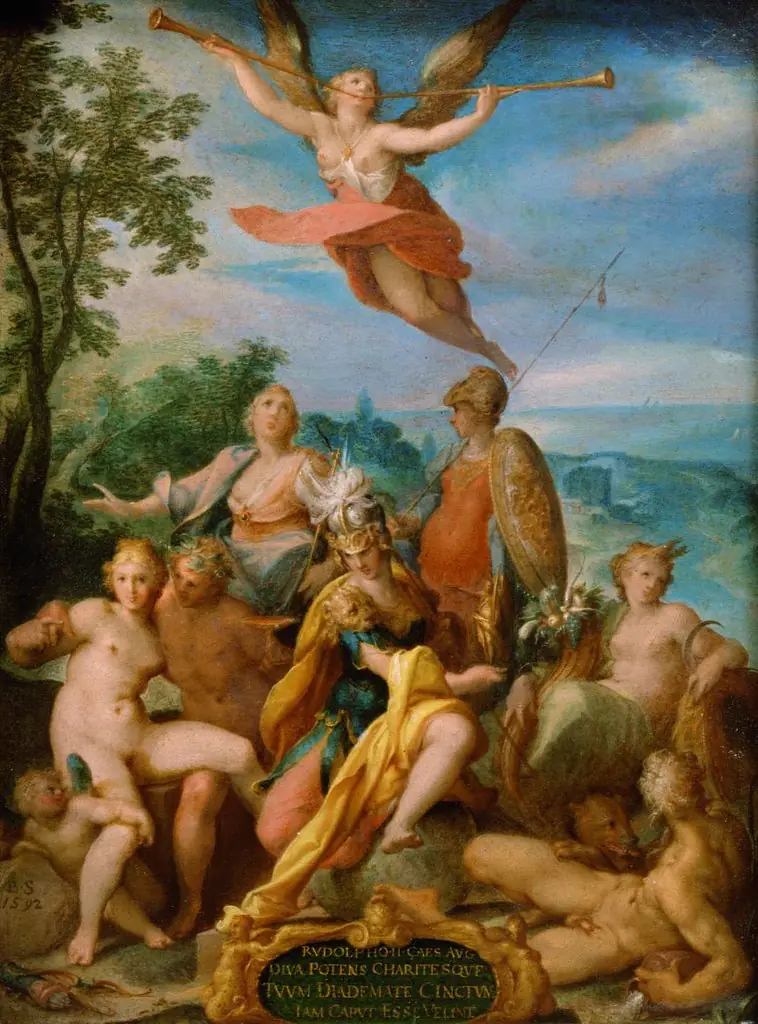 Allegory of Emperor Rudolf II
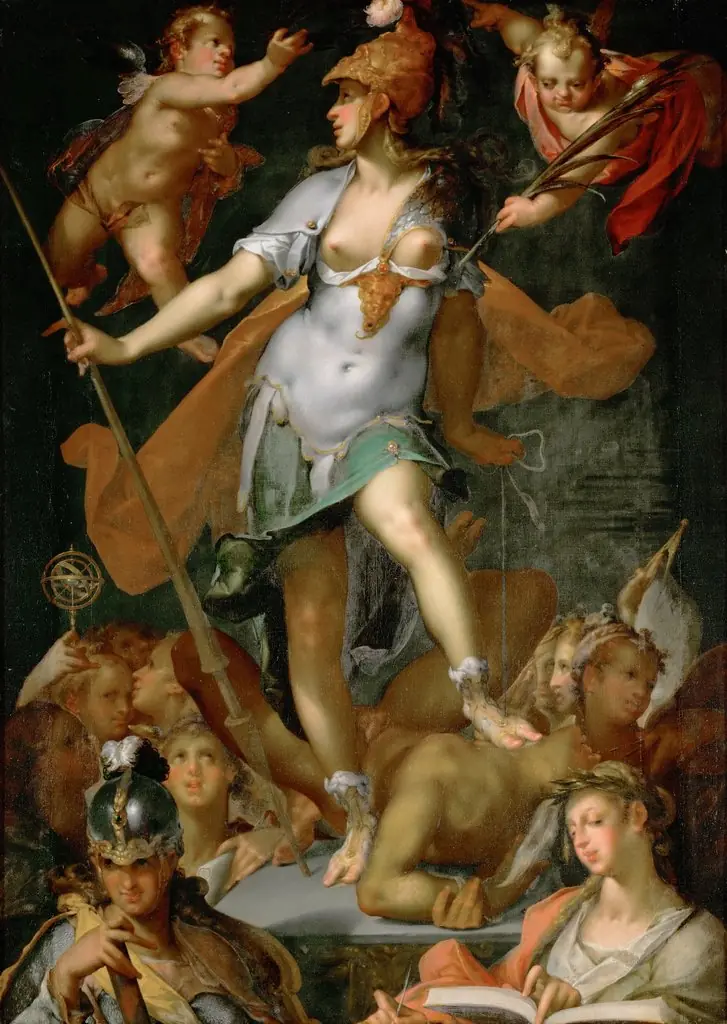 Minerva Victorious over Ignorance
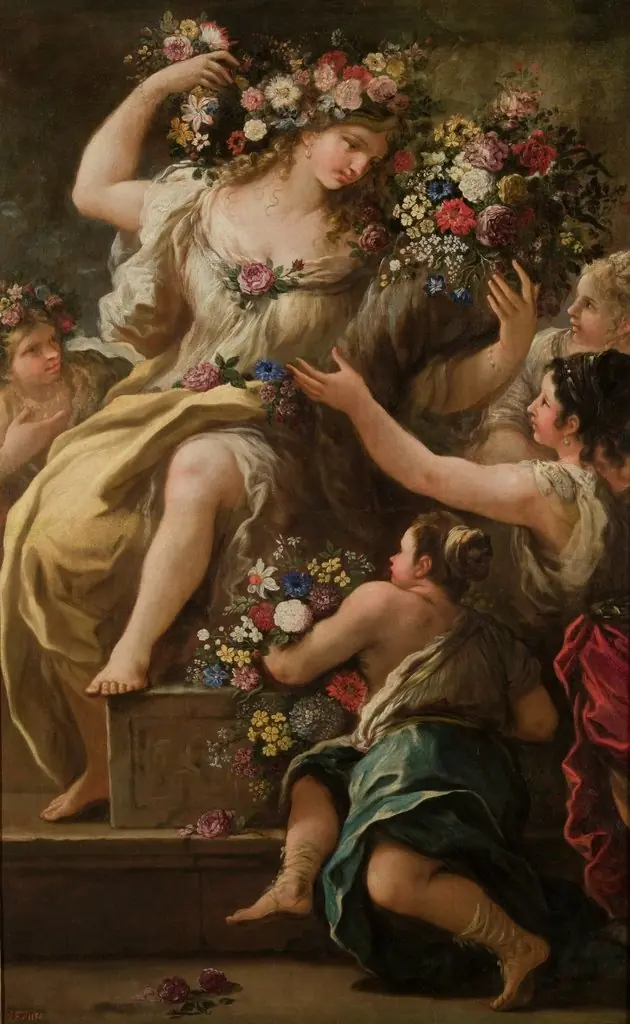 The Goddess Flora
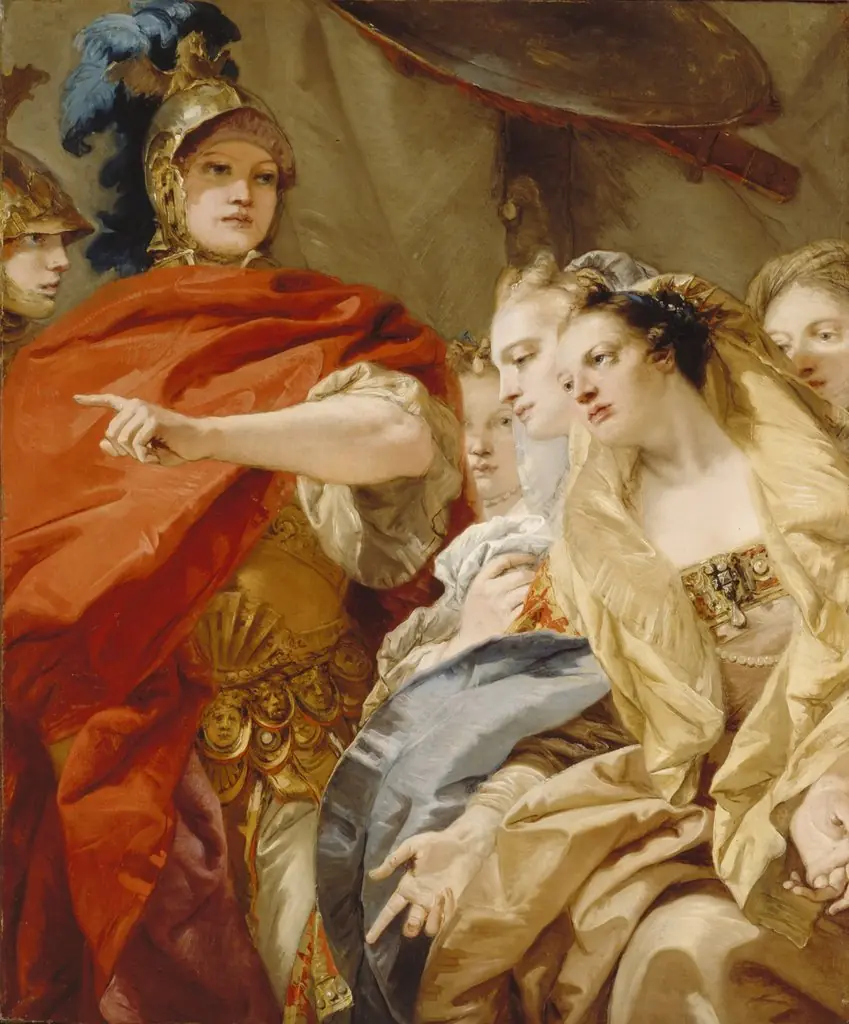 The Women of Darius Invoking the Clemency of Alexander
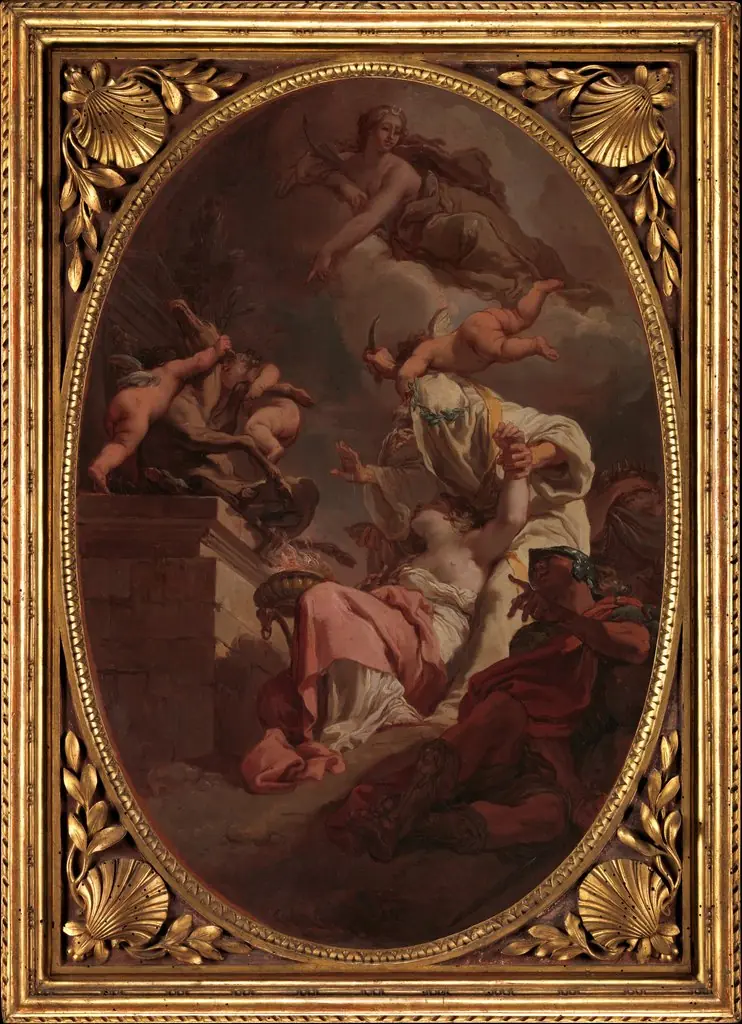 The Sacrifice of Iphigenia
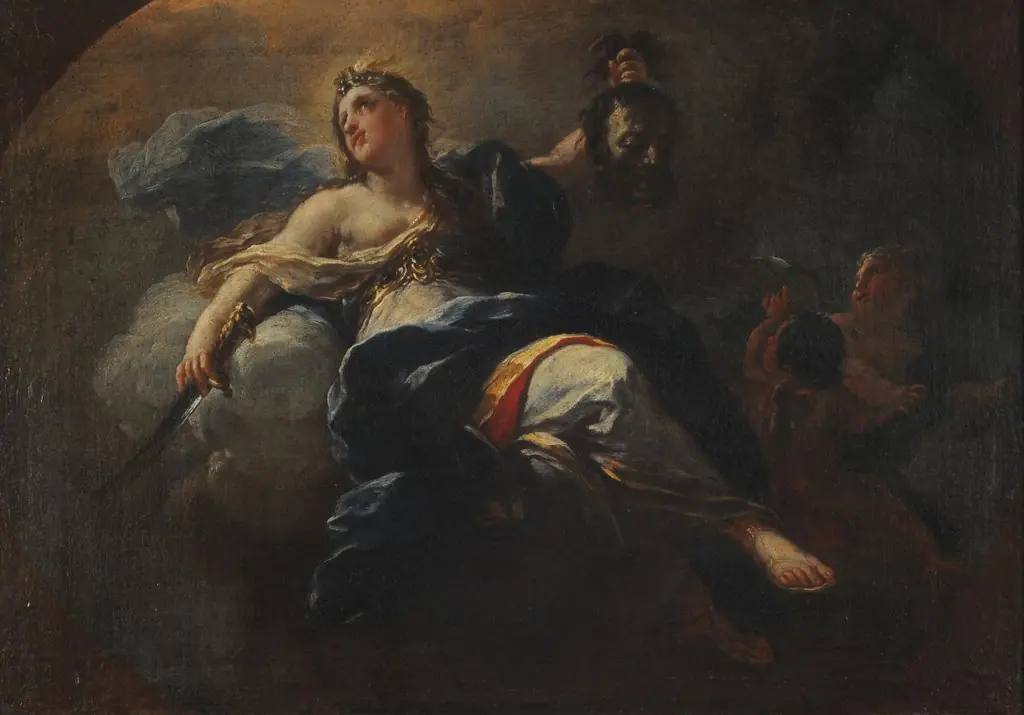 Apoteosis de Judith (Tit. Ant.: Judith llevando -en triunfo- la cabeza de Holofernes)
 Minerva von Hymen Begleitet