Artwork
The Transfiguration (recto); Study of Hands (verso)
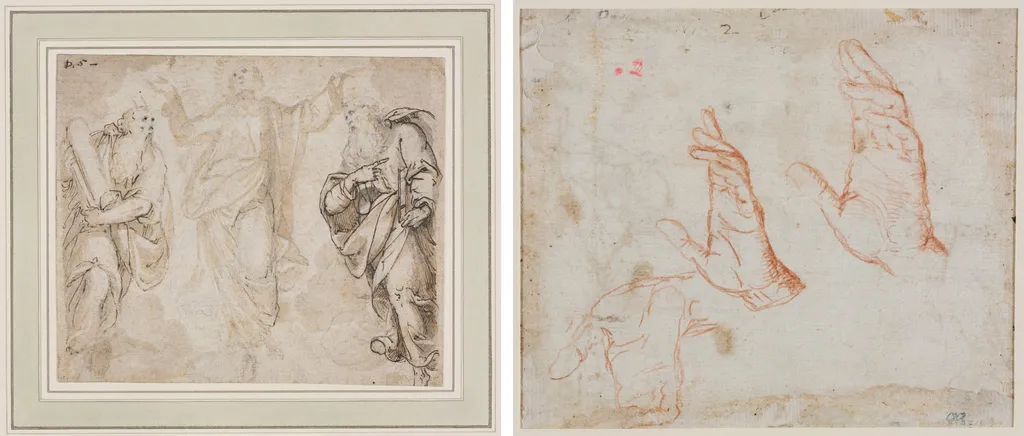
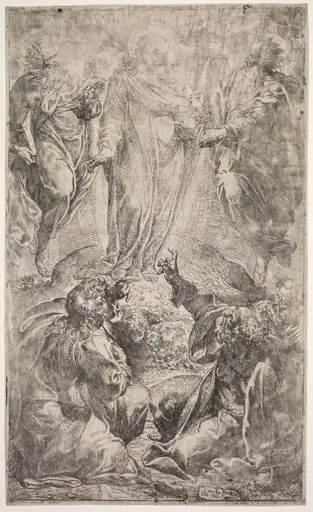
The Transfiguration (recto); Study of Hands (verso) is a drawing by the Renaissance artist Camillo Procaccini. It dates from 1590 and is held in the collection of the Cleveland Museum of Art.
About this work
Overview
Camillo Procaccini's drawing, The Transfiguration (recto); Study of Hands (verso), dates to around 1590 and is currently part of The Cleveland Museum of Art's collection.
Subject & Meaning
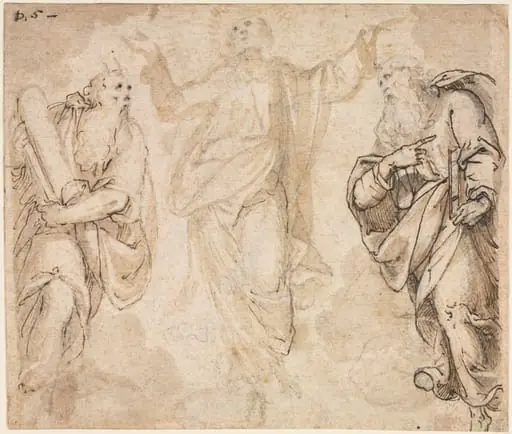
The recto depicts three robed figures in a scene interpreted as The Transfiguration. One figure wields a staff, another holds a scroll, and the third uses both hands in a gesture, suggesting a moment of divine transformation or revelation.
Technique & Style
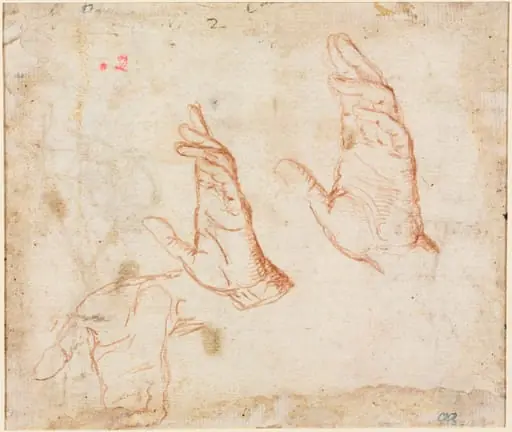
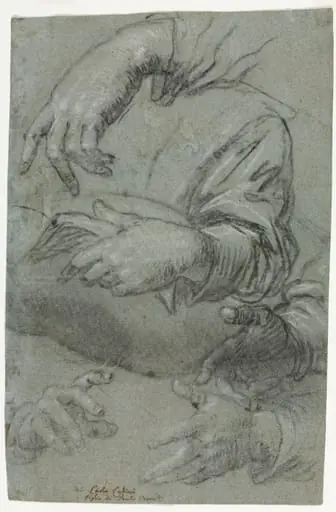
Executed in quick, sketchy lines, the drawing exhibits a sense of urgency and spontaneity. The faded paper and rushed outlines characterize it as a preliminary study. The verso features a loose, red-line sketch of hands, likely practice for the frontal figures.
History & Provenance
Created circa 1590 by Camillo Procaccini, the drawing's history prior to its acquisition by The Cleveland Museum of Art is not detailed here.
Context
This work reflects Renaissance artistic practices, where sketches served as essential preparatory steps. The loose style is reminiscent of common sketching techniques used during the Renaissance for capturing poses and gestures.
Legacy
While not individually renowned, this drawing contributes to the broader understanding of Procaccini's creative process and the sketching traditions of his time.
Artist & collection

 Studies of Hands (recto)
![Apollo and Studies of the Artist's Own Hand [recto], by Francesco Fontebasso](https://artifactworldgallery.com/img/francesco-fontebasso--apollo-and-studies-of-the-artist-s-own-hand-recto--ee93288e84456aea-w320.webp) Apollo and Studies of the Artist's Own Hand [recto]
Apollo and Studies of the Artist's Own Hand [recto]![Study of Two Putti and a Draped Arm [verso], by Giovanni Battista Cipriani](https://artifactworldgallery.com/img/giovanni-battista-cipriani--study-of-two-putti-and-a-draped-arm-verso--47f39e682d8c982d-w320.webp) Study of Two Putti and a Draped Arm [verso]
Study of Two Putti and a Draped Arm [verso]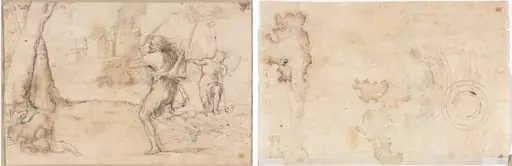 Romulus and Remus Found by Faustulus (recto) Concentric Circles (verso)
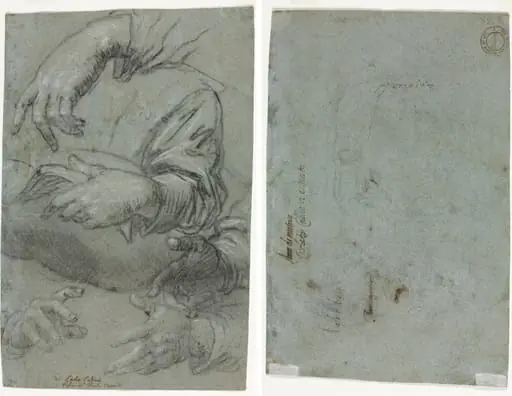 Studies of Hands (recto); Sketch of a Child's Head (verso)
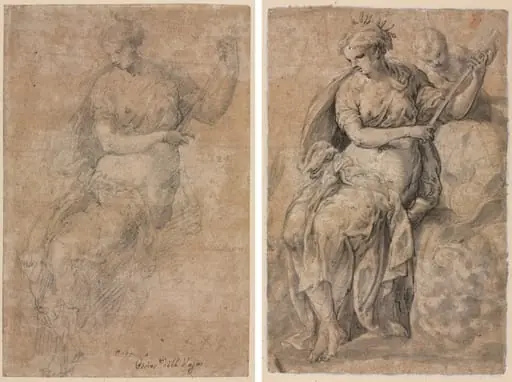 Allegorical Figure (recto and verso)
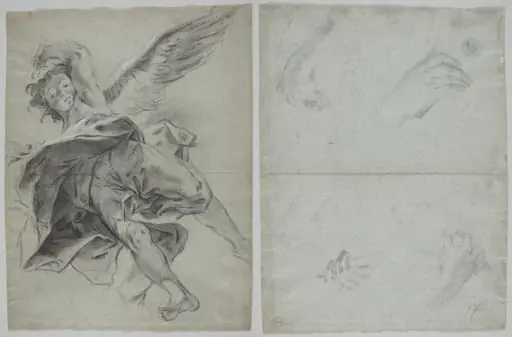 A Flying Angel (recto); Studies of Hands Playing Instruments (verso)
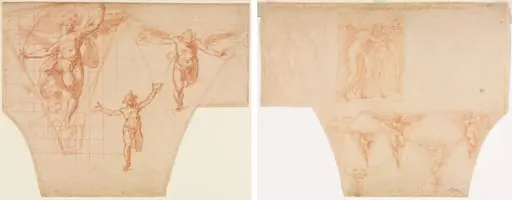 Three Studies of Angels for a Pendentive (recto); Studies for Christ Meeting His Mother on the Road to Calvary, Studies of an Angel in a Pendentive (verso)
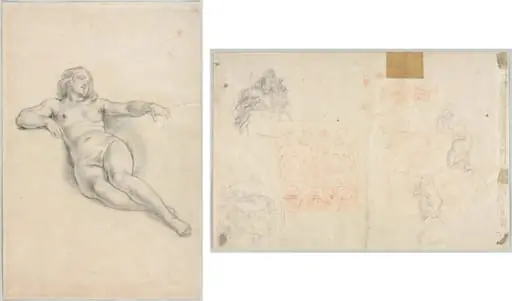 Reclining Female Nude (recto); Various Sketches of Figures and Plants (verso)
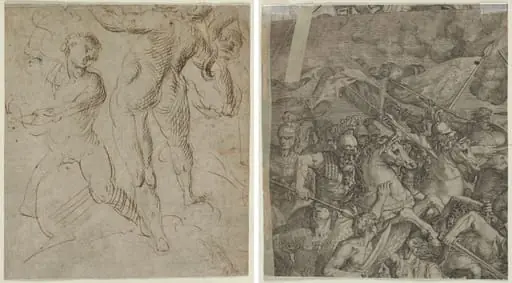 Laocoön (recto); Battle of the Milvian Bridge (fragment) (verso)