Artwork
Untitled
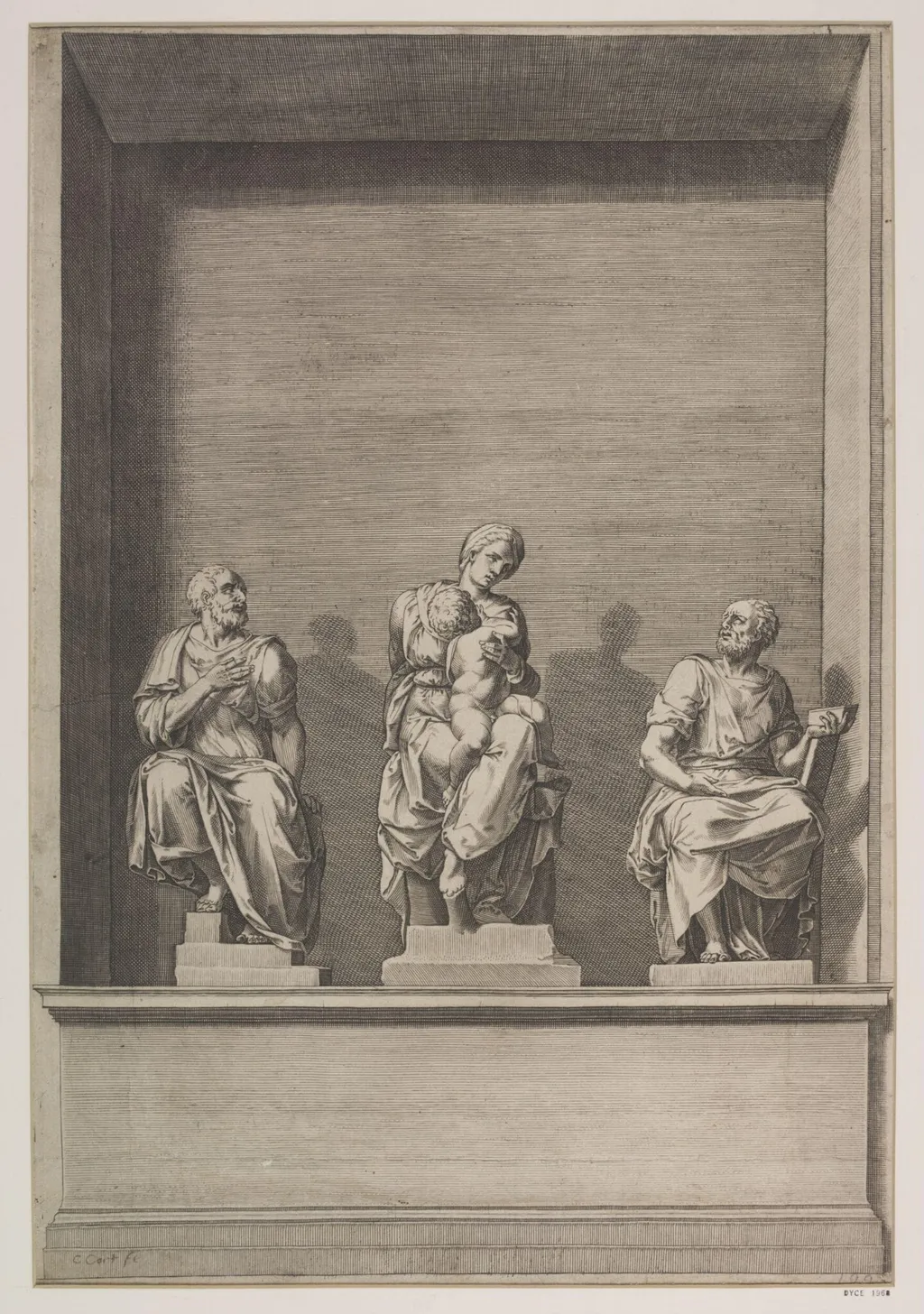
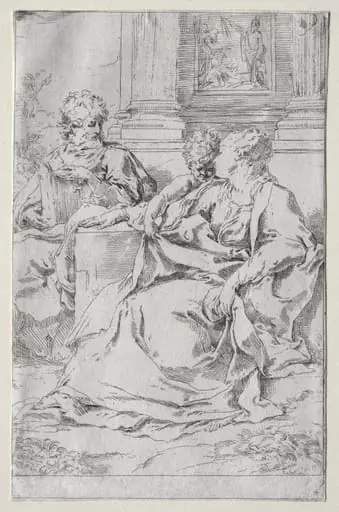
Untitled is a print by Cornelius Cort. It dates from 1550 and is held in the collection of the Victoria and Albert Museum. This print captures a sculptural composition in relief, rendered on paper as a two-dimensional impression.
About this work
Overview
The scene is rendered with careful attention to drapery and posture, suggesting a classical idealism adapted for reproductive printmaking.
This print captures a sculptural composition in relief, rendered on paper as a two-dimensional impression. It depicts three figures arranged symmetrically within a shallow architectural niche. The central subject is a maternal figure nursing an infant, flanked by two bearded elder men. The scene is rendered with careful attention to drapery and posture, suggesting a classical idealism adapted for reproductive printmaking.
Subject & Meaning
The central group of mother and child evokes traditional iconography associated with the Virgin and Child, though without explicit religious attributes. The two older figures, one holding his chest and the other a staff, may represent paternal or protective roles, possibly alluding to familial or communal guardianship. The arrangement suggests a quiet, humanized sacredness, emphasizing tenderness and continuity rather than divine authority.
Technique & Style
The print reproduces a sculpted relief with precise line work that conveys the texture of fabric and the solidity of form. Folds in the robes are rendered with rhythmic, incised contours, while facial expressions are subtly modeled to convey calm introspection. The background is left unadorned, enhancing the figures’ presence and reinforcing the sculptural illusion. The style reflects Renaissance ideals of proportion and balance, adapted for the medium of print.
History & Provenance
The original sculpture, now lost or unlocated, was likely created in the late Renaissance or early Baroque period. This print serves as a documented record of that work, produced to disseminate its composition. It entered the collection of the Victoria and Albert Museum, where it remains as evidence of how sculptural forms were reproduced and circulated among artists and collectors of the time.
Context
During the 16th and 17th centuries, prints of sculptural works were common tools for artistic education and patronage. This piece aligns with a broader practice of translating three-dimensional devotional or classical subjects into accessible formats. Its composition echoes Michelangelo’s groupings but simplifies them for clarity, reflecting a trend toward standardized, repeatable imagery in print culture.
Legacy
As a preserved impression of a now-unseen sculpture, this print functions as a historical artifact of artistic transmission. It offers insight into how classical themes were adapted for domestic and pedagogical use, and how printmaking extended the reach of sculptural ideals beyond the original medium. Its survival underscores the role of reproduction in shaping artistic memory.
Artist & collection
Artist
Dutch printmaker Cornelius Cort carved dramatic religious scenes in the mid-1500s.

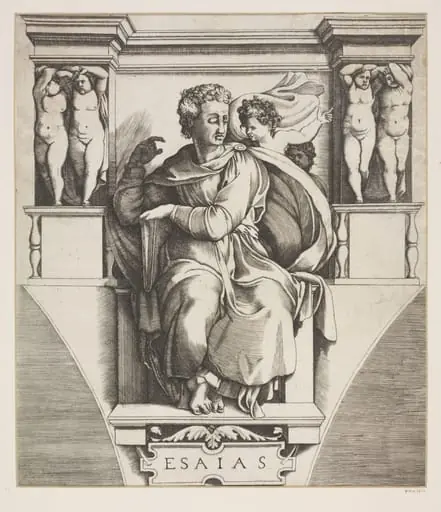 The Prophet Isaiah
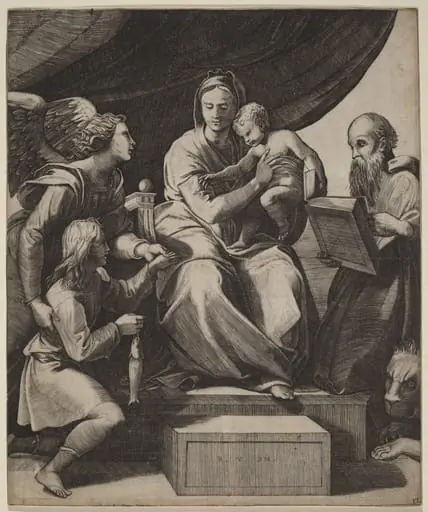 The Virgin with a Fish
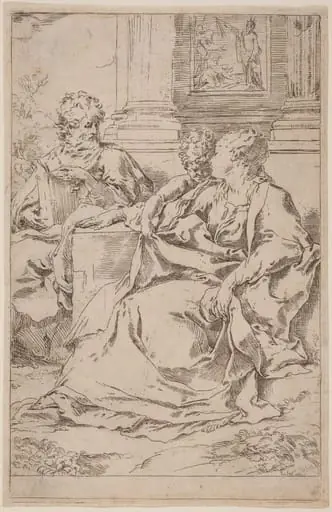 Holy Family
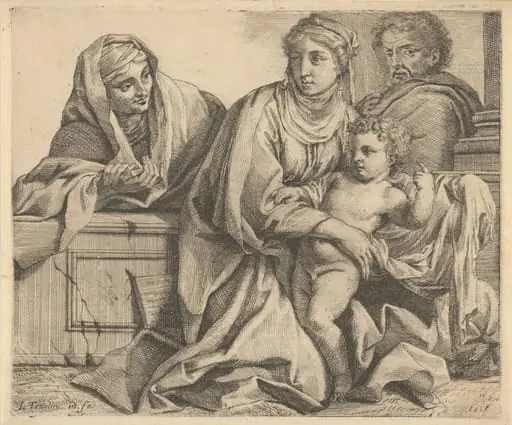 The Holy Family with Saint Anne
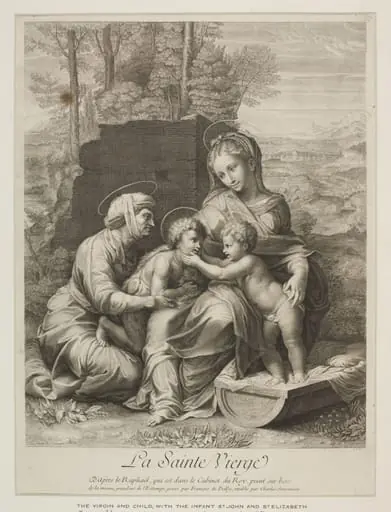 LA SAINTE VIERGE
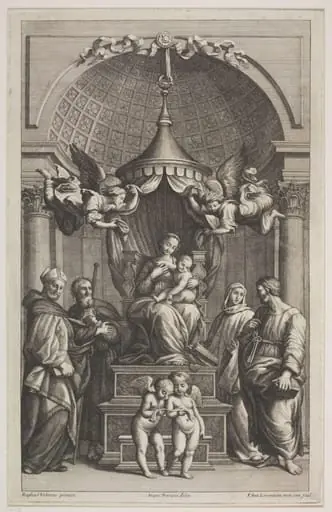 The Madonna
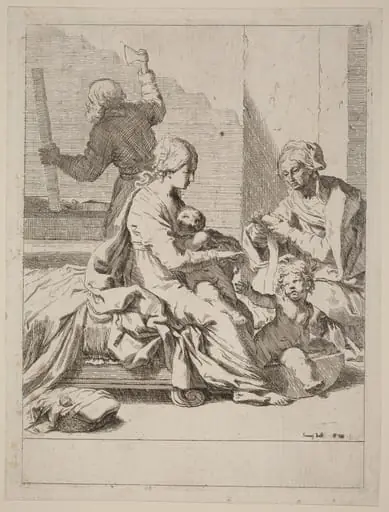 The Holy Family with Saint Elizabeth and Saint John the Baptist
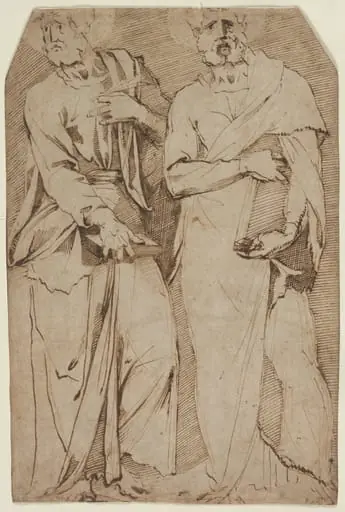 Two Standing Saints
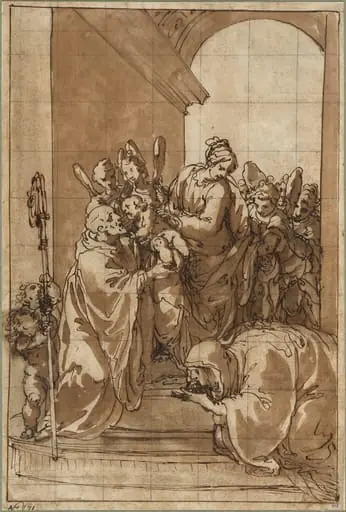 Madonna and Child with Angels, Saint Benedict, and Saint Scholastica
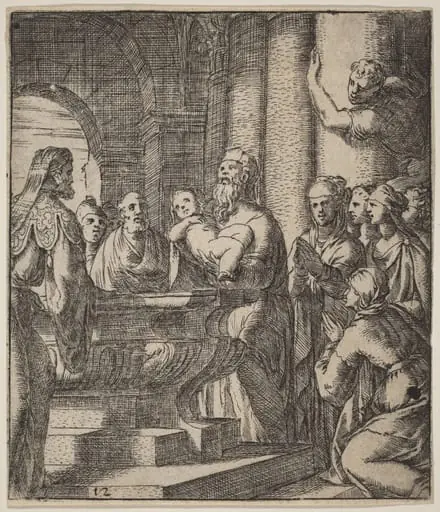 The Baptism of Christ
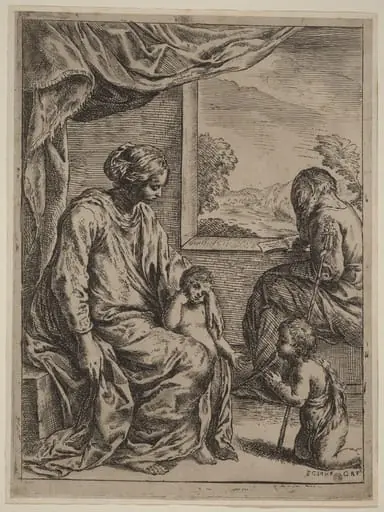 The Holy Family with Saint John the Baptist
 The Holy Family