Artwork
The Madonna
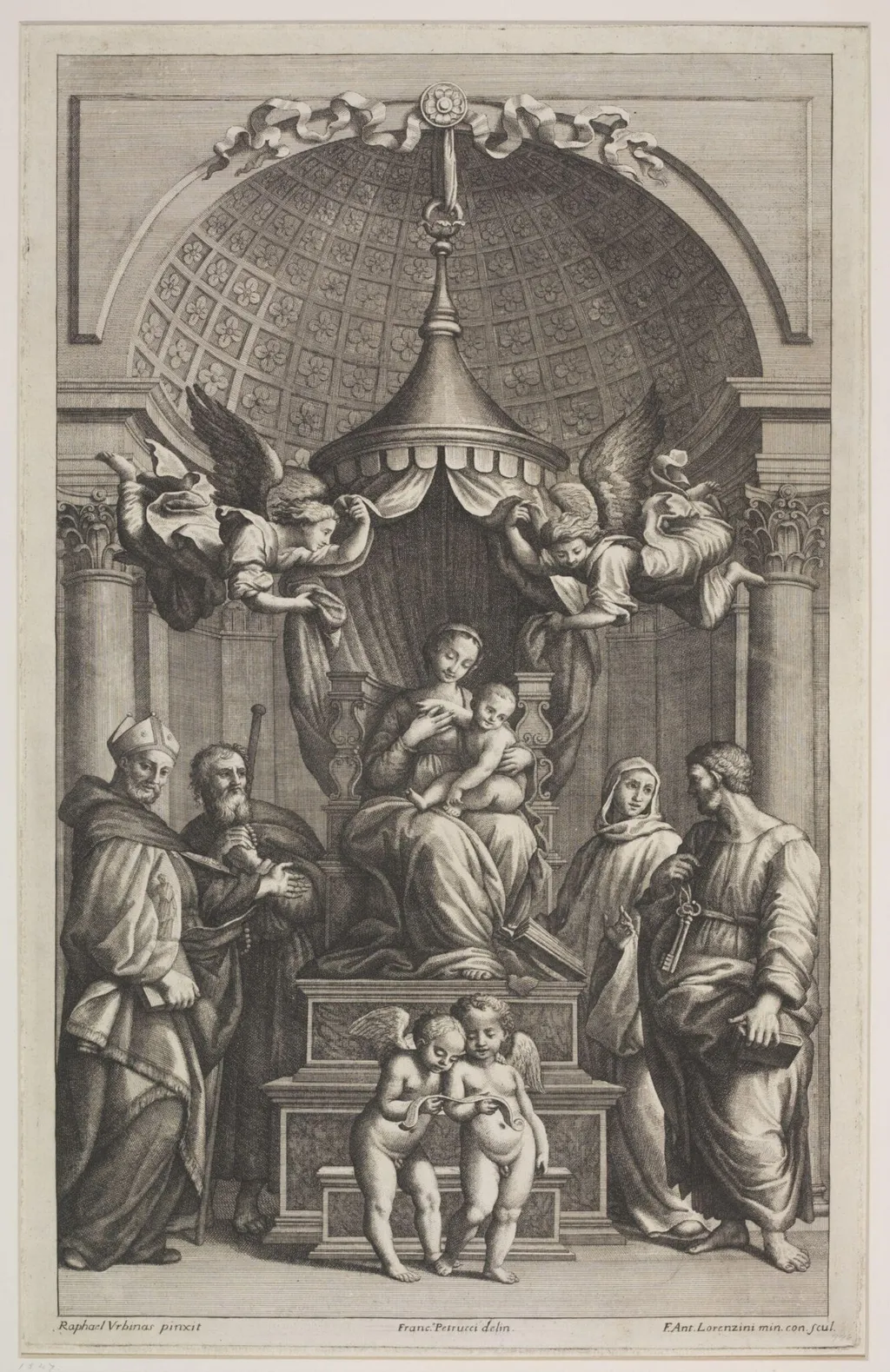
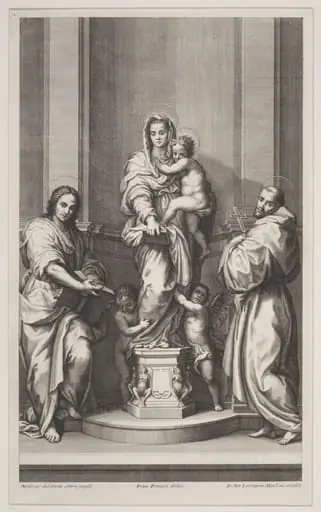
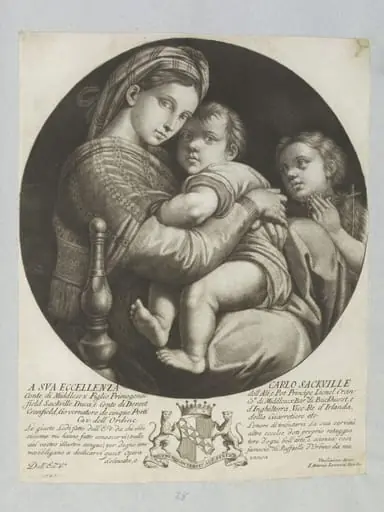
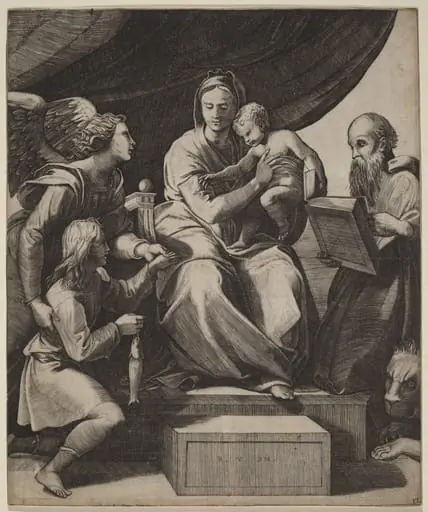
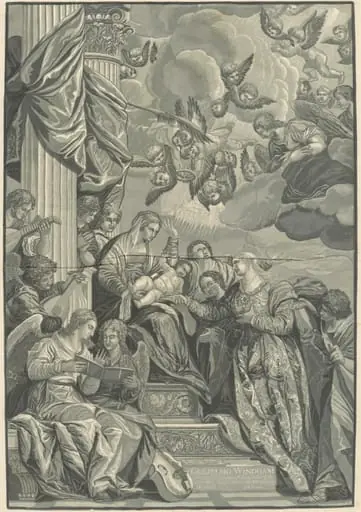
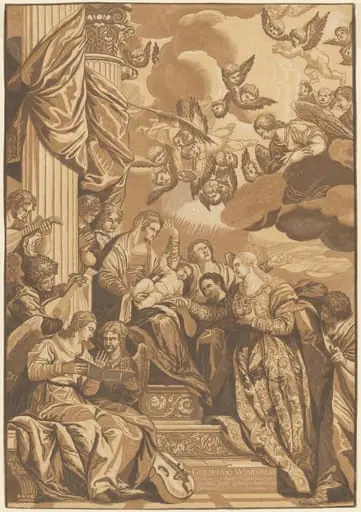
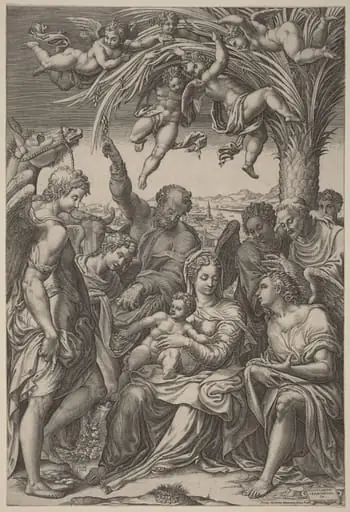
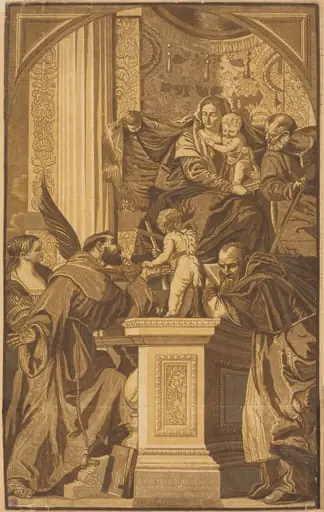
The Madonna is a print by Giovanni Antonio Lorenzini. It dates from 1750 and is held in the collection of the Victoria and Albert Museum.
About this work
Overview
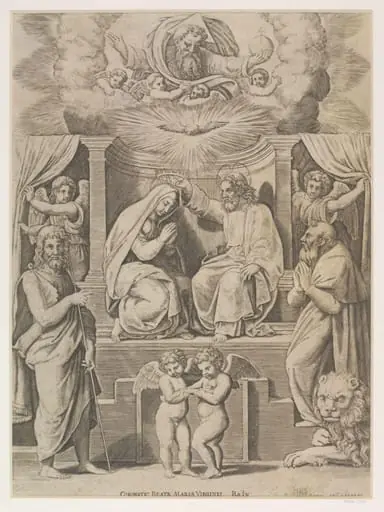
This print on paper reproduces a composition originally painted by Raphael, depicting the Virgin Mary seated on a monumental throne with the Christ Child.
This print on paper reproduces a composition originally painted by Raphael, depicting the Virgin Mary seated on a monumental throne with the Christ Child. She is flanked by two saints, while two angels hover above. Below, two cherubs interact playfully. The setting is an architectural interior with a coffered dome and classical columns, lending the scene a sense of solemn grandeur. The print was made to disseminate Raphael’s image to a broader audience.
Subject & Meaning
The Virgin and Child are central figures of veneration, presented in regal stillness amid a celestial assembly. The surrounding saints and angels signify divine intercession and heavenly order. The cherubs, though playful, reinforce the sacred atmosphere through their proximity to the holy figures. The composition reflects Renaissance ideals of harmony and divine hierarchy, where earthly and spiritual realms coexist in balanced arrangement.
Technique & Style
Executed as a reproductive print, the work translates Raphael’s painted composition into fine linear detail, emphasizing contours and delicate patterning. The architectonic space is rendered with precision, capturing the texture of marble, fabric folds, and the ornate dome. The figures are rendered with classical poise, their drapery flowing in rhythmic lines. The print’s clarity and restraint reflect the precision expected in reproductive engraving of the period.
History & Provenance
The original painting was part of the Medici collection in Florence, later transferred to the Uffizi Gallery. This print derives from that version, likely produced in the late 16th or early 17th century to meet demand for devotional and artistic imagery. The attribution to Lorenzini suggests the printmaker’s role in circulating high-status compositions beyond courtly circles, making Raphael’s style accessible to collectors and clergy.
Context
During the late Renaissance, reproductive prints served as vital tools for spreading the influence of celebrated painters. Raphael’s compositions were especially sought after for their idealized forms and compositional clarity. This print exemplifies how printmakers collaborated with patrons and institutions to replicate and preserve significant works, reinforcing religious and artistic norms across Europe.
Legacy
The print contributed to the enduring visibility of Raphael’s Marian imagery, influencing devotional practices and later artistic interpretations. While the original painting remains in the Uffizi, this reproduction ensured the composition’s reach beyond Florence, embedding its iconography in private collections and ecclesiastical spaces. It stands as a testament to the role of print in shaping artistic memory before the age of photography.
Artist & collection
Artist
These prints show religious scenes and classical stories from the late 1600s to mid-1700s.