Artwork
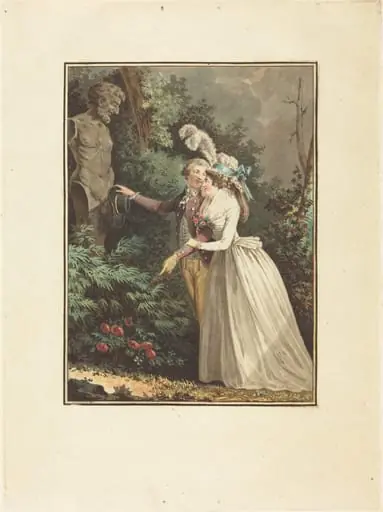
La statue du dieu Pan (Statue of the God Pan)
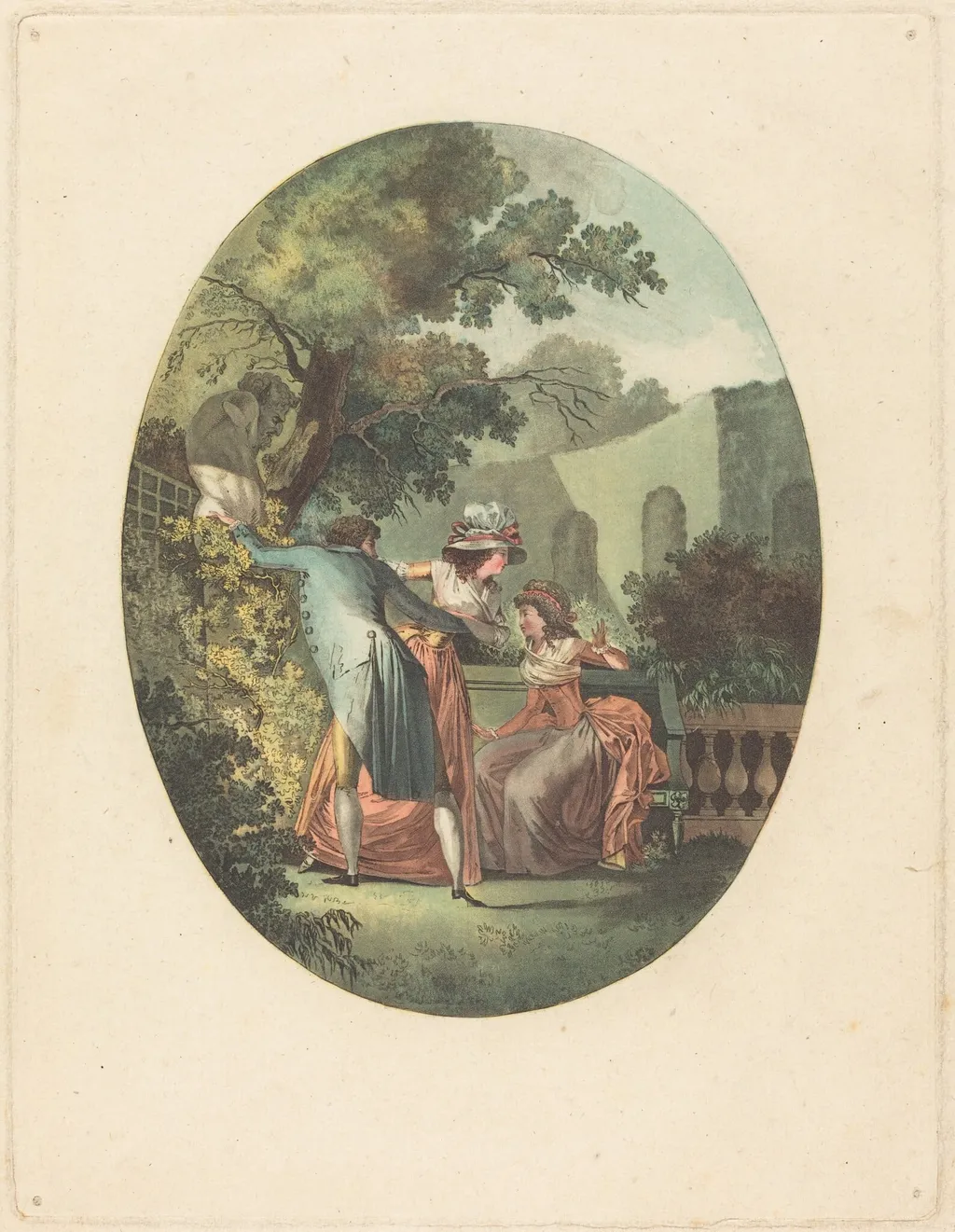
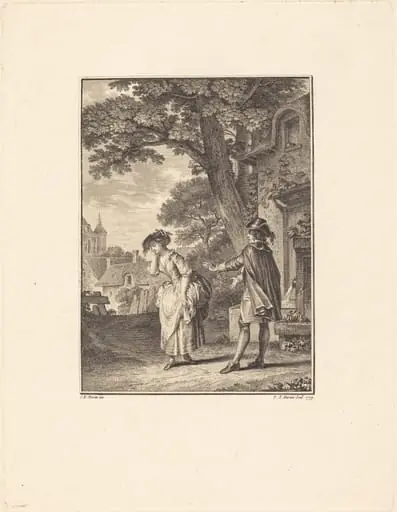
La statue du dieu Pan (Statue of the God Pan) is an ink print by the Baroque artist French 18th Century. It dates from 1750 and is held in the collection of the National Gallery of Art. The print, titled *La statue du dieu Pan*, presents a tranquil garden scene framed by a stone wall.
About this work
Overview
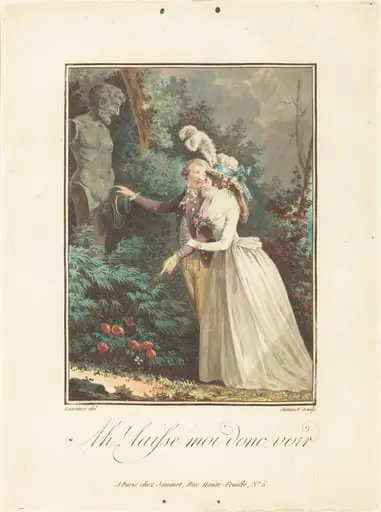
The print, titled *La statue du dieu Pan*, presents a tranquil garden scene framed by a stone wall. A woman in a pink dress sits on a bench with a small dog, while a man in a blue coat gestures toward a partially concealed statue. A second woman, wearing a white hat, leans forward to view the same figure, creating a quiet moment of shared observation.
Subject & Meaning
The central focus of the composition is the hidden statue of Pan, the half‑goat, half‑human deity of rustic music and nature. By positioning the figures around the statue, the artist suggests a dialogue between human leisure and the mythic presence of the wild, inviting viewers to contemplate the interplay of cultivated garden space and untamed mythic forces.
Technique & Style
Executed in color aquatint and etching, the work employs soft tonal washes and delicate line work to render the garden’s foliage and the figures’ clothing. The aquatint provides a muted, atmospheric background, while the etched lines define the forms, allowing subtle shading to convey depth and a sense of calm illumination across the scene.
Context
The print belongs to a tradition of 19th‑century French printmaking that combined narrative genre scenes with classical references. By integrating a mythological statue within a contemporary garden setting, the artist reflects the period’s fascination with antiquity and the romantic ideal of nature as a space for contemplation and cultural reflection.
Artist & collection

Artist
This artist worked in late 18th-century France, making portrait paintings and etched prints.

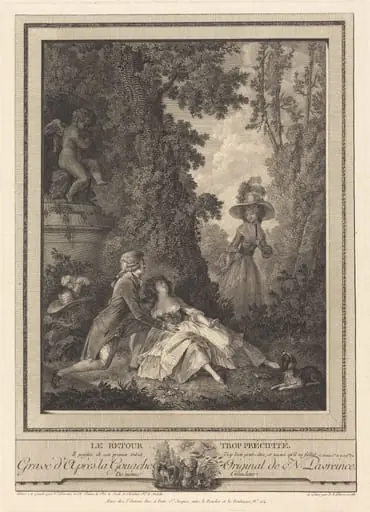 Le retour trop precipite
 Ah! Laisse-moi donc voir
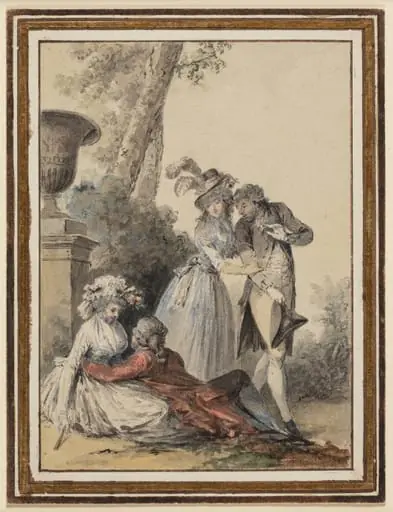 To galante par i en have, det ene liggende, det andet stående
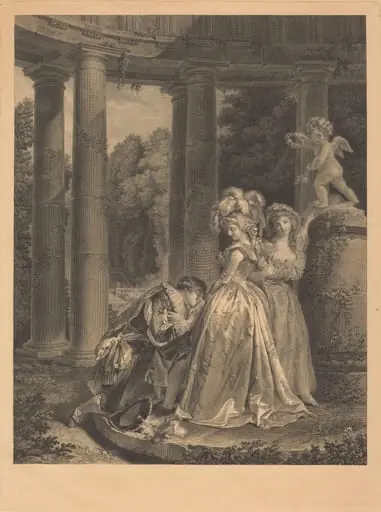 La Declaration
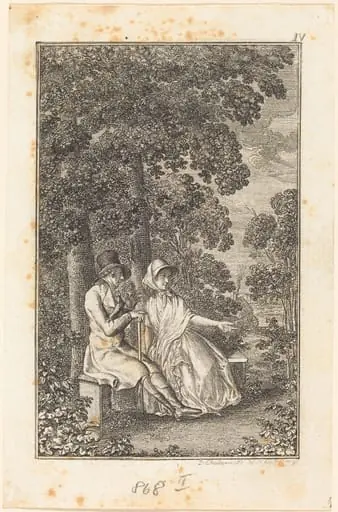 The Voyage to Paris
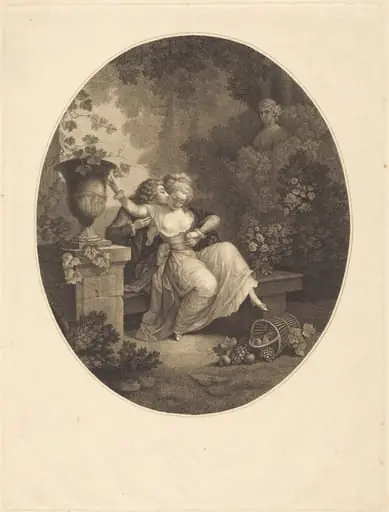 The Upset Basket
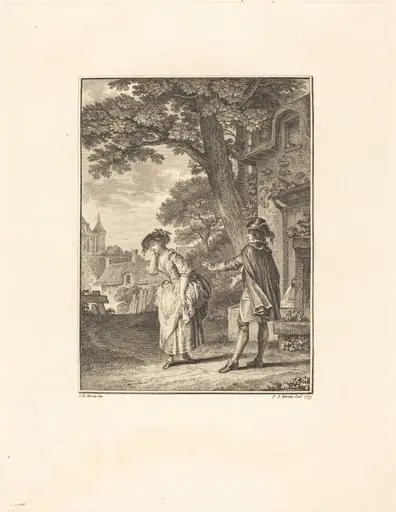 Le Devin du Village (Colette Weeping)
 Les sabots
 The Lover Surprised (L'Amant Surpris)
 Ah! Laisse-moi donc voir
 The Green Plot
 Le Devin du Village (Colette Weeping)