Artwork
The Buffoon, Arabesque
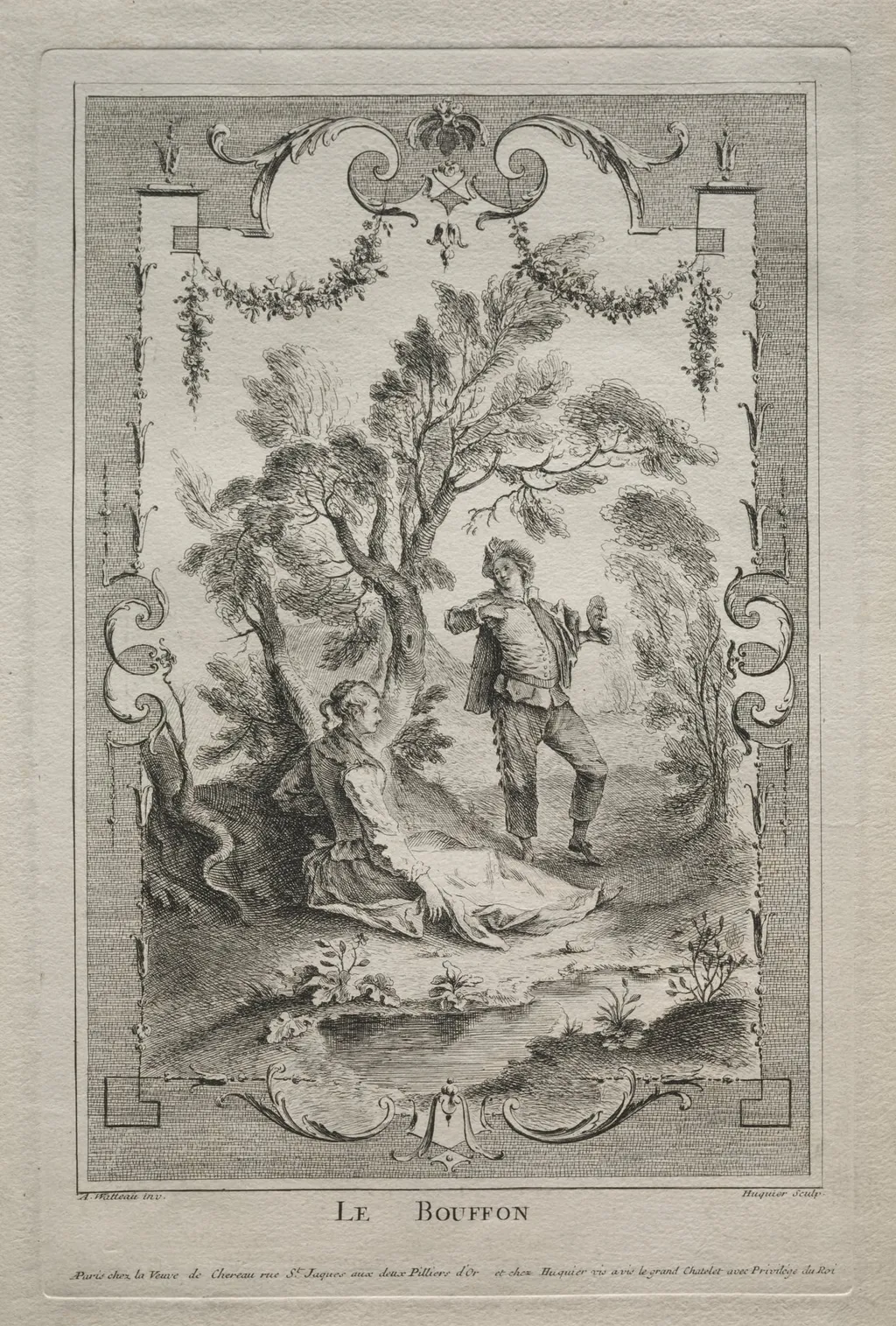
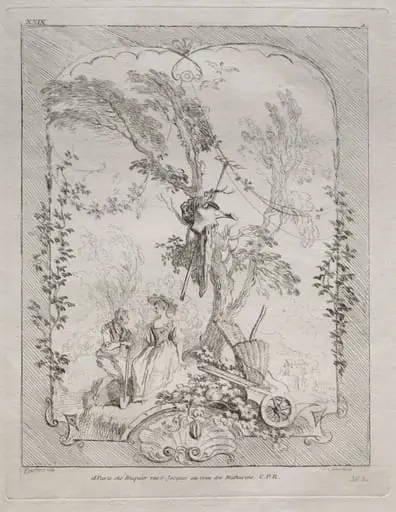
The Buffoon, Arabesque is a print by the Baroque artist Gabriel Huquier. It dates from 1750 and is held in the collection of the Cleveland Museum of Art.
About this work
Overview
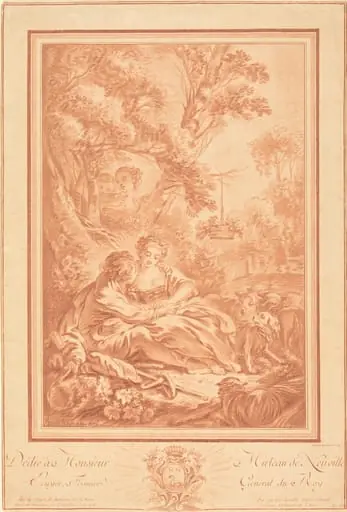
The composition centers on a pastoral scene with two figures amid natural elements, framed by ornamental scrollwork and corner motifs.
Created in 1750 by French engraver Gabriel Huquier, this print is a delicate etching titled *Le Bouffon*. It resides in The Cleveland Museum of Art’s collection. The composition centers on a pastoral scene with two figures amid natural elements, framed by ornamental scrollwork and corner motifs. Huquier’s signature, 'Huquier sculps,' confirms his role as both designer and engraver, reflecting the artisanal precision typical of mid-18th-century printmaking.
Subject & Meaning
The scene depicts a lone figure playing a flute atop a rock, while another sits below, gazing upward. The title, meaning 'The Buffoon,' suggests a performer or court jester, though the setting is serene rather than theatrical. The interaction implies a quiet, perhaps intimate exchange—more poetic than comedic—inviting interpretation as a metaphor for art, solitude, or the relationship between performer and observer in a natural world.
Technique & Style
Huquier employed fine-line etching to render subtle textures in foliage, water, and fabric. The figures are rendered with soft contours, contrasting the intricate scroll borders that frame the scene. The composition balances naturalism with decorative framing, characteristic of the late Baroque arabesque tradition. Light and shadow are suggested through delicate hatching, enhancing depth without heavy contrast.
History & Provenance
The print was produced during Huquier’s active years in Paris, when he specialized in ornamental and genre prints for private collectors. It entered The Cleveland Museum of Art’s collection through documented acquisition, though its earlier ownership remains unrecorded. Its survival in good condition reflects its appeal as a refined decorative object rather than a mass-produced image.
Context
Emerging in the decades before the French Revolution, this work reflects the aristocratic taste for pastoral fantasy and refined ornamentation. While the Baroque era’s grandeur had waned, its decorative language persisted in prints like this, blending naturalism with stylized frames. Huquier’s work catered to collectors seeking elegance and narrative subtlety, distancing itself from overt satire or political commentary.
Legacy
Huquier’s prints, including *Le Bouffon*, contributed to the dissemination of French decorative aesthetics across Europe. Though not widely studied today, such works illustrate the transition from Baroque theatricality to Rococo intimacy. They remain valuable for understanding how printmaking served as a medium for private contemplation and aesthetic refinement in 18th-century Europe.
Artist & collection

Artist
Gabriel Huquier (1695–1772) was an entrepreneurial French drawer (artist), engraver, printmaker, publisher, and art collector, who became a pivotal figure in the production of French 18th-century ornamental etchings and engravings

 Book of Fountains: No. 5
 Book of Fountains: No. 3
 The Goddess, Diana on the Clouds
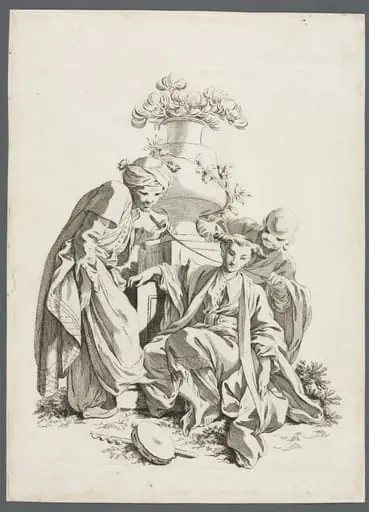 The Senses: Touch (after Boucher)
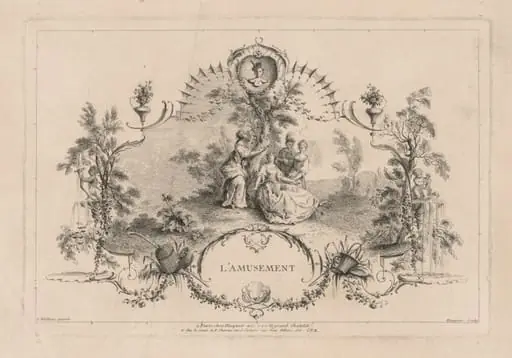 Amusement, Arabesque
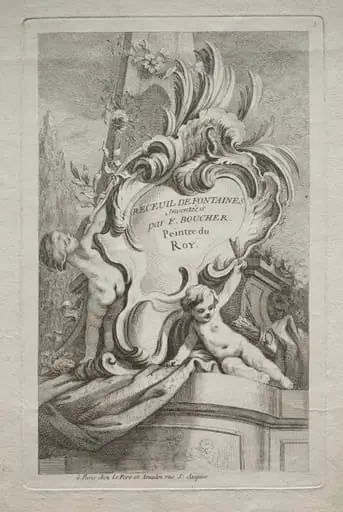 No. 1: Title Page
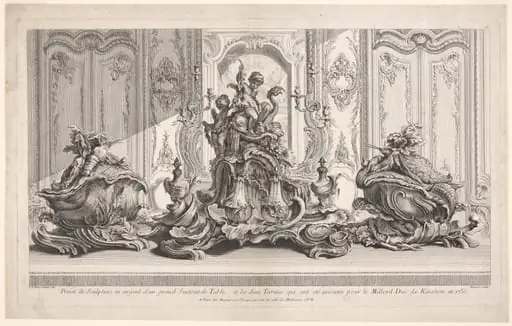 Silver Sculptural Project for a Large Centerpiece and Two Tureens Which Have Been Executed for His Lordship the Duke of Kingston, plate 115 from Works of Juste-Aurèle Meissonier (Oeuvre de Juste-Aurèle Meissonier)
 Book of Fountains: No. 4