Artwork
Deuils (Mourning Clothes)
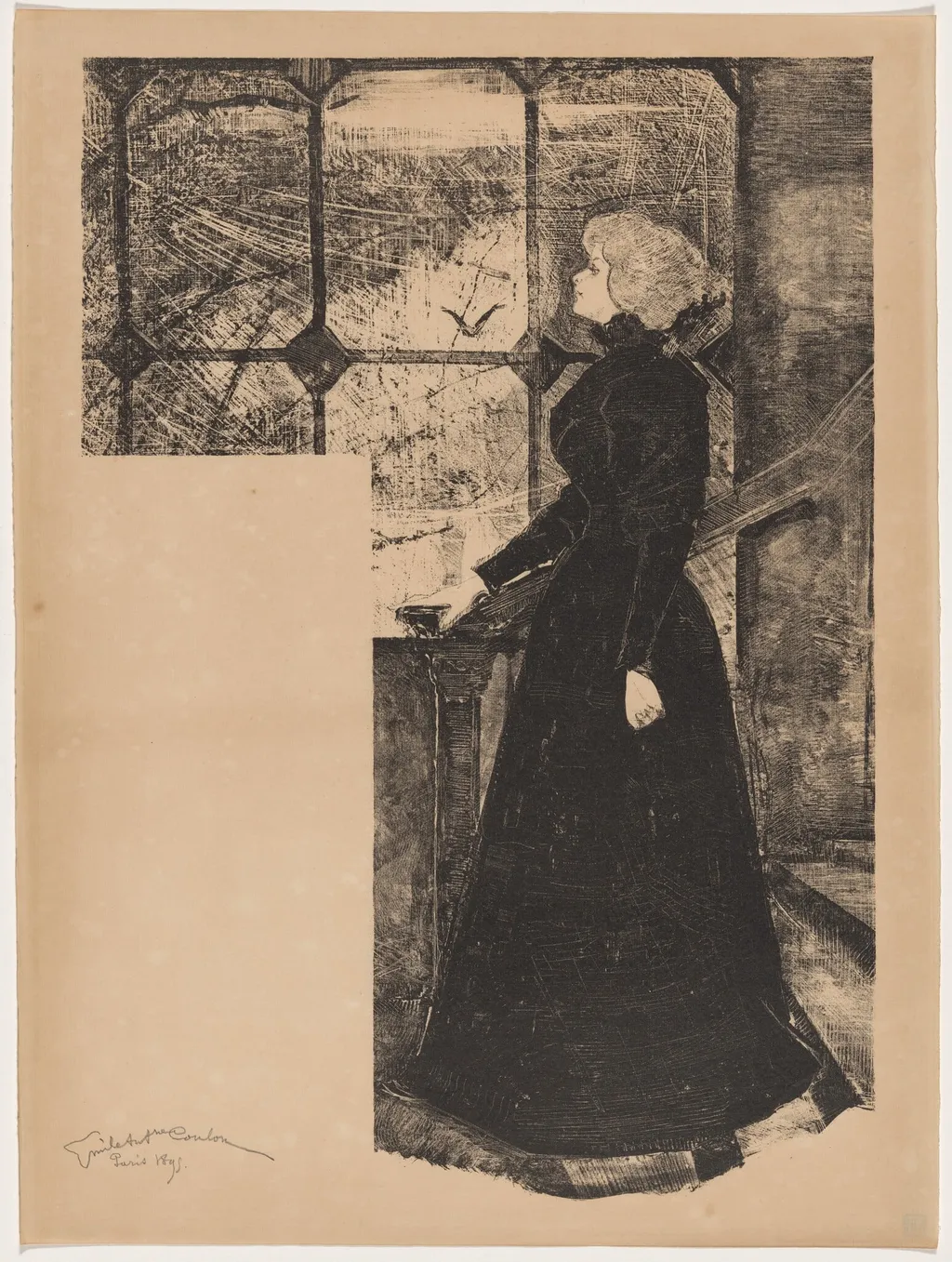
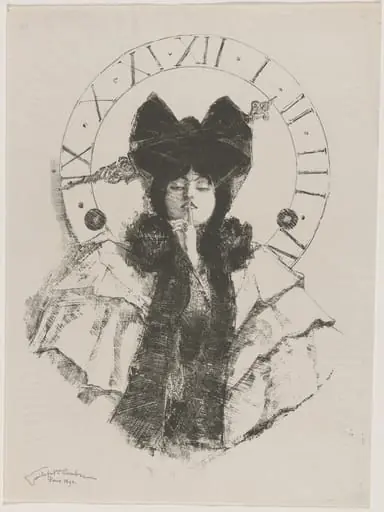
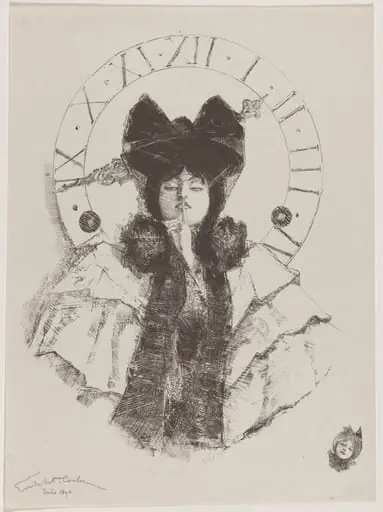
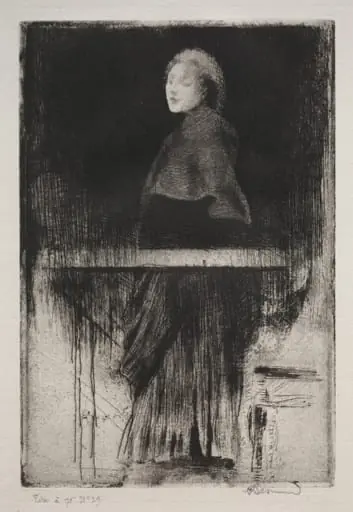
Deuils (Mourning Clothes) is an ink print by the Impressionist artist Emile Coulon. It dates from 1895 and is held in the collection of the National Gallery of Art.
About this work
It was created by Emile Coulon in 1895 and is part of the National Gallery of Art's collection.
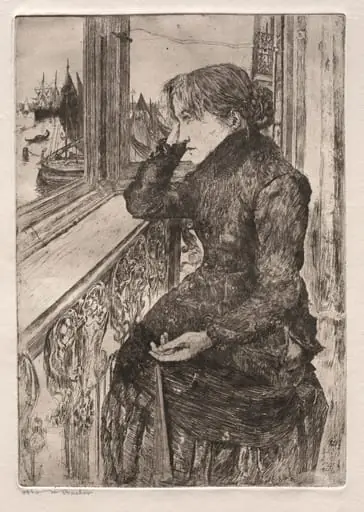
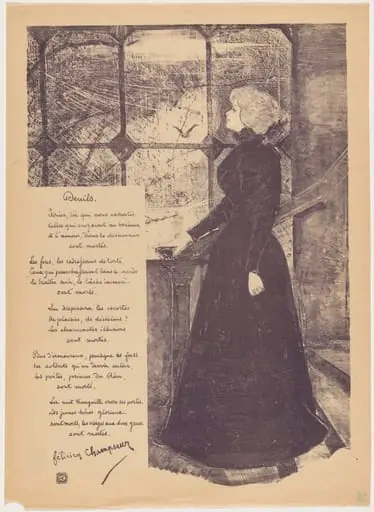
This painting shows a woman in a long, dark dress standing in front of a window. The window has four panes, and the woman is looking out of it. She has short, curly hair and is wearing a high-necked dress with long sleeves.
The room is dimly lit, and the woman's face is not clearly visible. The overall mood of the painting is somber and melancholic.
The painting is a lithograph, a technique that involves drawing on stone with grease or wax. It was created by Emile Coulon in 1895 and is part of the National Gallery of Art's collection. You might also be interested in the Impressionism movement.
Overview
Deuils (Mourning Clothes) is a 1895 lithograph by Emile Coulon, executed in black ink on thin Japan paper. The work depicts a solitary female figure standing before a window, conveyed through a somber and melancholic visual palette.
Subject & Meaning
The subject is a woman in mourning attire, indicated by her long, dark, high-necked dress with long sleeves. Her partial obscurity and gaze outward through a dimly lit window suggest introspection and sorrow, aligning the piece with themes of bereavement and solitude.
Technique & Style
Coulon utilized lithography, a process involving drawing on stone with grease or wax, to achieve the piece's stark, black-on-paper aesthetic. The choice of medium and minimal coloration enhances the overall somber mood, characteristic of late 19th-century expressive printmaking.
History & Provenance
Created in 1895 by Emile Coulon, Deuils (Mourning Clothes) is now part of the National Gallery of Art's collection, though specific acquisition details are not provided here.
Context
While the piece's style does not strictly align with Impressionism (noted for its emphasis on light and color), its creation period situates it within the broader late 19th-century European art movements that explored everyday life and emotional depth.
Legacy
The legacy of Deuils (Mourning Clothes) is not extensively detailed in available information, though as part of a national gallery's collection, it contributes to the historical record of late 19th-century printmaking practices and thematic explorations of sorrow.
Artist & collection