Artwork
Deuils (Mourning Clothes)
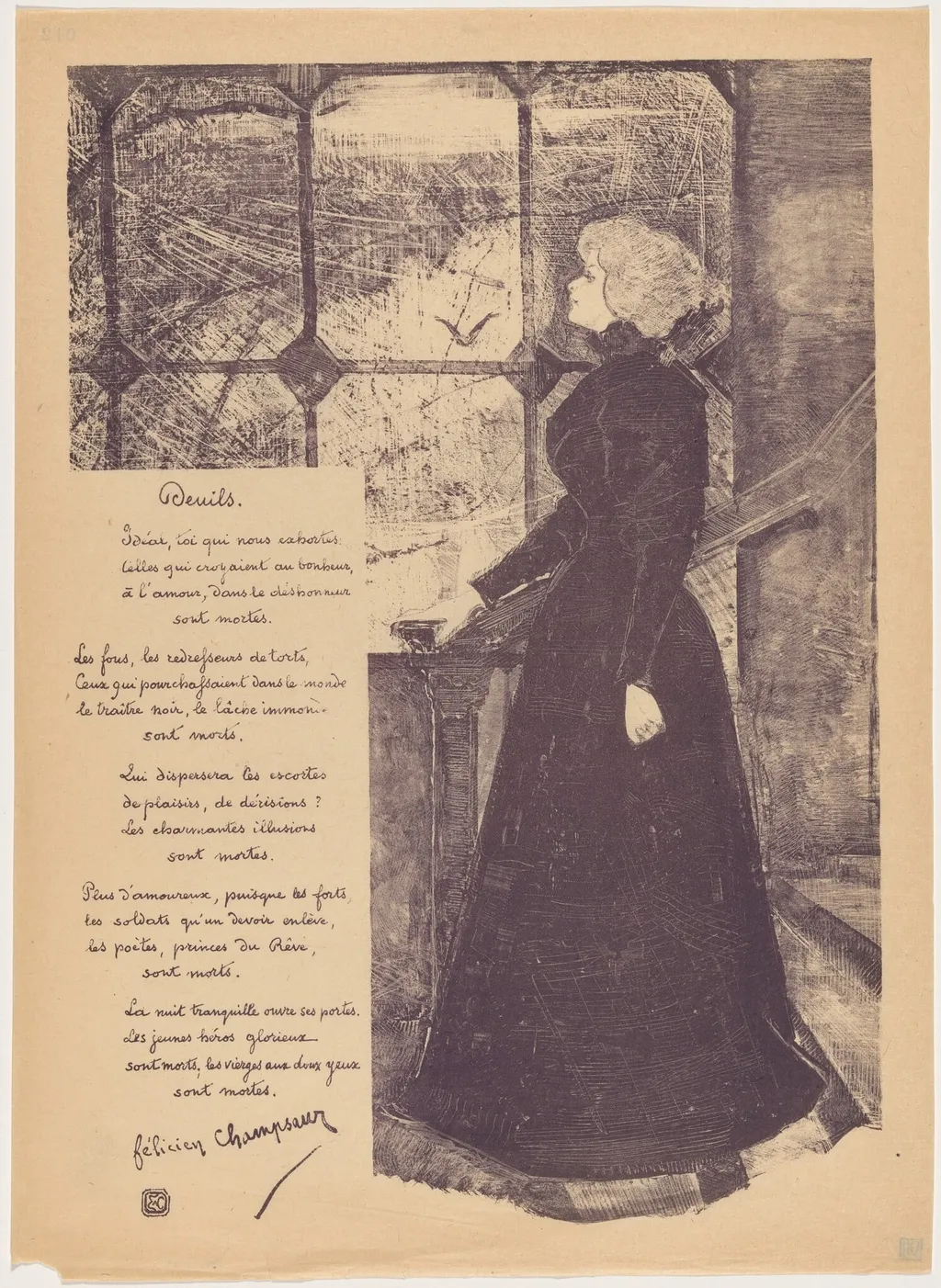
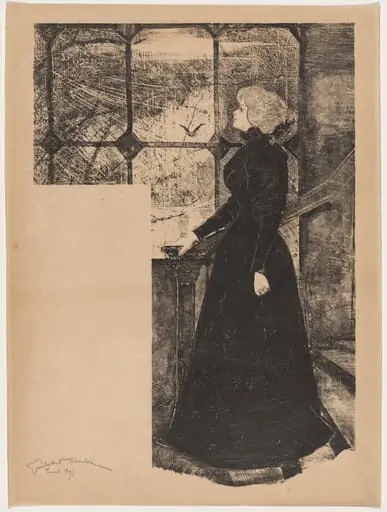
Deuils (Mourning Clothes) is an ink print by the Impressionist artist Félicien Champsaur. It dates from 1895 and is held in the collection of the National Gallery of Art.
About this work
Overview
The work belongs to the broader tradition of fin-de-siècle printmaking, where intimate scenes were rendered with emotional restraint and technical precision.
Deuils (Mourning Clothes) is a lithograph produced in 1895 by Félicien Champsaur, printed in violet ink on thin, delicate paper. It pairs a solitary visual image with a poetic text by the same artist, blending literary and graphic expression. The work belongs to the broader tradition of fin-de-siècle printmaking, where intimate scenes were rendered with emotional restraint and technical precision.
Subject & Meaning
A woman in full mourning attire stands with her back turned before a window, her posture conveying stillness and inward grief. The window, divided into multiple panes, frames a view beyond but offers no clear external scene, emphasizing isolation. The absence of facial expression and the heavy, dark clothing suggest a private moment of loss, where sorrow is held silently within domestic space.
Technique & Style
Champsaur employed lithography in violet tones to achieve a subdued, atmospheric effect. The thin paper enhances the delicacy of the image, allowing the ink to absorb softly, creating a hazy, almost ethereal quality. Light falls gently across the figure and window frame, modeling form without harsh contrast. The composition avoids narrative detail, favoring mood through minimalism and tonal restraint.
History & Provenance
Created in 1895, Deuils was likely part of a limited print run, common among artists of the period seeking to reach collectors beyond traditional painting markets. Its pairing with Champsaur’s own poem suggests an intention to unify visual and literary expression. The work’s survival on fragile paper indicates it was preserved by a dedicated collector, though its early ownership remains undocumented.
Context
In late 19th-century France, mourning rituals were codified and deeply visible in domestic life. Artists increasingly turned to quiet, interior scenes to explore psychological states rather than public drama. Champsaur’s work aligns with this trend, reflecting a cultural preoccupation with grief as a private, almost sacred experience, distinct from theatrical depictions of loss.
Legacy
Deuils remains a quiet example of Symbolist-inflected printmaking, notable for its fusion of poetry and image. While Champsaur is better known for his novels and illustrations, this lithograph endures as a refined study in emotional economy. It contributes to the understated legacy of French graphic art that prioritized introspection over spectacle.
Artist & collection

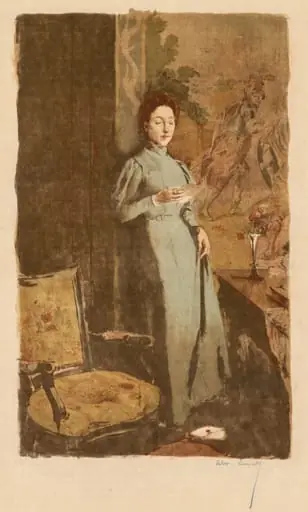 The Letter (La Lettre)
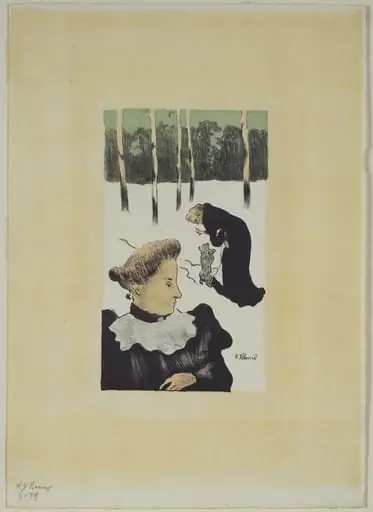 Untitled
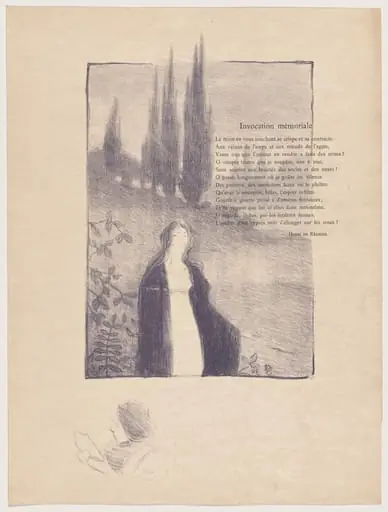 Invocation mémoriale
 Untitled
 Folder for Frontispiece of Elles
 Etchings of Venice: Beautiful View
 Mme. Le Marguoin, Milliner (Mme. Le Marguoin, modiste)
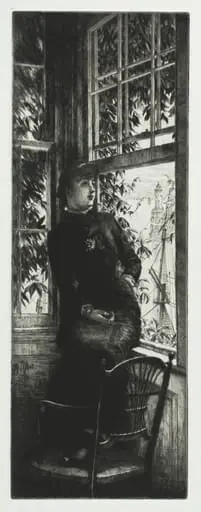 At the Sea Side
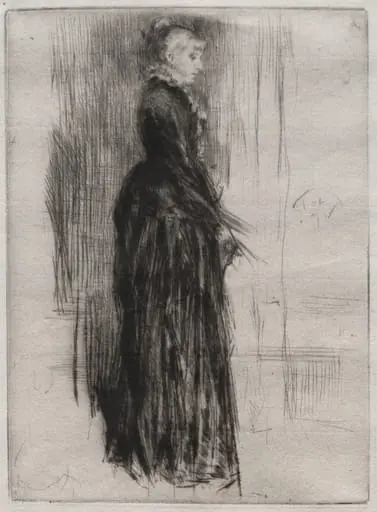 Little Velvet Dress
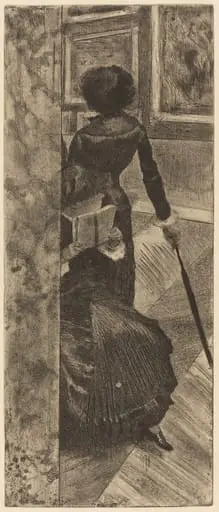 Mary Cassatt at the Louvre: The Paintings Gallery
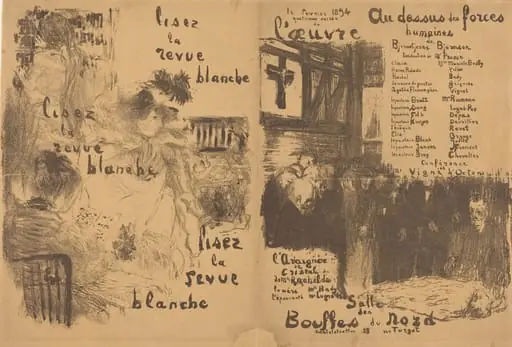 Au dessus des forces humaines; L'Araignée de cristal
 Deuils (Mourning Clothes)