Artwork
Haymaking, Welsh Mountains
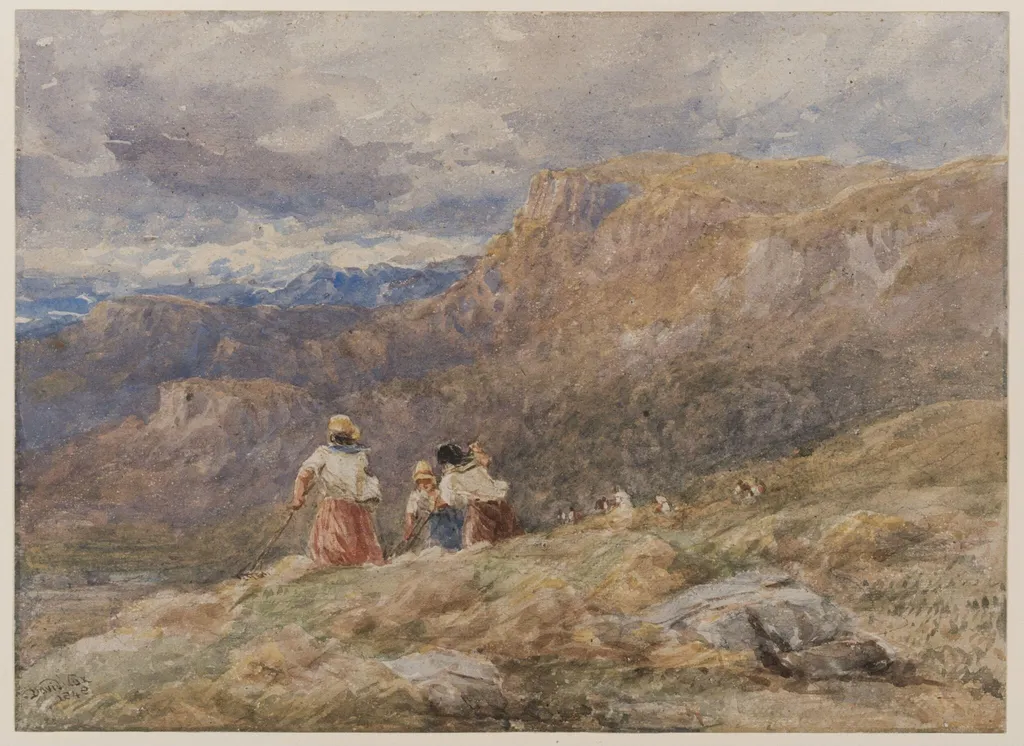
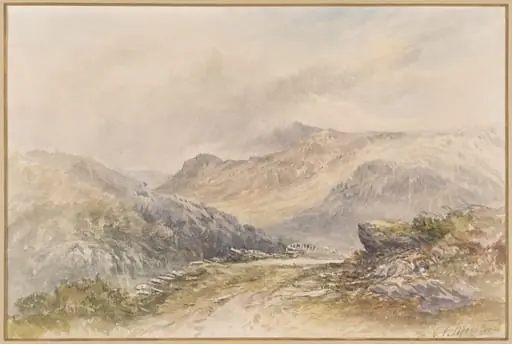
Haymaking, Welsh Mountains is a watercolor work on paper by the British Romanticist artist David Cox. It dates from 1848 and is held in the collection of the Victoria and Albert Museum.
About this work
Overview
David Cox the Elder created this watercolour in 1848, capturing a quiet moment of rural labor in the Welsh hills. The work is signed and dated, reflecting the artist’s mature style. Executed in transparent washes, it conveys a sense of stillness and seasonal rhythm, aligning with Cox’s lifelong interest in natural light and landscape as a subject worthy of serious artistic attention.
Subject & Meaning
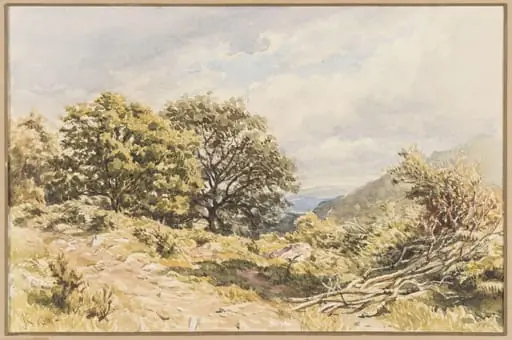
Three figures are engaged in haymaking on a sloping, rocky field—one standing with a staff, the others resting nearby.
Three figures are engaged in haymaking on a sloping, rocky field—one standing with a staff, the others resting nearby. Their simple attire and unposed posture suggest everyday labor rather than idealized pastoralism. The scene emphasizes quiet endurance and harmony with the land, avoiding sentimentality. The landscape itself becomes the true focus, framing human activity as a small, natural part of the environment.
Technique & Style
Cox employed loose, fluid brushwork and layered watercolour washes to suggest texture and atmosphere. The palette is restrained—earthy greens, muted browns, and soft blues—enhancing the painting’s subdued mood. Light is rendered diffusely, with mist softening the distant ridge and clouds casting subtle shadows. The technique prioritizes sensory impression over detail, reflecting Cox’s departure from rigid academic conventions.
History & Provenance
Painted in 1848, this work belongs to Cox’s later period, when he increasingly favored landscape over narrative subjects. It was likely created during his time in the Welsh countryside, where he sought inspiration away from urban centers. The painting remained in private hands for much of the 19th and 20th centuries before entering public collection, where its modest scale and quiet tone helped redefine the value of watercolour as a serious medium.
Context
In mid-19th century Britain, watercolour was gaining recognition beyond topographical sketches. Cox’s work contributed to this shift, aligning with broader Romantic interests in nature and rural life, though without overt drama or symbolism. His approach contrasted with the polished finishes of contemporaries, favoring immediacy and atmospheric truth, reflecting a growing appreciation for the ordinary and the transient in art.
Legacy
Cox’s Haymaking exemplifies his influence on later British watercolourists who valued expressive brushwork and naturalism. His willingness to depict labor without embellishment and to treat landscape as emotionally resonant helped pave the way for modern landscape traditions. Though not widely celebrated in his lifetime, his techniques and quiet vision gained retrospective recognition as foundational to 20th-century watercolour practice.
Own this work as a print
Artist & collection
Artist
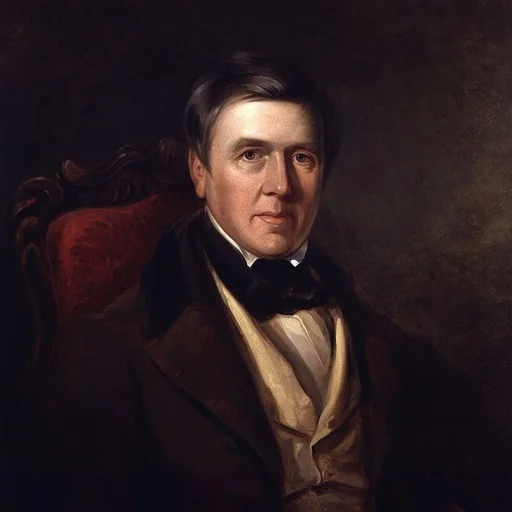
David Cox (29 April 1783 – 7 June 1859) was an English landscape painter, one of the most important members of the Birmingham School of landscape artists and an early precursor of Impressionism.

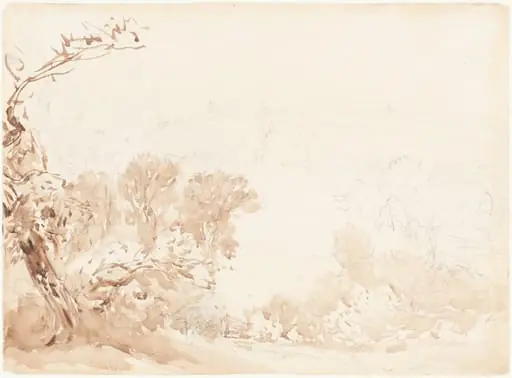
![Trees [verso], by David Cox](https://artifactworldgallery.com/img/david-cox--trees-verso--2f59ba73e183df09-w320.webp)
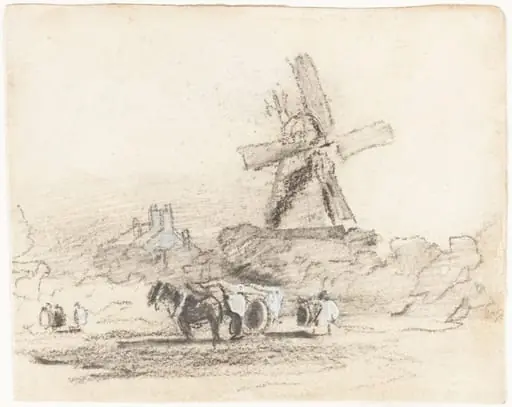
![Chatsworth [recto], by David Cox](https://artifactworldgallery.com/img/david-cox--chatsworth-recto--3f4d97adb21a8333-w320.webp)