Artwork
'Blot' drawing in progress for 'Hannibal Passing the Alps'
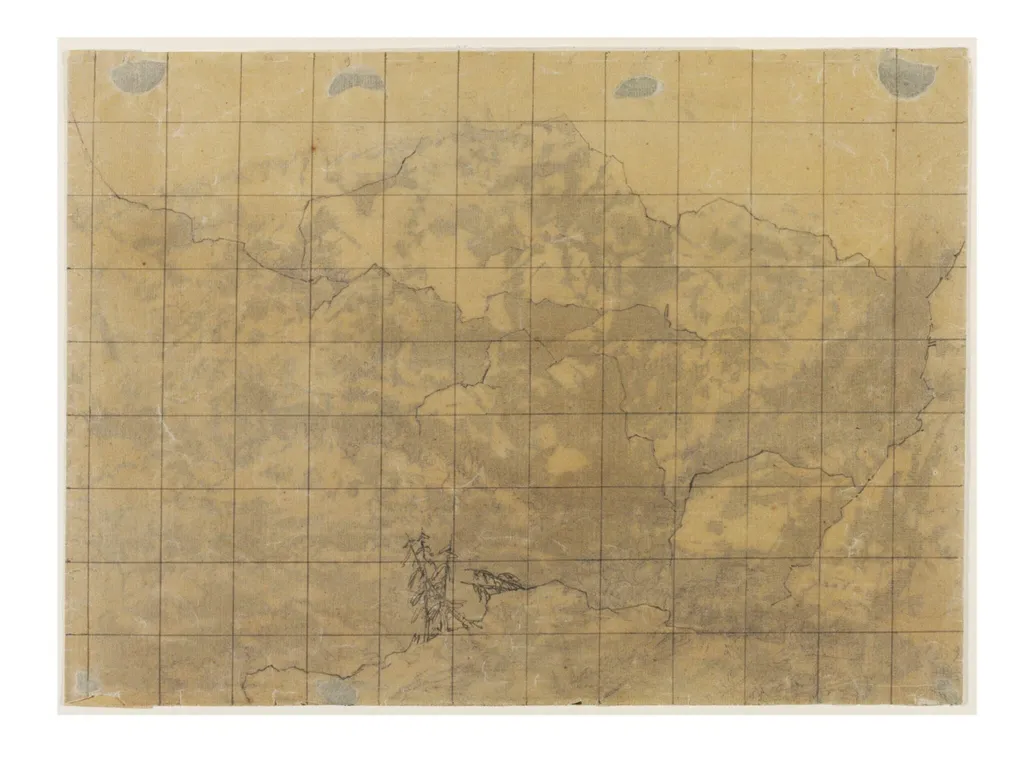
'Blot' drawing in progress for 'Hannibal Passing the Alps' is a drawing by the Romanticist artist Alexander Cozens. It dates from 1750 and is held in the collection of the Victoria and Albert Museum.
About this work
Overview
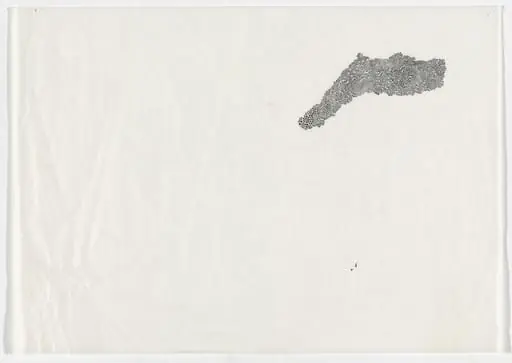
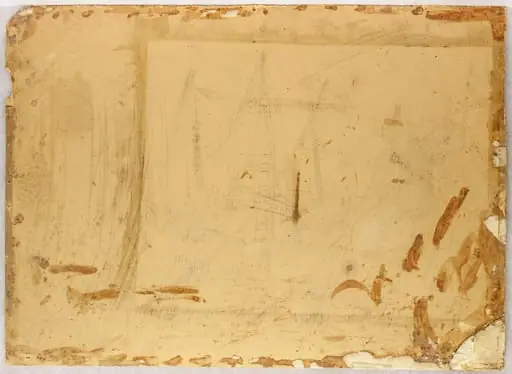
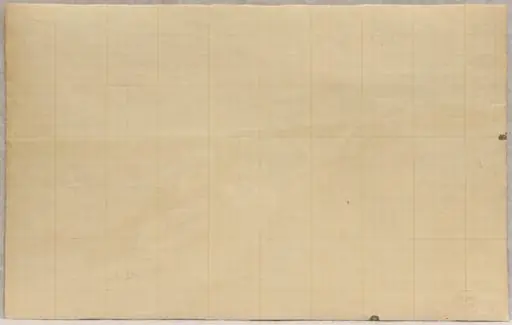
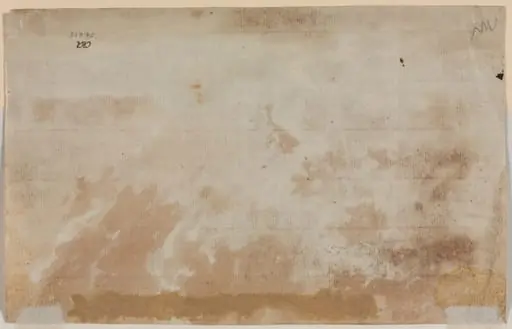
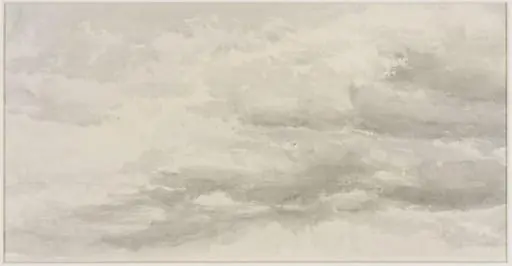
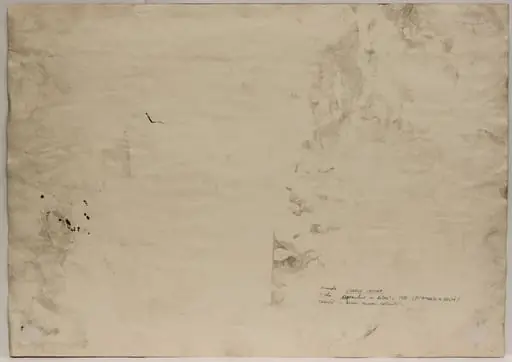
Around 1750 Alexander Cozens produced this preparatory drawing, known as a "blot" study, for his larger composition titled Hannibal Passing the Alps. Executed with brush and ink on a sheet that carries a faint graphite outline, the work is overlaid with a second tracing paper layer bearing additional pen and ink markings. The piece records an intermediate stage in the artist’s planning process.
Technique & Style
This layered approach illustrates the experimental balance between chance and design that Cozens advocated in his 1788 treatise on inventive landscape drawing.
Cozens employed his characteristic method of generating ink blots on a primary support, then refining the suggestion with controlled line work on a translucent overlay. The initial brush‑applied ink creates irregular, map‑like smudges, while the tracing paper allows precise additions, such as a barely discernible animal figure near the lower centre. This layered approach illustrates the experimental balance between chance and design that Cozens advocated in his 1788 treatise on inventive landscape drawing.
Subject & Meaning
The drawing serves as a compositional sketch for the historical scene of Hannibal’s crossing of the Alps, indicating the placement of terrain features and a possible animal element that may represent a horse or mule. The vague, blot‑derived forms suggest mountainous topography, providing a structural framework for the eventual narrative painting.
History & Provenance
Created as part of Cozens’s preparatory workflow, the sheet reflects his documented practice of using blots to spark imaginative landscapes. The work has survived with a yellowed, cracked surface, showing wear typical of paper that has been stored for centuries. Its provenance traces back to Cozens’s own studio, later entering collections that focus on 18th‑century British drawing practices.
Context
Cozens’s blot technique emerged in the mid‑18th century as a response to the rigid academic conventions of landscape drawing. By embracing accidental ink marks, he sought to stimulate the artist’s imagination, a principle he outlined in New Methods of Assisting the Invention in Drawing Original Compositions of Landscape (1788). This drawing exemplifies that pedagogical shift toward spontaneity in British art.
Artist & collection