Artwork
Untitled
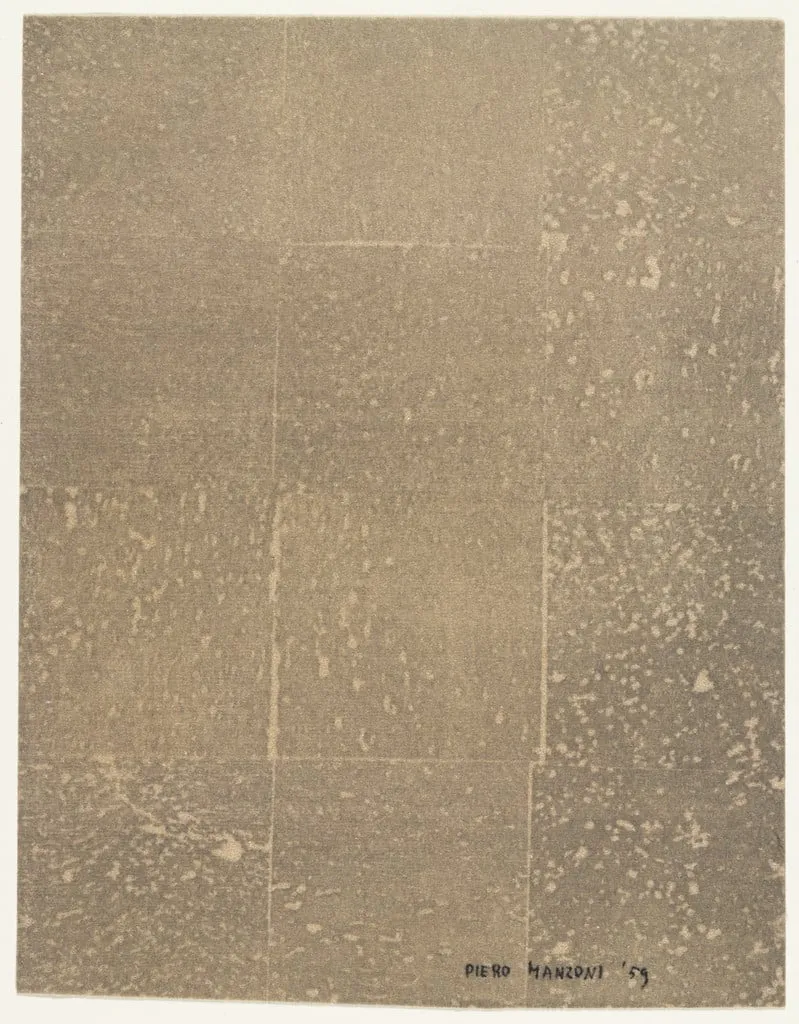
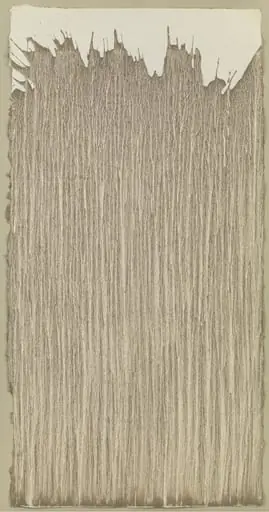
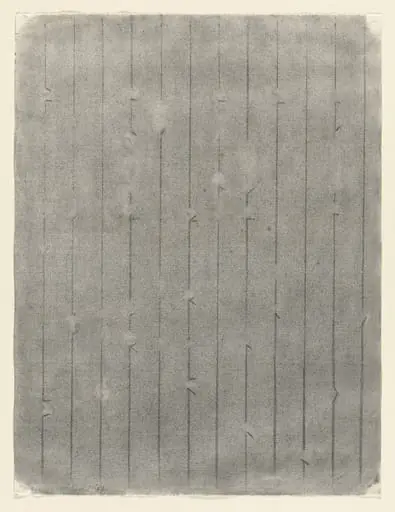
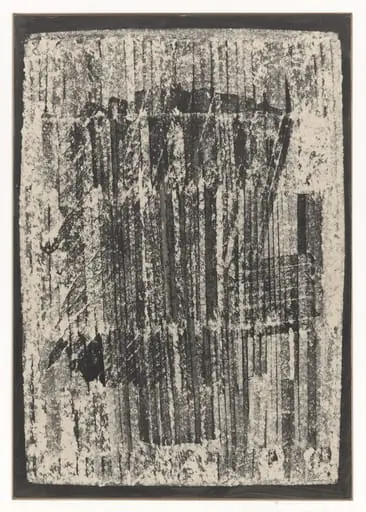
Untitled is an ink print by Piero Manzoni. It dates from 1959 and is held in the collection of the Museum of Modern Art.
About this work
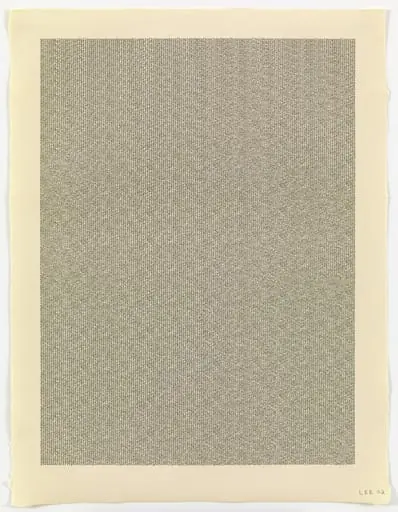
You see a small sheet of velour paper covered in tiny, crisscrossing ink lines.
Manzoni made this in 1959, when artists were asking: what *is* a painting? No color, no image—just texture and pattern. The velour soaks up the ink, making the lines look soft, almost fuzzy. It’s quiet, but it’s not nothing.
If you like this, look up the technique cross-hatching next.
Overview
The choice of velour—a fabric with a soft, absorbent pile—alters the ink’s behavior, producing a muted, blurred effect that resists sharp definition.
Created in 1959, this ink-on-velour-paper work by Piero Manzoni belongs to a series of minimalist investigations into the materiality of art. Rather than depicting recognizable forms, it presents a dense field of fine, intersecting lines. The choice of velour—a fabric with a soft, absorbent pile—alters the ink’s behavior, producing a muted, blurred effect that resists sharp definition. The work belongs to The Museum of Modern Art’s collection.
Subject & Meaning
Manzoni’s piece rejects traditional pictorial content, focusing instead on the physical interaction between medium and support. The absence of color or imagery shifts attention to process and surface. The subtle, repetitive marks suggest an obsessive, almost mechanical gesture, challenging assumptions about what constitutes a meaningful mark in art. It invites contemplation of labor, repetition, and the limits of visual representation.
Technique & Style
Manzoni applied ink with precision to a velour surface, allowing the fibers to absorb and diffuse the pigment. The result is a network of soft, blurred cross-hatched lines that lose definition at the edges. This technique emphasizes texture over form, transforming the paper into a tactile field rather than a plane for depiction. The effect is quiet and intimate, contrasting with the bold gestures common in contemporary abstraction.
History & Provenance
Produced during a period of intense experimentation in postwar Italian art, this work emerged alongside Manzoni’s broader inquiries into the dematerialization of the art object. It was acquired by The Museum of Modern Art in the decades following its creation, reflecting institutional recognition of his role in redefining artistic boundaries. The piece remains a key example of his early conceptual investigations.
Context
In the late 1950s, artists across Europe were reevaluating the foundations of painting and sculpture. Manzoni’s work responded to this climate by reducing art to its most basic elements: material, gesture, and support. His use of non-traditional surfaces and emphasis on process anticipated the concerns of Conceptual Art and later influenced the Italian Arte Povera movement, which similarly privileged humble materials and anti-monumental forms.
Legacy
Manzoni’s quiet, material-focused works like this one helped shift artistic priorities from representation to process and perception. Though unassuming in appearance, the piece contributed to a broader redefinition of what art could be—emphasizing the physicality of the object and the viewer’s engagement with its surface. Its influence endures in practices that prioritize material presence over symbolic content.
Artist & collection
Artist
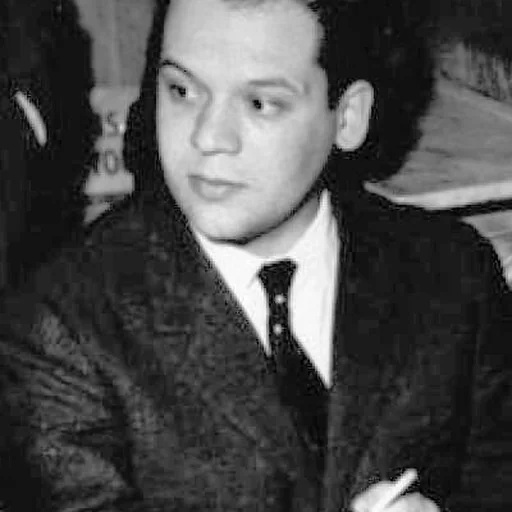
Piero Manzoni di Chiosca e Poggiolo (July 13, 1933 – February 6, 1963) was an Italian artist best known for his ironic approach to avant-garde art.

 Untitled
 Câmp fertil
 Untitled
 Sportivi
 Compoziție cu ruine și păsări
 Untitled
 Untitled
 Icoana de factură catolică îl reprezintă pe sfântul Teodor Tiron (306 d. Hr) sărbătorit pe 17 februarie.Sf. Teodor înveșmântat ca oștean: coif cu pene, armura și mantie roșie. În dreapta ține un coif cu stânga sulița. În planul doi o biserică catolică. Pe fondul alb, de o parte și alta a sfântului câte tulpină cu o floare roșie. Cromatica: predomină roșul(inclusiv ca desen) albastru, bleu, negru, maro, auriu, verde deschis, verde închis, fond alb.Ramă îngustă, patru stinghiii îmbinate oblic la colțuri.
 Untitled
 Untitled
 Femeie în picioare
 Compoziție III