Artwork
Peisaj la Popina
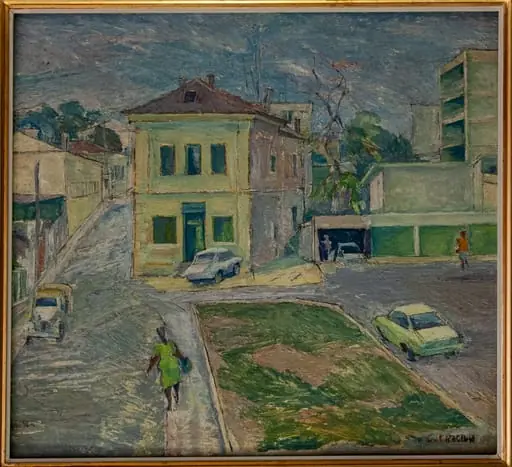
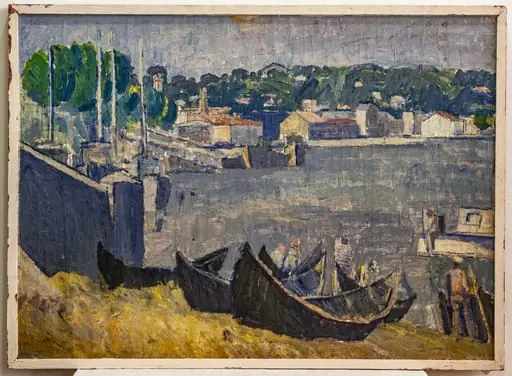
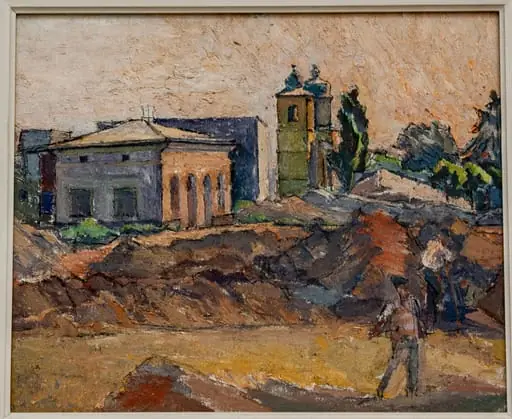
Peisaj la Popina is an unspecified painting by Constantin Crăciun. It is held in the collection of the Gavrila Simion Eco-Museum Research Institute Tulcea. This landscape depicts the Romanian village of Popina, rendered in muted earth tones of brown and green.
About this work
Overview
Painted on canvas stretched over a wooden frame, the work shows signs of age—fading and surface wear—that suggest prolonged exposure or imperfect storage.
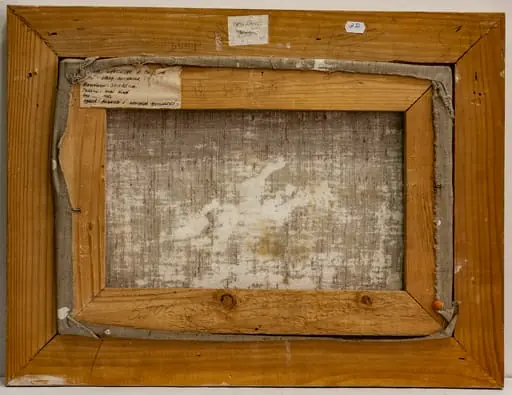
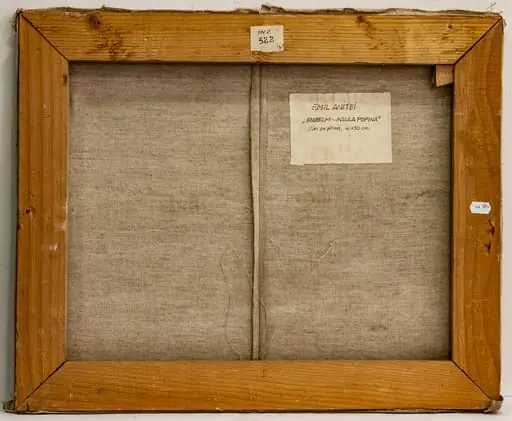
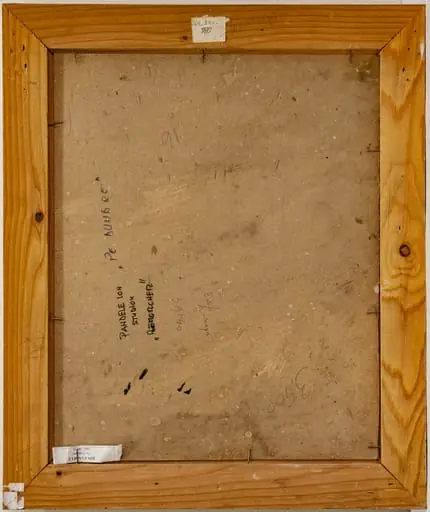
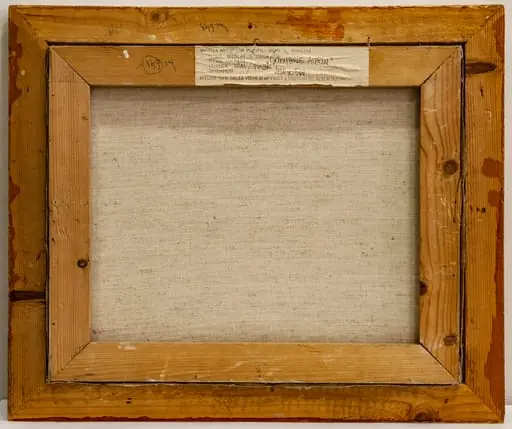
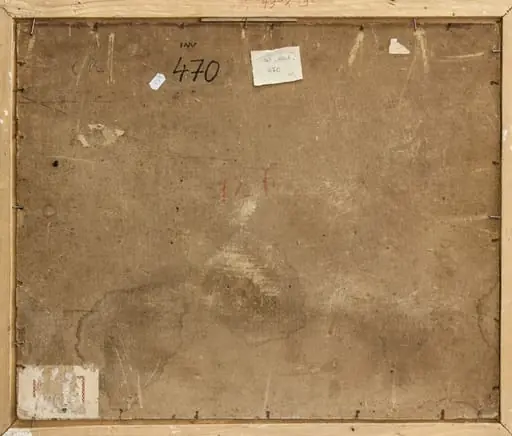
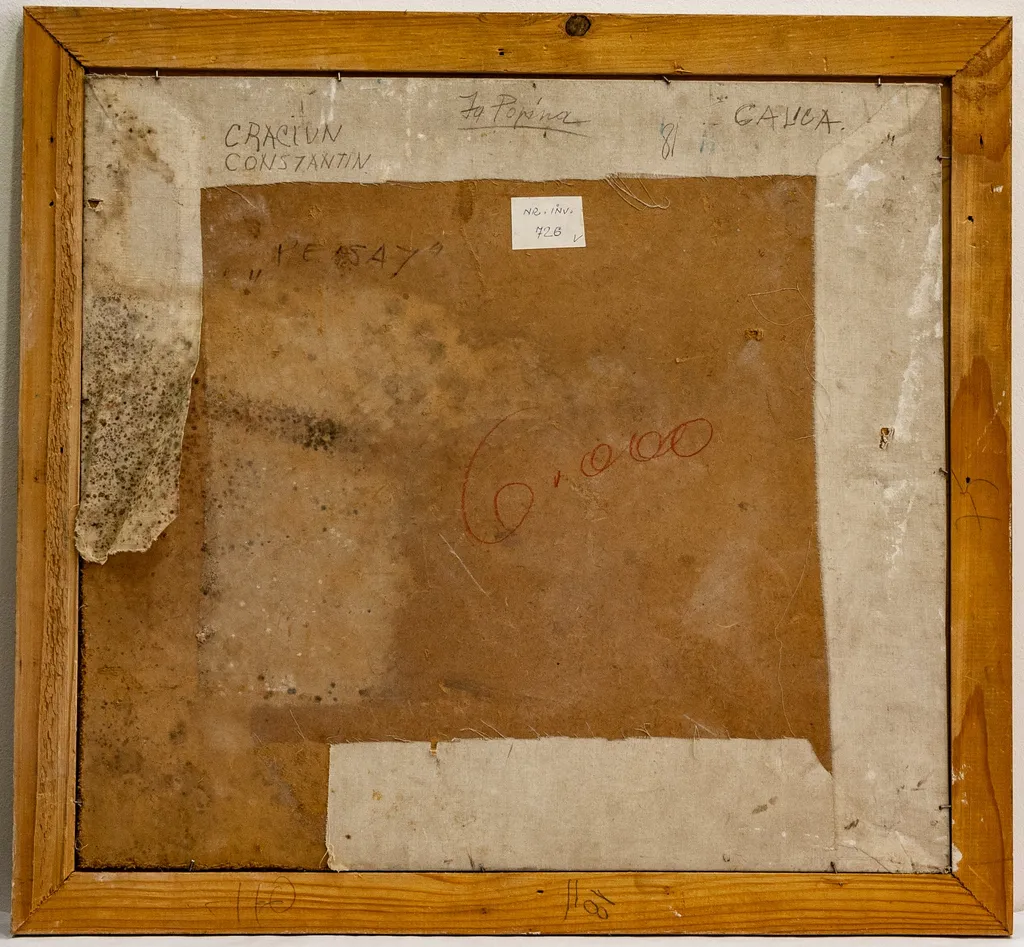
This landscape depicts the Romanian village of Popina, rendered in muted earth tones of brown and green. Painted on canvas stretched over a wooden frame, the work shows signs of age—fading and surface wear—that suggest prolonged exposure or imperfect storage. The frame’s edges remain visible, and faint markings on the reverse are legible only with difficulty, hinting at archival history now partially lost.
Subject & Meaning
The scene presents a quiet rural setting, likely observed directly, with no figures or architectural emphasis. The absence of dramatic elements suggests an intent to record place rather than convey narrative. Popina, as a subject, reflects a regional specificity common in early 20th-century Romanian art, where local landscapes served as quiet assertions of cultural identity.
Technique & Style
The artist applied pigment with restrained brushwork, favoring tonal gradations over sharp definition. Colors are subdued, consistent with naturalistic observation under ambient light. The canvas support, typical of the period, was prepared and stretched by hand, indicating a workshop practice rather than industrial production. Texture is minimal, emphasizing atmosphere over detail.
History & Provenance
The painting’s origin traces to Constantin Crăciun, a lesser-known Romanian artist active in the early 1900s. Its survival suggests it remained in private hands, possibly within the artist’s family or local community. The illegible inscriptions on the reverse may once have recorded date, location, or ownership, but time has obscured them, leaving gaps in its documented journey.
Context
Created during a period when Romanian artists increasingly turned to native landscapes as subjects, this work aligns with a broader movement away from imported academic styles. Popina, like other rural locales, became a site of quiet cultural affirmation. The painting’s modest scale and condition reflect its likely function as a personal study or domestic decoration rather than a public exhibition piece.
Legacy
Though not widely exhibited or reproduced, the painting contributes to the corpus of regional Romanian landscape art. Its survival, despite deterioration, offers a tangible link to a time when artists documented everyday environments without grandiose intent. It remains a quiet testament to the value placed on local place in early modern Romanian visual culture.
Artist & collection
Artist
Constantin Crăciun’s prints and paintings capture the light and streets of Dobrogea, a region in Romania.
Museum
Gavrila Simion Eco-Museum Research Institute Tulcea
Continue through works from the same source collection.