Artwork
The Virgin and Child Adored by Frederic the Wise of Saxony
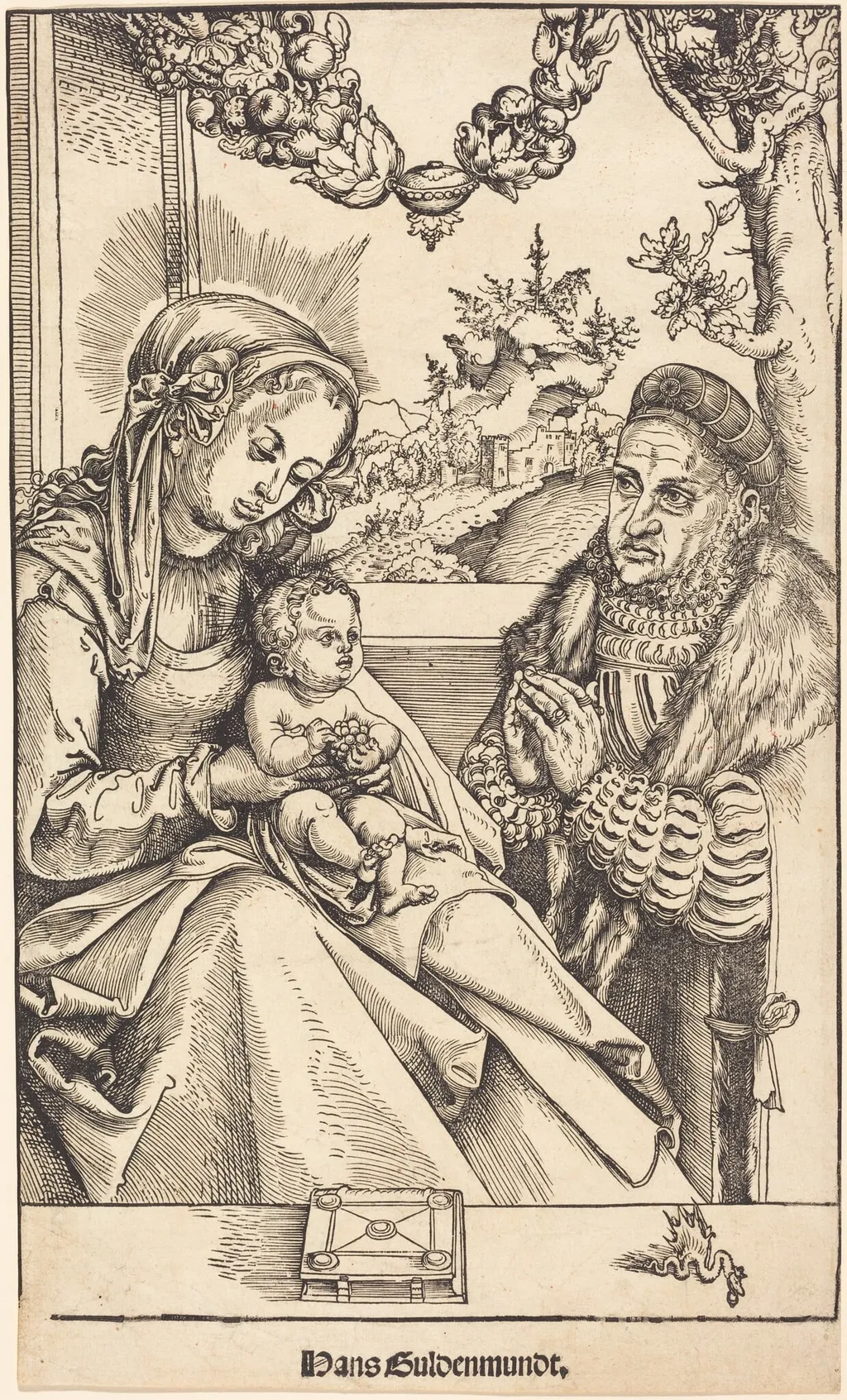
The Virgin and Child Adored by Frederic the Wise of Saxony is an ink print by the Renaissance artist Lucas Cranach the Elder. It dates from 1512 and is held in the collection of the National Gallery of Art.
About this work
Overview
Created in 1512, this woodcut by Lucas Cranach the Elder presents a devotional scene commissioned for Frederick the Wise, Elector of Saxony. As a court artist, Cranach produced religious imagery that blended spiritual symbolism with the patron’s personal identity. The work is part of a broader tradition of printed devotional aids, designed for private contemplation rather than public display.
Subject & Meaning
The Virgin Mary holds the Christ Child, both rendered with solemn grace, while Frederick the Wise kneels in adoration beside them. His inclusion as a supplicant underscores his piety and political legitimacy, positioning him as a devout Christian ruler. The composition merges sacred narrative with contemporary portraiture, reinforcing the Elector’s role as a protector of the faith.
Technique & Style
Executed as a woodcut, the image relies on bold, linear contrasts and fine hatching to define form and texture. Cranach’s precision in rendering fabric folds, facial features, and architectural details reflects his mastery of the medium. The flatness of the background and the intimate scale emphasize focus on the figures, characteristic of Northern Renaissance printmaking.
History & Provenance
Commissioned during Frederick the Wise’s reign, the print likely served as a personal devotional object or gift. Frederick, known for safeguarding Martin Luther and collecting relics, maintained a close relationship with Cranach. The work’s survival in multiple impressions suggests its circulation among court circles and religious elites in early 16th-century Saxony.
Context
Produced just before the Protestant Reformation, the image reflects the Catholic devotional practices still dominant in Saxony. Yet its emphasis on personal piety and the ruler’s direct relationship with the divine foreshadows emerging Lutheran ideals. Cranach’s work navigated this transitional moment, serving both traditional patrons and the reforming church.
Legacy
This woodcut exemplifies Cranach’s role in shaping the visual language of German Renaissance print culture. Its combination of portraiture and religious iconography influenced later devotional imagery, particularly in Protestant regions. Though not widely reproduced today, it remains a key example of how art reinforced political and spiritual authority in early modern Europe.
Artist & collection
Artist
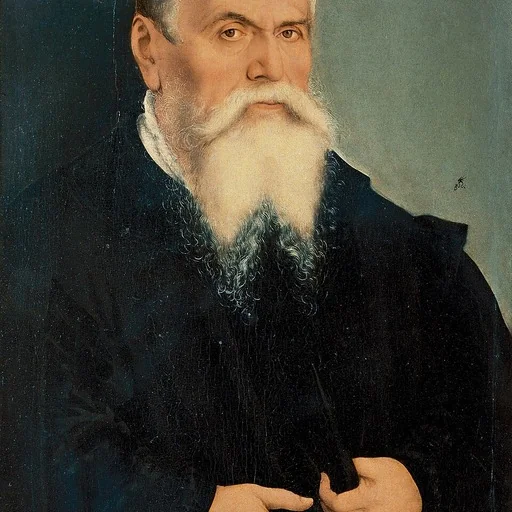
Lucas Cranach the Elder was a German Renaissance painter and printmaker in woodcut and engraving.

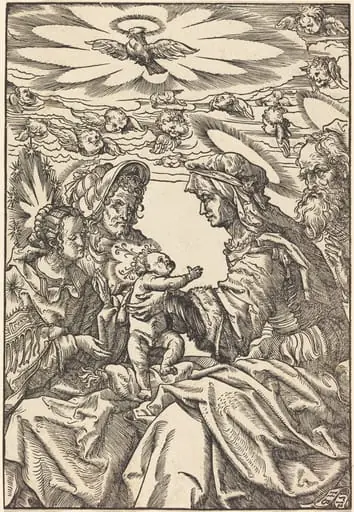 The Holy Family with Saint Anne and Saint Joachim
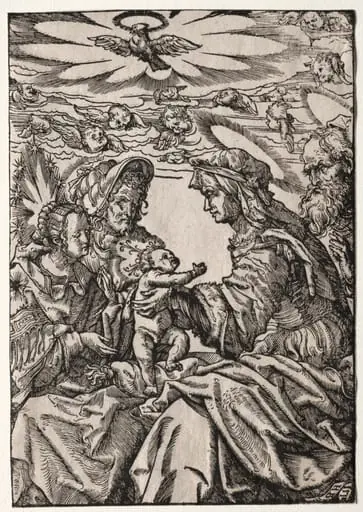 The Holy Family with St. Anne and Joachim
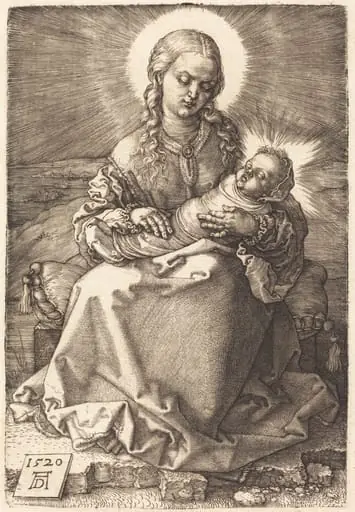 The Virgin with the Swaddled Child
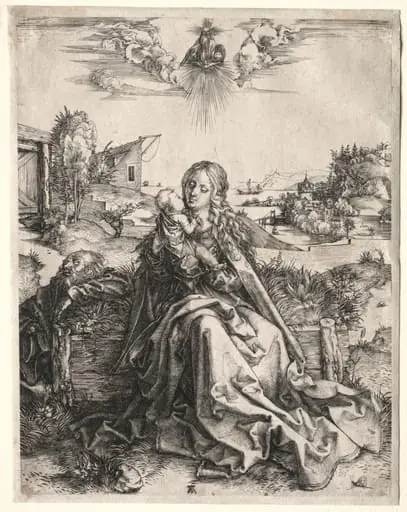 Holy Family with the Butterfly
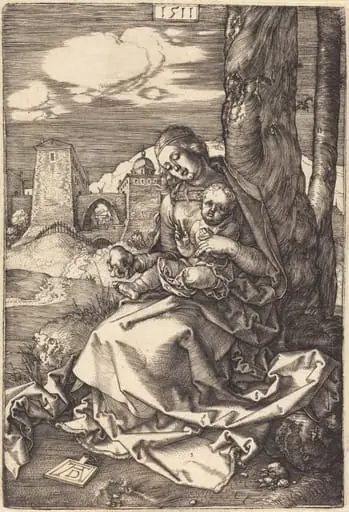 The Virgin and Child with the Pear
 The Virgin and Child with the Pear
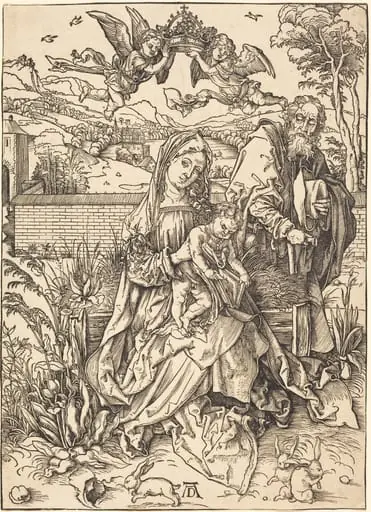 The Holy Family with the Three Hares
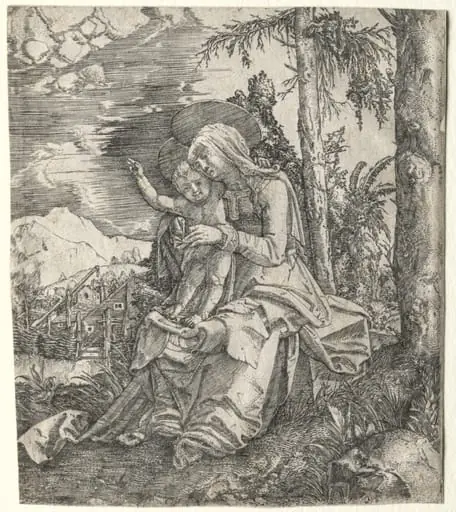 The Virgin in a Landscape
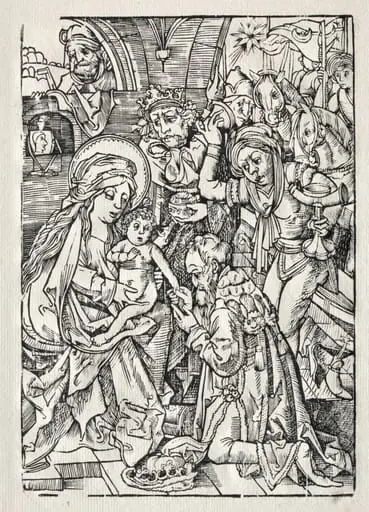 Adoration of the Kings
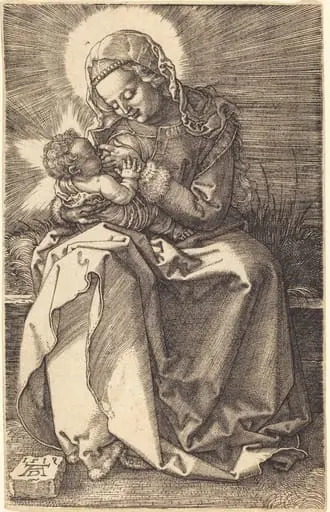 The Virgin Nursing the Child
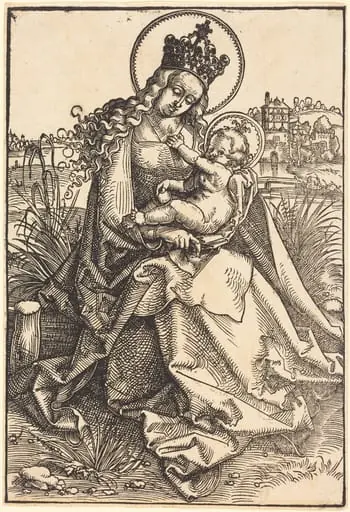 Madonna and Child on the Grassy Bank
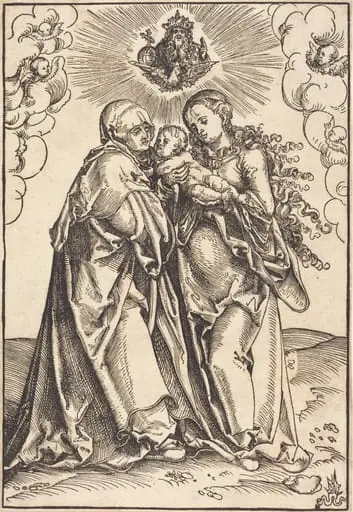 Saint Anne and the Virgin with the Child