Artwork
The Virgin with the Swaddled Child
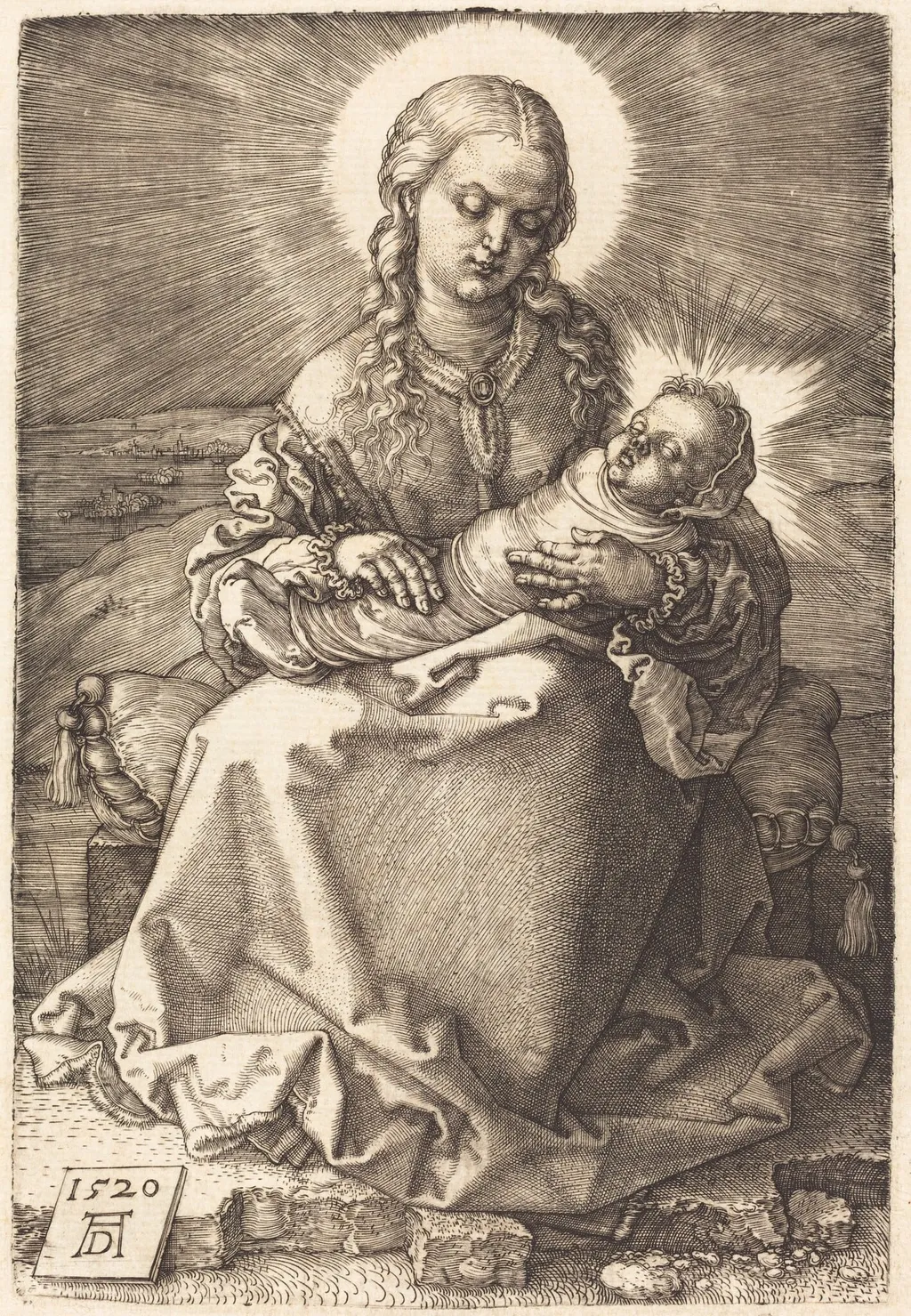
The Virgin with the Swaddled Child is an ink print by the Northern Renaissance artist Albrecht Dürer. It dates from 1520 and is held in the collection of the National Gallery of Art.
About this work
Overview
Albrecht Dürer’s engraving titled *The Virgin with the Swaddled Child* dates from 1520. Executed on laid paper, the work is a small‑scale religious print that presents the Virgin Mary cradling the infant Jesus. The composition is deliberately simple, with the figures isolated against an unadorned background, emphasizing their intimate interaction.
Subject & Meaning
The image portrays Mary in a modest robe, her hands supporting the newborn who is tightly wrapped in swaddling cloth. The tender pose reflects themes of maternal devotion and the incarnation, common in early sixteenth‑century devotional art. The calm expression on Mary’s face conveys a sense of serene acceptance of her role in the Christian narrative.
Technique & Style
Dürer achieved the delicate modeling of flesh and fabric through fine cross‑hatching, a method of intersecting lines that builds subtle tonal gradations. The meticulous incisions render the folds of the robe and the soft shadows on the child’s skin, while the plain backdrop allows the intricate line work to dominate the visual field.
Context
Created during the later period of Dürer’s career, the print reflects the artist’s continued interest in merging Northern precision with Italianate compositional balance. Religious prints such as this were widely circulated, serving both as objects of personal contemplation and as demonstrations of Dürer’s technical mastery in the medium of engraving.
Own this work as a print
Artist & collection
Artist
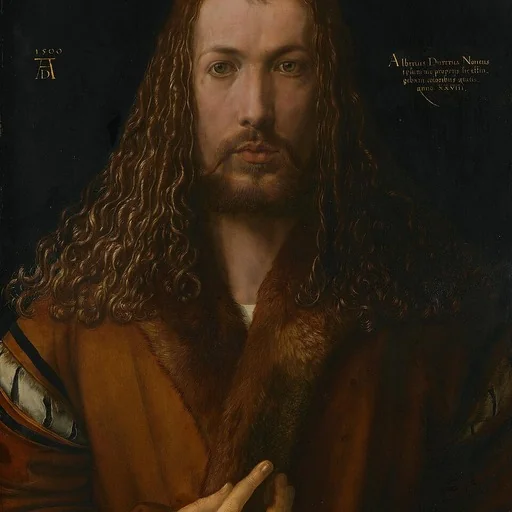
Albrecht Dürer spent his life in Nuremberg, a busy German city where artists traded prints like currency.

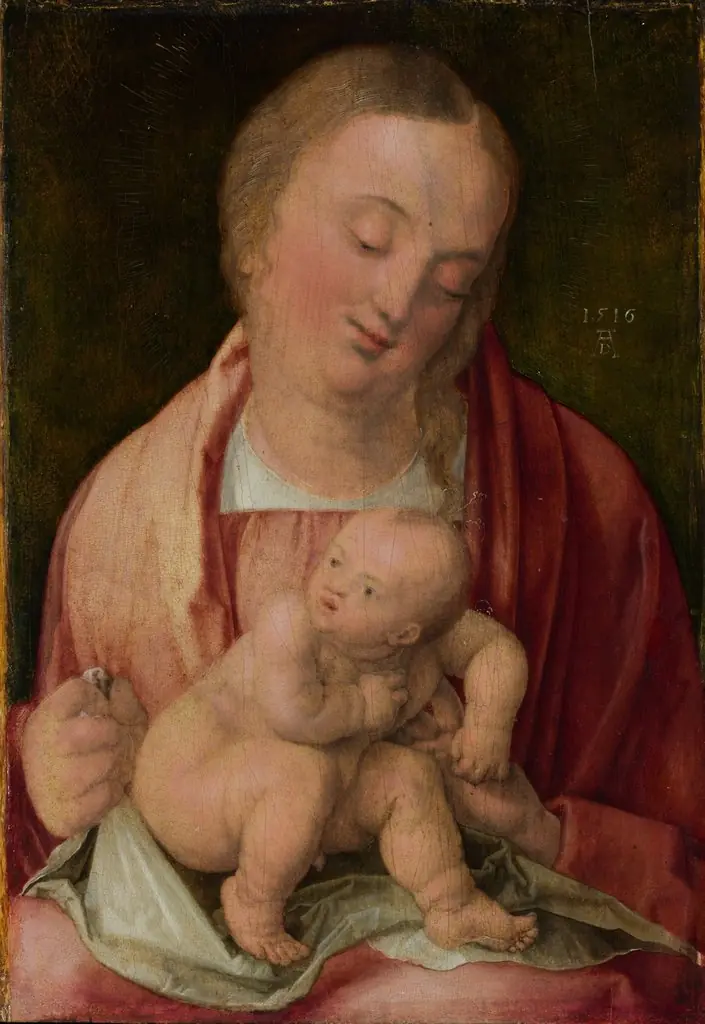
![Madonna and Child [obverse], by Albrecht Dürer](https://artifactworldgallery.com/img/albrecht-durer--madonna-and-child-obverse--d7b8ebf05d22ebe5-w320.webp)
![Lot and His Daughters [reverse], by Albrecht Dürer](https://artifactworldgallery.com/img/albrecht-durer--lot-and-his-daughters-reverse--b4ebf9b282faa17a-w320.webp)
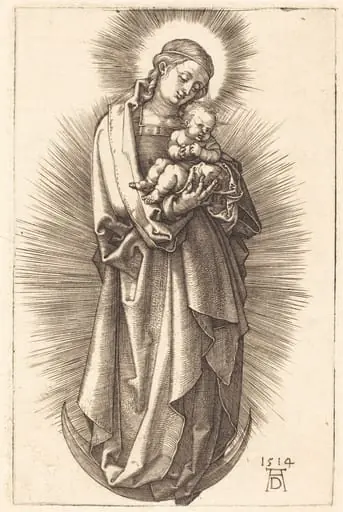 The Virgin and Child on a Crescent with a Diadem
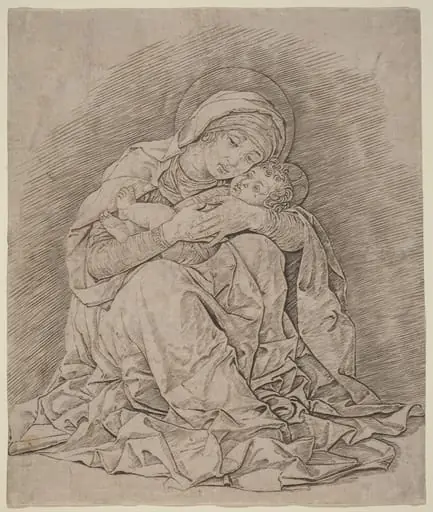 The Virgin and Child
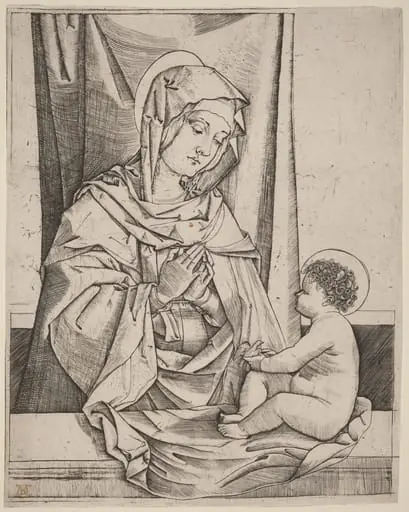 The Virgin and Child
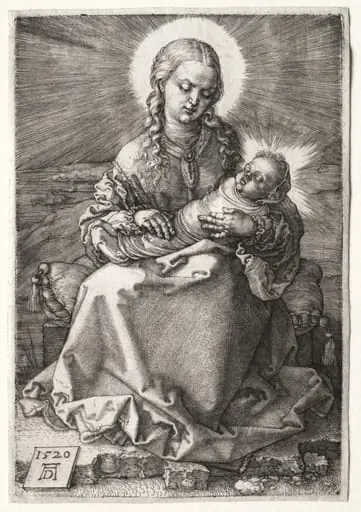 The Virgin with the Swaddled Child
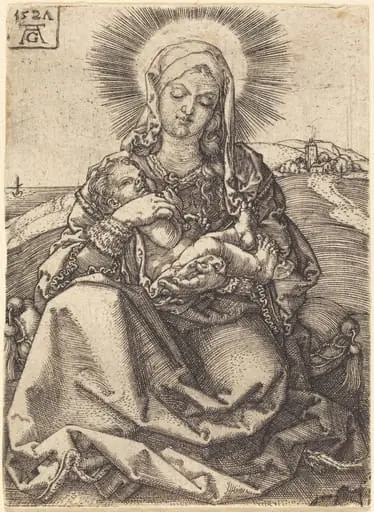 Madonna in a Landscape Sitting on a Cushion
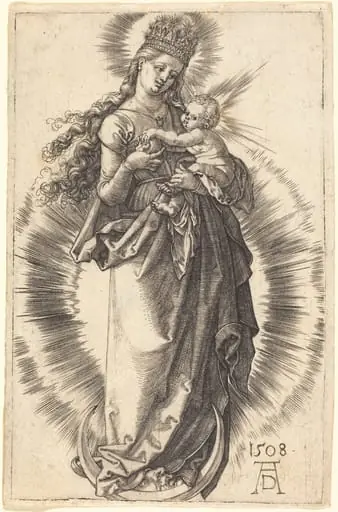 The Virgin and Child on a Crescent with a Starry Crown
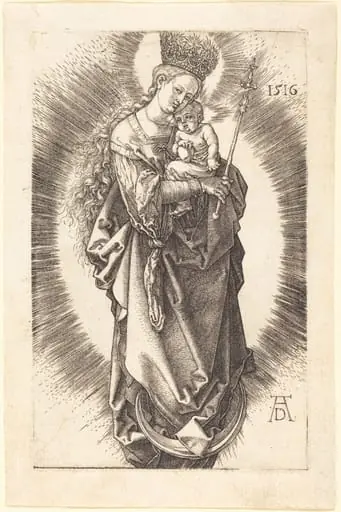 The Virgin and Child on a Crescent with a Sceptre and a Starry Crown
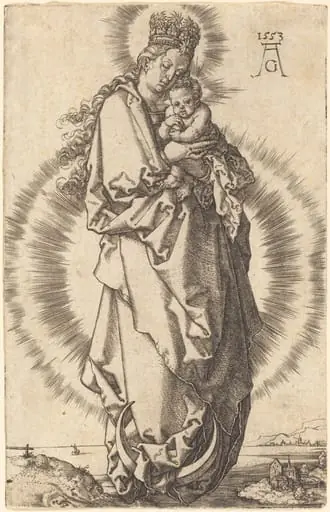 The Virgin with the Child on the Crescent
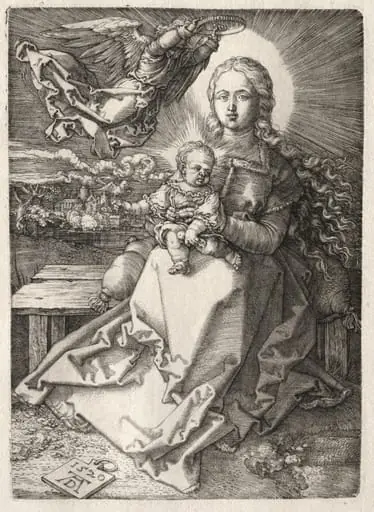 Virgin Crowned by an Angel
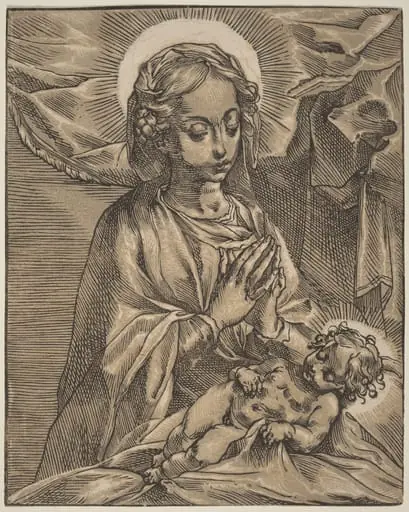 Madonna and Child
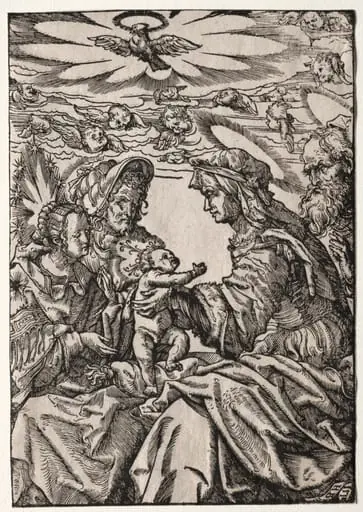 The Holy Family with St. Anne and Joachim
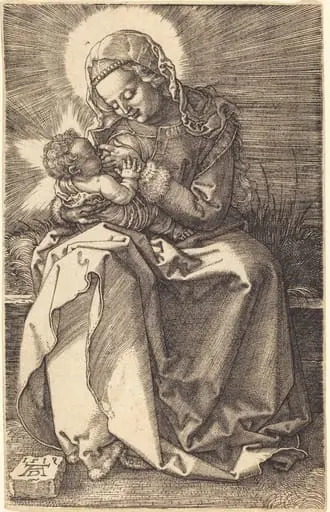 The Virgin Nursing the Child