Artwork
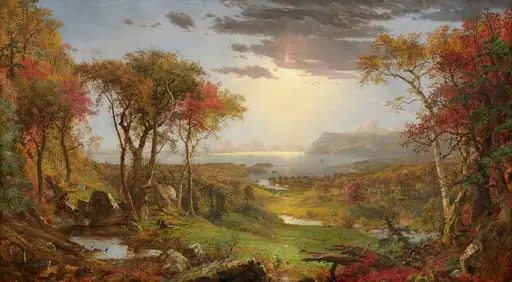
The Hudson River at Hastings
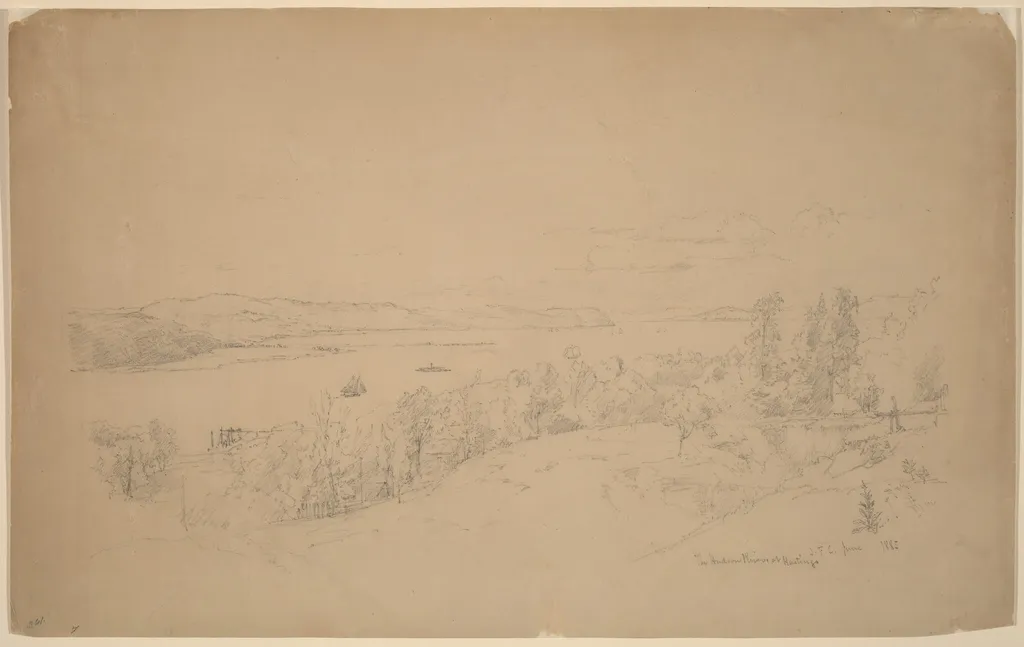
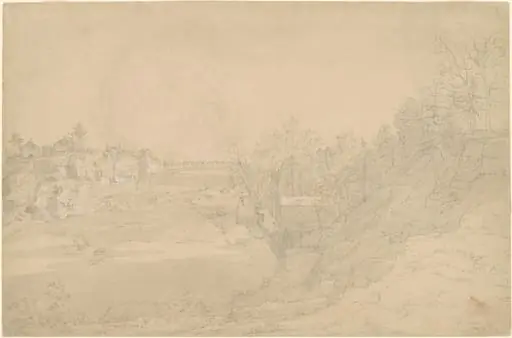
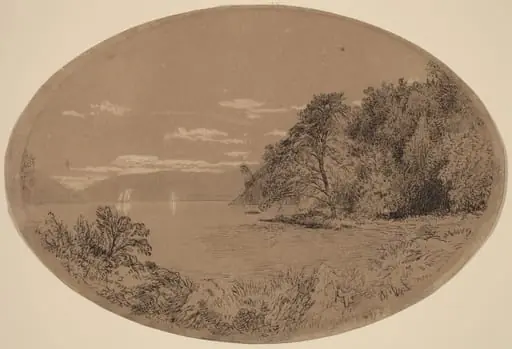
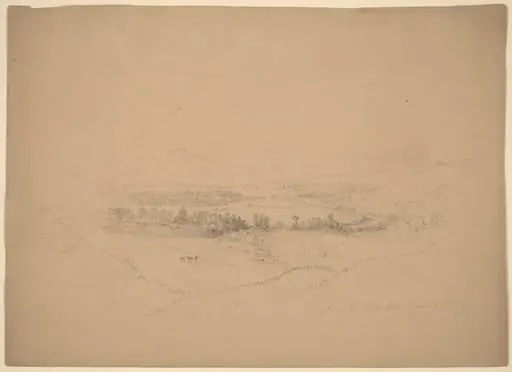
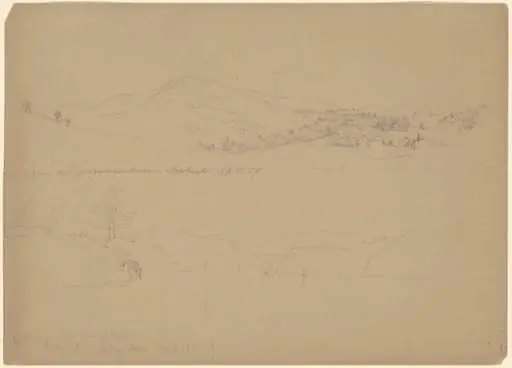
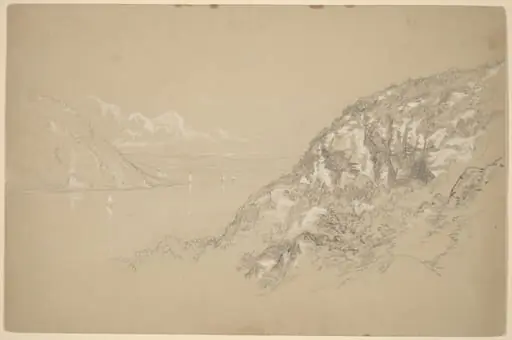
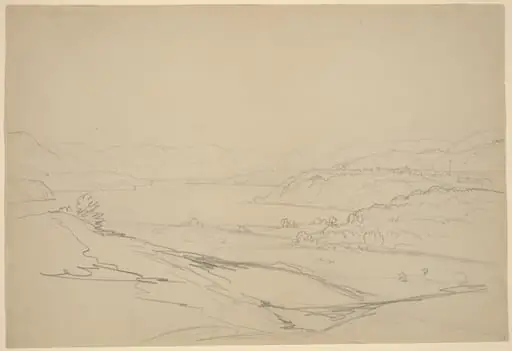
The Hudson River at Hastings is a graphite drawing by the Impressionist artist Jasper Francis Cropsey. It dates from 1885 and is held in the collection of the National Gallery of Art.
About this work
If you like this style, look up Realism next—it’s all about showing scenes exactly as they appear.
This sketch shows a quiet riverbank with a narrow path winding through trees. A small boat floats on the water in the distance, and the shore has a few scattered buildings. The artist used light pencil strokes to show shadows and light on the land.
The paper has a slightly yellowed look, like old sketches often do. The title says it’s the Hudson River at Hastings, drawn in 1885.
If you like this style, look up Realism next—it’s all about showing scenes exactly as they appear.
Overview
Jasper Francis Cropsey’s drawing titled *The Hudson River at Hastings* was executed in 1885. Rendered in graphite on wove paper, the work measures a modest size typical of field sketches. The paper exhibits a subtle patina of age, lending the image a subdued, archival quality.
Subject & Meaning
The composition depicts a tranquil stretch of the Hudson River near the hamlet of Hastings. A narrow, tree‑lined path meanders along the bank, while a solitary boat drifts on the water’s surface in the distance. Scattered structures punctuate the shoreline, suggesting a modest settlement integrated within the natural landscape.
Technique & Style
Cropsey employs delicate graphite strokes to model light and shadow across the terrain, creating a sense of atmospheric depth. The rendering favors precise, observational detail characteristic of late‑19th‑century American Realism, emphasizing the fidelity of form over decorative embellishment.
History & Provenance
Created during the final decade of Cropsey’s career, the drawing reflects his sustained interest in the Hudson River Valley, a region he frequently visited. The work remains documented as part of the artist’s oeuvre of river studies, though its ownership history after the artist’s studio is not extensively recorded.
Artist & collection