Artwork
West Point from Storm King
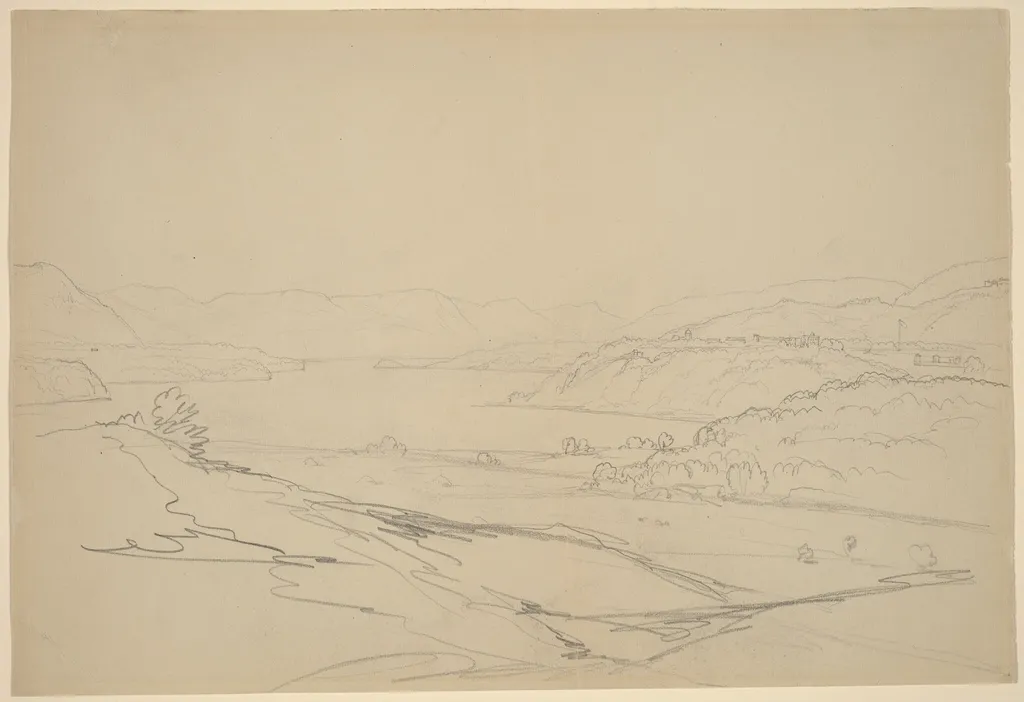
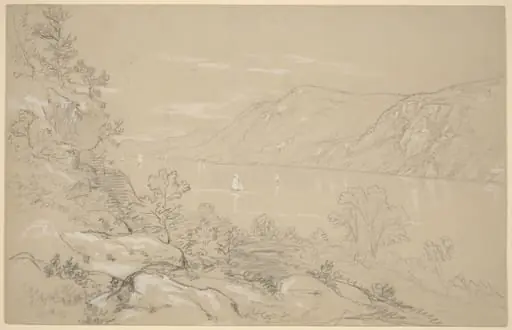
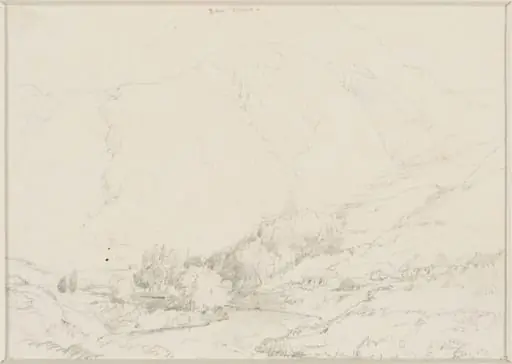
West Point from Storm King is a graphite drawing by the Romanticist artist John William Casilear. It dates from 1852 and is held in the collection of the National Gallery of Art.
About this work
Overview
Its delicate tonal range and restrained composition reflect a quiet observational approach, typical of mid-19th-century American landscape drawing.
Created in 1852, this graphite drawing by John William Casilear captures a view of West Point from the vantage of Storm King Mountain. Executed on light green wove paper, the work belongs to a series of topographical studies Casilear made in the Hudson River Valley. Its delicate tonal range and restrained composition reflect a quiet observational approach, typical of mid-19th-century American landscape drawing.
Subject & Meaning
The scene presents a distant view of the West Point military academy nestled within the Hudson River’s broad valley. Rolling hills frame the water’s edge, with sparse tree forms suggesting the forested slopes of the surrounding terrain. The composition conveys neither narrative nor drama, but rather an attentive rendering of place, emphasizing spatial depth and atmospheric stillness as expressions of natural order.
Technique & Style
Casilear employed fine graphite strokes to model subtle gradations of light and form across the hills and sky. The light green paper serves as a mid-tone ground, allowing highlights to emerge through reserved areas and shadows to be built with layered hatching. The absence of bold lines or dramatic contrast creates a hushed, contemplative atmosphere, aligning with the quiet realism of the Hudson River School’s early phase.
History & Provenance
The drawing was produced during Casilear’s period of active sketching in the Hudson Valley, a time when he was developing his reputation as a topographical artist. It likely originated as a preparatory study, possibly for a larger oil painting. The work remained in private collections until acquired by a major American institution, where it now contributes to the documentation of 19th-century landscape practice.
Context
In the 1850s, American artists increasingly turned to regional scenery as subjects worthy of serious study. Casilear’s drawing reflects this trend, aligning with the Hudson River School’s emphasis on truthful depiction of nature. Unlike romanticized visions, this work favors measured observation, mirroring contemporary scientific and surveying interests in mapping the American landscape.
Legacy
Though less celebrated than his finished paintings, this drawing exemplifies Casilear’s disciplined approach to landscape. It contributes to the broader understanding of how artists translated direct observation into refined compositions. As a preserved study, it offers insight into the working methods of mid-century American draftsmen and their engagement with the natural environment.
Artist & collection

 Landscapes
 The Hudson River at Hastings
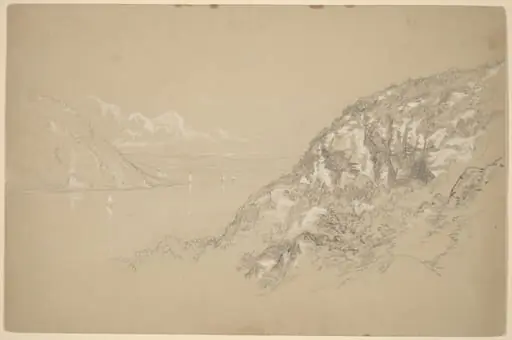 Hudson Highlands
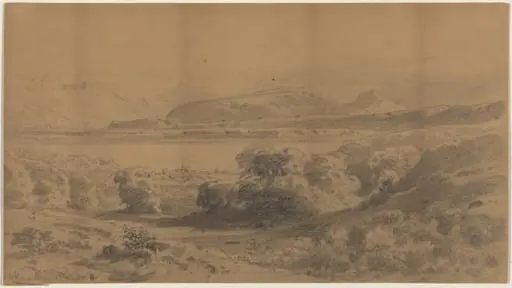 Panorama on a Mountain Lake
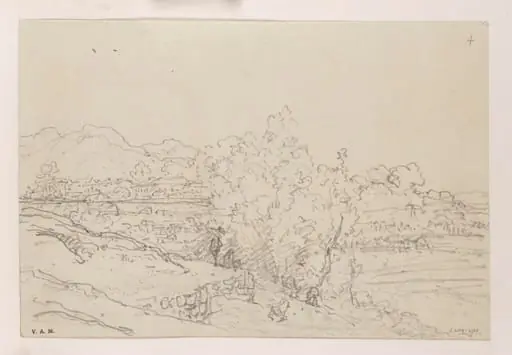 Fields and trees, with the city of Macau in the distance
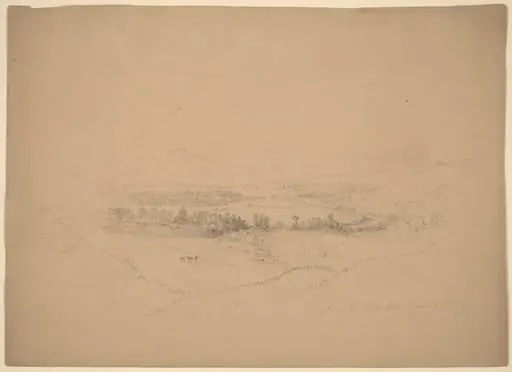 Miami and Ohio Rivers
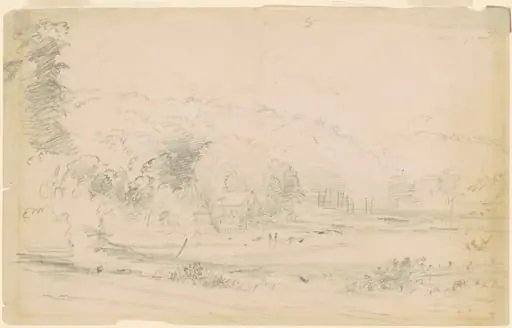 Long Island, New York
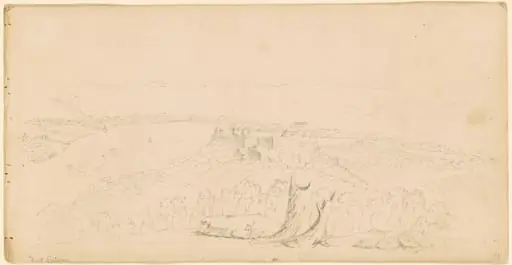 Fort Putnam
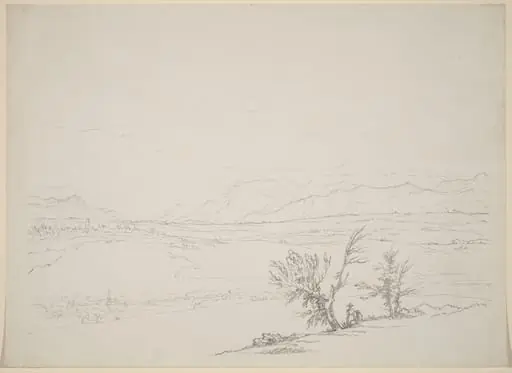 An Alpine Landscape with a Couple Seated by Trees Overlooking a Valley
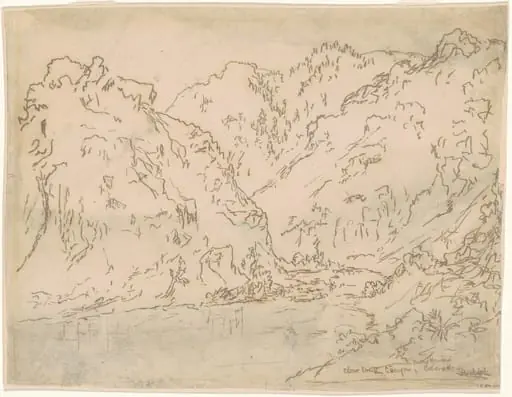 Clear Creek Canyon, Rocky Mountains, Colorado
 Ben Nevis