Artwork
Fort Putnam
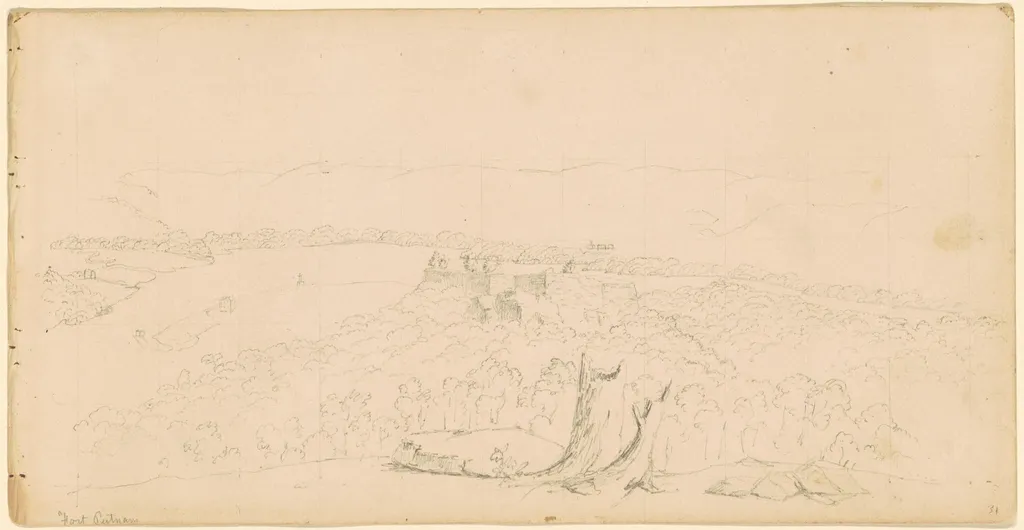
Fort Putnam is a graphite drawing by the Romanticist artist Seth Eastman. It dates from 1837 and is held in the collection of the National Gallery of Art.
About this work
Overview
Created in 1837, this graphite drawing depicts Fort Putnam set against a gently rolling landscape of trees and hills. Rendered on wove paper, the work presents the fort’s walls and towers with precise line work, while the surrounding terrain is rendered in a realistic, subdued manner that emphasizes topographical detail over dramatic effect.
Subject & Meaning
The image records a military installation on the American frontier, illustrating the strategic placement of Fort Putnam within its natural environment. By juxtaposing the engineered fortifications with the surrounding wilderness, the drawing conveys the interplay between expanding U.S. military presence and the untamed landscape of the early 19th‑century Midwest.
Technique & Style
Executed with graphite on smooth wove paper, the drawing relies on fine hatching and cross‑hatching to model form and texture. The muted tonal range produces a soft, atmospheric quality, while the meticulous line work reflects a surveyor’s eye for accuracy, characteristic of early American topographical illustration.
History & Provenance
The work was produced by Seth Eastman, a West Point‑trained officer stationed at Fort Snelling in the Minnesota Territory. While serving, Eastman sketched numerous frontier scenes, many of which later informed Henry Rowe Schoolcraft’s congressional study of Native American tribes. The drawing remains a testament to Eastman’s dual role as soldier and documentarian of the expanding United States.
Artist & collection
Artist
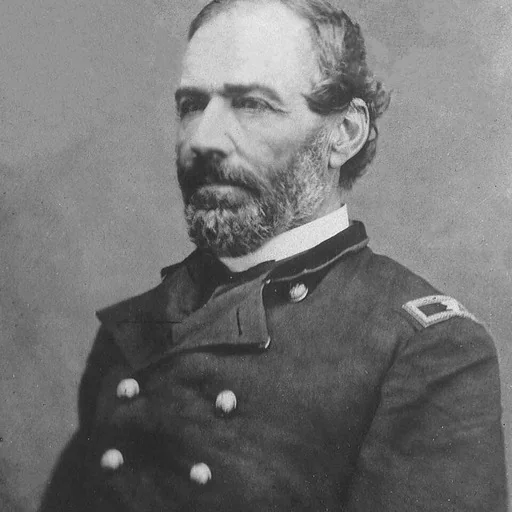
Seth Eastman (January 24, 1808– August 31, 1875) was an artist and West Point graduate who served in the U.S.

 Long Island, New York
 Landscapes
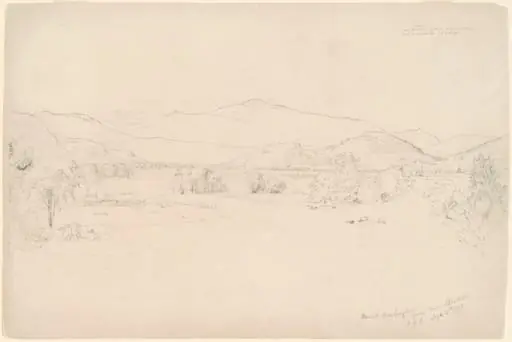 Study for "View of Mt. Washington"
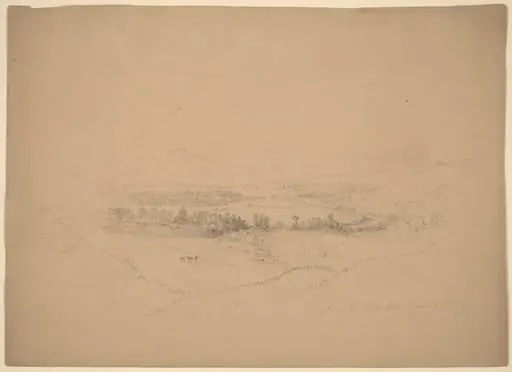 Miami and Ohio Rivers
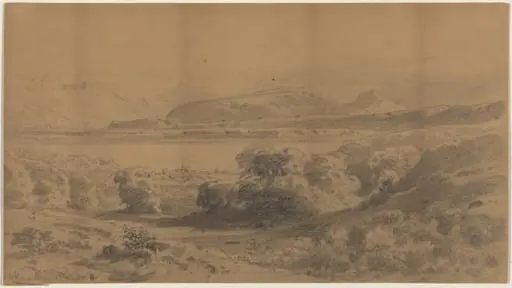 Panorama on a Mountain Lake
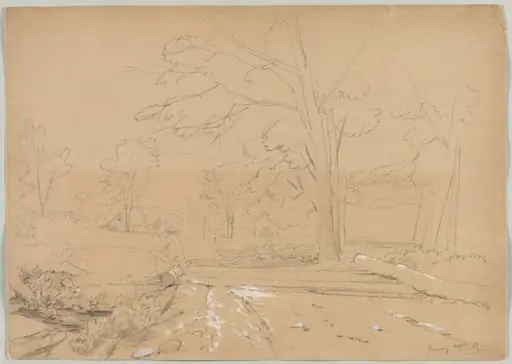 Landscape with Man Fishing, Conway, New Hampshire
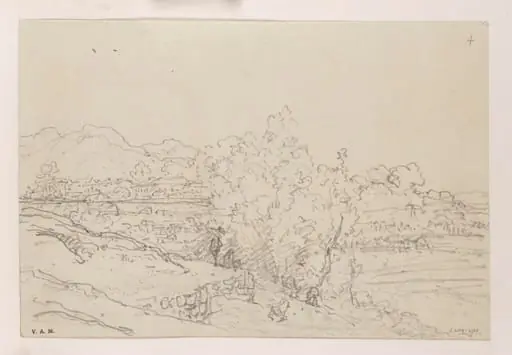 Fields and trees, with the city of Macau in the distance
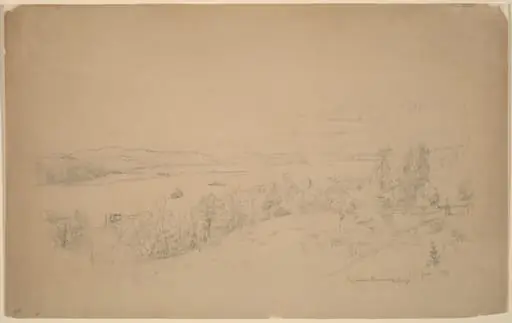 The Hudson River at Hastings
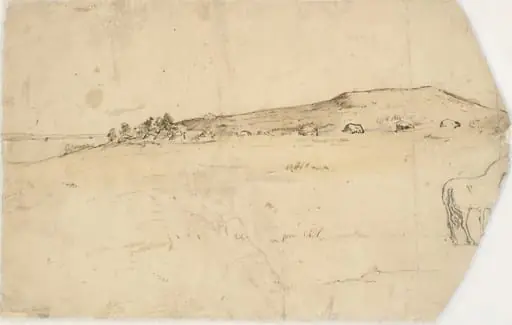 Landskab (fra Brandsø?) med kæmpehøje
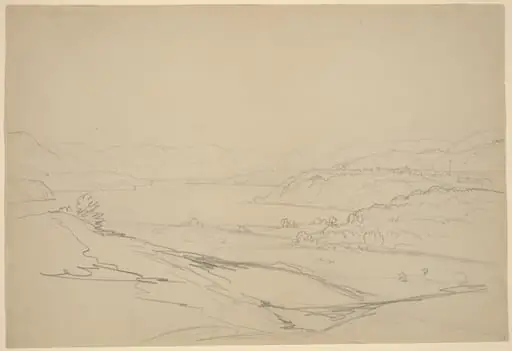 West Point from Storm King
 Farm with Trees in a Hilly Landscape (recto)
![View of a Mountain [verso], by Jasper Francis Cropsey](https://artifactworldgallery.com/img/jasper-francis-cropsey--view-of-a-mountain-verso--53dd196ec5bcb19f-w320.webp) View of a Mountain [verso]
View of a Mountain [verso]